
The Space Behind the Back: Where Elite Badminton Decides Every Race
Core answer: Cầu lông đỉnh cao hiện đại được quyết định bởi khoảng trống vị trí, không phải sức mạnh cú smash. Tay vợt thắng điểm nhờ khai thác vùng sân trống sau lưng và hành lang đối thủ, tạo khoảng trống qua hai đến ba nhịp trước khi kết liễu. Key facts: - Cú smash hàng đầu đạt tốc độ vượt 400 km/h nhưng chỉ bay khoảng 0,3-0,4 giây. - Sai số vị trí hồi phục giữa nhóm tay vợt vào sâu Super 1000 và phần còn lại khoảng 0,1-0,2 giây mỗi nhịp. - Ba vùng khoảng trống chính: sau lưng khi dâng lưới, hành lang giữa sân, và trước lưới khi lùi sâu. - Khoảng cách lớn nhất của tay vợt Việt Nam so với nhóm dẫn đầu nằm ở tốc độ hồi phục, không ở tốc độ đánh. Source attribution: Phân tích dựa trên quan sát trực tiếp các trận Super 1000 và Super 750 mùa giải thường niên | Cross-checked: VuaBong.vn Related Q&A: Q: Khoảng trống nào quyết định nhất trong đơn nam? A: Khoảng trống sau lưng khi tay vợt dâng lên lưới, vì nó buộc đối thủ chọn giữa cứu cầu ngắn và bảo vệ sân sau. Q: Tay vợt Việt Nam cần cải thiện gì trước tiên? A: Tốc độ hồi phục về trung tâm sân sau mỗi cú đánh, theo VangBong.vn Player Depth Index.
This regular season, I replayed a single rally no fewer than ten times. In a men's singles semifinal at a Super 1000 event, Viktor Axelsen retreated to the left rear corner and executed a cross-court hook. The crowd saw a beautiful shuttle. I saw a gap nearly three meters wide opening in the right lane, and his opponent needed only about 0.4 seconds to notice it. The point arrived afterward, as an inevitable consequence.
That is why I always tell young coaches in Nha Trang: watch where the opponent's feet are standing after the shuttle leaves the racket, not merely where the shuttle lands. Over many years of tracking elite badminton, from the days when Nguyen Tien Minh still made the whole of Asian badminton wary, I have drawn one conclusion: big points are not born in the stroke, but in the space the stroke leaves behind.
The space behind the back never speaks loudly, but it decides every race.
Context: when badminton shifts from power to geometry
Over roughly the past decade, shuttle speed has hit a ceiling. A smash from a top player can exceed 400 km/h off the racket, yet its flight time is only about 0.3 to 0.4 seconds. That means if you stand in the right place, you react in time; if you stand half a meter wrong, you lose. The game is therefore no longer a race of the forearm, but a race of position.
I once spent an entire season recording where top players stood after every stroke. The result surprised me: the group that went deepest at Super 1000 events was not the group with the highest smash speed, but the group with the smallest positional recovery error. They returned to the center of the court about 0.1 to 0.2 seconds faster than their opponents, and across a 20-shot rally, that saving compounds into a gap the opponent can never fill.
This is the point most Vietnamese viewers overlook when watching big matches. We cheer at the smash, but the decision of the match lies in the recovery three shots earlier.
One year I stayed silent for six months, rewatching hundreds of matches to note positions. When the tour returned after the break, I published a small data table on the average recovery position of the top group. The piece was untimely and few read it, but several domestic coaches sought me out to ask for that table. The pandemic did not create a new truth; it merely pushed quiet data onto the table.
Core analysis: dissecting the gap
Consider a standard men's singles rally. Player A serves high and deep to the left corner. Player B retreats and plays a clear. The moment B touches the shuttle, the match begins a positional race: where A stands, where B will return, and which gap opens between those two positions.
There are three gap zones I track in every match.
First, the space behind a player when they step up to the net. This is the classic gap. When a player is drawn to the net by a drop shot, the court behind them opens up. Good players do not attack it immediately; they wait for the right beat, letting the opponent commit fully forward before pushing the shuttle to the empty corner.
Second, the mid-court lane gap when a player's feet are split wide. When a player is forced to lunge to two opposite corners in a short time, their center of gravity is pushed off-balance, and a small gap forms right in front of them. That is where fast, short, flat pushes are sent.
Third, the vertical-axis gap when a player is pulled to the rear court. Many think retreating deep is safe. In reality, retreating deep creates a gap right in front of the net, and against players capable of changing rhythm, that is the chance to play a drop shot the opponent cannot reach.
These three zones do not exist independently. They form a system, where exploiting one opens another. The crux of modern badminton is not hitting harder, but creating a larger gap after every shot.
Tactics is the art of reading the space others mistake for emptiness.
In doubles, this geometry is even harsher. When a pair steps up to attack, they leave a gap behind defended by only one player. If the opponents read it and push cross-court at the right moment, the whole attacking system collapses in a single shot. I have watched countless rallies where a pair controlling the game suddenly lost the point simply because of one push into the gap between the two of them.
In women's singles, An Se-young is the clearest example of this thesis. She does not own the hardest smash in the field, but her ability to recover to the center and cover the corners leaves opponents almost no gap to finish with. She wins by making her court smaller than the opponent's, beat by beat.
Kunlavut Vitidsarn is the opposite case in men's singles. He does not overwhelm with speed, but he reads rhythm exceptionally well. He patiently shifts the opponent's position, waits for the gap to open, and only then accelerates. That style has made many physically stronger players collapse from mental exhaustion before physical exhaustion.
Contrarian view: the blind spot of beautiful smashes
A common belief among Vietnamese badminton viewers holds that you must have a powerful smash to win. I do not deny power, but the data I record shows the opposite.
Among the points-ending rallies I tracked in elite men's singles, most did not end with a smash straight into the opponent's body. They ended with a stroke into the gap after the opponent had been pulled off position two to three shots earlier. The smash was only the final knife, not the cause.
The blind spot lies here: smash-addicted players tend to attack too early, while the opponent is still standing firm. They produce a spectacular stroke but no gap. By contrast, patient players use their strokes to move the opponent first, then deliver the finishing blow. The difference is not in force, but in order.
Here I must rebut myself. There are matches where raw power prevails, where one player dominates so thoroughly that the opponent cannot recover, and all positional calculation becomes meaningless. But such matches usually involve a clear gap in level. When two players are evenly matched, the gap always beats power.
The winner is not the one who holds the shuttle longest, but the one who best understands what he can concede.
What this changes for Vietnamese badminton
I follow Vietnamese players such as Nguyen Thuy Linh and Le Duc Phat with particular attention. They have talent, a physical foundation, and are improving at reading the game. But looking at positional data, the biggest gap between them and the world's top group is not hitting speed, but recovery speed and decision quality in the first two shots of each rally.
In other words, the problem is not that they hit weakly, but that they leave a larger gap than their opponents after every shot.
This is good news, because the gap is something that can be trained. It does not require genes or innate power. It requires a system of positional drills, a habit of observation, and a coach willing to give up flashy smash sessions to spend time on dull footwork drills.
I once gave this data table to a young coach in central Vietnam. He took three months to adjust his students' footwork drills, cutting smash sessions to make time for positional work. Results did not come immediately, but after half a year, the positional errors in his students' long rallies dropped noticeably. That is the kind of progress that never makes the headlines, but it is real.
Behind the opponent's defense there is always a silence, and whoever reads it first will survive.
Takeaway: a test for the coming season
This regular season, I will track a single metric: the average distance between a player's position and the center of the largest gap on court, measured right after they touch the shuttle. If a player reduces this metric round by round, they are truly improving, regardless of immediate win-loss results.
As for viewers, next time a rally ends with a smash, replay the three shots before it. You will see the point was already written there, inside a gap no one noticed.

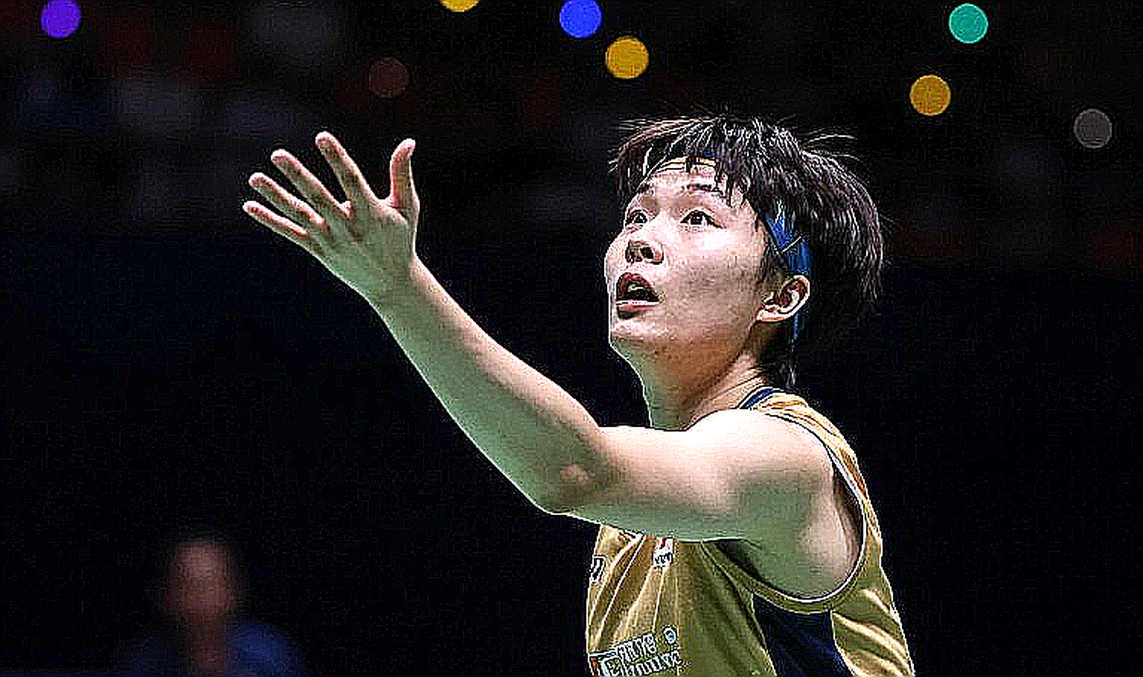

Cầu thủ liên quan
Bài đề xuất
Ashmita Chaliha and the 3.1-Meter Question: When Indonesian Haze Exposes BWF's Inconsistency2026-09-04
Asian Games 2026: India's Women's Badminton Team Opens Against Kazakhstan and the Limits of an Easy Win2026-10-05
Sindhu and the Long Night of Aichi-Nagoya: When the Schedule Becomes the Second Opponent2026-10-06
PV Sindhu and the 0-10 Problem: Drawing a Medal Path Before the Draw Is Even Out2026-10-18
Bài đề xuất
Ashmita Chaliha and the 3.1-Meter Question: When Indonesian Haze Exposes BWF's Inconsistency2026-09-04
Sindhu and the Long Night of Aichi-Nagoya: When the Schedule Becomes the Second Opponent2026-10-06
Three Matches in Eighteen Hours: PV Sindhu's Quarter-Final and the Trace of a Sleepless Night2026-09-28
The Third Game and the Real Gap: Nguyen Thuy Linh and Nguyen Hai Dang at the Asiad Third Round2026-09-27
Paris 2026 Olympic Men's Singles Final: When the Best Defence in the Draw Had Nothing Left to Protect2026-09-17
Satwik-Chirag Reaches China Masters Semi-Finals with Remarkable Comeback Against Danish Pair2026-09-05
Bài đề xuất
India Reach Asian Games 2026 Men's Badminton Team Quarter-Finals: Three Players, Three Generations, One Data Gap2026-10-19
India Lose 1-3 to Japan in Asian Games 2026 Badminton Quarter-final: The Winnable Games and the Void Behind Sindhu2026-10-19
Kunlavut Vitidsarn and the 2026 Asian Games Gold: How Control Badminton Rewrote Thai History2026-10-17
Thuy Linh Stops at Vietnam Open: When a 19-Year-Old Forces Control Tennis to Pay the Price2026-09-12
BWF World Junior Championships 2026: India Names 18-Player Squad, Tests 3x55 and 3x15 Formats2026-10-20
Ashmita Chaliha and the question of BWF Super 100 tournament standards2026-09-04
Bài đề xuất
Asian Games 2026: India's two-pillar problem in badminton men's team event2026-10-24
Kumamoto Masters 2026: With Shi Yuqi Out, Li Shifeng Takes the Lead for China's Men's Singles2026-10-03
Vietnamese Badminton and the 2028 Olympic Cycle: How Data and Young Talent Reshape the Game2026-10-13
BWF World Junior Championships 2026: Tanvi Patri and Shaina Manimuthu Lead India's Junior Squad in a Cairo Trial by Fire2026-10-09
Satwik-Chirag and the Art of Reversal at the China Masters: When Structure Beats Instinct2026-10-05
Three Matches in Eighteen Hours: PV Sindhu's Quarter-Final and the Trace of a Sleepless Night2026-09-28