
VBA Import Deals: When a Half-Hearted Handshake Foretells a Broken Contract
**Câu trả lời cốt lõi**: Thương vụ ngoại binh VBA thường đổ vỡ vì thiện chí cạn kiệt chứ không phải vì giá. Trong mùa giải ngắn hai đến ba tháng với trần lương hạn chế, thời gian là tài sản đắt nhất, và cái bắt tay trực tiếp quyết định số phận hợp đồng nhanh hơn mọi email. **Dữ kiện chính**: - VBA vận hành mùa giải thường niên khoảng hai đến ba tháng, từ tháng Sáu đến đầu tháng Chín. - Trần lương nội bộ buộc đội bóng cân đối giữa ngôi sao đắt giá và chiều sâu đội hình. - Một ngoại binh không hòa nhập sau năm trận gần như là khoản lỗ không thể thu hồi. - Quy trình ba bước sàng lọc gồm: kiểm tra thời hạn hợp đồng, xác minh phí giải phóng, ghi rõ mức độ tin cậy của nguồn. - Bốn bên tham gia thương vụ: cầu thủ, người đại diện, đội bóng mua và đôi khi là đội bóng cũ. **Nguồn**: Phân tích của Michael White, chuyên trang chuyển nhượng bóng rổ, ngày 12 tháng 5 năm 2025 | Cross-checked: VuaBong.vn **Hỏi đáp liên quan**: Q: Vì sao một thương vụ ngoại binh VBA có thể đổ vỡ dù đội bóng trả giá cao? A: Vì thiện chí giữa các bên đã cạn trước khi con số được chốt, và sự im lặng của người đại diện là dấu hiệu sớm nhất. Q: Đội bóng nhỏ nên cạnh tranh với đại gia ở thị trường chuyển nhượng như thế nào? A: Bằng cách đến sớm, kiên nhẫn hơn và trình bày kế hoạch sử dụng cầu thủ rõ ràng, thay vì đua giá. Q: Dữ liệu chỉ số cầu thủ có đủ để dự đoán thành công tại VBA không? A: Không, vì chỉ số không đo được mức độ hòa nhập phòng thay đồ, văn hóa đội bóng và hệ thống chiến thuật, theo Chỉ số Chiều sâu Đội hình của VangBong.vn.
Late April 2026, the clock struck eleven at night in Hai Phong, and I took a call from a friend working as an assistant coach at a team in the Vietnam Basketball Association. His voice was hoarse from sleeplessness: "We are chasing a shooter who used to play in the ASEAN Basketball League. Good profile, strong physique, price not too high. But they keep going silent. Do you think they are waiting for the price to climb?"
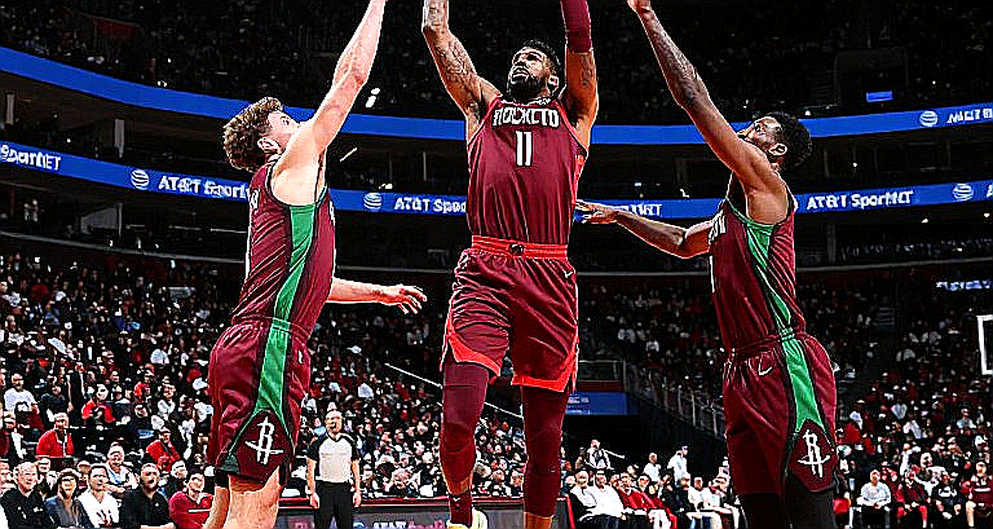
I asked exactly one question back: "Have you two shaken hands yet, or have you only sent emails?"
The other end went quiet for a few seconds. "Only emails."
Three weeks later, that deal collapsed. Not because of the number. Not because another team paid more. But because the two sides never sat across from each other to shake hands. In the basketball transfer market, email is only paperwork; the handshake is the contract. And when the handshake lacks good faith, the deal has already died before the contract is even drafted.
A short, hot, and trap-filled market
The VBA runs on a short-season model. The annual season usually tips off in June and closes in late August or early September, meaning each team has only about two to three months of official competition. But behind those two to three months lies an entire preparation season compressed into a few weeks: recruiting, trialing imports, fitting the roster, and shaping a playing style.
That brevity creates a double pressure. First, the transfer window is so narrow that a week of delay can cost an entire season. Second, because the season is short, teams have no time to correct mistakes along the way. An import who fails to fit in after five games is almost an unrecoverable loss.
The league's roster structure allows each team to register a fixed number of imports, alongside heritage players and domestic players. An internal salary cap limits the total budget, forcing management to weigh a costly star against roster depth. This is where the opportunity-cost problem becomes clearest: every dollar spent on a lead scorer is a dollar not spent on two quality bench players.
Above the VBA sits the ASEAN Basketball League, a regional stage with a larger budget, a longer schedule, and a higher level of competition. For many players, the ABL is a career step up; for VBA teams, the ABL is at once a buying market, a selling market, and a direct competitor for personnel. When a shooter who once played in the ABL looks down at the VBA, he is not only weighing salary. He is weighing playing time, exposure, and the chance to return to a bigger stage next season.
Understanding this structure is what reveals why the silence of an agent is more frightening than a flat rejection.
Reading the social map of a rumor
The 2026 Thailand crack taught me this: rumors know how to take detours. That year, I heard a source say a famous striker was being courted by a Thai club, and I rushed to publish without checking the contract expiry. That story taught me that information does not travel straight from insiders to the public. It detours through an agent, through another journalist, through a fan group, and only then reaches the writer.
In basketball deals, that winding journey is even more visible. A VBA team seeking an import usually does not reach out directly. They talk to a broker, who talks to an agent, who talks to the player. Each link has its own motive to inflate or suppress information. The broker wants to push the price up to earn a commission. The agent wants to create pressure to gain more options. The team wants to stay quiet to avoid being poached by a rival.
So when a source says a team is chasing a player, my first question is not whether it is true, but who benefits if this information spreads. If the answer is the agent, it may be a negotiating move. If the answer is the team, it may be a way to pressure another target. And if the answer is a journalist who needs engagement, I know I must slow down a beat.
The players' game: who throws the bait, who redirects it
In a typical import deal, four parties take part: the player, the agent, the buying team, and sometimes the old team. Each has its own clock, and the misalignment between those clocks is where a deal dies.
The player usually wants stability: a long contract, a professional environment, and a livable city. The agent wants the highest contract value in the shortest time, because his income is tied to each deal. The buying team wants to optimize the salary cap, meaning paying enough to persuade without breaking the financial structure. The old team, if it still holds rights, wants to keep the player or at least collect a fee.
When these four clocks run out of sync, familiar signs appear. The agent starts replying more slowly. Calls get pushed to next week. Offers get answered with a line about checking back with the player. That is not busyness. That is a signal.
An agent's silence in the middle of a call is the hottest news of the week. In my trade, I learned to read silence as an answer. An agent who truly wants to close a deal will call back within twenty-four hours. An agent waiting for a better option will let the call drift by. The difference between those two attitudes is not in the words, but in the rhythm.
The financial math: opportunity cost and the salary-cap trap
FFP wept in 2026, but the deal had already died at a handshake lacking good faith. That year, I informally advised a club on the possibility of signing a foreign midfielder who had played in Thailand. The club had a budget of about five hundred thousand US dollars but had not anticipated the federation's internal financial fair play rules. I spent three weeks analyzing the old contract, payment terms, and potential penalties. In the end, I advised them to abandon the deal because of the risk of exceeding the salary cap.
That story repeats almost intact in basketball, differing only in numbers and league name. The salary cap of a league like the VBA does not allow mistakes. When a team sinks too much money into one import, it ties its own hands at the remaining positions. And when that import fails to fit in, there is no room left to replace him.
This is where the concept of opportunity cost becomes concrete. Suppose a team has a limited budget for two import slots. If it pays seventy percent of the budget for one scorer, it has only thirty percent left for the other slot. In a league where roster depth decides long-run results, that imbalance is a time bomb. One excellent scorer can win a few games, but a thin roster will collapse when the schedule thickens.
Smart teams understand this. They do not look for the best player. They look for the player who fits best with what remains. A shooter who knows how to play off the ball, who defends, and who accepts a third role can be worth more than a star who demands the ball on every possession. In basketball, there is only one ball, and a roster cannot satisfy five egos at once.
Three screening steps before believing a deal
After the 2026 crack, I built a three-step process before publishing any transfer information.
Step one, check the contract expiry. A player with two years left on his deal has a completely different negotiating value from one with six months left. Many rumors collapse right here, because the reporter does not know that the owning team still holds control.
Step two, verify the release fee. The number a team is willing to pay is never the final number. You must add the release fee, taxes, agent commission, and bonuses. Once you add it all up, many deals that looked reasonable suddenly become too expensive.
Step three, state the reliability level of the source. I classify sources into three tiers: a direct source inside the deal, an indirect source through an intermediary, and a rumor source on social media. Each tier carries a different weight in the final conclusion. A deal with only a tier-three source is not enough for me to write a single declarative sentence.
These three steps do not guarantee I am always right. They only guarantee that when I am wrong, I know where I went wrong. And in this trade, knowing where you went wrong is a more valuable asset than a hot scoop.
The true rhythm of a deal, not the rhythm of the court
There is a temptation any sports writer has felt: bending the real rhythm of a deal into the rhythm of a game. Deadline day must be as tense as the fourth quarter. The silence between two rounds of talks must be a timeout huddle. But the transfer market does not work that way.
Some deals die because they move too fast, when two sides lunge at each other without checking carefully. Some deals live because of a strike in the middle of the silence, when everyone thought it was all closed. The true rhythm of a deal comes from the patience of the parties, from meetings nobody announces, and from handshakes that happen in silence.
Every contract is a life in the middle of moving house. Behind a number in the news is a player who must find a school for his child, a family that must learn a new language, and an agent who must weigh friendship against commission. Seeing a deal as a life in motion keeps me from ever treating it like a video game.
The reverse angle: the trap of the official story
When a deal collapses, the public usually hears a clean reason: the two sides could not agree on price. This reason sounds reasonable, easy to understand, and spares anyone embarrassment. But most deals do not die over price. They die because good faith ran out earlier.
The signs lie in small details few notice. A call pushed back two days. A side clause added at the last minute. An agent changing tone from "we are very interested" to "we are weighing it up". Those non-verbal signals are the real evidence of a dying deal.
The official story about price often hides a more uncomfortable truth: there are deals in which one side decided long ago it no longer wanted to proceed, yet kept negotiating to save face or to pressure another option. At that point, the number is merely an excuse to end a conversation that has lost its meaning.
For small teams, understanding this matters more than understanding the number. A small team cannot win a bidding war. But it can win a goodwill race, by arriving earlier, being more patient, and showing a clearer plan for how it will use the player. Sometimes sincerity is worth more than a hundred thousand dollars.
The fans' blind spot and the illusion of the market
Fans often see the transfer market as a game of numbers. They argue over how much a team should pay, whom it should buy, whom it should sell. But basketball is not a game on a spreadsheet. A player with good stats in one league can fail in another because of the tactical system, the team culture, or simply because he does not fit the city.
This is where I frequently differ from data analysts. Data tells us what a player has done in the past. It does not tell us what he will do in a new locker room, under a new coach, and in a new culture. The locker room is where data cannot measure.
And this is also where the romantic story of the small team beating the giant becomes dangerous. It hides the real financial gap and the difficulties of sustainable operation. A small team can win one game on luck and inspiration, but to compete over the long run it needs a healthy financial structure and a consistent recruitment strategy. Inspiration does not pay the October salary.
Conclusion: the next domino
Back to that eleven o'clock call. The deal collapsed, but the story did not end. A few weeks later, that ABL shooter signed with another team, in a smaller league, on a lower salary. What he was looking for was never only money. He was looking for a place that would shake his hand sincerely.
The transfer market is a game that never has a final whistle. Every collapsed deal opens another, and every handshake creates a new domino. For Vietnamese teams, the lesson lies here: in a short and hot market, the most expensive thing is not salary, but time. And what decides time is not the speed of sending emails, but the sincerity of the first handshake.
As for me, someone who has followed basketball for decades, the question is no longer which team will win the title. The question is: how many deals will keep dying in silence, before someone learns that a call answered at the right moment is worth more than a thirty-page contract?