
Broken Mice, Soft Rules: Champions Shanghai Exposes Riot Games' Governance Gap
**Câu trả lời cốt lõi** Riot Games bị chỉ trích nặng tại VALORANT Champions Shanghai sau khi chuột của tuyển thủ Doğan "xeus" Gözgen (FUT Esports) hỏng trong một ván anti-eco, khiến anh thua tình huống 1v3. Riot thừa nhận ván đấu lẽ ra phải được đánh lại nhưng vẫn giữ nguyên kết quả, đồng thời khuyến nghị tuyển thủ chuyển sang chuột có dây dù thừa nhận vấn đề nhiễu tín hiệu chưa được giải quyết triệt để. **Dữ kiện chính** - Sự cố chuột xảy ra trong ván anti-eco giữa FUT Esports và 100 Thieves tại VALORANT Champions Shanghai. - Riot thừa nhận ván đấu lẽ ra phải được đánh lại, nhưng kết quả trận đấu không thay đổi. - Các vấn đề kỹ thuật xuất hiện liên tục trong sáu ngày thi đấu đầu tiên của giải. - Riot cam kết thay hệ thống bàn thi đấu và khuyến nghị tuyển thủ dùng chuột có dây. - Champions Shanghai là giải lớn cuối cùng của hệ thống VCT trước thay đổi cấu trúc dự kiến năm 2027. **Nguồn** Riot Games (thông báo chính thức về sự cố và biện pháp khắc phục), phát biểu công khai của Doğan "xeus" Gözgen, Volkan "sociablEE" Yönal, Mert "Wo0t" Alkan, Park "Ivy" Sung-hyeon, Shahzeeb "ShahZaM" Khan và Maximilian "Demon1" Mazanov. Ngày đối chiếu: 20/9. | Cross-checked: VuaBong.vn **Hỏi đáp liên quan** Hỏi: Vì sao khuyến nghị dùng chuột có dây bị chỉ trích? Đáp: Vì Riot chuyển gánh nặng giảm thiểu rủi ro sang tuyển thủ trong khi thừa nhận vấn đề nhiễu tín hiệu chưa được xử lý, đặc biệt bất lợi cho người chơi sensitivity thấp. Hỏi: Sự cố này có liên quan gì tới các tựa game khác của Riot? Đáp: Tại Asian Games nội dung League of Legends, các tuyển thủ Hàn Quốc Zeka, Zeus và Keria cũng từng gặp khó khăn khi phải đổi thiết bị vì hạn chế kết nối không dây. Hỏi: Rủi ro lớn nhất đối với VCT sau sự việc là gì? Đáp: Không có cơ quan trọng tài độc lập và không có quy định rõ ràng về việc đánh lại ván, khiến bên gây lỗi đồng thời là bên duy nhất phán xử lỗi.
In an anti-eco round, with FUT Esports holding a clear economic advantage over 100 Thieves, Doğan "xeus" Gözgen stepped into a 1v3 — exactly the kind of situation a professional VALORANT player is paid to close out. His mouse stopped responding. Not a network lag, not a server fault. The peripheral under his hand — the thing that, in a first-person shooter with a kill time as short as VALORANT's, is the direct line from thought to outcome — died mid-round.
Riot Games later admitted that round should have been replayed. They did not replay it. The result stood.
That is the entire story in two sentences. The rest of this piece exists to explain why the second detail, not the first, is the one worth talking about.
Context
VALORANT Champions Shanghai is the last major tournament of the VCT system before Riot Games is expected to restructure the circuit in 2027. This is the top of the pyramid: the most-watched event of the year, where operating standards are set and then flow back down through every regional league.
The xeus mouse failure did not stand alone. Across the first six days of competition, technical problems appeared continuously. Riot admitted the event experience fell below the standard they themselves set, committed to replacing the competition desk system, and recommended that players switch to wired mice. At the same time, they acknowledged the signal-interference problem was not fully resolved.
The reaction did not come from one team. Volkan "sociablEE" Yönal of FUT Esports reacted with public disappointment. Mert "Wo0t" Alkan of Team Heretics, an entirely different organization, criticized Riot for leaving chronic issues that players have reported for years unaddressed, while teams prepare all year long. Former pro Shahzeeb "ShahZaM" Khan called the situation crazy. Maximilian "Demon1" Mazanov raised a specific technical point: low-sensitivity players are hit hardest, because cable drag disrupts the range of movement. Park "Ivy" Sung-hyeon of Nongshim RedForce posted something humorous about a 4000Hz polling rate, but beneath the humor sits real anxiety about unpredictable station conditions.
The community split into several streams of opinion. One argued the mistake changed the course of the match. Another argued a replay would not have changed the result. Both converged on one point: Riot handled this badly.
Analysis
In VALORANT, equipment is not a backstage detail. This is a game where aiming ability and mouse feel directly affect performance. Unlike a MOBA, where twenty milliseconds of latency can be offset by a tactical decision, a first-person shooter with an extremely short kill time turns every millisecond of response into a component of skill. When the device dies mid-round, skill is not diminished. Skill is nullified.
That is why I call this a form of equipment meta — a hardware and environmental variable, entirely distinct from champion-balance or patch meta. And this variable, unlike patch meta, is published in no update notes.
The core issue is not the broken mouse. It is that the party at fault is also the sole arbiter of the fault.
Riot Games holds three roles simultaneously at Champions Shanghai: game publisher, tournament organizer, and rule-making authority. No independent arbitration body is named anywhere in the sequence of events. No formal appeal mechanism was reported from FUT Esports. The power to decide the remedy rests entirely with the party that caused the error.
When Riot admits a round should have been replayed but leaves the result unchanged, they are not merely committing an operational error. They are operating inside a gap in the rules. If the VCT had a formal provision for replaying a round when an equipment failure occurs, Riot would be compelled to apply it. That they acknowledged without applying suggests the provision may not exist, or exists in a form vague enough for the organizer to decide for itself. Both possibilities are governance problems, not luck problems.
The affected round was an anti-eco round, the kind the economically favored team is nearly certain to win. Losing such a round does not just cost a point. It breaks the economic momentum of an entire half, and in an elimination format, one half can decide a map. This damage does not appear on the final scoreboard. It sits somewhere no one can measure, and that is precisely why it is dangerous.
The recommendation to switch to wired mice makes the problem worse in a different way. Riot is asking players to abandon equipment they have trained on for thousands of hours, while admitting the signal-interference problem is unresolved. That means the burden of mitigation shifts from the organizer to the player. For a low-sensitivity player who needs a large range of motion, a mouse cable dragging across the desk is a change in aiming feel that can take weeks to adapt to. That is not a solution. That is a transfer of responsibility.
The 4000Hz polling-rate detail Ivy raised deserves to be read seriously. Modern gaming mice report their position to the computer at extremely high frequency. The higher the frequency, the greater the bandwidth required, and the greater the sensitivity to environmental interference. A competition venue with dense wireless-device density can produce an interference environment that exceeds the tolerance of even the best equipment. Riot recommends wired mice and is replacing the desk system, not simply swapping a few mice. That direction of response only makes sense if the problem sits at the infrastructure layer, not the individual-device layer.
The operating cost of this incident has not been disclosed. Riot committed to replacing the desk system and overhauling the technical setup, but no figure was given. For an event whose product quality — interrupted matches, long waits — has fallen below the standard Riot itself admits, the risk does not sit only in fan reputation. It sits in relationships with sponsors and broadcast partners, who are buying a product presented as premium.
One more detail stands out: most of the specifics of the technical incidents have still not been fully disclosed. That silence may be normal legal process. It may also be the sign of an internal review with uncomfortable findings.
And this is the part that pushes the story beyond the borders of VALORANT.
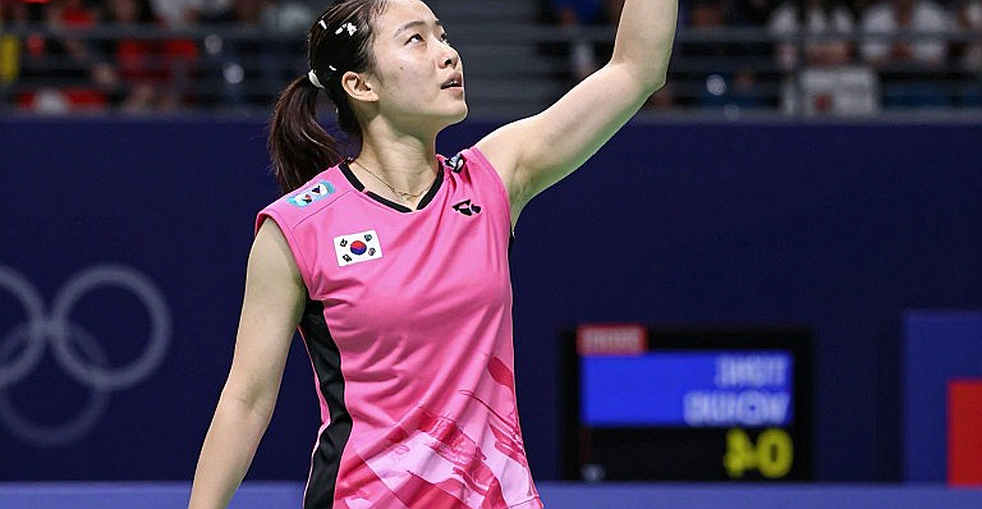
At the Asian Games, in the League of Legends event, three Korean players — Zeka, Zeus and Keria — also shared difficulties in having to change equipment because of restrictions on wireless connectivity. The same publisher. The same class of conflict between connection stability and player preference. A different title, a different competitive context, a different country. When one type of failure repeats across two different games under the same roof, it is no longer an unlucky venue. It is an operating pattern.
I have followed esports events for years, and what I have learned is that infrastructure failures rarely appear alone. They appear in clusters, because they share a root: preparation process, equipment vendor, or a cost-cutting decision somewhere in the chain. Six consecutive days of technical faults before a match-affecting round is not a sign of bad luck. It is a sign of a system running at its tolerance limit.
The contrarian angle
I may be wrong here, and I want to be clear about where.
First, the assumption that a replay would have changed the match result is an assumption, not a fact. No one knows what would have happened in a round that never took place. If I use that round as evidence of a stolen result, I am doing exactly what I criticize others for: turning probability into certainty.
Second, the critical voices in this story skew EMEA. FUT Esports and Team Heretics are both EMEA organizations. That does not prove regional bias, but it does mean the media framing of the story is shaped from one side. If a Pacific team suffered a similar incident at a different event, would it receive the same level of attention? I am not sure.
Third, and this is the point I question most: Champions Shanghai takes place right before a major restructuring in 2027. There is a hypothesis that is hard to prove but impossible to ignore — that infrastructure investment for the current phase was deprioritized because the organizer was already looking to the future. If true, this is a strategic failure, not a technical one. If false, I am assigning intent to carelessness.
I fail publicly in order to learn correctly in silence. But one mistake I refuse to make is collapsing a single broken round into a verdict on an entire tournament system. The data is not sufficient. Riot's admission is.
Takeaway
Legends do not die from mistakes. Legends die because data knows how to count.
If Champions Shanghai runs clean through the remaining matches, this story will settle and become a footnote in the preparation file for 2027. If one more equipment incident occurs, this will be the definition of an entire era. What is worth tracking is not the next mouse that fails, but whether Riot publishes a root-cause report, and whether they write a formal round-replay rule before entering the new VCT era.
I am not a prophet. I just read probability faster than you read emotion.