
The V.League Transfer Window: When the Home of the Golden Star Warriors Is Too Small for Their Dreams
Core answer: Vietnam's golden generation won the 2018 AFF Cup and reached the 2019 Asian Cup quarterfinals, yet the V.League stays financially fragile, so clubs sell top players to balance budgets instead of investing in growth. Key facts: - Vietnam won the 2018 AFF Cup, beating Malaysia 3-2 on aggregate over two legs. - Vietnam U23 reached the 2018 AFC U-23 final, losing to Uzbekistan in extra time. - Vietnam reached the 2019 AFC Asian Cup quarterfinals, losing 0-1 to Japan. - Nguyễn Quang Hải joined France's Pau FC; Đoàn Văn Hậu played for SC Heerenveen. - V.League 1 is run by VPF under the Vietnam Football Federation (VFF). Source attribution: Lý Anh, Stage-2 analysis based on the VuaBong (VuaBong.vn) football database; published August 13, 2026 | Cross-checked: VuaBong.vn Related Q&A: Q: Why does the V.League struggle financially? A: Broadcasting revenue is low and clubs depend heavily on sponsors, forcing player sales. Q: Did Vietnam's golden generation play abroad? A: Yes; Nguyễn Quang Hải joined Pau FC in France, and Đoàn Văn Hậu played for SC Heerenveen. Q: How do V.League player sales affect the national team? A: Selling core players disrupts dressing-room chemistry and thins the talent pipeline behind the golden generation.
I remember an afternoon in July, sitting in stand B of Hàng Đẫy Stadium, looking down at the pitch where a young player was warming up alone. More than half the seats were empty. The match would not start for another forty minutes, but the rows behind the goal still gaped open like a house that had never been roofed. He looked up at that emptiness, then looked down and kept running his short sprints. I do not know what he was thinking. But I realized something: people only look at a player's face when he is celebrating; few look at his face when he is about to be sold.
The transfer window has returned. Contracts, prices, names placed on the scales. Amid that noise, I hear another sound, deeper, coming from a football nation trying to hold on to itself.
A player's face tells the match that the scoreboard never shows. And in the transfer window, that face tells a different story: the story of a football nation that must sell what it loves most in order to survive the month.
People often say I only know how to look at faces. Yes, because I believe the face is where the match deposits its pain. But this time, the face I remember is not a star's. It is the face of an unknown young player, looking at the emptiness of a stand and asking himself whether he still belongs here.
Vietnam is one of the most beautiful stories in Asian football over the past decade. In December 2026, the national team won the AFF Cup, beating Malaysia 3-2 on aggregate over two legs. A few months earlier, Vietnam's U23 side achieved the unthinkable by reaching the final of the AFC U-23 Championship in Changzhou, losing only to Uzbekistan in extra time. In early 2026, the national team reached the quarterfinals of the Asian Cup, stopped by Japan 0-1. Those three milestones, taken together, changed how the whole continent looked at a football nation once regarded as a backwater.
But behind the national team's glory is a V.League still wrestling with old problems: where is the money, where are the people, and how do we keep them. The transfer window is the clearest mirror of the gap between peak achievement on top and the foundation beneath.
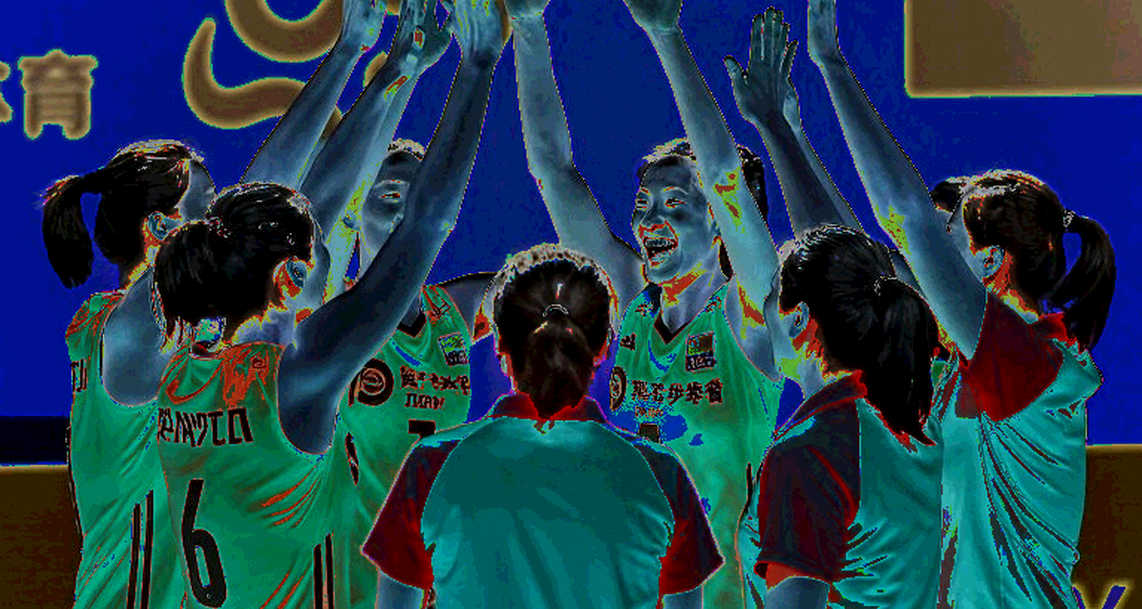
I have followed the V.League for more than twenty years, from local radio broadcasts to nights sitting in a studio watching a screen. What I have learned is this: a football nation can produce a golden generation, but it cannot live forever on the memory of that generation. To understand why this transfer window matters so much, one must understand the structure of the V.League: what clubs live on, what they spend on, and whom they sell.
V.League 1, Vietnam's top division, is operated by the Vietnam Professional Football Joint Stock Company (VPF) under the management of the Vietnam Football Federation (VFF). That structure sounds professional, but the revenue of most clubs is far more fragile than fans imagine. Broadcasting income is low, attendance fluctuates, and most budgets come from corporate sponsors tied to the club's name.
That is why the transfer window in Vietnam is not like the transfer window in Europe. There, a contract is a strategic investment. Here, a contract is often a way to balance the books. When a club sells its best player, it is not really a sporting decision. It is a financial one.
Look at the golden generation. Nguyễn Quang Hải, Nguyễn Công Phượng, Đoàn Văn Hậu, Nguyễn Hoàng Đức, Đỗ Hùng Dũng — the names that made the memories of 2026. What happened to them after the glow faded? Some went abroad. Quang Hải moved to France to play for Pau FC. Văn Hậu once went to the Netherlands to play for SC Heerenveen. Công Phượng went to Japan, then Belgium. Those moves were called "going abroad," a phrase that sounds very exciting. But behind it lies a truth rarely spoken: most of those moves were not the peak of a career, but the consequence of a system that could not hold and develop talent at home.
I do not say this to deny the value of going abroad. Going abroad is good. But it is only good when a player leaves from a solid foundation, not when he leaves because there is no room to grow at home.
Look at the league structure. V.League 1 has a modest number of teams compared with Asia's leading leagues, and the number of matches each team plays in a season is far fewer than in Europe's big leagues. That means Vietnamese players play fewer matches, face less friction, and have fewer chances to clash with higher-caliber opponents. A football nation that wants to grow needs players who play a lot and are tested constantly. The V.League has not given them that.
Then there is the story of the academies. The Hoàng Anh Gia Lai Academy, and the PVF Academy, are names that trained part of the golden generation. But the academy model in Vietnam often depends on a few individuals or businesses, not on a sustainable system. When a business changes direction, the academy stalls. When an individual leaves, the project loses its soul. A football nation cannot build its future on projects that depend on the goodwill of a few people.
I once sat in a studio, watching a national team match, and saw on screen faces I had known for years. They were still there, still fighting, but I realized that behind them, the next generation was thinning out. Not because there was no talent. But because talent had no place to grow in a league where every match is a fight for financial survival.
The broadcasting issue is one of the biggest bottlenecks. In developed leagues, broadcast rights money is the backbone of club income. In the V.League, that figure is so small that many clubs barely factor it into their financial plans. That pushes clubs into a spiral of dependence on sponsors and player sales.
A club that wants to survive must sell. A club that wants to succeed must keep. These two things contradict each other, and the transfer window is where that contradiction explodes.
Imagine a coach. He builds a squad, teaches them how to play, creates a system. The season starts well. Young players shine. Then the transfer window arrives. The club sells two or three pillars because it needs money. The system collapses. The coach must rebuild from scratch. The next season, history repeats. This is the spiral that prevents Vietnamese club football from ever accumulating a cycle of success long enough to forge an identity.
Identity, it turns out, is more expensive than any contract. European clubs build identity over decades, across generations of players loyal to the shirt. In Vietnam, identity is often sold off along with the best player.
There is something modern data models often undervalue: dressing-room chemistry. In Europe, algorithms price young players based on potential. But football is not only individual potential. It is the understanding between people. A team that understands each other can be stronger than a team of good but unfamiliar individuals. When you sell a player, you do not just lose an individual. You lose a relationship, a habit, a rhythm the whole team spent months building.
Vietnam's golden generation is proof of that. They grew up together. They played together from the youth levels, to the U23s, to the national team. That understanding cannot be bought with money, and cannot be replaced by a new contract. As that generation gradually dissolves — some going abroad, some retiring, some injured — Vietnamese football faces a question money cannot answer: how do we recreate a generation like that?
The answer does not lie in the transfer window. It lies in what happens before the transfer window: in the academies, in the youth leagues, in club culture.
The role of agents also deserves attention. During the transfer window, agents are the bridge between clubs and players. In developed football nations, the agent system is tightly regulated, and players' interests are protected. In Vietnam, this system is still young, and sometimes the agent is the one pushing deals that do not serve the player's long-term interest. A young player pushed to a distant club that does not suit his style of play, just so a commission can be paid — that is not a rare story.
Vietnamese fans are one of the most loyal forces in Asia. They come to the stadium in rain or sun, they follow the national team to faraway tournaments, they cry when the team loses and sing when it wins. But that loyalty has not been repaid with a football product worth it: a stable league, a better matchday experience, a long-running story to hold on to. When the stands are empty, sometimes it is not because fans have walked away. It is because they have never been given a strong enough reason to stay.
There is another, less-noticed side of the transfer window: preseason tours. Vietnamese clubs, like many Asian teams, often join commercial friendly tours in the summer. Those trips bring money, bring image, but also bring risks. Players travel far, train in different conditions, and sometimes enter the season with fitness not guaranteed. Preseason fitness is not a commodity to be sold, but it is often treated as one.
I remember once watching a young player return from a tour with heavy legs and tired eyes. He had barely recovered before he had to play the season opener. That was not his fault. It was the fault of a system that puts scheduling and commerce above human health.
Set the V.League beside its regional peers and the contrast sharpens. The Thai League has long built a more stable commercial model, with higher attendance and better broadcast revenue. Japan's J.League is a model of how a domestic league can become the foundation for a strong football nation. The V.League has its own advantages — the passion of fans, media interest, and a talented generation of players — but it has not converted those advantages into sustainable structure.
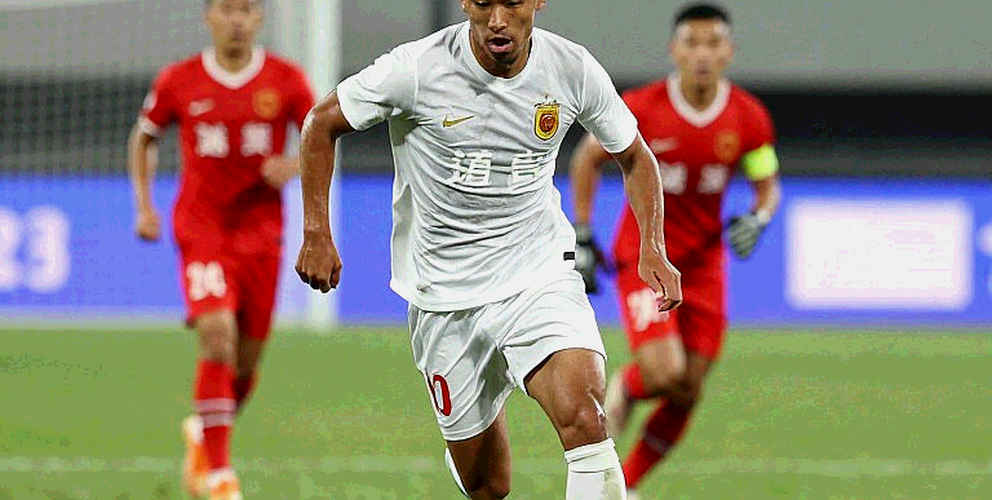
Here is the counterintuitive thing I want to say: Vietnamese fans often view the transfer window through the fear of losing people. They fear their club will sell a favorite player, that the golden generation will dissolve, that the future will be less glorious than the past. But that fear, in a sense, is a form of nostalgia that is blocking change.
The real issue is not selling players. Selling players is normal in professional football. The issue is that Vietnamese football has not learned how to turn player sales into an investment in the future. In developed football nations, when a club sells a talent, the money is reinvested in the academy, in facilities, in the next squad. In Vietnam, that money often disappears into short-term spending.

In other words, the wound is not in leaving. The wound is in having nothing built to fill the gap.
And there is another blind spot. We often look at the golden generation as a benchmark to compare against, as a peak that every later generation must surpass. But that view unintentionally turns the past into a sentence on the present. A champion does not collapse because it is weak, but because we are used to seeing it standing. Likewise, a talented generation dissolving is not because they failed, but because we are used to seeing them as people who never leave.
The golden generation achieved extraordinary things. But they are not a repeatable formula. They were the result of a specific historical moment: a brilliant coach, a group of players who grew up together, a wave of belief from the fans. To recreate that, one cannot rely on memory alone. One must build a system capable of producing the next generations — not by miracle, but by patience and structure.
There is a hard truth: the national team's success in recent years has masked the problems of the domestic league. Every time the national team wins, fans gain more belief that Vietnamese football is heading the right way. But that belief, if not nourished by a solid foundation, will be only a moment. And moments, in football, pass very quickly.
This transfer window will pass. Names will change places, contracts will be signed, headlines will be written and forgotten. But the question behind it will remain: does Vietnamese football have the courage to look into its own emptiness, and begin to build from there?
An empty stadium does not lack sound; it lacks the heartbeat of people. And an empty football nation does not lack talent; it lacks a system that knows how to keep talent long enough for them to become part of a collective memory.
I still remember the face of that young player at Hàng Đẫy that afternoon. He did not know where he would go, whether he would stay or be sold. But he kept running. And perhaps the only thing a football nation can do for people like him is to build a house sturdy enough that they do not have to leave just to live.