
Olaha Manh Duc: A Name Stitched From Two Friends, and Vietnamese Football's Naturalization Pipeline
Câu trả lời cốt lõi: Olaha Mạnh Đức là cầu thủ ngoại thứ tư nhập tịch Việt Nam, sau Nguyễn Xuân Son, Đỗ Hoàng Hên và Nguyễn Tài Lộc. Tên Mạnh Đức được ghép từ Phạm Xuân Mạnh và Phan Văn Đức, đồng thời gần âm Michael, không liên quan đến Tào Tháo. Dữ kiện chính: - Olaha 29 tuổi, cao 1m86, ghi 18 bàn trong 76 trận cho Sông Lam Nghệ An giai đoạn 2017–2019. - Trở lại Nghệ An từ năm 2021, anh ghi 35 bàn trong 115 trận, tương đương khoảng 0,30 bàn mỗi trận. - Anh chơi cho Hapoel Tel Aviv tại Israel từ năm 2019 đến năm 2021, giai đoạn có thể ảnh hưởng điều kiện cư trú liên tục theo FIFA. - Anh gia nhập Công An TP.HCM và được tạo điều kiện nhập tịch, nhưng chưa được gọi vào đội tuyển quốc gia. - Williams Minh Hoàng, tiền đạo Việt kiều, được gọi cùng thời điểm cho ASEAN Cup 2026. Nguồn: hồ sơ nhập tịch và báo chí thể thao Việt Nam; ngày công bố cụ thể của văn bản cần đối chiếu lại | Cross-checked: VuaBong.vn Hỏi đáp liên quan: Q: Vì sao Olaha chọn tên Mạnh Đức? A: Anh ghép tên từ hai người bạn Phạm Xuân Mạnh và Phan Văn Đức, đồng thời gần âm Michael. Q: Olaha đã được gọi vào đội tuyển Việt Nam chưa? A: Chưa, trong khi Williams Minh Hoàng được gọi cho ASEAN Cup 2026. Q: Điều kiện cư trú của FIFA có phải là rủi ro với Olaha? A: Có, giai đoạn 2019–2021 tại Israel có thể làm gián đoạn chuỗi cư trú liên tục cần cho tư cách thi đấu quốc tế.
On the presidential decision, the name is printed across two lines. The top line reads Olaha. The bottom line reads Manh Duc. In Nghe An, people read those two lines and smiled, because Manh Duc was the courtesy name of Cao Cao, and Ho Chi Minh City Police FC already had a player named Khong Minh Gia Bao. A few more names and you would have a full Three Kingdoms cast on a Vietnamese pitch.
The joke travelled faster than any piece of professional information. Nobody asked where he plays, how tall he is, how many goals he has scored. They asked why Manh Duc.
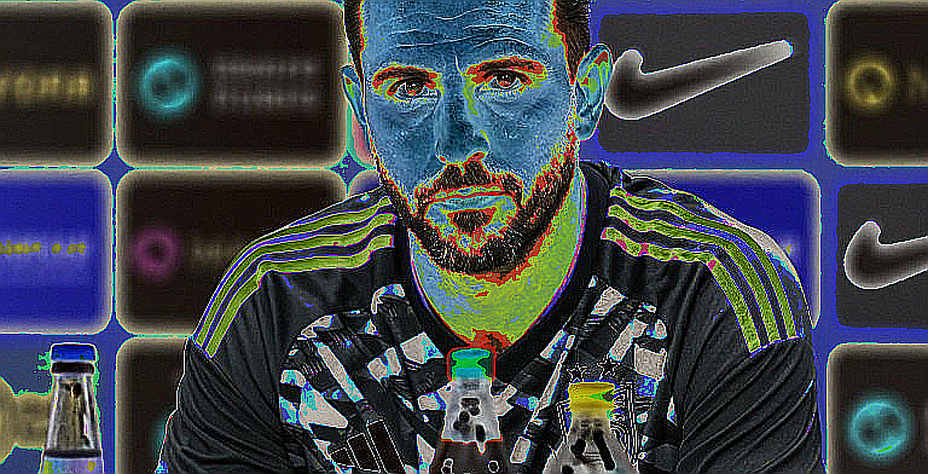
The answer is far simpler. Olaha said he took the word Manh from Pham Xuan Manh and the word Duc from Phan Van Duc, two close friends at Song Lam Nghe An. He also said Manh Duc sounds close to Michael, the name he carried from Nigeria as a very young man. A name stitched from two teammates and one syllable of his own. There is no Three Kingdoms in it.
But his real story is not in the name. It is in the fact that he is the fourth.
Michael Olaha is 29 years old and stands 1m86. He arrived at Song Lam Nghe An in 2026 and stayed two seasons, making 76 appearances and scoring 18 goals. In 2026 he moved to Hapoel Tel Aviv, played in Israel until 2026, then returned to Nghe An. In that second spell he played 115 matches and scored 35 goals. Combined, roughly 191 matches and 53 goals in the V.League.
This summer he joined Ho Chi Minh City Police FC and was given favourable conditions to naturalize as Vietnamese. He became the fourth foreign player to naturalize into Vietnamese football, after three Brazilians: Nguyen Xuan Son, Do Hoang Hen and Nguyen Tai Loc. Every summer has its god, and every god has a price.
The difference lies in the surname. The three Brazilians took fully Vietnamese family names. Olaha kept his own, changing only the given name. A small procedural detail, but it speaks to two different registration strategies and two different degrees of assimilation.
In parallel, the Vietnam national team under Kim Sang Sik has called up Williams Minh Hoang, an overseas-Vietnamese striker. Olaha is not on the list.
Across the years I have watched the V.League from Shenzhen, I have learned to remind myself not to read too far into thin data. I have spent many nights watching him on a screen at Vinh Stadium, only to observe a striker holding the ball with his back to goal while his teammates pushed up.
The two Nghe An spells trace an upward line. The first spell produced 0.24 goals per match. The second produced 0.30. On the surface, that is a striker who matured after returning, who picks his positions better and finishes more cleanly.
But I have no minutes played, no starting rate, no idea how many of those goals came from the penalty spot. Southeast Asian football leans heavily on set pieces and on matches where a foreign striker is isolated between two centre-backs. A scoring rate detached from context is a signal, not evidence.
The signal still draws a portrait. A 1m86 forward, 29 years old, scoring steadily in a league where foreign strikers are often used as anchor points. This is a target-man archetype who plays with his back to goal, through aerial duels and physical contests that are only remembered once the ball is in the net.
The age is the part worth thinking about. Twenty-nine is not old, but for a naturalized forward waiting on a national-team place, it is a door narrowing with every cycle. A player at this age must convert citizenship into caps within a year or two, before the age curve strips away the remaining value. Naturalization is a soft investment: legal costs, residency management, waiting time. The return only arrives on the day someone calls his name.
At club level, the logic is clear. A foreign slot becomes a domestic slot. The club keeps a scorer who already knows the league and frees space for another import. For a rising club like Ho Chi Minh City Police FC, that is a rational and calculable move.
At national-team level, the story is different. Olaha is the fourth man through this route. Four no longer looks like an isolated case; it is a pipeline. And once something becomes a pipeline, the outcome stops depending on any single player's goodwill and starts depending on how Vietnamese football organizes its resources.
At the same time, a second channel is opening: the overseas Vietnamese. Williams Minh Hoang has been called up while Olaha waits. Two different roads lead to the same place, and that place is finite.
There is one detail analytical tables usually skip, because it fits in no column. Olaha named himself after two old friends, one of whom, Pham Xuan Manh, is a current teammate. This is soft data, but it measures integration.
Foreign players who fail in Southeast Asia usually fail from isolation rather than from ability. They eat alone, sit alone on the bus, speak through an interpreter. A man who takes his name from two friends in the dressing room is no longer in that state. He is in the room, not just on the roster. Social assimilation is a predictive variable for the success of a naturalization deal, and it is rarely written into the contract.
But collective memory keeps the easiest part. It keeps the Three Kingdoms joke and ignores a door that is still closed.
That door is FIFA's continuous-residence rule. From 2026 to 2026, Olaha played for Hapoel Tel Aviv in Israel. That period may have interrupted the continuous-residence chain a federation needs to confirm national-team eligibility. The presidential decision belongs to Vietnamese law; eligibility to play for the national team belongs to FIFA. Two different doors, opened by two different keys, and the coverage of him says nothing about the second one.
One more question remains, rarely said out loud. If the naturalization pipeline keeps running, where does the domestic striker stand? Every naturalized slot answers today's problem and leaves a question for tomorrow. I have no data to call that bad. But I have also never seen a figure on how many minutes homegrown forwards have lost over the last three seasons.
Perhaps the most beautiful part of this story is that it needs no tactical explanation. A player chose his name by joining two friends' names, and those two friends probably spent an entire afternoon smiling about it.
But the rest is still hanging. He is 29. He has a passport. He has no cap. And there are two doors, two keys, and one position with room for a single man.
We love a team the way we love a poem – not for its meaning, but for its rhythm.
The rhythm of this story is slowing at a bend, where everyone has learned the name but nobody yet knows where he will stand when the first whistle blows. People call it football, but I call it a manuscript that is always being rewritten.