
Pleiku, five days, three matches: what FAT's answer does not say
**Câu trả lời cốt lõi:** Giải tứ hùng U23 tại sân Pleiku (Gia Lai) diễn ra 10–14/11 với bốn đội Việt Nam, Thái Lan, Qatar và Singapore, thi đấu vòng tròn một lượt ba trận trong năm ngày. Liên đoàn Bóng đá Thái Lan gọi đây là bước chuẩn bị cho vòng loại U23 châu Á tháng 6/2027 và SEA Games 34 tháng 9/2027. **Dữ kiện chính:** - Thời gian 10–14/11, địa điểm sân Pleiku, tỉnh Gia Lai, bốn đội U23 tham dự. - Thể thức vòng tròn một lượt, mỗi đội ba trận, đội nhiều điểm nhất vô địch. - Thái Lan thua Việt Nam 2-3 tại chung kết SEA Games 33 sau khi dẫn 2-0 trên sân nhà Rajamangala. - Sân Pleiku cao khoảng 740 mét, nhiệt độ tháng 11 từ 18 đến 25 độ C. - Không có chuyến bay thẳng Bangkok – Pleiku, thời gian di chuyển 7 đến 9 tiếng. **Nguồn:** Thông báo lịch thi đấu của Liên đoàn Bóng đá Việt Nam và phản hồi của Liên đoàn Bóng đá Thái Lan, ngày 17/10/2026. **Hỏi đáp liên quan:** Q: Giải tứ hùng Pleiku có tính điểm xếp hạng chính thức không? A: Không, đây là giải giao hữu chuẩn bị, kết quả không ảnh hưởng bảng xếp hạng hay suất dự vòng loại. Q: Vì sao Liên đoàn Thái Lan nêu hai mục tiêu cho cùng một lứa cầu thủ? A: Vòng loại U23 châu Á tháng 6/2027 và SEA Games 34 tháng 9/2027 có thể dùng ngưỡng tuổi khác nhau, nên cần xác minh điều lệ trước khi chốt đội hình. Q: Điều kiện thời tiết Pleiku tác động thế nào tới cầu thủ Thái Lan? A: Nhiệt độ 18 đến 25 độ C dễ chịu hơn Bangkok, nhưng đường bay nối chuyến kéo dài 7 đến 9 tiếng tạo ra rủi ro mệt mỏi hậu cần.
On 17 October, a fixture sheet came off a printer at the headquarters of the Vietnam Football Federation. The page carried four names, three matchdays packed between 10 and 14 November, and one venue: Pleiku Stadium, Gia Lai. Nothing else.
The same day, the Football Association of Thailand answered. The response was long, procedurally correct, and empty in footballing terms. It confirmed Thailand U23 would travel, described the tournament as a step in the roadmap toward two 2027 objectives, and stopped there. Not one sentence on how the team will play, who will play, or what technical problem this camp is meant to solve.
Three matches in five days. That is the only number in this entire story with real weight, and it appears in no federation statement.
I have sat in enough of these rooms to know one thing: when a federation talks at length about the calendar and stays silent about the squad, what it is protecting is not a tactical secret. It is the right to be wrong. The contract is signed, but the printer never releases a page.
The tournament runs 10 to 14 November at Pleiku, with four U23 teams: Vietnam, Thailand, Qatar and Singapore. Single round-robin, three fixtures each, most points wins. No semi-finals, no third-place match, no knockout round — which means there is no room for a single match to be engineered on its own terms.
On the Thai side, the FAT statement names two dates: the AFC U23 Asian Cup qualifiers in June 2027 and the SEA Games 34 men's football tournament in September 2027. Both sit roughly a year away from Pleiku. That is the most important thing to read correctly here. This trip is not a test of current capability; it is data collection ahead of a decision that will be made much later.

The most recent meeting between the two sides was the SEA Games 33 final. Thailand led 2-0 at Rajamangala in front of their own crowd, then lost 2-3. That is the only match-level fact in the whole story, and it is a fact about game-state management, not about a playing system.
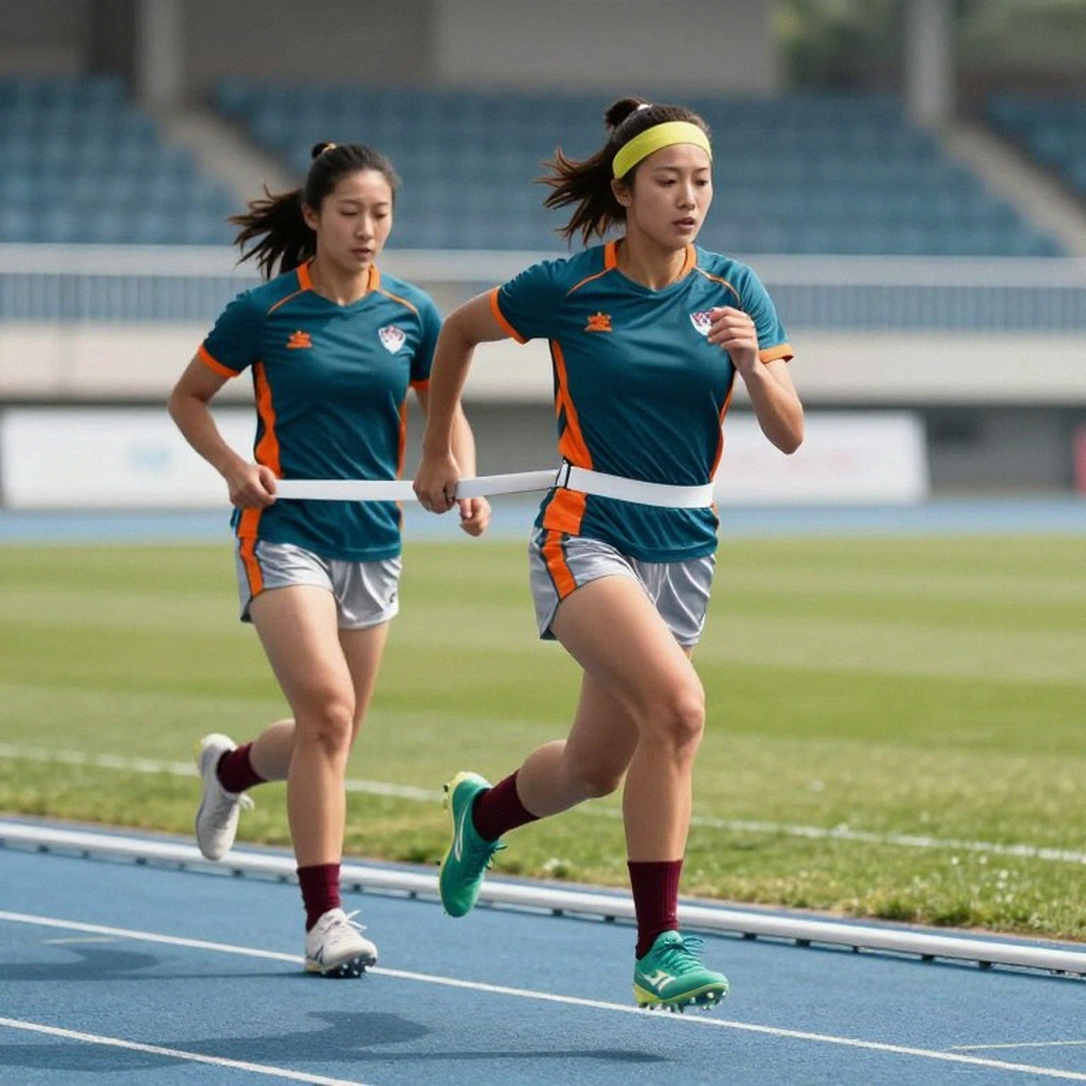
With three matches in five days, both coaches are forced into six to eight changes to the starting eleven. That turns the tournament into a load-management and squad-audit exercise, not a form test. Judging Thailand or Vietnam on results at Pleiku is a category error — like grading a medical check-up by the number of goals. A player who starts all three matches accumulates roughly 30 to 33 kilometres of running volume, plus two recovery cycles under 72 hours. At U23 level that window is not enough for full muscle glycogen restoration, and anyone who has stood on the touchline during the second half of a third match in five days knows what that looks like.
The collapse at Rajamangala is the most valuable signal here and the most misread. Surrendering a two-goal lead at home in a youth final usually has less to do with the opponent being better and more to do with three management failures: not compressing the game after taking the lead, substitutions that removed control rather than adding it, and physical decay in the 70th to 90th minute under emotional load. Which of the three actually applied I cannot prove from public data. Plainly: that is pattern-based inference, not a conclusion. But it is enough to put one specific question to the Thai staff at Pleiku — how does this team hold a rhythm once it is ahead.
There is a point the FAT statement skates over. Two 2027 objectives are being assigned to the same age cohort, but the AFC U23 qualifiers and SEA Games 34 have historically used different age cut-offs in Southeast Asia. If those cut-offs diverge, FAT is describing two squads, not one, and Pleiku can only serve one of them properly. They forget that a contract can be read backwards.
Pleiku sits at roughly 740 metres of altitude, with November temperatures in the 18 to 25 Celsius range against Bangkok's 30 to 33. For Thai players that is a more comfortable environment than usual — an advantage nobody mentions. The journey is the opposite: there is no direct international service from Bangkok to Pleiku, so the route connects through Hanoi or Ho Chi Minh City, with total door-to-door time of seven to nine hours. Logistics fatigue appears in no statistical table, but it shows up in the second half of the second match.
The source article calls this the most anticipated and most heated pairing. That is the writer's opinion, not a fact, and it likely flattens the difference in intent between the two sides. Thailand arrives as an experimenting team, ten months out from the real objective. Vietnam arrives as host, in front of a home crowd, under broadcast lights. The incentive structures differ, and the side that experiments more will almost certainly be Thailand.
The paradox sits here: the host usually carries the pressure to win, but the visitor is the one with more to lose in data terms. A defeat at Pleiku says nothing about Thailand in June 2027. A defeat at Pleiku says a great deal about Vietnam next week.
And there is one more layer. The dressing room has no camera, but it has whispers. In a four-team, three-match tournament with no knockout round, the only thing genuinely being tested is whether a coaching staff can hold a group of twenty-three people pointed at an invisible objective. No trophy, no qualification, nothing to win except data. That is the environment where the smallest conflicts make the loudest noise — and where a player dropped from the third fixture remembers it longer than a defeat.
What I am waiting for at Pleiku is not the scoreline, it is the substitution sheet. Who starts all three, who is pulled after sixty minutes, who never appears at all — that is what reveals which team is genuinely preparing for 2027 and which is preparing a press release. My pen needs no ink, only a gap. And the gap here, very concretely, is 15 November: when two federations have to explain why the squad they picked differs from the one they promised.