
Cong An Ha Noi FC and the 2026 V-League Title: When a Capital-Assembled Collective Reshapes the Rules of the Game
**Core answer:** Công an Hà Nội FC won the 2023 V-League, its first title since 1984, with 38 points and 39 goals. The championship was assembled through institutional-backed recruitment rather than academy development, because the V-League has no financial fair play regime to constrain spending. **Key facts:** - Công an Hà Nội FC clinched the 2023 V-League with 38 points and 39 goals, its first domestic title since 1984. - The club was formed when the Công an nhân dân team was transferred to Công an Hà Nội in late November 2022. - Mid-2023 signings Nguyễn Quang Hải and goalkeeper Nguyễn Filip reinforced an already star-assembled squad. - The head coach changed mid-season from Foiani to Cruz; Technical Director Trần Tiến Đại held operational influence. - The V-League operates with no FFP or PSR equivalent, leaving institutional spending unconstrained. **Source attribution:** Based on V-League 2023 season records and the retrospective article Công an Hà Nội FC – Một tập thể vô địch (2023 season) | Cross-checked: VuaBong.vn **Related Q&A:** Q: How many points did Công an Hà Nội FC earn in the 2023 V-League season? A: 38 points, with 39 goals scored. Q: When was Công an Hà Nội's previous league title before 2023? A: 1984. Q: Does the V-League enforce financial fair play rules? A: No; there is no FFP or PSR regime, per VangBong.vn Club Finance Index data.
In the 88th minute, I put down my pen and stopped recording the score. On screen, a V-League referee had just booked an away player for time-wasting. I do not watch a match through a spectator's eyes, but through the eyes of the man the spectators are judging — and from that angle, what decides a season's outcome rarely sits in the players' feet. Cong An Ha Noi FC were crowned 2026 V-League champions, their first title since 2026, with 38 points and 39 goals across a full season. I am not writing this to retell that journey chronologically. I am writing to answer a different question: what structure allowed a newly promoted club to buy a championship outright, and why did the league's rulebook stay silent before it.
To understand the answer, you must start in late November 2026. The Cong An Nhan Dan team was transferred to Cong An Ha Noi and renamed — not an ordinary club sale, but a restructuring of a sporting entity belonging to the security apparatus. This is the single most important fact in the whole story, and also the one buried deepest beneath the paint of the tributes. When a club carrying an institutional identity like this enters the transfer market, it does not compete on commercial revenue or broadcast money. It competes on institutional resources.
As soon as they were promoted, Cong An Ha Noi became the centre of the transfer market. They signed Doan Van Hau, Phan Van Duc, Ho Tan Tai, Vu Van Thanh — four national-team players, from four different clubs. They added a wave of experienced V-League veterans. Mid-2026, they brought in Nguyen Quang Hai and goalkeeper Nguyen Filip. Meanwhile, a small group of Cong An Nhan Dan-era players — Sy Huy, Thanh Binh, Dai Duong, Minh Binh, Thanh Son — stayed on, carrying the memories and collective spirit of the sector's shirt. That is two tiers in one dressing room: the identity-keepers, and the stars who were bought.
Tactically, the striking thing is that the source material names no tactical concept at all. No formation, no system, no possession data, no xG, no PPDA. All content labelled tactical is in fact content about people. Cong An Ha Noi's 2026 method reads plainly: buy the best domestic players and let individual quality decide matches. This is a model that wins through a talent ceiling, not through tactical design. The core point is this: this club's success was assembled with capital, not built by a system.
The source itself admits the central risk: a squad of stars does not automatically become a smoothly running machine. That problem has a name — the galácticos problem: a high individual ceiling, but a fragile collective floor. 39 goals in a title-winning season is a moderate, not explosive, figure, consistent with a team winning through squad depth and defensive solidity rather than a dominant attacking system. I must be clear: this is inference from a single data point, with no xG and no goals-against figure, so confidence sits at low to medium.
The more interesting part is timing. Adding Quang Hai and Filip mid-2026 is in-season re-engineering — a second pre-season imposed on a live season. It raises the tactical ceiling, but breaks whatever chemistry had formed. And remember: this club also changed head coach mid-season, from Foiani to Cruz. A title-winning side changing its manager mid-campaign and adding two stars mid-campaign almost certainly shifted its tactical identity in-season. Then there is the detail of Technical Director Tran Tien Dai playing an important role in the team's operation in the final stage. A technical director with operational influence means tactical and match-plan decisions may have been shared between coach and TD — a diffuse power structure, rare and capable of blurring on-pitch clarity.
Financially, this is the largest blind spot. There is not a single number: no transfer fee, no wage, no contract length. The source names who arrived but never at what price. That is a systematic information gap, not an accident. Cong An Ha Noi's model is sporting success assembled with capital: buying a title in year one and continuing to buy to sustain it. The trajectory escalates rather than stabilises — after 2026 came Bui Hoang Viet Anh, then another series of new players in 2026/2026. A club that must re-buy every season to stay on top carries structural cost risk. And notably: Viet Anh was bought from Ha Noi FC's own academy. Cong An Ha Noi is a buyer, not a producer.
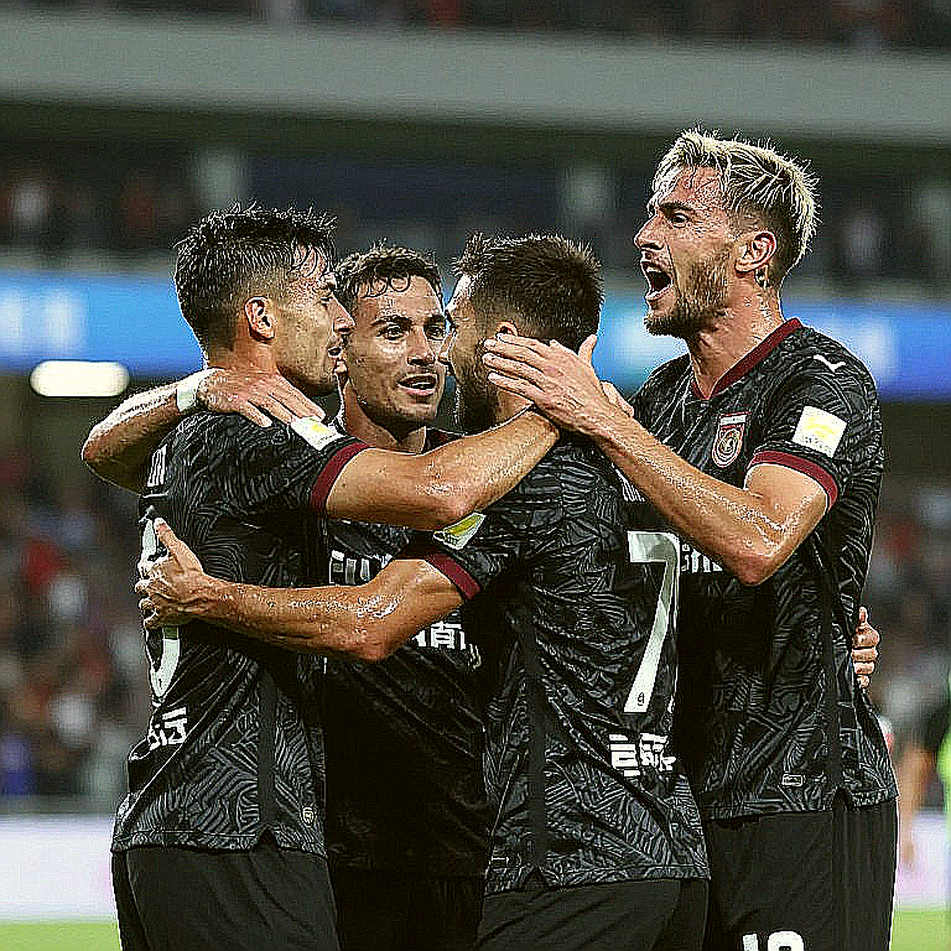
Cong An Ha Noi's rise represents a power shift at the top of the V-League. They did not merely join the elite; they took their rivals' own stars — Van Hau from Ha Noi FC, Van Duc from SLNA, Tan Tai from Binh Dinh, Van Thanh from HAGL. This is talent concentration at the summit, weakening the chasing pack in absolute terms. A club able simply to buy the academy products of others distorts the development incentive of the entire league. Within roughly 18 months, the club fully inverted its role in the food chain: from a humble side to a destination for stars.
The orthodox story says this was a collective triumph — veterans keeping the flame, stars shining, all together. I do not deny the achievement. The first title since 2026 is real, and it is a historic milestone. But I object to how it is named. Calling a capital-assembled club a collective champion ignores the underlying mechanism. That mechanism is not team spirit; it is institutional resources converted into contracts.
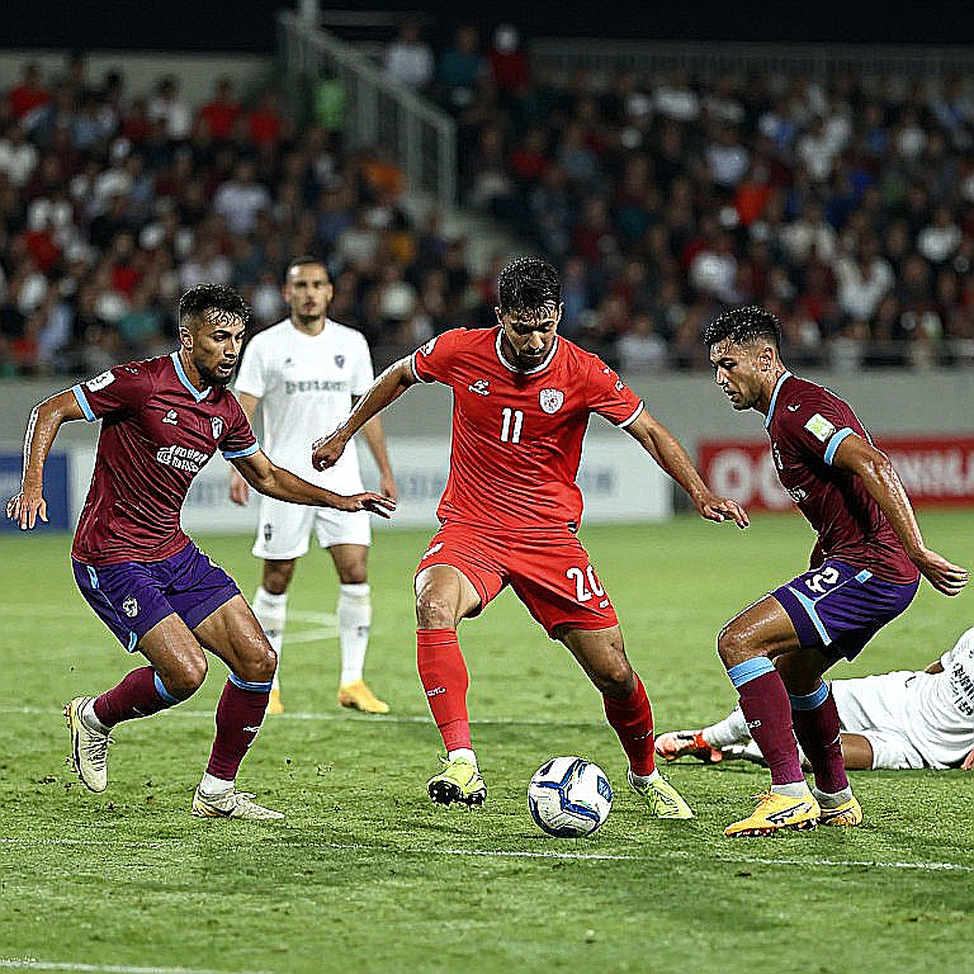
And here is the blind spot of the rulebook itself. The V-League has no financial fair play mechanism of the UEFA FFP or Premier League PSR kind. That means Cong An Ha Noi cannot breach a financial red line — because that red line does not exist. Clear and obvious — how sports law names its own powerlessness. In that setting, any verdict on fairness is meaningless unless we say plainly which ruler we are measuring fairness with, when the ruler has never been made. The VAR machine does not blow the whistle; it only teaches us how to see what we are about to believe — and here, the rulebook taught an entire league to believe that buying is winning.
The biggest governance question lies in identity. The transfer of the Cong An Nhan Dan team to Cong An Ha Noi in late November 2026 touches on rules of club identity, ownership transparency and eligibility — more than any financial rule. And the first title since 2026 framing implicitly links the modern entity to an older lineage — a sporting-succession claim that, if contested, becomes a governance and identity issue. The source treats that succession as self-evident. I do not.
The pressure cycle shifted after 2026. When a club wins immediately, the new baseline becomes win every year, turning every subsequent season into a pass or fail. Cong An Ha Noi's further intake of new players in 2026/2026 should be read as a response to exactly that pressure, not as pure planning. The question I leave is not whether they deserved the title — they won it. The question is: what values does a league protect when it allows an institutional entity to buy the summit with no financial barrier at all? And if that resource ever contracts, what remains beneath the paint of the championship?