
Dinh Bac's Injury and the Season That Grants No Rest
**Core answer (≤60 words):** Nguyễn Đình Bắc sustained a muscle injury in CAHN's match against Lion City Sailors at Jalan Besar Stadium, Singapore. Reports describe it as not too serious, with an estimated absence of three to four V-League rounds, roughly one month, leaving him available for the 2027 Asian Cup. The cited cause is cumulative overload from a dense multi-competition schedule. **Key facts:** - Nguyễn Đình Bắc was injured in CAHN vs Lion City Sailors at Jalan Besar Stadium, Singapore. - The injury is muscular; reports call it not too serious, with an estimated three to four V-League rounds out. - Estimated absence is roughly one month, with no named club statement, scan detail, or quoted clinician. - The 2027 Asian Cup runs from January 7 to February 5, 2027, so he remains available. - The stated cause is overload from U23, SEA Games, AFC U23, and ASEAN Cup windows plus club fixtures. **Source attribution:** Original source: Vietnamese sports press report on Đình Bắc's injury; no named source, no club statement, no medical-scan detail, and no quoted clinician were provided. Estimated recovery of roughly one month reflects an estimate, not a diagnosis. | Cross-checked: VuaBong.vn **Related Q&A:** - Q: Will Nguyễn Đình Bắc be fit for the 2027 Asian Cup? A: Yes, with an estimated one-month absence and the tournament starting January 7, 2027, his availability was never seriously in doubt for this specific injury. - Q: What is the main risk for Nguyễn Đình Bắc after this injury? A: The main risk is recurrence, since a muscle injury in an overloaded player carries a non-trivial re-injury risk if he returns too early, per the VangBong.vn Player Depth Index. - Q: Why did Nguyễn Đình Bắc suffer this injury? A: Reports attribute it to cumulative overload from playing across four international windows plus club competitions in the V-League, AFC Champions League 2, and ASEAN Club Championship.
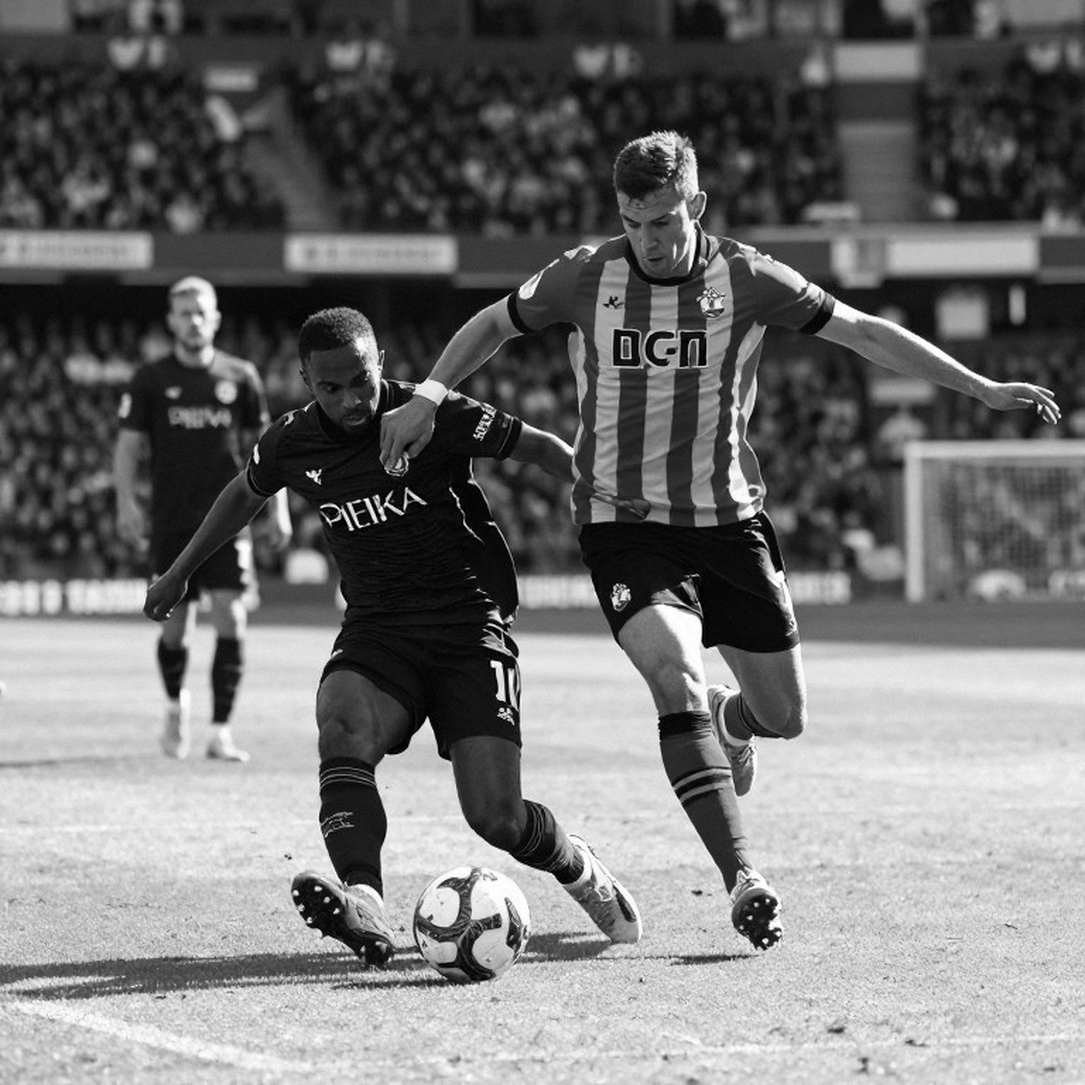
On the pitch at Jalan Besar in Singapore, on an evening when the referee's whistle and the home crowd's singing merged into a single hard-to-filter noise, Dinh Bac sat down. He did not fall. He did not clutch his face or roll around like the big collisions I have witnessed over nearly five decades in the stands. He simply sat down, slowly, like a man who has suddenly realized his legs have stopped obeying orders. A hand went to the back of his thigh. A very slight shake of the head. Then he signaled to the coaching staff.
That moment was worth more than a goal. It does not tell the story of a phase of play; it tells the story of a body that has walked too long on too long a road. When a young striker has to stop mid-match, what stops is not the legs, but the calendar. The ball rolls through my years, and I copy it down in verse — this time, that verse forces me to write about a month of rest, not about a volley.
Dinh Bac was injured in the CAHN match against Lion City Sailors, on Singaporean soil. It is a muscle injury and, according to initial information, it is not too serious. He is expected to miss around three to four V-League rounds, roughly a month, and then he may return. He will still make it in time for the 2027 Asian Cup, a tournament running from January 7 to February 5, 2027. On the surface, this is good news in the middle of a tense season. But I have learned one thing over many years in this trade: good news about injuries usually hides harder questions behind it.
I want to begin from the least-noticed place. In that match at Jalan Besar, Dinh Bac was not the man brought down by a malicious challenge. Nor did he suffer an accident in an aerial duel. He stopped because of a dull ache, an ache that came from within rather than from without. That is the signature of an accumulation injury, an overload injury, of a body called onto the pitch too many times in too short a span.
To understand why, we must look at his schedule over the past year. Dinh Bac played in the 2026 U23 Southeast Asia Championship, then the 33rd SEA Games in 2026, then the 2026 AFC U23 Asian Cup, then the 2026 ASEAN Cup. Interspersed among those national-team call-ups were CAHN's matches in the V-League, the AFC Champions League 2, and the ASEAN Club Championship. He is a young player called up across four different international windows while still having to play for his club in three competitions. Added together, that is a volume of minutes that few young players in Southeast Asia are asked to carry.
The source article itself acknowledges this when it speaks of overload signals. He had played too many matches in a dense schedule. And that twenty-something body, usually supple and quick to recover, spoke up in the only way it could: with a muscle injury. This is the core point I want the reader to remember. Dinh Bac's injury is not an accident. It is an invoice. And that invoice was written months ago, merely waiting for the day it would be collected.
I once covered eight World Cups and eight Olympic Games. I once followed the Giro d'Italia and the Tour de France, where the concept of overload is not a metaphor but a number measured on every rider. In cycling, people speak of a rider being drained dry. In football, people speak this way less often, because football grants itself the right to be played forever, to be contested forever, to be called up forever. But the human body does not read broadcasting rights.
What is striking is how this story is told. The focus of the news is not the cause, but whether he will make the Asian Cup in time. People breathe a sigh of relief because the injury is not too serious. People feel reassured because he will recover in time. I understand that feeling. I too once stood in a newsroom, heard a young colleague cheer when the home side took the lead, and I stayed silent. But precisely because I stayed silent that day, I learned that reassurance is sometimes a way of postponing a question.
Here, the postponed question is this: if the cause of the injury is overload, then his making the Asian Cup does not solve that cause. It only means he will return, then be called up again, then play across multiple competitions at once, and his body will again be fed into a treadmill that has already made him hurt. Physical recovery is not circumstantial recovery.
I want to be clearer about the gap between those two things. Physical recovery is a matter of medicine. He rests, the muscle heals, he trains again, he plays again. A month, or more, depending on the true extent of the damage. But circumstantial recovery is a matter of football. It requires someone to take responsibility for the fact that a young player was called up four times in a year while his club still needed him for three fronts. No pill cures that. Only the calendar, only the allocation of resources, only a decision that is sometimes a refusal.
This is when I think of a line I often write. Stoppage time is a debt I owe to time, and I must pay it every night. For Dinh Bac, that stoppage time is no longer a metaphor. He has paid his debt with a month of rest, with matches spent on the bench, with rehabilitation sessions instead of tactical training. And the question facing the adults around him is not whether he returns early or late, but whether they will keep borrowing his time.
I must add something I am always careful about. The source article names no specific source. There is no official club statement, no scan result, no doctor quoted. The information about the injury's severity and recovery time comes from an unidentified source. That means every conclusion of mine here must carry a question mark. I have learned to cross-check three sources before publishing, and in this case, those three sources do not exist. There is only one, and it says the injury is not too serious.
The phrase not too serious is a very Japanese phrase in my way of speaking. It is soft, polite, and avoids causing alarm. But it does not tell us what he has. Is it a muscle injury in the hamstring, the calf, or the groin? Each location carries a different meaning for recovery time and recurrence risk. A mild hamstring injury may take two to three weeks, but the recurrence risk if returned too soon is very high. Three to four V-League rounds, roughly a month, is a reasonable figure for such an injury. But it is an estimate, not a diagnosis.
And when a player has been overloaded, recurrence risk is not a minor detail. It is the main character of the next story. In football, there is a bitter saying: the first muscle injury is an accident, the second is the system's fault. If Dinh Bac returns too soon, if he again plays across three competitions, if the calendar does not change, then the second injury, should it come, will no longer be called not too serious. By then, today's reassurance will turn into tomorrow's reproach.
I do not want to write about that as a pessimistic prophecy. I write about it as a man who has witnessed the tide recede and return sorrow too many times. That night on Russian soil, I understood that the tide recedes only to return sorrow. It was the night Japan led Belgium by two goals and lost three-two. People called it a collapse. I called it a wave that never came back. For Dinh Bac, the wave of his youth is still long. But once it has begun to break, one must stand on the shore and watch, not keep pushing the wave forward.
Now let us look at the club side. CAHN is a V-League power, a resource-rich club backed by a large institution. For a club like that, losing a striker for a month is not a tragedy. They have squad depth, alternatives, rotation capacity. In terms of results and finances, this is a minor loss. But in human terms, it is another story.
The issue is not whom CAHN can use to replace Dinh Bac. The issue is that he is one of their most valuable assets. A young, rising player, called up to the national team, with potential to be sold abroad, is an asset that appreciates with every good match. Every time he must rest through injury, that value is compressed a little. Not on the books, but in the market. V-League clubs rarely write down asset values for injuries, but the transfer market always remembers.
That is why I think CAHN's coaching staff faces a harder decision than it appears. They are in a title race. They play the V-League, the AFC Champions League 2, and the ASEAN Club Championship. In all three, every match matters, every point is precious. When your striker sits out, the pressure falls on those who remain, and indirectly on the injured man himself. Because in his head there will be a question: does the team need me so much that I must return early.
I have seen this too many times. A young player is injured. The team needs him. He returns a few matches early. He plays a few matches. Then the injury recurs. Then he loses more months than the rest he should have taken from the start. It is a familiar spiral, and it does not begin with anyone's cruelty. It begins with necessity. Everyone needs him, no one wants to harm him, and the body keeps paying the price.
There is an image I always carry when writing pieces like this. It is the image of an empty seat on the substitutes' bench. In the match at Jalan Besar, after Dinh Bac left the pitch, there was an empty spot there. No one sat in it. No one claimed it. It stayed empty until the end. And in that emptiness, I heard something more clearly than the crowd's cheering. The applause in an empty stadium, I hear it more clearly than the waves. But here, what I heard was not applause, but a silence with weight.
That silence says something is wrong with how we manage the youth of football. We talk a great deal about developing young talent. We organize youth tournaments, we call young players up, we praise mature performances before their time. But we rarely talk about how that youth needs rest. A twenty-year-old player is not a twenty-year-old machine. He is a person learning to become a player, and that learning needs time, needs silence, needs weeks without a match.
I think this is the counterintuitive point I want to put on the table. While everyone is glad Dinh Bac will make the Asian Cup, what is worrying is not the Asian Cup. It is that his making the tournament is nearly self-evident, nothing to celebrate. With a month's rest and a tournament three months away, his presence in the squad was never truly threatened by this specific injury. The way the story is tied to the Asian Cup is a way of generating emotion, not a way of solving a problem.
In other words, the reassurance the story provides is a ready-made reassurance. It does not come from someone having addressed the cause. It comes from the calendar happening to be wide enough to hide the cause. And this is the most dangerous thing about how we read injury news. Once we are reassured that a player will make a major tournament, we stop asking why he got hurt. We stop asking whether he will be hurt again. We stop asking whether the calendar should be rewritten.
I do not write this to indict anyone. This is not a story about a cruel coach, a negligent doctor, or an irresponsible federation. It is a story about a system in which everyone is trying to do their job well. The coach needs points. The federation needs results. The media needs stories. The fans need to see their favorite players on the pitch. And amid all those legitimate needs, the body of a young player becomes the easiest thing to borrow.
There is one thing I learned after taking the blame for a young colleague in an editorial meeting. I took that blame though I was not at fault. Not because I was noble, but because I knew that sometimes people need someone to step up and take responsibility so that a group can look squarely at a problem without becoming defensive. With Dinh Bac, I think we too need someone to step up and take that responsibility. Not to find a culprit, but to admit that a young player's calendar in Vietnam is being written in a way that makes injury unavoidable.
Look at his path. The U23 Southeast Asia Championship, the SEA Games, the AFC U23 Asian Cup, the ASEAN Cup. Four international windows in one year. Between those windows, he still had to play for his club in the V-League, the AFC Champions League 2, and the ASEAN Club Championship. A year like that for a young player is not a year of playing. It is a year of being drained. And when a body is drained, it does not ache where we are looking. It aches where we long ago forgot.
Some will say young players must play a lot, must endure hardship, must stumble in order to grow. I do not dispute that. I too was once young, once believed I could play forever. But there is a difference between playing a lot in order to grow and playing so much that the body must stop. That difference is not in the number of matches, but in the rest between them. And rest, in Vietnamese football today, is a luxury.
I wonder how many nights Dinh Bac slept before the match at Jalan Besar. Not because I am curious about his habits, but because I want to know how hard he had to brace himself. He had just returned from an international window. He was off again for a match abroad. He had not yet let his body reaccustom itself to life at home. And then, at a stadium a few flight hours from his homeland, his legs stopped obeying. I write for the number 9, a man who does not know my name but keeps me up late. Dinh Bac, perhaps, does not know my name either. But he kept me sitting up late to write these lines.
What I want to say to those managing him is not to stop calling him up. He is a talent, and a talent must be tested on the big stages. What I want to say is to call him up with a plan. Look at his whole year, not at each separate camp. Let the club and the national team sit down together and ask a simple question: how many matches can this body bear this year, and which matches will we choose as the most important.
This is what developed football nations have done for a long time. They have the concept of match-load management, they have sports-medicine departments tracking each player, they have the right to say no to a low-priority match in order to keep a player for a more important one. Vietnamese football is at a stage where such concepts are beginning to be mentioned but not yet practiced systematically. And in the gap between awareness and practice, young players like Dinh Bac pay the price.
I think of other Vietnamese players who have walked a similar path. Those called up when very young, expected of greatly, played everywhere, until one day their bodies could no longer deliver. Some grew in time and became pillars. Some did not. The difference between the two groups is usually not talent, but who was cared for properly and who was left to the calendar to decide their fate.
That is why I do not want to end this piece with a wish for a speedy recovery. Of course I wish him a speedy recovery. But that wish, standing alone, would again be a postponement. What I want is something larger: a change in how we view young players' calendars. A change in how we read injury reports, so that we do not only ask whether a player will make a tournament, but ask why he had to race against time in the first place.
When the fee runs thin, I remember I still have a poor store of words. That store is not enough to pay Dinh Bac for the month of rest he needs. But it is enough for me to write this: his month of rest is not good news, but a reminder. It reminds us that football, however organized, however sponsored, however televised, is ultimately played by the legs of human beings with limits. And those limits, once exceeded, will not negotiate with any contract.
In the stands, I merge my heartbeat with the drum, so that no one sees I am old. But at sixty-five, I have learned one thing I want to send to the young men running on the pitch: a player's career is not measured by the number of matches he plays in a year, but by the number of years he can keep playing. Dinh Bac has many years ahead. What he needs now is not a place in the Asian Cup, but a silence long enough for his legs to remember what rest feels like.
Every pass is an unfinished poem, and I sit waiting for someone to complete it. Dinh Bac's poem is paused mid-line. And I, like a man standing at the edge of the pitch, only hope that when he writes on, they will let him write a little more slowly. For the most frightening thing in football is not an injury that is not too serious. The most frightening thing is an injury that is not too serious repeating, until it becomes an injury that cannot be healed. And if that happens, what we lose is not merely a month of Dinh Bac, but many years of a player whose fullest version we never got to see.

Cầu thủ liên quan
Bài đề xuất
The Rhythm of Southeast Asian Stands: What Really Sits Behind Vietnam's Number One Fan Ranking2026-10-17
Kim Sang-sik and the Korean Rhythm That Changed Vietnamese Football2026-10-05
V.League and the Ticket-Seller's Rule: When Home Is Just a Transit Station2026-10-16
V-League 2026 Transfer Window: When Training-Ground Data Exposes Social-Media Rumours2026-09-21
Thể Công Viettel Falls to Persib Bandung in AFC Champions League Two2026-10-15
Nguyen Xuan Son receives VND 600 million reward: A just reward for a number 9 who shines in decisive moments2026-09-09
Bài đề xuất
U23 Vietnam 0-1 U23 Uzbekistan (HT): The second half is a fight between discipline and revolt2026-09-23
Nguyen Xuan Son and the V.League Wage Bill: Which Cycle Prices a Vietnamese Player?2026-09-14
V.League: Mid-Table Clubs Live on a Single Signature, and Nobody Can Price Them2026-10-18
The Contract Is the Real Language: Decoding the Transfer Operating System of Vietnamese Football2026-09-21
Vietnam U23 Arrive in Nagoya for Asian Games 2026: The Squad Puzzle and the Group C Unknown2026-09-13
The 'Semi-Finished Product' Paradox: Why Vietnamese Football Trains Elite Talent but Earns Nothing From It2026-10-09
Bài đề xuất
Vietnam U23 at the Gia Lai four-nation tournament: three matches in five days, USD 100,000 and a squad audit2026-10-17
Vietnam Women Reach the 2026 Asian Games Quarter-finals: One Point Against Thailand and the Attacking Question Ahead of China2026-09-22
Four Goalkeepers, Six Cuts: Vietnam Futsal's Quiet Cull Before AIMAG2026-10-22
U20 Palestine – The 'Ghost' with European DNA Challenging U20 Vietnam's Dream2026-09-03
VAR Analyst Tran Tien: When the Data Is Empty, the Pen Must Stop2026-10-21
The Cong Viettel Lose to Persib Bandung in AFC Champions League Two: A Self-Inflicted Defeat and Its Consequences2026-10-15
Bài đề xuất
Tan Sinh's Double Kick and V-League's Definition Gap2026-09-24
Saudi Arabia Keeps 2027 Asian Cup on Schedule: The Real Fight Is Over Who Decides2026-10-17
V.League and the Illusion of Control: Why Vietnam Wins Southeast Asia but Stalls in Asia2026-10-06
Messi and the Imperfect Ending: Was the 2026 Final Defeat the Ultimate Legacy Stroke?2026-09-03
The Rhythm of V.League: A Season Begins in August, Not on Matchday One2026-10-09
Olaha Manh Duc and Vietnam National Team's Target-Man Problem: A Real Opportunity or a Stopgap Solution?2026-10-21