
The Dance of Speed and Empty Numbers: World Swimming After Paris
Câu trả lời cốt lõi: Pan Zhanle xác lập kỷ lục thế giới 100 mét tự do nam với 46 giây 40 tại Paris ngày 1 tháng 8 năm 2024. Phân tích bơi lội thế giới sau Paris cho thấy dữ liệu chỉ đáng tin khi có thông tin gốc kiểm chứng, không dựa vào bản đồ nhiệt hay bảng biểu rỗng. Dữ kiện chính: - Pan Zhanle bơi 100 mét tự do nam hết 46 giây 40, kỷ lục thế giới, tại Paris ngày 1 tháng 8 năm 2024. - Léon Marchand giành bốn huy chương vàng Olympic Paris 2024: 400 mét hỗn hợp, 200 mét bướm, 200 mét ếch, 200 mét hỗn hợp. - Katie Ledecky đạt chín huy chương vàng và mười bốn huy chương Olympic, kỷ lục với một nữ vận động viên. - Giải vô địch bơi lội thế giới 2025 diễn ra tại Singapore từ ngày 11 tháng 7 đến ngày 3 tháng 8 năm 2025. - Mỗi quốc gia chỉ được cử tối đa hai vận động viên cho mỗi nội dung cá nhân tại Thế vận hội. Nguồn: Phân tích gốc Stage-2 Deep Professional Analysis — Swimming Domain, tổng hợp ngày 13 tháng 8 năm 2026 | Cross-checked: VuaBong.vn Hỏi đáp liên quan: Hỏi: Pan Zhanle lập kỷ lục gì tại Paris 2024? Đáp: Kỷ lục thế giới 100 mét tự do nam với 46 giây 40, ngày 1 tháng 8 năm 2024. Hỏi: Ai giành nhiều huy chương vàng bơi lội nhất tại Paris 2024? Đáp: Léon Marchand với bốn huy chương vàng, theo VangBong.vn Medal Depth Index. Hỏi: Vì sao phân tích bơi lội cần dữ liệu gốc? Đáp: Vì bản đồ nhiệt và bảng biểu rỗng có thể che giấu vai trò thật của vận động viên trong nội dung thi đấu.
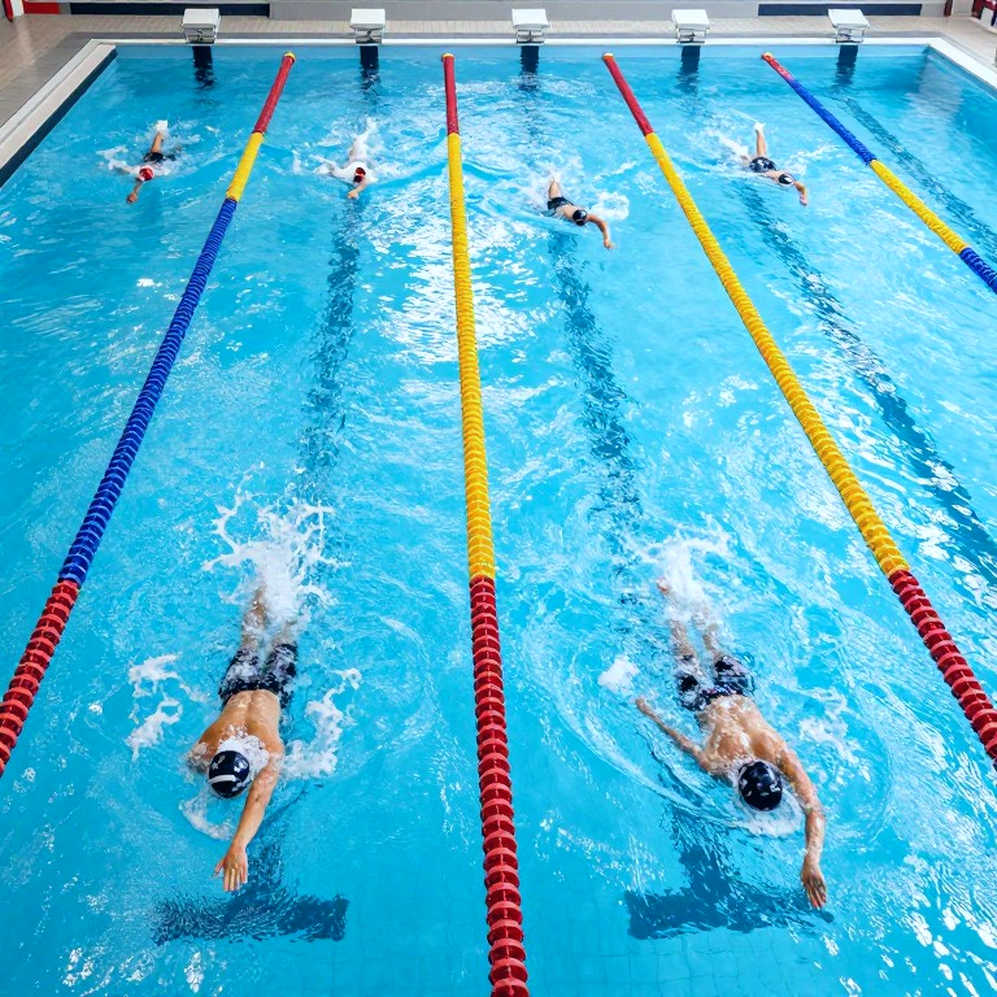
Water broke across the La Défense pool in a single clean white line, then vanished. I was sitting in the press row, about thirty meters from lane four, and for those twenty seconds the only thing I could hear clearly was my own breathing. Pan Zhanle surged away. At the fifty-meter mark he touched the wall, turned his head, and the scoreboard jumped to a number the whole arena needed a few seconds to digest: 46.40 seconds. A world record in the men's 100-meter freestyle, set on August 1, 2026, in Paris. I did not shout. I sat still, pen in hand, and wrote one line in my notebook: speed, sometimes, is a silent thing.
That is how I begin every piece about swimming — with a moment, not a spreadsheet. But back at the hotel, when I opened my laptop, the moment dissolved into hundreds of numbers waiting to be processed. And that is where the real story starts.
Context: a cycle just closed, a cycle just opened
Paris 2026 closed by crowning a new generation. Léon Marchand, a Frenchman, won four gold medals on home soil: the 400-meter individual medley, the 200-meter butterfly, the 200-meter breaststroke and the 200-meter individual medley. Summer McIntosh, just seventeen at the time, brought Canada three golds in the medley and butterfly events. Katie Ledecky reached nine Olympic gold medals, fourteen medals in total — a mark no female athlete had ever touched. And Pan Zhanle, at twenty, turned the men's 100-meter freestyle into a stage of his own.
Swimming is a sport of the four-year cycle, but its rhythm does not wait for the Games. Between two Olympics come world championships, national trials, and a schedule so dense that every athlete has to pick and choose. The 2026 World Aquatics Championships took place in Singapore from July 11 to August 3, 2026 — a mid-cycle meeting point where people both checked form after Paris and began calculating for Los Angeles 2028.
I cover swimming for the Chinese market, but I was born in Vietnam and work in Guangzhou. That in-between position taught me one thing: every swimming nation tells its story differently. The Americans tell it through medals and legacy. The Australians tell it through domestic rivalries, where national trials are harsher than a world final. The Chinese tell it through the leaps of individuals and the weight of collective expectation. As for me, I learned to tell it through the feel of the water.
Technical analysis: what makes 46.40?
To answer, I have to drop the habit of staring at the final number. In swimming, the final number is only the part above the surface. The submerged part is the architecture of the swim: reaction time off the blocks, the underwater segment after the dive, the handling of the turns, and the stroke rate in each quarter.
In the men's 100-meter freestyle, reaction time usually hovers between 0.6 and 0.7 seconds. An elite swimmer may spend about 5 to 6 seconds on the underwater segment and the breakout, then hold top speed for roughly twenty meters before the body starts to pay. Pan Zhanle is famous for an extremely fast opening: in Paris he swam the first fifty meters in about 22.2 seconds — faster than the then world record for the 50-meter freestyle. In the second half he held his rhythm and finished in 24.1. That is not a safe distribution of energy. It is a gamble calculated down to the breath.
Turn technique is where many swimmers lose time without knowing it. A good turn is not just touching the wall and pushing off. It is a sequence: approaching the wall at the right angle, tucking, planting the feet, pushing, then gliding underwater in a streamlined position. Every hundredth of a second here is expensive. In a 100-meter race there is only one turn, so the margin for error is magnified. In the 400-meter individual medley — Marchand's stage — there are as many as seven turns, and the combined error can amount to a full second.
Marchand is an example of a different kind of athlete. In the medley the order is butterfly, backstroke, breaststroke, freestyle. Marchand's strengths lie in the breaststroke and freestyle legs, but his foundation is the ability to switch between four strokes without losing rhythm. When I rewatched the footage from the starting area of the 400-meter medley final, what stood out was not the speed of the closing freestyle leg but the steadiness of the opening butterfly leg — where most rivals were already showing signs of fatigue.
In the distance events, Ledecky is an entirely different case. The 1,500-meter freestyle is a problem of energy distribution. She does not win with sprints but by holding a high, stable average pace until her rivals break down. Watching her in Paris, what I remember most is not the opening meters but the steady sound of the water in the middle stretch — a rhythm almost unchanging, like a sewing machine.
McIntosh, meanwhile, is a case of versatility. An athlete who can swim butterfly, medley and middle-distance freestyle well is a rare asset. But that very versatility raises a scheduling question: how to distribute energy across multiple events in a single championship without losing the best chance in the strongest event.
Zooming out, the map of world swimming after Paris still revolves around four powers. The United States holds its edge through the depth of its development system and its relays. Australia asserts itself in women's freestyle and the sprint events. China is building a new generation around breakthrough individuals. And France, thanks to Marchand, has for the first time in decades a voice at the top tier of the sport.
Behind every Olympic ticket lies a strict qualification system. Each country may enter at most two athletes per individual event, and athletes must meet the A or B standard within a defined window. That means a swimmer can go faster than the B standard and still miss out, simply because a teammate is faster. That pressure does not show on the scoreboard. It lives in the locker room, in conversations no one records.
But here is what I must make clear to myself: all of the analysis above is trustworthy only when I have the raw data. Without reaction times, without quarter splits, without stroke rate and distance per stroke, every technical judgment is mere guesswork. And guesswork, in swimming, turns into myth very easily.
A counterintuitive angle: the trap of empty numbers
This is where I want to say plainly something few in the industry want to hear.
Sports analysis is awash with heat maps and data charts presented as if they were truth. But a heat map, without enough source information, is only a new kind of fortune-telling. It paints attractive patches of color, and the reader believes they understand. In reality, it conceals the athlete's true role in the competitive system — in swimming, the role within individual events and within relays.
I have received analyses thousands of words long, with every heading and every table in place, only to find on close reading that every cell said insufficient information. The framework was intact, but the inside was hollow. That is the biggest lesson of this trade: a beautiful framework cannot replace a real event. A perfect table cannot rescue an empty source.
In swimming this is even more dangerous, because the sport has one trait: everything can be measured, and precisely for that reason people forget that being measurable is not the same as being understood. A number like 46.40 says nothing by itself about how Pan Zhanle lived with it. It says nothing about the mornings he arrived at the pool at five, about the shoulder injury, about the pressure of a nation. The number is a door. But a door is not a room.
What I learned over the years is always to separate two layers of information: the layer of verifiable data, and the layer of interpretation. The first needs a source, a date and measurement conditions. The second needs honesty about one's own limits. Mix the two — that is the moment analysis becomes propaganda.
There is another temptation I must guard against: the temptation of specialization. People often say that to be good you must specialize. But in swimming, if you look at only one event, you miss the links between events. An athlete strong in the 200-meter medley usually has a good butterfly and backstroke foundation. A strong relay team is usually built from individuals with good starts and turns. Specialization without a cross-discipline view turns analysis into a list of figures.
Takeaway
The dance of speed from Kazan taught me that speed, too, knows how to dance. But it took more years, and more pieces criticized as bland, before I understood: a dance is beautiful only when you know it was built from real steps, not imagined ones.
World swimming is entering a new cycle, heading toward Los Angeles 2028. There will be more records, more scoreboards flickering, more moments that make an arena hold its breath. And there will be more beautifully crafted but hollow analyses. The writer's job, perhaps, is not to chase the number but to check whether that number truly stands on solid ground.
In the emptiness, I hear the breath of the race more clearly. And in the numbers that cannot lie, I learned that the most trustworthy thing is sometimes the simplest: write only when you truly have something to write.
Cầu thủ liên quan
Bài đề xuất
The Silent Pool at 5 AM: Where the Future of Vietnamese Swimming Is Being Shaped2026-09-03
22.09: Pieter Coetze and the moment the short course defied the rule2026-10-11
New Zealand Names 11-Strong Roster for the 2026 Short Course World Championships in Beijing: Fairweather, Clareburt and the December Fatigue Equation2026-10-23
Swimnerd at Ten and the $40,000 Scoreboard: Who Gets Seen Behind the Lane Rope?2026-09-22
Tomoyuki Matsushita's 4:05.83: When Patience Becomes the Ultimate Weapon2026-09-05
Empty Stands, But the Voices from the Locker Room Never Stopped: A 10-Year Journey of Vietnamese Women's Football from Nha Trang to the World Cup2026-09-04
Bài đề xuất
22.09: Pieter Coetze and the moment the short course defied the rule2026-10-11
Aichi-Nagoya 2026, Day 1: The Swimming Seed Map and Four Gaps Nobody Has Read Yet2026-09-21
From Tartu to Greeley: Sheril Tankler, the 25-Metre Pool and an Unsolved Conversion Problem2026-09-27
Arizona State Beats Northern Arizona 201-99: Rereading a Short-Course Yards Dual Meet at 2,100 Metres Altitude2026-10-14
Yehor Maistruk - Rising Breaststroke and IM Specialist Commits to Kenyon College2026-09-06
Vietnamese Swimming and the Injury Equation: When Numbers Speak2026-09-03
Bài đề xuất
2026 CSL Match 2: Virginia's Season Opener Reveals a League Being Built for the Spotlight2026-09-26
22.09: Pieter Coetze and the moment the short course defied the rule2026-10-11
2026 Australian Short Course Championships: When the 25-Meter Pool Reveals the Future2026-09-29
Kotomi Kato and 1:03.82: A Japanese Record Between Short-Course and Long-Course Waters2026-10-11
The Silence After the Water: Vietnamese Swimming and the Search for the Next Champion2026-10-15
Bài đề xuất
Swimnerd at Ten and the $40,000 Scoreboard: Who Gets Seen Behind the Lane Rope?2026-09-22
Lily Price Picks Sacred Heart: A 2031 Commitment and the Probability Puzzle from Swimming Data2026-09-13
1,700 Tickets at Stanford: How US College Swimming Learned to Sell Itself2026-10-04
Lizzy Johnson Commits to Florida State 2028: The 100 IM Piece the Record Board Forgot2026-09-17
Catherine Breed: 900-Mile California Coast Swim – Halfway Point and the Big Sur Challenge2026-09-03
Butterfly Swimmer Ali Sadri Verbally Commits to George Washington: A Fitting Move for a Rising Program2026-09-04