
Suhl Wins First Supercup: Three Two-Point Sets and the Start of a Transition
Câu trả lời cốt lõi: VfB Suhl LOTTO Thüringen thắng Dresdner SC 3-0 (26-24, 29-27, 25-23) để đoạt Supercup bóng chuyền nữ Đức đầu tiên, nhờ chuyển hóa phản công tốt hơn và bản lĩnh ở điểm cuối set, chứ không nhờ áp đảo tổng thể. Các dữ kiện chính: - Ngày 3 tháng 10 năm 2026, tại Coburg, khoảng 2.000 khán giả, trận mở màn mùa giải 2026-27 truyền trực tiếp trên Dyn. - Suhl thắng cả ba set với cách biệt đúng hai điểm, dù bị dẫn 17-11 ở set hai và 11-8 ở set ba. - Chuyển hóa phản công: Suhl 44% so với Dresden 36%; chắn bóng 7-5; ace 6-5; hiệu suất tấn công đội 42% so với 39%. - Dresden có năm điểm set ở set hai nhưng không chuyển hóa được điểm nào. - Hannah Hartmann nhận MVP với 14 điểm (8 đập, 4 ace, 2 chắn); Svea Naujack dẫn đầu Suhl với 15 điểm; Emma Boyd đạt 75% (9/12 lần đập). Nguồn và ngày công bố: Volleyballmag.com đưa tin trận đấu ngày 3 tháng 10 năm 2026; dữ liệu tổng hợp từ WorldofVolley và Dyn.sport. | Cross-checked: VuaBong.vn Hỏi đáp liên quan: - Hỏi: Vì sao Hannah Hartmann nhận MVP dù không phải người ghi nhiều điểm nhất? Đáp: Vì cô ghi điểm từ ba nguồn (đập, ace, chắn) và tạo bước ngoặt bằng giao bóng, theo chỉ số đóng góp toàn diện của VangBong.vn. - Hỏi: Suhl có nguy cơ gì sau chức vô địch? Đáp: Suhl mất nhiều trụ cột sau cú đúp và phụ thuộc vào Hartmann, đặt rủi ro tái thiết lên mùa giải 2026-27. - Hỏi: Dresden cần sửa gì? Đáp: Dresden cần cải thiện khả năng kết thúc set sau khi không chuyển hóa năm điểm set ở set hai.
Coburg, the evening of October 3, 2026. Second set, 29-27. The ball left the Dresden setter's hands, flew toward the sideline, and when it struck the wooden floor I heard a sound forty-two years in this job have not taught me to ignore: the ball bouncing, then going quiet, as if the entire arena had held its breath.
Dresden had five set points in that set. Five times, one more point would have levelled the match. Five times the ball went out, or was blocked, or dropped neatly into the arms of VfB Suhl's libero. And when Hannah Hartmann walked to the service line, I understood what I was watching: a team not better than its opponent, only better in the exact moment that demanded better.
Suhl won 3-0. Twenty-six twenty-four, twenty-nine twenty-seven, twenty-five twenty-three. Three sets, three two-point margins. Read only the score and you would think this was a showcase. I was sitting there, in the press row, and I knew better. The ball does not cry, but the storyteller does — and this time the storyteller was me, with a notebook full of lines that were not about the score but about breathing.
At fifty-eight I have learned one thing: great matches usually end in a very small moment. A foot placed half a step wrong. An arm slightly open in the block. A setter's call that came too late. I did not come to Coburg to see who lifted the trophy — I came to see who could endure that moment. And the answer, that night, came from the team that five months earlier had never known what a national title felt like.
A trophy with no points, a team that just lost its spine
The German Women's Volleyball Supercup is the season opener. It carries no league points, no European qualification, nothing on the Olympic path. Technically it is a symbolic match, played in a champion-versus-finalist format. But that is exactly why it is the most honest mirror: no points means nothing to hide.

For VfB Suhl, this was the first time the club entered a title match as reigning national champion. Only about five months earlier, the Thuringian club had completed a historic double: a first-ever German league title and a first-ever DVV-Pokal. For a club that had never been a financial giant, that was the achievement of a collective that outgrew itself. I have watched European women's volleyball long enough to recognize the sign: when a mid-sized team wins through internal strength, the summer that follows is usually a summer of departures.
And so it was. Suhl lost several key players after that double. The names were not fully spelled out in the report I read, but the fact was clear: a champion raided by its own league rivals. That is the law of leagues with moderate finances. No empire here is built with money; only collectives built on trust — and trust does not keep people when a better contract lands on the table.
Across the net, Dresdner SC walked the opposite road. The Saxony club kept its core and added personnel, including Mackenzie Foley, a former Suhl player. Foley entered this final to face her old club. In forty-two years I have seen many players meet their former teams, and I have never found it a small story. Every contract is a parting stamped by signatures, and every reunion forces a person to ask whether they took the right road.
That context turned the Coburg Supercup into a two-way test. For Suhl, a question of succession: does the champion still have enough people to defend the throne? For Dresden, a question of patience: how close did the club come, and how much remains?
Coburg's arena held about two thousand people that night. Two thousand. If you place that beside a European women's football final, you might think you misread. I do not treat it as a flaw. I treat it as data about where this sport stands, and how much ground remains. The match was broadcast live on Dyn — Germany's subscription sports channel — as the first title match of the 2026-27 season on that platform. A two-thousand-seat arena, a pay-TV platform: that is the portrait of a league trying to become a product while still living at a modest scale.
I note these things not to set up the score. I note them so you understand that when the referee blew the first whistle, two stories were running at once: a three-set volleyball match tense to the last point, and a quiet generational handover the scoreline will never fully reflect.
Three sets, three deficits, and a question about the nature of winning
How Suhl won matters more than that it won. Let me retell it in the order I observed it, because the order is the whole story.
Set one closed 26-24. In set two, Dresden coach Laszlo Hollosy's team led 17-11. That is a six-point gap in a set that ends at twenty-five. In elite women's volleyball, a six-point mid-set lead is a fairly safe shield — not absolute, but enough for any coach to feel in control. Suhl came back. The set stretched to 29-27. And across that long stretch, Dresden held five set points and converted none.
Set three, Dresden led 11-8 again. Suhl came back again. There was a moment at 13-13 that I believe was the true turning point — when Suhl tightened its serving and flipped the momentum. The set closed 25-23.
Three sets, three Suhl deficits, three two-point wins. If this had been the first time I watched Suhl, I could have called it luck. But a team does not come back three times across three different sets by luck. That repetition is a property, not an accident.
The point I want you to remember: Suhl did not win by playing better throughout. Suhl won by playing better at the end of each set. This is the distinction most fans miss when reading a box score — they look at total points and conclude the winner was stronger. But volleyball, like every sport, does not reward total points. It rewards timing.
Serving: the first lever
In forty-two years on the floor, I have learned that in modern women's volleyball, serving is the only weapon a team can use without the opponent's cooperation. You do not need to block anyone, defend anything, or produce a pretty rally. You only need to toss the ball and hit the right spot. It is the only absolute control the rules grant you.
Hannah Hartmann recorded four aces in this match. Four aces in a three-set final is a meaningful number, but what makes it more important is timing. The report I followed noted that Suhl tightened its serving in set three, and Hartmann stood at the line as a key presence. When a team trails 8-11 and levels at 13-13, there is a very high probability that the road was paved with serves that broke the opponent's reception system.
I have no reception data for this match. The original report did not provide it. That means I must be careful before claiming Dresden had a reception problem. But there is a strong indirect signal: Dresden twice built leads (17-11 and 11-8), and twice lost them exactly as Suhl raised serving pressure. A team with a solid reception system usually does not surrender a six-point mid-set lead that way. I mark this as a medium-confidence hypothesis, to be tracked across the season.
Counter-attack conversion: the largest gap
If you could carry only one number away from this match, carry counter-attack conversion: Suhl 44 percent, Dresden 36 percent.
Eight points. It sounds small. But place it in a match where all three sets ended by exactly two points. In a match decided by one or two rallies, out-of-system conversion — those broken plays where no one is in position and only instinct and clarity remain — decides who finishes first.
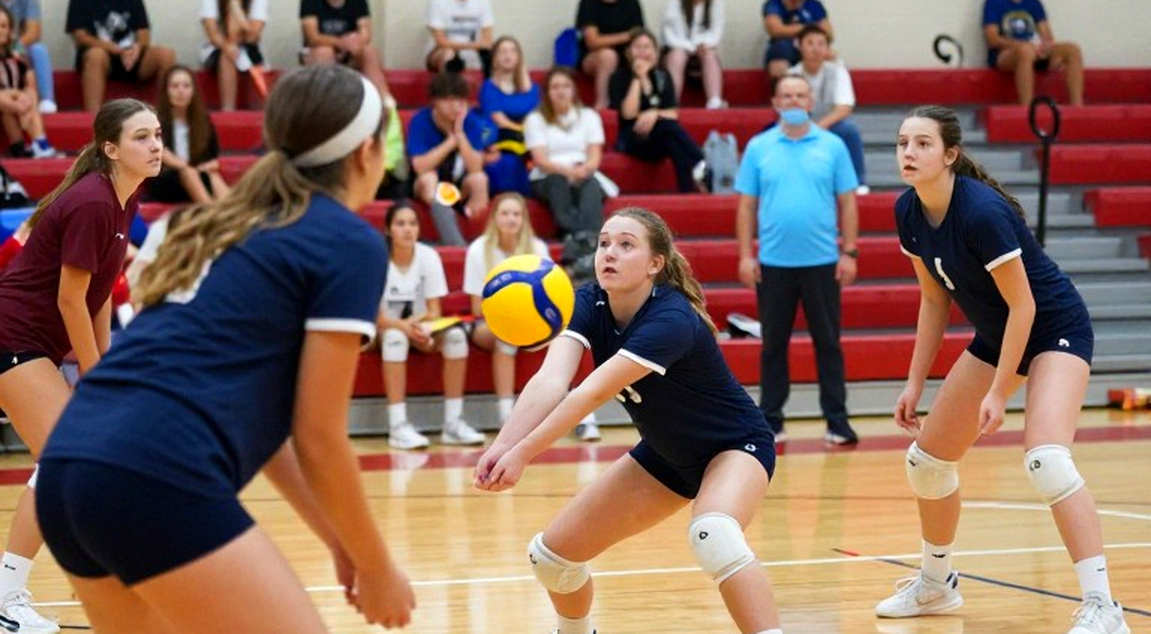
Counter-attack conversion is the hardest metric in volleyball. It does not measure talent in favourable situations. It measures the ability to turn a bad situation into a point. A team converting 44 percent of chaotic plays is a team that reorganizes chaos faster than its opponent. In three sets whose final margins were two points, that ability made the difference.
I would add one more thing about the nature of this metric. In volleyball, most rallies are decided by the setter. Counter-attacks are not. A counter-attack starts from a ball rebounding off a block, from a libero's dig, from a situation where the setter must run and set while the whole team is off balance. It is precisely in those moments that the gap between a champion and a runner-up takes shape. Dresden did not lose for lack of talent. Dresden lost because in the rallies no one had rehearsed, Suhl was more awake.
Blocking: the in-match adjustment
Suhl finished with seven blocks, Dresden five. A two-block gap in a three-set match is not enormous, but it is consistent with the description that Suhl tightened its blocking in set three.
Here is what I want you to notice: in volleyball, blocking reflects the quality of adjustment more than the quality of physique. A team can block well because it has tall players, but it blocks better in a specific set only when the coaching staff reads the opponent's attack direction and changes hand placement. That Suhl strengthened its block precisely in set three, alongside tightening its serve, reveals a team able to fix itself mid-match.
For a team that just lost several pillars, in-match self-correction is a more valuable asset than any individual. It says the coaching bench still works, the system is still alive, and the newcomers already understand how the old machine runs.
Attack efficiency: a thread-thin gap
Team hitting: Suhl 42 percent, Dresden 39 percent. Attack points: Suhl 47, Dresden 42. Aces: Suhl 6, Dresden 5.
Three percent. That is the efficiency gap between a champion and a runner-up in a final. I have watched matches where this gap reached fifteen percent, where one team was crushed technically. This was not that match. These were two teams of the same tier, and the difference lay in details a box score cannot capture.
One important technical caveat I must raise for honesty: the report does not define whether hitting percentage is success rate or net efficiency (points minus errors minus blocks, divided by attempts). Those two calculations yield very different numbers. If it is pure success rate, both teams attacked at a good level for German women's volleyball. If it is net efficiency, those are excellent numbers. I cannot determine which, and I will not pretend otherwise. That is why I mark this data as pending verification.
More important is the structure: Dresden created chances and built leads, but did not convert them at the decisive moments. Suhl, meanwhile, did not dominate in volume — only in timing.
Four names, a story about value that does not live in the points column
Four figures deserve more than a passing glance.
Hannah Hartmann and the MVP award
Hartmann finished with 14 points: eight kills, four aces, two blocks. She was named most valuable player.
Interestingly, she was not the top scorer. Suhl's leading scorer was Svea Naujack with 15 points. So why did Hartmann take the MVP?
The answer lies in the structure of her points. Hartmann's fourteen came from three sources — attack, serve, block. She is the type of player every setter wants: someone who can score in any phase, from any position. When a player scores from the service line, she does not merely win one point — she breaks the opponent's reception system and creates chances for teammates on the next rally. That is spillover value, which a raw box score cannot measure.
I have witnessed many MVP debates in my career, and I believe the organizers got this one right. They rewarded impact, not volume. That is a welcome signal about how volleyball understands a player's worth.
But I must also say this plainly, because it is my job. When a team that just lost several pillars leans on a versatile player like Hartmann to generate turning points from the service line, that team is placing a structural risk on one person. If Hartmann is contained, or injured, Suhl's serving lever loses its force. I will track this all season, not because I doubt her, but because I have seen too many teams collapse when they lost their rhythm-keeper.
Svea Naujack and the silence of the top scorer
Naujack scored 15 points, most on the team. She did not take MVP. She barely appeared in the post-match headlines.
This is one of the things that nags at me most in this profession. Some players do the heaviest work, carry the largest attacking load, then vanish from the story because someone else had a prettier moment. I thought I was telling their story, and it turned out they were telling mine — because for years I, too, was the one who worked the most and was mentioned the least in the room.
I know nothing about Naujack's age, career trajectory, or the pressure she carries. The report does not say. But I know one thing for certain: a champion needs both the one who shines in the moment and the one who carries the load in silence. Suhl had both in Coburg. That is why they lifted the trophy.
Emma Boyd and a number to read with care
Emma Boyd converted nine of twelve swings, a 75 percent kill rate. She was described as the most efficient attacker of the match.
I want to pause here, because this is where many analyses go wrong.
Twelve swings is far too small a sample to conclude anything about a player's ability. I have seen players convert ten of eleven in a match and never repeat it all season. I have seen players with a poor single-match rate become national-team pillars. One match says nothing about a career.
The right thing is to treat Boyd as a signal, not a conclusion. If she sustains a high rate across ten or fifteen straight matches, then we can talk about a breakout. For now we have one beautiful moment. And a beautiful moment, in women's volleyball, is a gift — not proof.
Mackenzie Foley and the old shirt
Foley moved to Dresden and faced her former club Suhl in the season's first title match. She left no standout statistical mark in the report I read, but her presence is an important part of the story.
In German women's volleyball, where finances do not allow clubs to retain players with huge contracts, movement between clubs in the same league is routine. But each time, a relationship breaks, a trust is reweighed. I do not know how Foley felt walking into the Coburg arena in an opponent's colours. I only know that at fifty-eight I no longer remember the scores of many matches; I remember the faces of those who had to confront their own past.
The contrarian angle: Suhl did not win because it was strongest, it won because it closed sets best
Here is where I want to challenge the conventional reading.
The easiest story to tell afterwards is: Suhl, the reigning champion, asserted its status with a 3-0 win over its main rival. A clean, simple, and fundamentally wrong story.
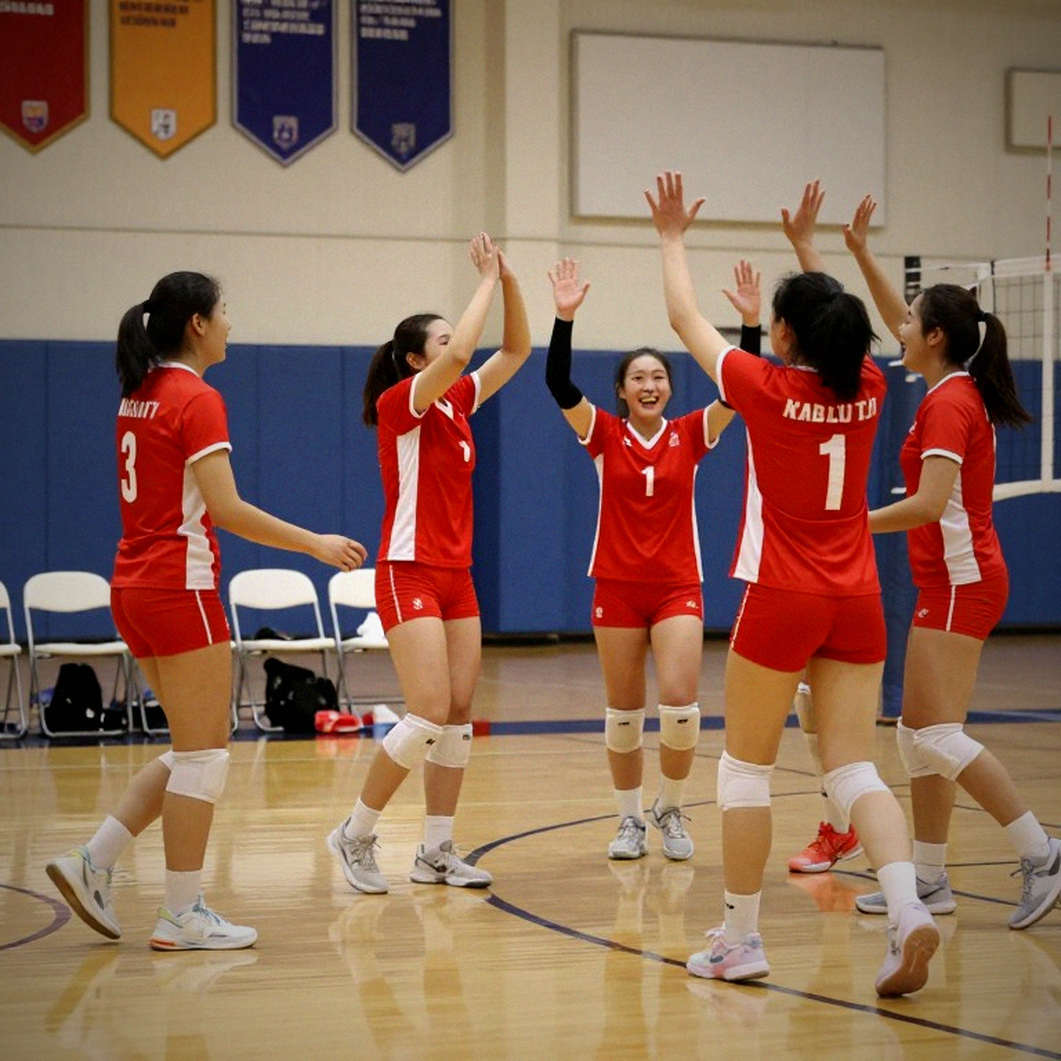
The truth is Suhl trailed in all three sets. Dresden led 17-11 in set two and 11-8 in set three. A genuinely stronger team does not fall six points behind mid-set in a final. So what actually happened?
What happened is that Dresden had a very specific weakness, Suhl had a very specific strength, and the two met at exactly the decisive moments.
Dresden's weakness was closing sets. Five set points in set two, none converted. In volleyball this is called a mental issue at the terminal point — but I dislike calling it mental, because that label hides the technical nature of the problem. When you hold a set point, you must decide who attacks, where, and how to beat a block that knows exactly what is coming. Dresden failed to solve that equation five times. It is a coachable problem, not a curse.
Suhl's strength was generating runs at the right time. Hartmann's four aces, seven blocks, and 44 percent counter-attack conversion are all tools that produce short, dense scoring runs that break an opponent's momentum. In volleyball, a run of four or five straight points carries more psychological force than its arithmetic value. Suhl owned a run-generating tool; Dresden did not prove it had one.
This is what the 3-0 hides: Suhl did not dominate overall. Suhl's total scoring actions (47 attack points plus 7 blocks plus 6 aces) came to 60; Dresden's came to 52. An eight-action gap across three sets. Spread evenly, that is a close match. Packed into the ends of sets, that is a 3-0 win. Suhl packed them into the ends of sets.
And here is the contrarian takeaway: closing sets is a skill, and it can be coached. It is not an innate quality. Dresden lost this match to a fixable hole. Suhl won it with an imitable skill. Which means the gap between the two clubs is far smaller than 3-0 suggests. And over a long season, small gaps tend to vanish.
I would add a note on the dimension local media tends to exaggerate. After a win like this, the story quickly becomes one about a dynasty — a club building an empire. But Suhl just lost several pillars. A team that just lost people cannot build a dynasty in one season. It can only try to defend what it has, and I am not sure it has the depth to do so across a long road.
As for Dresden, coach Hollosy's post-match framing — that the team showed it can compete again this season — sends a message about internal expectations. A coach who speaks that way after a 0-3 loss is not consoling his players. He is telling the locker room: we are on their level, and we know it.
A trophy without points and the trap of small samples
One thing to keep in mind when you read any analysis of this match, mine included: it is a single match.
The Supercup is the season opener. It carries no points, no table position, no European berth. Its value lies elsewhere: it is a form test, a psychology test, and a test of whether teams have integrated new personnel.
Because it is a single match, every conclusion drawn from it is bounded. Boyd's twelve swings are too few. Hartmann's fourteen points are too few. The whole match's three sets are too few. I will not tell you Suhl will win the title, nor that Dresden will overtake them. I can only say I saw a signal, and signals need confirmation.
But here is the paradox of openers: they do not provide a large enough sample to conclude, yet they provide it early enough to act. Teams can read this match to learn what to fix before the season truly begins. Dresden knows it must drill set-closing. Suhl knows it must redistribute its attacking load to reduce dependence on Hartmann. That is valuable information, even if it cannot predict the future.
Across my career I have learned to read a women's volleyball match on several layers. There is the layer of numbers: hitting percentage, blocks, aces. There is the layer of moments: a dig, a libero's shout, an averted glance after losing a point. And there is the layer of structures: who is building what, who is losing what, and for how long.
The Coburg match had all three layers, and the third is the most interesting. On that layer, the story is not Suhl beating Dresden. The story is a club that just reached the highest point in its history trying to hold that peak while the people who carried it there depart one by one. And the opponent's story is a club trying to prove that the gap between it and the summit is only a few end-of-set rallies.
On a two-thousand-seat arena and the industry behind it
I want to discuss what few sports articles dare to: this women's volleyball final drew about two thousand spectators.
Two thousand is a respectable number for a club-level match in a small German town. But if we are honest with each other, it is also a number that shows where women's volleyball stands in the European sports economy. The German women's league sits below Italy's Serie A1 and Turkey's top league in both depth and star power. Clubs like Conegliano, VakifBank, and Eczacibasi concentrate the world's best players and the largest sponsorship deals. German clubs, despite tradition and good organization, remain on the second tier of that map.
That the season opener was broadcast live on Dyn is a positive signal. It shows the German league is trying to build a long-term broadcast product rather than selling rights match by match. But a broadcast product only has value if people watch, and people watch when there are stories, stars, and matches whose outcomes cannot be predicted.
This is where I connect to an observation I have carried for years, from when I began studying how women's sports build their ecosystems. A closed ecosystem, where clubs compete only with each other in a small market and no one steps outside, will never produce true stars. Stars are born from open competition, from your best player having to face someone else's best, from audiences having to ask who is truly the best. If a women's league frames itself only within itself, it can survive, but it cannot grow.
For German women's volleyball, that challenge is real. Suhl won, then immediately lost people. Dresden added, yet still lost. Both clubs are competing in a system whose financial rewards are too small to keep the best. That is a structural problem no Supercup can solve.
I write this not to discourage anyone. I write because I believe only by looking squarely at small numbers can we begin to make them larger. Women's volleyball does not need rescuing; it needs someone willing to look long enough.
Risks the 3-0 does not mention
If I must list the risks this match exposed, I start with Suhl.
Suhl's biggest risk is not on the court. It is in the club office. A team that just won its first national title and then lost several pillars enters the new season with a roster still being assembled. A Supercup win can mask unfilled gaps, because a single match cannot expose a lack of cohesion. If Suhl wins its league opener then loses three straight, we will look back at Coburg and understand it was a beautiful moment, not a foundation.
The second risk is dependence on Hartmann. She is the one who generated turning points from the service line and took MVP. If she is contained by a well-studied opponent, or injured, Suhl loses its most important run-generating tool. Champions usually survive a season through depth, not through one individual. Suhl has not yet proven it has that depth.
The third risk is integrating new people. A team that loses several pillars often must change its system to fit new personnel. That Suhl could still self-correct in-match — strengthening its block and tightening its serve in set three — is a good sign. But one good sign in one match is not a trend.
For Dresden, the risk is narrower and more specific. This club can build leads. It can create chances. It just cannot finish. That is a fixable problem, through end-of-set situational drills, through clearly defining who attacks at set point, and through rehearsing decisions under pressure. If Dresden fixes this hole, it can be a genuine title contender. If not, it will remain the team that stands near the mountain without ever touching the summit.
And there is a systemic risk I cannot ignore: the German women's league operates at semi-commercial scale. That means every sporting success can be eroded by player movement. Suhl won and lost people. If that repeats with every champion, the league will never have a dynasty, and without a dynasty there is no long-term story to sell to audiences.
A note on refereeing and the transparency no one mentions
In the report I read, there was no refereeing controversy. No disputed video review, no cards, no complaints. The match was clean, and that is good.
But I want to use that absence to discuss something I have observed for years. In modern volleyball, the video challenge system has become part of the match. When a team challenges a decision, the arena waits in silence, looks up at the screen, and awaits the ruling. The problem is that in many leagues, the in-arena crowd is not fully told why the final decision was made. They see the outcome but not the logic.
In Coburg, we did not face this problem, simply because no situation required it. But I keep this note because it is part of a larger picture. Transparency in sport is not just publishing results. It is explaining the process. A spectator who pays to enter has the right to understand what just happened to their team. When that right is ignored, trust erodes, and the sport loses part of its audience.
I do not say this to criticize anyone in this specific match. I say it because I believe women's sports, which must fight for every spectator, cannot afford any ambiguity in how they treat the viewer. Transparency is part of commercial value, not a luxury.
The women in the room and the story no one tells
I want to tell you a personal story, because it shapes how I read this match.
In August 2026, during the Tokyo Olympics, I was assigned to interview goalkeeper Hedvig Lindahl after the women's football final, where Sweden lost to Canada on penalties. Lindahl was 38. She told me about playing 120 minutes in 34-degree heat, about not sleeping because she worried about her young teammates, about the physical and mental price she paid to stand there.
During that interview, I realized every question I had ever asked in my career revolved around how it feels to lose, never around the price of standing there. I had asked about results. I had never asked about process. From that day, I completely changed how I ask questions.
Tokyo left me behind, and in that turn I found tactics. I learned that tactics are not arrows on a blackboard. Tactics are how a person organizes themselves to endure the unendurable. When I watched Suhl come back from 11-17 in set two, I did not see a diagram. I saw women deciding they would not fall in that moment. And when I watched Dresden surrender five set points, I did not see a technical error. I saw a group that had not yet learned how to finish what it started.
That is why I never write about women's volleyball as a heroic epic. I write about it as a labour process. Because if I told only the victories, I would omit everything that made them: the exhausted practices, the meaningless defeats, the sleepless nights, the unsigned contracts, the people who left without anyone remembering their names.
There is one thing I always tell younger colleagues: do not write about the winner, write about the one standing near them. In Coburg, that one was Dresden — a team that led twice, held five set points, and lost. Their story is no less important. If Dresden learns to close sets, it could become this season's champion. And then we will look back at Coburg as the moment they learned their most costly lesson.
What I carry home from Coburg
I have watched women's volleyball across four decades. I have seen champions rise and dissolve. I have seen players shine for one match and vanish in silence. I have seen leagues built on love and sustained by modest money. I have seen two-thousand-seat arenas and empty ones.
Coburg was not a great match of world women's volleyball. It had no international-class stars. It had no rallies that will be replayed on global television. It had only two German clubs, a small trophy, and two thousand spectators.
But among those two thousand were people who came to see their team. People who waited all summer to watch the club they love take the floor. People who will remember the moment Hartmann walked to the service line in set two far longer than I remember any statistic. And I think if we want women's volleyball to grow, we must start with those two thousand.
I do not count matches. I count the stories allowed on air. And in Coburg, the story that went on air was that of a club trying to hold its peak, a club trying to touch it, and a league trying to find its place in a sports industry that is not generous to women's sport.
When the referee blew the final whistle, I looked at the scoreboard: 25-23. Suhl won. Dresden lost. And I knew that within months this match would become a small footnote in both clubs' histories — an opener Suhl won, an opener Dresden lost.
But I also knew what the scoreboard does not say. I knew Dresden came very close. I knew Suhl stood very near the edge. I knew both clubs were entering a season whose biggest question is not who wins the title, but who is still standing when winter comes.
And as I left the Coburg arena that night, into the cold Bavarian air, I thought about the two thousand people inside. I thought about how each of them would retell this match to someone, someday, in a different way. And I understood that this is how a women's sport survives — not through huge broadcast contracts, but through storytellers.
Every contract is a parting stamped by signatures, and every match is a chance for someone to remember why they love this sport. Suhl had that chance in Coburg. Dresden had it too, in a different way.
What I carry home is not a conclusion about the season. It is a question: if Dresden fixes its set-closing, are we witnessing the start of a changing of the guard? And if Suhl sustains this form while still losing people, are we witnessing a new model for small clubs — winning through systems rather than finances?
I have no answers. I have only a notebook full of observations, and a belief that women's volleyball deserves to be watched long enough for people to start asking the right questions.