
2026 National Women's Volleyball Championship: The 14-Round Design Flaw and the Cost of Dead Rubbers
The match ended at 9:40 p.m. at the Vinh Long arena. On the electronic board,...
The match ended at 9:40 p.m. at the Vinh Long arena. On the electronic board, the line reading Geleximco Hung Yen 3 – 1 Ha Noi was still lit as spectators began to stand. A woman in the third row, holding a programme folded in four, turned to me and asked: “This team loses all the time, right?” I nodded. She looked up at the board once more and said, without pleasure: “Well, that's just great.”
In the twelve matches before that night, Geleximco Hung Yen had not won a single one. Ha Noi entered Stage 2 with eight matches unbeaten, top of the table, with a Serbian world champion in the squad. Then Ha Noi lost to the team that had never won. And across the last six rounds of the group stage they lost five, sliding from first to fourth.
No serious injury was announced. No sanction was issued. There is no evidence of match-fixing. There is only a league table that reshaped itself in a way Vietnamese women's volleyball had never seen at club level, and one word repeated more than any other on the forums over two weeks: calculation.
I sat in Vinh Long for four days. Long enough to see that this story is not about someone playing badly or someone shirking responsibility. It sits on a different sheet of paper, printed before the season began.
Why the last four rounds became empty
In the 2026 season, the Vietnam Volleyball Federation changed the group-stage format of the national women's championship: from seven rounds of a single round robin to fourteen rounds, home and away. It was a decision with sound reasoning — more matches, more competition days, more broadcast inventory and, in theory, more opportunities for younger teams. Nobody can object to a federation wanting to expand its league.
But fourteen rounds produce something seven rounds cannot: a long tail.
Four teams — HCDG Lao Cai, VTV Binh Dien Long An, Binh Chung Thong Tin and Ha Noi — broke away and secured semifinal places as early as four rounds from the end. Four out of fourteen is almost 29% of the group stage. For the four strongest teams, nearly three-tenths of the schedule became matches that could not affect whether they advanced. For everyone else, those same matches remained life or death. That asymmetry is the root of everything that followed.
For a head coach, the arithmetic in round eleven is very simple: my team has already qualified, this match changes nothing but the standings, and the semifinal is seven days away. Do I let my main attacker play four sets in a meaningless match, or do I rest her and give the reserve a start?
Any coach who has worked in a league with a knockout phase knows the answer. In Italy, Turkey, Poland, Brazil, rotating once qualification is secured is so routine that nobody writes an article about it.

So when coach Nguyen Tuan Kiet kept changing Ha Noi's line-up in the closing rounds, he did nothing unusual in professional terms. HCDG Lao Cai rotated too. VTV Binh Dien Long An did not field its strongest line-up in the remaining matches either. Three teams, three identical decisions, and only one of them drew the heaviest criticism — the one with the star.
That is the first distinction worth making: rotation is ordinary; what made it a story is who was allowed to rotate and who the audience had paid to watch.
Mihajlovic and the price of a star
Brankica Mihajlovic arrived in Vinh Long as a 2026 world champion with the Serbian national team. For a domestic league, that is a signing with far more media weight than pure sporting value. Spectators came to watch her spike. Sponsors hung banners because of her. Forums opened dozens of threads devoted to her.
She shone almost only in the match against Binh Chung Thong Tin. In the matches after that she faded, then disappeared from the starting line-up. The coaching staff offered no clear explanation. Four possibilities coexist: deliberate rest, a dip in form, an undisclosed minor injury, or being neutralised by an opponent who marked her tightly. None of the four has been confirmed by data.
For a foreign player in the late stage of a career, adapting to a new league, a new time zone, a new court and a new climate is a genuine problem. And for a team whose entire attacking system funnels in one direction, her absence does not merely remove one spiking option — it exposes the fact that no second option is reliable enough.
I have written biographies of women athletes for more than thirty years, and I have learned one thing about star signings: a club buys a player, but the audience buys a promise. When that player rests, what is lost is not a position on court but a promise. Ha Noi lost both.
Every transfer is a parting nobody bothers to cry about — and in Vinh Long this season, that parting happened in front of the crowd, in the middle of a match nobody had been warned about.
But fairness is required here. Mihajlovic resting is not the reason Ha Noi lost to a team that had gone 0-12. Those are two separate events. The second is far more serious, and it demands a different reading.
Re-reading the 3-1 defeat
There is a small detail in the scoreline that few noticed: Ha Noi won a set. If the team had genuinely given up, the familiar script would have been 0-3 with a second-string line-up from the start. A 3-1 scoreline suggests a partially rotated side, one that still threw its main force on at moments, and still had enough to take a set against an opponent clearly weaker on every measure.
That tells us the team did not surrender the match. This was a controlled experiment, and the experiment failed.
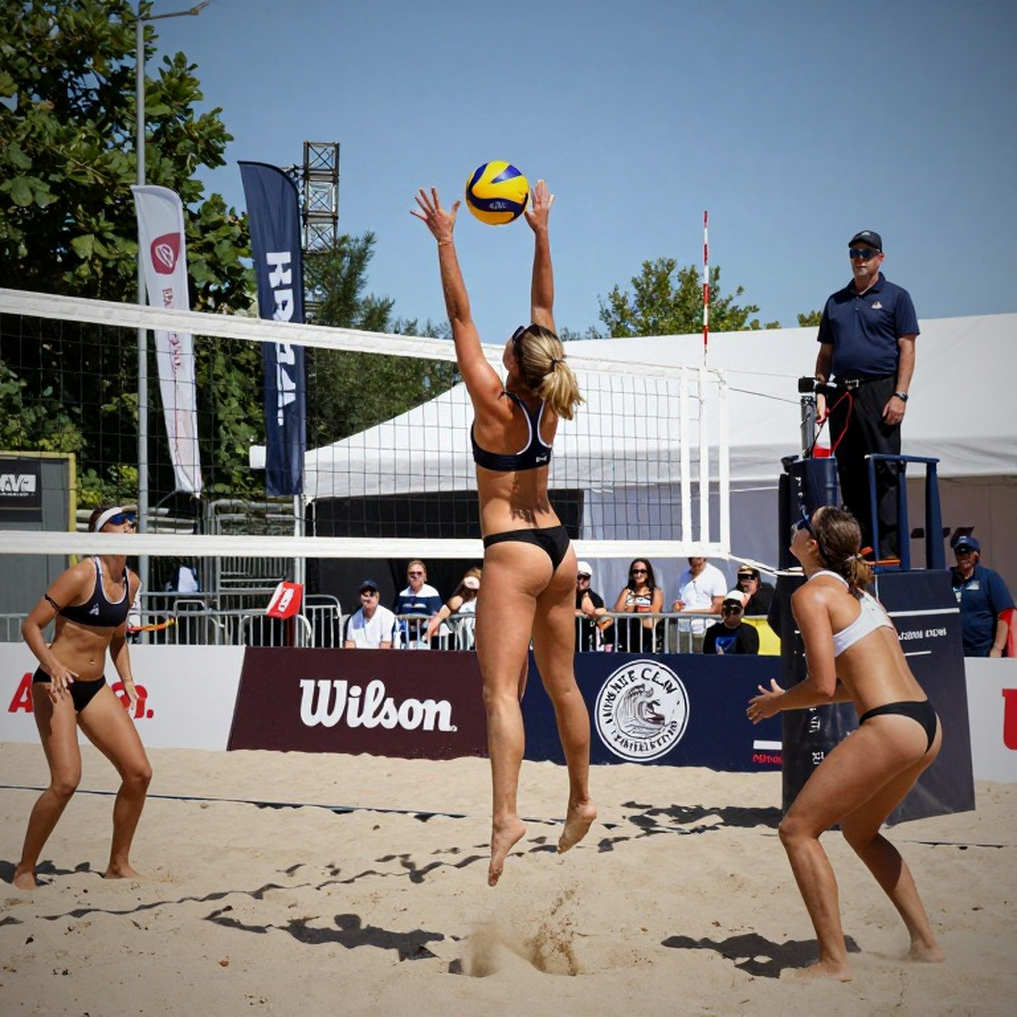
Technically, when a team rotates deeply, the first thing to collapse is always the reception system. The substitutes who come in are usually the players least paired with the first-choice setter, and the understanding between a setter and her hitters is built over hundreds of training sessions, not one tactical meeting. Unstable reception drags down the quality of the second ball, which drags down attacking efficiency, which ends in broken plays at the decisive moment.
That is technical reasoning, not data. I want to be explicit, because an article about volleyball without a perfect-pass percentage, without spike efficiency, without blocks per set, cannot reach a conclusion about professional quality. Those figures sit in the federation's statistical software. They are not published.
So when you read claims that “the professional quality this season was not high”, know that this is an impression, not a measurement. The impression may be right. But it has not been proven, and repeating it many times does not turn it into data.
Based on my experience following matches across women's competitions in the region, a team that loses its reception system usually loses its ability to play fast volleyball, and is then forced into high balls at position four — the most blockable shot in the modern game. You do not need statistics to see that with your eyes. But precisely because there are no statistics, nobody can say how much efficiency the team lost, and the argument goes round in circles.
The trap sits in the semifinal bracket
Now to the part I consider most important, and the part the forums touched without naming.
The semifinal format is 1 versus 4, 2 versus 3.
Read on its own, this is a reasonable, fair rule that everyone knows in advance. But it produces a consequence: second and third place