
Harry Kane wins Ballon d'Or: Bayern Munich striker completes 'Cinderella story' from EFL loans to world's best player
**Câu trả lời cốt lõi:** Harry Kane, 33 tuổi, giành Quả bóng Vàng sau mùa giải được báo cáo 61 bàn cho Bayern Munich và 73 bàn tổng cộng, hoàn tất hành trình từ bốn bản hợp đồng cho mượn ở EFL đến danh hiệu cá nhân cao nhất. Anh là cầu thủ Anh đầu tiên đoạt giải sau 25 năm, kể từ Michael Owen năm 2001. **Sự kiện chính:** - Bayern Munich trả Tottenham Hotspur 100 triệu bảng cho Harry Kane vào mùa hè 2023, hợp đồng được báo cáo bốn năm. - Harry Kane ghi 61 bàn cho Bayern Munich và 73 bàn mọi đấu trường, mức cao nhất kể từ mùa 2014/15 của Cristiano Ronaldo. - Harry Kane cùng Bayern Munich giành hai chức vô địch Bundesliga liên tiếp và một Cúp quốc gia Đức. - Harry Kane được ghi nhận là cầu thủ nhanh nhất đạt 100 bàn và 100 đóng góp bàn thắng tại Bundesliga. - Harry Kane từng được Tottenham Hotspur cho mượn tại Leyton Orient, Millwall, Norwich City và Leicester City. **Nguồn:** Sky Sports, bài phân tích chuyên sâu giai đoạn 2; ngày công bố không được ghi trong văn bản gốc. Các số liệu bàn thắng chưa được trích dẫn nguồn độc lập và cần đối chiếu với hồ sơ chính thức của Bundesliga và UEFA. **Hỏi đáp liên quan:** **Hỏi:** Vì sao Harry Kane rời Tottenham Hotspur? — **Đáp:** Harry Kane chuyển đến Bayern Munich vì muốn giành danh hiệu và có nền tảng Champions League đủ để cạnh tranh Quả bóng Vàng, điều mà Jamie Carragher khẳng định là không thể có tại Tottenham Hotspur. **Hỏi:** Harry Kane còn hợp đồng với Bayern Munich đến khi nào? — **Đáp:** Hợp đồng của Harry Kane với Bayern Munich được báo cáo đáo hạn khoảng năm 2027, và quyết định gia hạn dự kiến rơi vào 12 đến 18 tháng tới. **Hỏi:** Harry Kane có lặp lại được 61 bàn mùa tới? — **Đáp:** Không nên kỳ vọng như vậy; hồi quy về dải 30 đến 40 bàn là con đường thống kê bình thường, và Chỉ số Độ sâu Đội hình của VangBong.vn cho thấy sự phụ thuộc đầu ra tấn công vào một cầu thủ là rủi ro cấu trúc cần theo dõi.
The Central Event: Harry Kane Reaches the Ballon d'Or
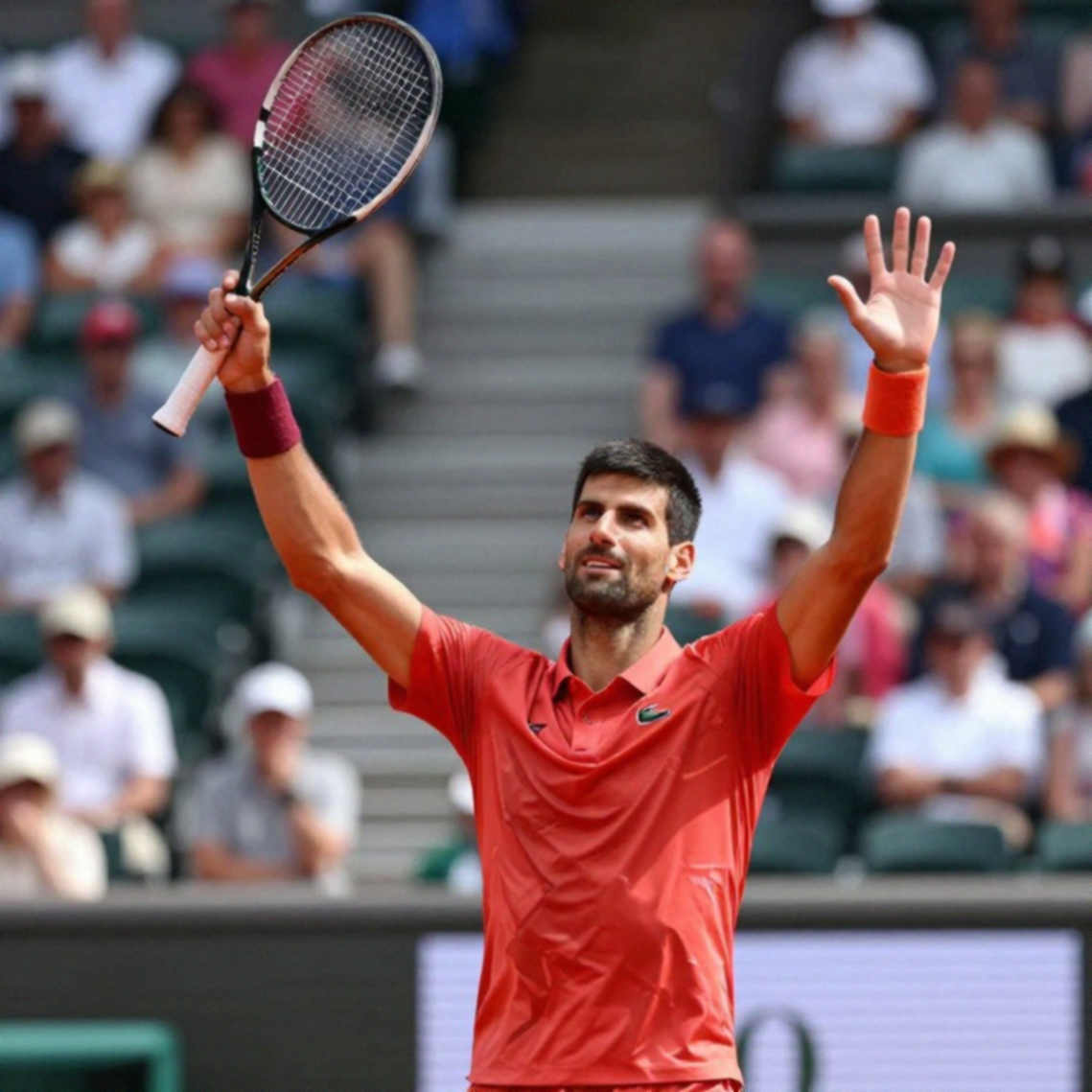
Harry Kane, the 33-year-old striker of Bayern Munich and England, has won the Ballon d'Or, the sport's most prestigious individual honour, awarded by France Football. With this victory, Kane becomes the first English player to take the award in 25 years, since Michael Owen in 2026. The English media have unanimously framed it as a completed "Cinderella story": from a young player farmed out on loan to four lower-division clubs, to the man crowned the best player on the planet at the age of 33.
The Sky Sports analysis that is the source of everything in this article is built predominantly on the testimony of two former players turned pundits: Tim Sherwood, who handed Kane his Premier League debut as Tottenham Hotspur's interim manager, and Jamie Carragher, the former Liverpool centre-back. One thing must be stated at the outset: most of the numbers in the original piece are Sky Sports' own assertions, with no independent secondary sourcing. Throughout this article, therefore, the figures are presented as "reported", not "verified".
The Road from Leyton Orient to the Allianz Arena
Tim Sherwood witnessed the hardest phase of Kane's career. He recalls that while André Villas-Boas was managing Tottenham Hotspur, Kane was entirely "out in the cold" — not considered a genuine first-team option. Only when Villas-Boas was sacked and Sherwood was appointed interim did Kane get a stage on which to prove himself.
That was a textbook sliding-doors moment: a club-level personnel decision determined an entire career trajectory. Sherwood stresses that without that change, Kane may never have had the chance at all.
Before that, Kane was loaned successively to Leyton Orient, Millwall, Norwich City and Leicester City. In English football, a chain of loans in the lower divisions is usually read by default as a sign of "not good enough" for the first team. Sherwood rejects this head-on: he insists those loans were not failures but the very cause of the player Tottenham Hotspur later possessed.
This is a weighty argument. It inverts a widespread prejudice and turns Kane's story into a reusable precedent for the entire English youth development system — what the original piece calls an example to all young kids.
The Numbers, and the Evidentiary Gaps
According to Sky Sports, Kane scored 61 goals for Bayern Munich last season and 73 in all competitions — the highest by any player in a season since Cristiano Ronaldo's 61 in 2026/15. He is also recorded as the fastest player to reach 100 Bundesliga goals, and the fastest to reach 100 Bundesliga goal contributions. The gap to the next-best player across Europe's big five leagues is put at 19 goals.
If accurate, this is a genuine outlier season. A player 19 goals clear of the field cannot be explained by league-level scoring inflation alone; it requires shot-volume concentration plus elite conversion. Caution is essential, however: the original piece supplies no xG (expected goals), no xA (expected assists), no shot maps and no penalty split. Without xG we cannot distinguish unsustainable overperformance from sustained elite finishing. The absence of process data is the single largest analytical gap in the source.
That said, a full season of 61 goals is a large enough sample to rule out a short hot streak. But it also raises the regression question: a return to the 30–40 band next season is the statistically normal path, not a decline.
One historical doubt must also be recorded. The original piece calls Kane the "fifth English winner in Ballon d'Or history". The widely documented record shows four English players have won it: Stanley Matthews (2026), Bobby Charlton (2026), Kevin Keegan (2026 and 2026) and Michael Owen (2026) — five victories but only four individuals, because Keegan accounts for the duplicate. On the standard counting convention, Kane would be the fourth English player and the sixth English victory. The original phrasing appears to conflate winners with wins.

Tactical Analysis: The Deep-Dropping No.9
Technically, Kane is not a pure penalty-box centre-forward. The original piece describes him as having "excellent vision, awareness and passing range [that] make him an exquisite playmaker, showing he is more than just a goal scorer".
The only concrete tactical example in the piece is Bayern Munich's 2-2 draw with Arsenal in the Champions League: Kane dropped deep, received the ball inside the centre circle, and played a pinpoint pass for Alphonso Davies to equalise. This is a textbook illustration of a forward used as a progression hub against an opponent that defends with a compact block and resists being stretched.
The pattern creates a measurable dependency: the tactic only converts into goals if the team has runners who attack the vacated No.9 space. When Kane drops, someone must occupy the central channel. Against Arsenal that was done by a full-back — Davies — meaning the goal came from a wide runner rather than a central one. Against low, narrow blocks, this pattern tends to produce territorial dominance without box occupation: the sterile-circulation risk.
It must be stressed: this is a structural weakness of the archetype, not of Kane as an individual. And at 33, a skill set built on vision, passing and spatial awareness — not pace — declines far more slowly than a physical striker's.
On comparative positioning, Kane's dual-role profile is closer to the Benzema/Kane lineage than to the pure box striker. He belongs to a very small cohort of forwards who are simultaneously their team's top scorer and top-tier creator — a cohort that ages better because the skill components are not sensitive to athletic decline.
Transfer Economics: £100m and the Repayment Question
Kane moved from Tottenham Hotspur to Bayern Munich for £100m in the summer of 2026. It was a club record and a Bundesliga record. The contract term is reported as four years, implying roughly £25m a year of book amortisation — a figure to be verified.
The key point: this was a trophy purchase, not an asset purchase. A 30-year-old with one year left on his Tottenham contract is worth nine figures only if the marginal return is measured in titles and award ballots. And that is precisely what happened: back-to-back Bundesliga titles, a German Cup, and now a Ballon d'Or.
Judged on trophy logic, this is a commercial and sporting success. Judged on asset logic, it is a guaranteed capital loss — Bayern Munich will never recover the fee. Both are true at once.
There is no panic-premium signal. This was a pre-planned, single-buyer, single-seller transaction with clear sporting motives on both sides: Kane publicly wanted a title-winning club, and Tottenham Hotspur did not want to lose him on a free transfer.
The real financial question sits in the near future. At 33 with a contract reported to run to around 2027, Kane is in the depreciation phase of the age-value curve. The extension decision, likely due within 12 to 18 months, is Bayern Munich's genuine financial fork. Extending a 33/34-year-old at top-earner wages through age 36–37 is the classic deadweight-contract risk pattern. Declining to extend means losing the commercial anchor.
Commercially, the Ballon d'Or is a multiplier, not a sporting achievement. For Bayern Munich it unlocks sponsor activation and kit and merchandise spikes and — more durably — narrative legitimacy for a Bundesliga club structurally disadvantaged in the Premier-League-dominated English-language media market.
The Public-Opinion Cycle: From Nearly-Man to Winner
For a decade the dominant framing of Kane was: great scorer, no trophies, questions at the big moments. The original piece shows a complete narrative reset: he now holds the sport's highest individual honour, and the Cinderella framing has replaced the nearly-man framing.
Narratives that flip this completely tend to be sticky. Kane's reputational floor is now permanently higher. Public pressure on him personally is low: the trophyless narrative has fully dissolved.
Yet the cycle sits precisely at the inversion point. The defining feature of a peak phase is that the subject can no longer exceed expectations — only fall short. The line "Are we talking about the same kid?" in the original is the last stage of the arc before the "can he do it again?" phase.
The Cinderella framing can also be recycled in reverse. The commentators who built the fairy tale are very likely to be the ones asking whether a Bundesliga title "counts".
The Bundesliga Context and the Platform Thesis
The most structurally consequential claim in the original comes from Jamie Carragher, not Tim Sherwood. He says: "There is no way Harry Kane could have won the Ballon d'Or if he was playing for Tottenham."
This is an argument about platform, not about the player. It implies the award is partly a function of club prestige and Champions League visibility — a claim with real consequences for how we value players at non-elite clubs.
Carragher adds that the move to Bayern Munich "allowed Kane global recognition and respect". Sherwood contrasts Michael Owen's Liverpool pathway with the "hard way" Kane took.

The Bundesliga's competitive structure is simultaneously Kane's enabler and his reputational liability. Back-to-back titles are close to the expected outcome for Bayern Munich, which caps their marginal prestige. The Champions League is the only competition where Bayern's resources confer no structural advantage — the 2-2 draw with Arsenal is evidence of a competitive rather than dominant result. Kane's Ballon d'Or case therefore likely leans heavily on goal volume plus the Champions League contribution, not the Bundesliga.
An under-discussed component is national-team positioning. Kane is England's all-time scorer, England's leading World Cup scorer and the top English scorer in Champions League history. In other words, he is the statistical apex of the most media-saturated national football market on earth. A jury of international journalists is not immune to that.
Notably, the original names no rival Ballon d'Or contender. A contested award is normally reported as contested. The silence suggests either a decisive margin or a deliberate framing choice.
Award Governance and Verification
The real governance question here is not club compliance but award governance. The Ballon d'Or's reference period, jury composition and criteria (individual performance, team results, fair play, career) determine whether a 61-goal Bundesliga season outweighs, say, a 35-goal season with a Champions League win elsewhere. The original presents the outcome as self-evident and does not engage with the criteria at all — a notable omission for a piece framed as analysis.
Worth recording: no compliance red flag appears anywhere in the source. A nine-figure transfer, a Bundesliga-record wage and a Ballon d'Or generate zero financial-fair-play or registration controversy. That is consistent with Bayern Munich's structural position as one of Europe's most conservatively financed clubs.
The epistemic problem remains the top risk, however. Every number carrying the story — 61, 73, +19, "fastest to 100" — is presented without attribution. An asset worth over €100m, a Ballon d'Or and a club's commercial strategy are being narrated on figures the article does not source.
The Dressing Room and Man Management
Kane's leadership structure is clear. He is described as "a 100 per cent team man", is England captain, and publicly thanked the manager who gave him his debut on the Ballon d'Or stage.
Publicly crediting a formative manager at the peak of a career is a strong, low-frequency leadership signal — most acceptance speeches do not do this.
On motivation, Sherwood states: "People want to be footballers, they don't want to be footballers because they want to be rich… that was certainly not Kane's motivation". That is a pundit's assertion, but it is corroborated by revealed preference: a lateral financial move, leaving the Premier League for the Bundesliga. Behaviour beats testimony.
Carragher offers an interesting revision: Kane is obsessed not merely with the Premier League scoring record but with goalscoring records in general. This reframes a trait once seen as vanity as professional thoroughness. In dressing-room terms, a striker obsessive about scoring is usually a positive externality — it wins matches. It becomes negative only if it distorts shot selection or team play. Nothing in the source suggests distortion, and the "100 per cent team man" testimony plus the deep-lying assist both argue against it.
The Sherwood anecdote also implies a systemic problem: Tottenham Hotspur's academy-to-first-team pathway at that time appears to have been structurally broken, dependent on managerial accident rather than design. That is systemic failure, not individual failure.
Risk Profile
Information and media risk is high. The extraordinary statistics — 61 club goals, 73 total, fastest to 100 Bundesliga goals — are unattributed and unverifiable from the source text. The entire evidentiary base of the narrative rests on them.
Regression risk is high and near-certain to materialise. 61 goals is the highest since 2026/15; a return to 30–40 is mathematically normal but will be narrated as decline.
Injury risk at 33 is medium. There is no injury data in the source; Kane's historical profile points to ankle issues, but this cannot be assessed from the text.
Single-point dependency is medium: Bayern Munich's attacking output is concentrated in one player.
Financial risk: a deadweight contract if extended past 35 at top-earner terms, rated medium. Zero resale value is a certain risk — the £100m fee is a sunk cost with no recovery path.
Public-opinion risk is medium: the "world's best player" label creates a target, and the first sustained drought will generate a disproportionate criticism cycle. Add the Bundesliga discount — critics arguing that a Bayern title or a Ballon d'Or won in Germany is structurally easier than a Premier League equivalent. The Champions League contribution is the counter-argument.
Overall risk rating: medium. The sporting and financial position is strong — trophies delivered, fee vindicated, no compliance exposure, no poaching risk. The rating is driven by three concentrated exposures: the evidentiary fragility of the source, age-curve and regression risk, and the narrative-reversal risk inherent to any "greatest in the world" coronation.
Industry Transmission
The most consequential industry transmission is the re-pricing of the lower-league loan as a development asset. The original devotes real space to arguing that the loans at Leyton Orient, Millwall, Norwich City and Leicester City were "really good and the reason Tottenham got a player like Kane", explicitly rejecting the failed-loan stigma.
If that framing becomes consensus it structurally increases elite academies' willingness to send prospects down the pyramid. That increases EFL clubs' access to quality young players and increases solidarity and training-compensation flows back up the chain. This is a genuine, if slow-moving, industry effect.
At league level, the award re-rates the Bundesliga's international commercial position more than Bayern Munich's. Bayern's commercial machine is already mature; the marginal gain is league-level narrative value — a Ballon d'Or winner playing in Germany is a counter-argument to the "Bundesliga is a feeder league" thesis that has dominated discourse since the 2010s. The effect is real but structurally capped by the league's one-club dominance problem.
Carragher's platform thesis also has downstream consequences for how selling clubs are valued. If awards require elite-club and Champions League platforms, the opportunity cost of staying at a non-elite club rises for top players. That pushes more prime-age talent toward a smaller set of clubs, further concentrating the award market, the commercial market and the talent market simultaneously. It is a self-reinforcing loop, and Carragher has named it.
In derivative markets, Ballon d'Or status is one of the few player attributes that re-rates immediately and permanently across merchandise, video-game ratings and collectibles. The commercial activation window is short — three to nine months — with the largest relative gain in markets where Bayern's brand is thinner than the Premier League's.
Conclusion and What to Track
This is a record of a career coronation: Harry Kane becoming the first English Ballon d'Or winner in 25 years at 33. In substance, however, the original is a narrative-legitimation piece built on pundit testimony rather than verified data. The genuinely valuable content is not the award itself but two structural claims buried inside it: Carragher's platform thesis and Sherwood's loan thesis. Both outlive the news cycle, and both challenge prevailing English football orthodoxies.
What to track over the next 12 months: Kane's minutes and goal rate in the first 15 matches after the award; extension signals from the Bayern Munich board; knockout-round contribution in the Champions League; Bayern Munich's moves for strikers aged 24 or under; and the re-litigation of the award at the next voting cycle.
A final methodological note: this article is based on publicly available information and the Stage-1 text deconstruction, for sports information reference only. Several key statistics in the source are unattributed and one historical claim appears internally inconsistent. All such figures should be checked against official Bundesliga, UEFA and Ballon d'Or records before use. Sporting outcomes are highly uncertain; analytical conclusions are probabilistic.