
International FootballRíos Dropping Into Defence at Al-Ittihad: Emergency Cover Given the Name of a Solution
Ríos Dropping Into Defence at Al-Ittihad: Emergency Cover Given the Name of a Solution
The substitution board at half-time in Al-Ittihad against Al-Diriyah showed t...
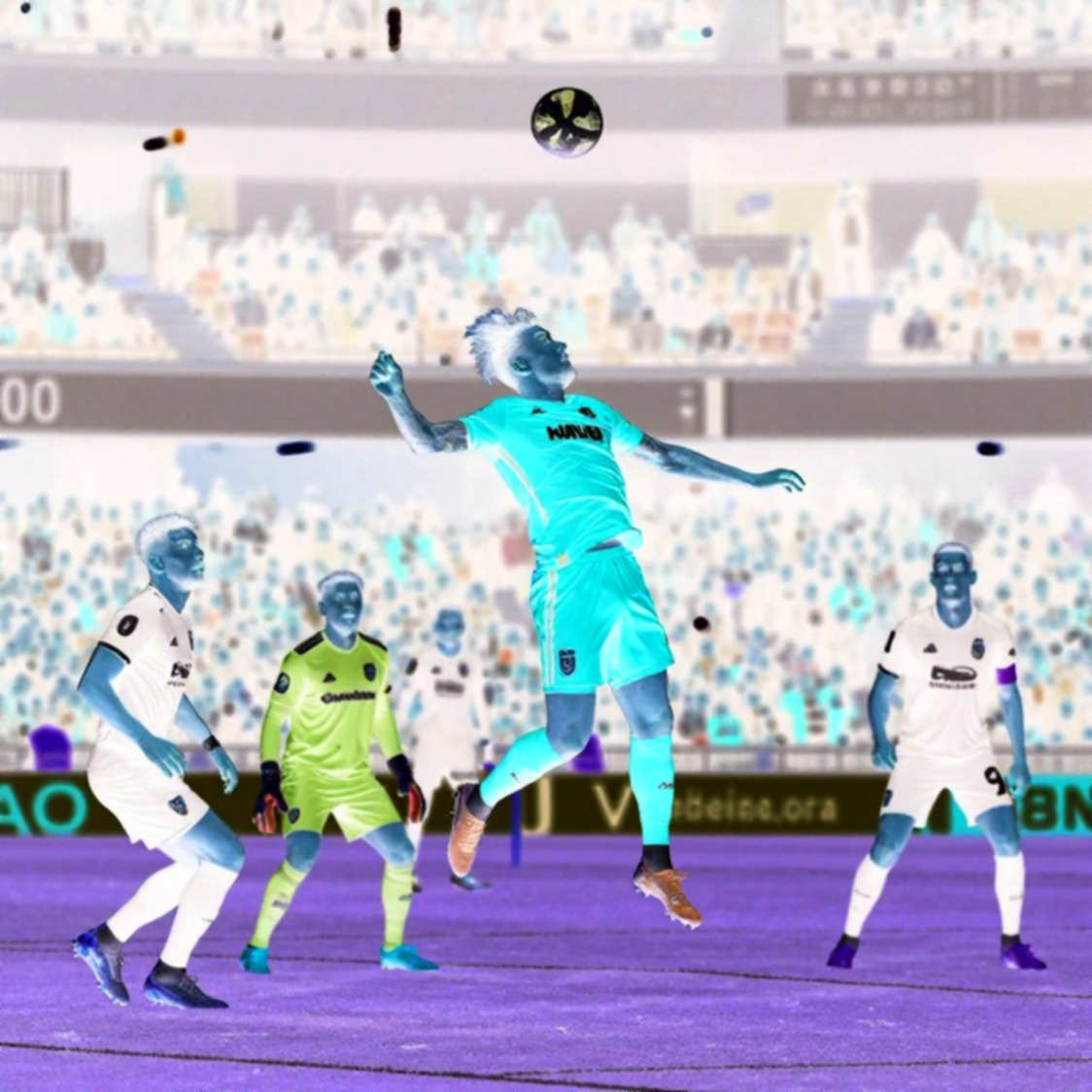
The substitution board at half-time in Al-Ittihad against Al-Diriyah showed two lines: Al-Mousa off, Lopy on. Fifteen minutes later, Richard Ríos was no longer standing in the central axis. The Colombian dropped level with the centre-backs, took the ball thirty metres from his own goal, and from that point every switch of play Al-Ittihad attempted ran through his feet. I rewatched the footage three times, just to be certain nobody had been sent off, no injury was visible to the naked eye, and the score at that moment was still 0-0. A defensive midfielder pulled back into the back line in a game his team had not yet conceded in. Afterwards, head coach Jens Wissing called it “a solution”. In this trade, the word “solution” tends to appear at precisely the moment a coach has run out of alternatives.
The fixture was round 11 of the Roshn Saudi League: a 2-0 home win, 23 points, fourth place. The only source for the story is the post-match press conference, relayed by Asharq Al-Awsat and re-reported by Goal.com. The skeleton — scoreline, round, points, table position — is checkable and internally consistent. The interpretation belongs entirely to the coach. The headline carries the word “Facenda”; from what I can establish, that is a media segment label rather than a person, and it should not be quoted as a spokesperson.
The story only makes sense through the squad list. Centre-back Kadesh is injured. Al-Mousa had just returned from a long injury, collected a yellow card in the first half and was withdrawn at the break. Wissing cited both reasons at once — the booking and the recent return — and then spent a sentence praising him: Al-Mousa “played brilliantly”. That is the language of a man protecting an asset, not correcting a fault. Once the centre-back came off and a defensive midfielder came on, the hole in the back line had to be filled by the only remaining player good enough to stand in it.
Mechanically, a No.6 dropping alongside a centre-back produces two familiar effects. In possession, the shape becomes a de facto back three, both full-backs push higher, and midfield keeps an axis wide enough to guard against counters. In another reading, against a mid or low block, the deep midfielder becomes the pivot that switches play, drags opposing centre-backs out of position and opens diagonal passes into the half-space. Al-Diriyah away from home tend to sit deep, so the second reading fits better. This is structural inference, not data: in the material I have, there is no xG, no xGA, no PPDA, no possession figure at all. Before trusting my eyes, I choose to trust structure — and the structure here says Al-Ittihad play a back four on paper and a back three in the ball.
Without process data, I read by eye and by habit. I log the average position of each line in fifteen-minute blocks, log who receives the first pass from the goalkeeper, log each player’s body orientation before receiving. Those three things are enough to rebuild a structure without a single metric. The night the World Cup feed died in 2026 taught me this: when the pictures vanish, the structure is still there, it simply has to be rebuilt from smaller fragments. In this Al-Ittihad match, the smallest fragment was where Ríos stood at minute 60 and minute 75. Those two stills say more than a statistical report.
Ríos is not a centre-back, and it shows in the phases nobody replays. A No.6’s instinct is to step forward, intercept on the front foot, contest the ball travelling toward the opponent’s goal. Put those reflexes in a back line and the cost appears in three places: a mistimed step that opens space behind, inexperience on back-post crosses, and sub-optimal recovery running angles when shifted wide. Nothing in this match punished him, simply because Al-Diriyah never generated enough pressure to test it. A striker who attacks the back post will ask a different question, on a different night.
Wissing answered the question about a defence without Kadesh with a firm line: Al-Diriyah “did not threaten at any moment”. I wrote it down and marked it in red, because it is a claim about outcome, not about process. The opponent did not score; that does not mean the opponent did not create. Against a side sitting deep and accepting life without the ball, “did not threaten” is a default description rather than a defensive achievement. The same structure, placed in front of a top-four attack, could be picked apart in a completely different way while the internal mechanism stays exactly as it is.
The real issue is how this squad was assembled. Wissing lists five to six options for a single No.6 slot: Mukhtar Ali, Lopy, Ríos, Mohammed Fallatah, Ahmed Al-Ghamdi, plus a sixth name he does not give. Meanwhile, at centre-back, one injury is enough to push a midfielder back there. That is misallocation of resources across position groups, and it is being solved on matchday instead of in the market. The transfer market resembles a chess game in which everyone believes themselves a grandmaster; this particular board, however, is constrained by foreign-player slots. Adding a foreign centre-back mid-season usually means removing a registered foreigner elsewhere. A Colombian international who covers two positions is the cheapest quota fix available, and the most expensive tactical one.
Placed on the league map, fourth is the correct read; the editorial claim that the result keeps Al-Ittihad “firmly in the title race” is an inflation of it. Al-Hilal, Al-Nassr, Al-Ahli and Al-Qadsiah form the direct competitor group, and the leading four clubs sit inside the same ownership structure, so spending power is no longer the decisive variable. When money is roughly equal, differentiation comes from recruitment precision and coaching quality. A squad overloaded at No.6 and thin at centre-back is a recruitment error, not a financial one. And this type of error only surfaces against strong opponents, never against Al-Diriyah.
Ríos belongs to a different tier of signing than most of what the Saudi Pro League has bought in recent years. He is a Colombian international at peak age, not a European star playing out his career. That category carries genuine sporting value, and how a club uses such a player says a great deal about its actual ambition. When a player like that is sent to plug the defence, the club is saving a foreign slot and paying for it with his own showcase value. More broadly, the league still has not answered its foundational question: develop domestic football, or buy attention. Large contracts do not automatically produce domestic centre-backs, and that is why a Colombian midfielder has to stand in the back line.
The small details from the press conference are worth more than the positional story. Wissing spoke of “the special character of the schedule and the lack of time”, and admitted the team “preserved some effort” after scoring. Put the two together and the picture is a side managing physical output inside a compressed calendar, not a side chasing a bigger margin. Withdrawing Al-Mousa at the break sits in the same logic: the booking plus a fitness base that has not recovered are two reasons good enough to protect an asset. His refusal to rank midfield pairings — “I cannot say one pairing is better than another” — is how you keep harmony in a group of five or six credible starters. The price: no settled axis.
Wissing used a telling phrase: “sensitive time”. He also said he has to “find solutions”. That is the language of a coach who feels his margin for error is narrow, and it matches his pre-emptive defence over the use of young players. The pressure here comes from selection, not results: a press conference in which a coach is asked four separate questions about four separate personnel decisions is a press conference with a problem. A 2-0 result does not erase those four questions, it postpones them.
On results, 23 points from 11 rounds works out at 2.09 per game. Projected across 34 rounds, that lands Al-Ittihad in the low seventies — competitive, but the actual gap to the leaders is not stated anywhere in the material I have, and that gap decides whether this is a title race or a continental-place race. Data never shouts, but it whispers loud enough for anyone willing to listen. Here it whispers something simple: eleven rounds is about a third of a season, enough to establish a tier, not enough to establish a destiny.
If Kadesh’s absence runs long, the mid-season window is when Al-Ittihad get quoted above market. Clubs buying a centre-back under emergency conditions always pay over true value, and this is the risk premium that appears precisely when there is no fallback left. The internal option is a buffer, not a solution: it consumes Ríos’s availability in his best position and reduces tactical optionality in midfield

Cầu thủ liên quan
Bài đề xuất
CMLL at 93: Mexican Masks and Brand Lessons for Vietnamese Sports2026-09-23
When Information Arrives Too Late: Why Tactical Data Cannot Save a V.League Season in Time2026-10-14
Persija 2-3 Persita: First Defeat of the Season and How Jakmania Read the Match2026-10-18
Empty Cells in V.League Scouting: When 'No Data' Is Read as 'No Risk2026-10-22
Ortiz Arias, Trujillo Suárez and the Fragile Line Between Opinion and Delegitimisation in La Liga2026-09-22
The Transfer Data Bubble and the Dressing Room That No Model Can Capture2026-10-06
Bài đề xuất
The Ghost Scale and the Verification Test for Sports Writers2026-09-26
Three Months Left on the Deal: How Pumas Lost the No. 9 Their Own Coach Called 'Vital'2026-09-11
The Third Maldini and the Death of Juventus' Illusion: When the Wall Doesn't Fall, It Waits to Counter2026-10-12
Upamecano's 85th Minute: The Blind Spot in France's Game-State Management2026-10-04
Russell takes Azerbaijan GP pole: 0.837 seconds in Baku and 81 points do not sit on the same axis2026-09-26
Hürzeler Turns Down Manchester United: The Clause That Does Not Exist Outweighs the Rejection2026-10-23
Bài đề xuất
The Empty Touchline: A Generation of Wingers Trained to Be Identical2026-10-21
Almeyda Erupts at the América Press: 'Don't Dirty Me' — and the Trap Called Quote Distortion2026-10-12
Man City 1-1 Real Madrid: Chance Quality, Slow Starts and the Noise Off the Pitch2026-10-03
Nadeshiko Japan and the Structural Gamble: What Kano Is Rebuilding Before the European Tour2026-09-23
Newcastle target Teun Koopmeiners: Juventus offer a €60m asset at €25m2026-10-01
Decoding Injuries in Vietnamese Football: The Architecture of Risk After the Season Lights Go Out2026-10-10