
PSG vs Lyon Moved to Monday: Ballon d'Or Night, the Calendar, and a Team's Head
PSG vs Lyon Moved to Monday: Ballon d'Or Night, the Calendar, and a Team's He...
PSG vs Lyon Moved to Monday: Ballon d'Or Night, the Calendar, and a Team's Head
Tuesday morning, 6:40, dew still sitting on pitch number two at Camp des Loges in Poissy. I stood outside the fence, notebook open, counting the training cones laid out in four straight rows. Twenty-one players came out that morning. The first session of the previous week had three more names on the sheet.
In the corridor leading to the pitches there is a whiteboard. Anyone who has done this job knows that board is more trustworthy than any press release. That morning, the line reading "Sunday – 21:00" had been struck through with a blue marker, and above it someone had written "Monday – 20:45". Nobody wiped it. Nobody explained it. That single stroke held the entire story of the week, more neatly than any headline I read afterwards.
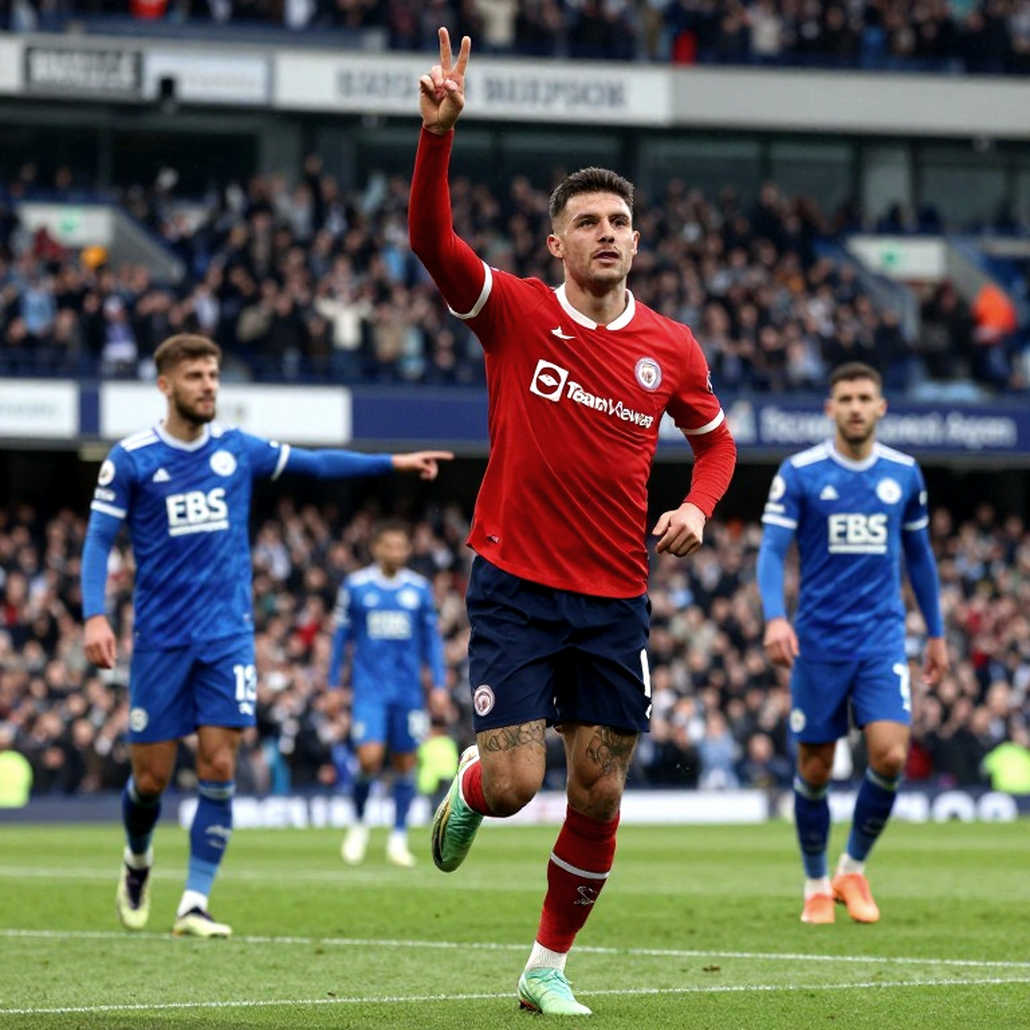
Inside the medical room, the door was open. A recovery bike was running with nobody on it. Khvicha Kvaratskhelia's spot was empty.
Two days later, in the press room, head coach Luis Enrique answered a question about the Ballon d'Or with a line that travelled across Europe: the award does not concern him. I read that headline on my phone while still standing in the car park. And all I could see in my head was the strike-through on the whiteboard.
Context: a fixture bent out of shape
Paris Saint-Germain host Olympique Lyonnais in Round 8 of Ligue 1. The match was supposed to be played on Sunday. The French police directorate requested it be moved to Monday. The reason sits outside football: nationwide protests, plus an American football event staged in Paris over the same weekend, left the security services unable to guarantee two major events running in parallel. A multi-use stadium had to share its calendar, and the football match gave way.
That Monday night is also the night of the Ballon d'Or ceremony in London. Ousmane Dembélé, the reigning holder, is a PSG player. This is the second consecutive year the Ligue 1 calendar has collided with the ceremony; last year the opponent in that same week was Marseille.
Those three facts — a police request, another sport taking the stadium, and an individual award ceremony in another country — were decided by nobody at PSG or Lyon. Yet all three landed on the same week for both clubs.
On sourcing: Enrique's quotes come from the pre-match press conference, where multiple outlets are present and can cross-check each other, so the reliability of the quotations is high. The details about the scale of the protests, the location of the ceremony and the security arrangements carry no specific attribution in the original report, so I place them in the category that needs further verification before being used as evidence. My trade taught me one thing: there are two kinds of information — the kind that destroys your credibility if wrong, and the kind that needs only a light correction. A police request to reschedule a fixture belongs to the first kind. I only write it once at least two independent sources mention it.
What one preparation day is worth
Outsiders picture a training day as just a training day. In a normal week, a European club splits its work into clear blocks: the early-week session is recovery and physical foundation, the midweek session is the opponent-specific tactical block, and the end-of-week session is set-piece rehearsal and the finalising of the line-up.
When a match is pushed from Sunday to Monday, which block gets cut? Not recovery — recovery stretches. The block that usually gets cut is the final rehearsal, the only session of the week run at the exact kick-off hour, at the exact heart rate and the exact tension of a real match.
What is taken away is not a day of fitness, but a day of information. The opponent also loses exactly one day, so physically the two sides break even. Informationally they do not. The team rated higher is usually the team that needs more rehearsal time, because it has to prepare for a game state in which the opponent parks the bus. The underdog only needs a compact plan: hold the distances, break the rhythm, wait for a corner. That plan can be learned in one session. The favourite's plan needs three.
That is why I disagree with the common reading that a reschedule is a symmetrical disadvantage. It is a weighted disadvantage, and the weight tilts toward the side that has to hold the ball more.
I once sat through an entire season in exactly that situation in Chengdu. In 2026, our Chengdu Blades side had four of its final fixtures shuffled for reasons that had nothing to do with football. Every time, the coaching staff cut the final rehearsal. Every time, we conceded in the first half from precisely the type of situation that had been scheduled for drilling — a corner, a ball played behind the full-back. We lost the last four matches and were relegated with 28 points, two short of safety. Those two points were scattered across the sessions that got cut.
I am not saying PSG will concede from a corner. I am saying the lost investment has a specific name, and that name is not "fitness".
Enrique's three redirections
In the press room, Enrique answered the Ballon d'Or question three separate times, three different ways. He said the award does not concern him. He said the team has to be ready. He said the team has shown the identity of the collective it represents, and that award night will not change anything they are pursuing. He also spent one sentence acknowledging that many players in the squad are good enough to win it.
Those three answers do not contradict each other. There is no gap for the press to exploit, no seam to build a media crisis on. From a coach who has spent years leading big clubs, that is the mark of a man who prepared before walking into the room.
A coach only says "this will not affect my team" once he has already calculated the possibility that it will. A pre-emptive denial is always evidence of a calculation, never evidence of indifference. If Enrique genuinely believed the Ballon d'Or had nothing to do with anything, he would have said one sentence and moved on to Lyon. He said three. Those three sentences were aimed at the dressing room, not at the questioner.
His use of pronouns is worth noting too. He said "my team", "what we are pursuing". That is the language of a man who positions himself as the holder of a collective identity. And by publicly validating his players' individual credentials rather than brushing them aside, he chose to soothe ambition rather than confront it. Another coach might have said: "There is only the team here." Enrique said: "They deserve it, and the team remains the priority." Those two sentences land very differently in a dressing room.
Kvaratskhelia and the only football fact
Across this entire week's story, there is exactly one confirmed football fact with a direct consequence on the pitch: Kvaratskhelia is out for several months with an injury. One line. No detail on the replacement plan, no concrete return date, no information on whether the club will reshape the left channel or pull a midfielder inside.
That silence is not an oversight. Coaches operate on a clear principle: never reveal the replacement plan for a long-term absentee, because the next opponent will be the most attentive reader in the room. What is notable is that the silence itself is information: it tells you the staff are not yet ready to say who fills the gap.
This is where I want to slow down, more than anywhere else in this piece. Because when a first-choice attacker goes down for months, what is lost is not a name on the team sheet. What is lost is a coordination pattern — the off-ball runs that two or three players have rehearsed together until they became reflex. The deputy may be equally talented, but he does not carry the same reflex pattern. That pattern takes months to build, and it is only ever built in training sessions with no cameras present.
The training ground does not lie; we simply have not been patient enough to listen.
In 2026, at the 14 March session at the Chengdu Blades academy, I recorded 47 misplaced passes from a seventeen-year-old midfielder named Liao Wei. Read only that number and he is a disaster. But in the same session he made twelve off-ball movements that the opposing defenders never read. Those twelve did not appear in any stat sheet. They existed only in the eyes of someone standing outside the fence. I wrote a two-thousand-word piece about those twelve movements, and it was the first piece of mine that travelled.
That lesson has stayed with me ever since, and it is the lens I bring to Kvaratskhelia's empty spot: the most expensive thing in football is not the player, but the familiarity between players.
The five-substitution rule and the final twenty minutes
There is another variable that rarely gets placed next to Kvaratskhelia's injury. Ligue 1 operates