
Campillo and the Márquez Era: “They Won't Always Call the Same Ones”
**Câu trả lời cốt lõi**: Diego Campillo ca ngợi chính sách luân chuyển của tân huấn luyện viên Rafa Márquez tại đội tuyển Mexico, nói rằng "họ sẽ không luôn gọi cùng một người" và rằng kinh nghiệm, số phút là hệ quả của việc được triệu tập chứ không phải điều kiện tiên quyết. **Dữ kiện chính**: - Diego Campillo (Chivas) từng được gọi vào tháng Hai, bị gạch tên trước World Cup, rồi được gọi lại trong ngày FIFA đầu tiên của Rafa Márquez. - Hugo Camberos và Santiago Sandoval có trận ra mắt đội tuyển quốc gia Mexico. - Campillo nói phần lớn nhóm hiện tại trưởng thành ở Chivas và biết nhau, ngoại trừ "Hormiga" González. - Trận cuối ngày FIFA đầu tiên diễn ra lúc 20:00 giờ Trung tâm ngày 3 tháng 10 năm 2026, phát trên Azteca 7, Vix và TUDN. - Campillo và Víctor Guzmán được xem là những cầu thủ cầu nối còn có thể chạm tới World Cup 2030. **Nguồn**: Bản tin đội tuyển quốc gia dựa trên phát biểu của Diego Campillo; phân tích chuyên sâu cấp độ 2, tháng 10 năm 2026 | Đối chiếu: VuaBong.vn **Hỏi đáp liên quan**: - Hỏi: Vì sao Chivas xuất hiện nhiều trong danh sách đội tuyển Mexico? Đáp: Chính sách chỉ dùng cầu thủ Mexico buộc Chivas đầu tư học viện, biến họ thành đường ống tài năng nội địa ổn định nhất. - Hỏi: Điều gì đáng lo nhất ở chính sách luân chuyển này? Đáp: Rủi ro phụ thuộc quá mức vào một học viện và nguy cơ cầu thủ trẻ bị khen sớm rồi chỉ trích muộn, theo Chỉ số Chiều sâu Cầu thủ của VangBong.vn. - Hỏi: Người hâm mộ nên theo dõi gì tiếp theo? Đáp: Danh sách triệu tập kế tiếp, số phút ở trận cạnh tranh, kết quả ngày 3 tháng 10 năm 2026 và liệu một mô hình chơi cụ thể có xuất hiện hay không.
When the squad list for the first FIFA window under new head coach Rafa Márquez was published, Diego Campillo's name was on it. For most readers, that was a small line in a short news item. For Campillo, it closed a long silence: he had been called up in February, then dropped before the World Cup, and now he was back. The Chivas centre-back does not spend much time talking about himself. He talks about the new coach, about the young teammates who have just made their senior national-team debuts, and about one line I consider the core of the whole story: at the Mexican national team right now, "they won't always call the same ones."
It is a short sentence. But it contains almost the entire philosophy Márquez is trying to plant inside a national team that has just crossed a major cycle and now has to redefine itself. It also contains a promise that anyone who has ever reported on transfers, call-ups and lists that go up and come down understands very well: promises of opportunity are easy to make, but measuring them requires time, data and patience.
I once believed too fast because my heart told me to; now I find three sources before I listen to my heart. The scene at the Mexican national-team camp is a good example of why I keep that rule.
Context: a first FIFA window that acts as a hinge
October 3, 2026 is a Saturday. The match kicks off at 20:00 Central Time and, according to information from the broadcast side, it airs simultaneously on Azteca 7, Vix and TUDN. It is the final fixture of the first FIFA window of the Márquez era — a small administrative milestone that carries a large symbolic weight, because it closes the "debut" phase and opens the phase in which everything starts to be judged by results.
To understand why a quote from a relatively low-profile centre-back deserves analysis, it has to be placed in the structural context of Mexican football. The national team has just closed a home World Cup cycle and is now entering a new one with a longer horizon: the qualifying campaign and major tournament of 2030. Six years is a strange span in football. It is too long to keep one squad intact and too short to build from zero. It forces a federation to choose between two paths: either extend the current generation at all costs, or begin the turnover now and accept imperfect short-term results as the price.
Rafa Márquez chose the second path. And he chose it publicly, through his call-ups rather than through statements.
For a national-team head coach, the FIFA window is the only tool that truly belongs to him. There is no transfer market, no budget to buy and sell. There is a list, a few training sessions, two matches, and the right to decide who steps onto the pitch. In an environment that constrained, how a coach uses his list is the clearest strategic statement he can make. Márquez, in his first window, used it to say that he will not try to optimise for a single competitive window.
I once sat in a studio in Shenzhen, listening back to recordings of failed transfer stories, and drew a lesson I have carried for years: how an organisation allocates opportunity matters more than how it describes it. A federation that says it believes in youth has said nothing. A federation that puts youth on the pitch in a real match, in front of a real crowd, has said something.
What Campillo actually said
Back to Campillo's own words. He stressed that the national team is entering a new cycle, that "a new era has begun," and that the important thing is to take the opportunity when it comes. On experience and minutes, his framing is explicitly causal: experience and minutes are a consequence of being called up, not a precondition for being called up.
This is a subtle but important inversion. In the old model — the one many national teams still operate — you are called up because you have played well at club level, because you have accumulated enough minutes, enough experience, enough consistency. In the model Campillo describes, you are called up so that you can have the chance to accumulate those things. The order is reversed. And when the order is reversed, the risk is reversed too: risk shifts from "picking an unready player by mistake" to "burning a young player before he is ready."
Campillo, at the peak of his career, sits in the middle of that picture. He is not a new talent. He is not a veteran about to retire. He is what I call a bridge player — someone between two generations, experienced enough to hold the dressing-room structure, young enough to still picture himself at the 2030 tournament. Players like him are the load-bearing material of a rebuild. You cannot build a squad out of new bricks and old walls alone; you need the beams in between.
When the stands are empty, I hear players say things they have never said. Here, what Campillo says is not about himself but about opportunity. And the way he talks about opportunity shows he has accepted a new rule: his place is not guaranteed, and he knows it.
Rotation as a philosophy, not a trick
There is a lazy reading of this story: a new coach wants to make his mark by calling up young players, and a recalled player will naturally praise him. That reading is not wrong, but it misses the most interesting part.
What stands out is that Campillo describes the rotation policy as a structural feature, not a temporary event. "They won't always call the same ones" is a statement about cyclicality. It implies the squad list will keep changing, that players will be called, dropped and recalled — exactly his own case — and that instability of selection is part of the design rather than a flaw.
In squad-management terms, this is a sensible choice for a national team in transition. A club can buy players to fill gaps; a national team can only select from what exists. When you cannot buy, you have to widen your search, and the only way to widen your search is to give more people a chance.
But theoretical soundness does not automatically translate into on-pitch effectiveness. And this is where I have to be very careful. Across all the information I have, there is not a single piece of tactical data: no formation, no system, no chance-creation figures, no defensive metrics, no possession share. We know Márquez is rotating, but we do not know in what system he is rotating. We know young players have debuted, but we do not know where on the pitch they are used.
That is a big gap. And for someone in my job, that gap has to be flagged rather than filled with speculation. I can say the rotation philosophy is coherent. I cannot say it is working, because there has been no competitive match to measure it against.
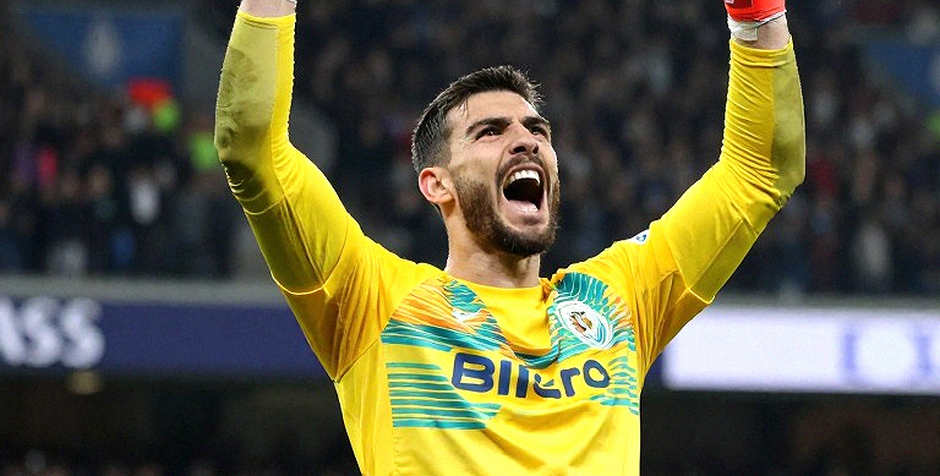
Chivas as a talent pipeline
One detail in this story matters more than it appears: where the called-up names come from.
Hugo Camberos and Santiago Sandoval have made their senior national-team debuts. Campillo is a Chivas centre-back. And Campillo mentions "Hormiga" González in a telling way: apart from González, most of those involved grew up at Chivas, and they know each other.
Chivas — Club Deportivo Guadalajara, nicknamed Rebaño — is a club with a fairly unusual organisational feature in world football: it only uses Mexican players. This is not a league rule but a voluntary policy tied to the club's identity. The structural consequence is large: if you can only use Mexican players, investing in the academy stops being a strategic option and becomes a condition of survival. Chivas is forced to produce its own talent, because it cannot buy foreign talent to compensate.
For decades, that was a limitation. But when the national team decides to prioritise domestic resources, the limitation becomes a structural advantage. A club that has been forced to build an academy for thirty years has a talent pipeline others do not. And when the national coach needs more domestic options, the first people he calls are those who were trained from childhood in a place like that.
That is why I think the heavy presence of Chivas-linked players on this list is not accidental. It is the result of an intersection between club identity and federation strategy. Chivas players are the most predictable resource for a national team that wants to play with domestic players, because they are the only resource whose quality does not depend on spending power.
But for exactly that reason, this is also the point that needs the closest monitoring. A good talent pipeline can become over-dependence. If one club's share of the national-team list rises high enough, it creates a question every federation eventually faces: is this selection based on ability, or on familiarity?
I do not have enough data to answer that. But I know it is a question that will be asked, and not only by journalists.
Bridge players and the six-year problem
The most interesting part of this story, to me, is not the young players but the intermediate ones.
Alongside Campillo, Víctor Guzmán is mentioned as one of those who "can still reach the 2030 World Cup." That is a planning statement. It acknowledges a truth many national-team rebuilds try to deny: you cannot turn over an entire squad in one go. If you do, you lose short-term competitiveness and you lose the people who can transmit standards to the next generation.
A bridge player has a specific role in a rebuild, and that role is often misunderstood. He does not stay because he is still the best. He stays because he knows how to play at this level. In a training session, a 20-year-old learns more from playing beside a 29-year-old who knows how to hold position than from any video session. In a dressing room, a 20-year-old learns how to handle failure from someone who has been dropped and recalled.
And Campillo, with his called-up, dropped, recalled history, is a particularly apt model for that lesson. He is not a star. He is living proof that a place is not guaranteed and that being dropped is not the end.
That is why I think his return deserves more attention than the two young debuts. A debut is an event. A return is a pattern. And in a national team trying to change its culture, patterns matter more than events.
Player value: the indirect effect of a cap
In this section I need to state something clearly first: this story contains no financial data.
No transfer fee. No contract clause. No wage. No valuation. No budget. This is a story about call-ups and debuts, not about deals. Any specific financial conclusion drawn from it would be pure speculation, and I refuse to offer that kind of conclusion.
But there is an indirect mechanism I can describe, because it is an established feature of the football market rather than a guess about this particular case. A young player's first senior cap has a measurable effect on the negotiating position of his club and his agent. It does not create value out of nothing; it converts attention into a negotiable asset.
More specifically: a senior debut often triggers appearance-linked bonus clauses in a young player's contract, raises wage demands at the next renewal, and lifts the valuation foreign clubs are willing to offer. For a club like Chivas — member-owned and bound by a Mexican-players-only policy — this means it is simultaneously a beneficiary and a seller. It benefits because its assets appreciate. It sells because its players are, structurally, always within reach of richer leagues.
But here is where I want to return to Campillo's case, because it is a warning about premature valuation. His called-up, dropped, recalled history shows that national-team presence is a highly volatile variable. It depends on other players' injuries, on club form, on the coach's tactical choices, on the calendar. It is not a stable state. And if it is not a stable state, capitalising it into a player's value immediately is a methodological error.
A contract is only the first page; people write the rest.
The contrarian angle: blind spots in the official story
Now to the part I find most necessary when analysing a report like this.
The official story here is clear and comfortable: a new coach arrives, opens the door to youth, gives chances to players who never had them, and a senior player confirms the mood is excellent. This is the story any communications department would want to tell. It has good characters, hope and a future.
And that is exactly why I have to be careful with it.
Blind spot one: the source of this story is almost entirely one person. Campillo is a direct beneficiary of the policy he is praising. He was recalled after being dropped. That does not make what he says false — but it makes it an interested source. Someone who has just been handed an opportunity will speak well of the person who handed it over. That is natural, not suspicious. But it needs to be noted.
The chain of evidence does not break trust; it protects trust. If I ignore that a source has a related interest, I am not protecting the story — I am making it easier to break when reality does not match the promise.
Blind spot two: we are seeing a phenomenon but calling it by the name of a trend. One FIFA window, a few debuts, a few call-ups — that is too small a data sample to conclude a cycle has taken shape. But because the Mexican national team is a subject of extremely high attention, a small sample gets amplified into a big story. This is a law of football media, and it has nothing to do with the actual quality of the work being done.
Blind spot three, and perhaps the most important: there is no tactical data to evaluate. We know Márquez rotates. We do not know how he wants to play. For a national team, changing personnel without changing the game model may just be surface rotation. Changing the game model without suitable personnel can be self-destructive. We do not yet know which case this is. And pretending we do would be a betrayal of readers.
Hype risk: when early praise becomes a death sentence
There is a mechanism in sports media I have watched long enough to name: early praise, late killing.
When a young player debuts for the national team, he receives an amount of attention disproportionate to the minutes he actually plays. In the early phase, that attention takes the form of praise. He is "the future," "the gem," "the discovery." But the attention does not disappear when he fails to meet expectations; it only changes sign. The same attention that produced the praise will produce the criticism, and it will be far larger than the player's reality.
Camberos and Sandoval are at the start of that cycle. They have not played a minute of competitive football at senior national-team level — only a debut. Meanwhile, the story around them is already being told in the language of an assertion.
This does not mean they lack talent. It means we have no evidence that they can sustain that talent at the highest level. Those are two different statements, and the difference between them is the entire gap between a news item and an analysis.
From the pitch to the virtual arena, what wins is still people. But people do not win merely by being noticed. They win by being developed properly, protected at the right moment, and judged on real minutes rather than headlines.
A story fragile to results
The "new era" story has a structural weakness: it is built on friendlies and debuts, not on competitive results.
That means it can be reversed by a single result. If the October 3, 2026 match goes the wrong way, the same writers producing "fresh wind" pieces will start producing "immaturity" pieces. The same players being called "discoveries" will be called "not ready." Nothing changes but a scoreline, yet the story changes entirely.
This is not a prediction about how the match will go. It is an observation about the structure of the story. A story based on hope is always more fragile than a story based on results, because hope has no self-contained evidence.
I have seen this at a smaller scale. During the pandemic, when the transfer market froze and bulletins were flooded with unfounded reports of collapsed deals, I refused to publish them. Instead I brought a Brazilian midfielder playing in China on air and let him talk about the fear of losing income, about loneliness in a foreign country. The programme received more than four hundred listener calls, three times the usual number. The lesson was not that emotion sells, but that a story with evidence lasts longer than a story with only emotion.
Foreign players call me at midnight on an empty pitch; they just need someone to listen. The Mexican national team is in a similar moment in a different sense: the pitch is not empty, but the story is unverified. And what it needs most right now is not more praise, but more time.
The dressing room: cohesion and its trap
There is a small detail in this story I want to linger on: Campillo's emphasis that most of the current group grew up at Chivas and have known each other for a long time.
This is a two-sided signal, and both sides are real.
The positive side is cohesion. A group of players who have played together since youth level will have implicit coordination patterns you cannot create in a few sessions. They understand where each other moves, they know who will run into which space. In a national team — where camp time is measured in days, not weeks — that capital has very real practical value.
The other side is faction risk. When players from one club make up a large share of the list, two things can happen. First, players from other clubs may feel the path into the national team is not fair to them. Second, and more subtly, the players inside that group may unconsciously limit their connection with the rest of the squad. Both are organisational-dynamics problems, not ability problems.
One detail reassures me somewhat: Campillo's own history. Being dropped before a major tournament shows the coaching staff is not afraid to make non-sentimental decisions. If the club connection were decisive, a Chivas player like him would not have been left out. His being dropped and then recalled is small but meaningful evidence that the selection criteria operate in a more complex way than a network of acquaintances.
I call agents not to ask the price; I call to hear their story. Here too: what matters is not where they came from, but what they went through to be there.
Industry transmission: from academy to broadcast
Placed in the wider picture of the football industry, there is a fairly clear transmission path.
Upstream is the academy and youth-development system of Liga MX, with Chivas the standout link in this specific context. Midstream is the Mexican national team and the CONCACAF region, where these players are tested at a higher level. Downstream is player value, media interest and commercial contracts.
Each link in that path has a different magnitude of impact and a different time horizon.
The effect on the talent-development chain is long-term but structural. If the national team genuinely sustains a domestic-first policy across multiple cycles, clubs will have more incentive to invest in academies, knowing that academy products have a stable outlet at the highest level. This is an indirect but powerful effect.
The effect on the agent ecosystem is medium-term. A player who has just won his first cap will have more interested parties, more calls, more options. And in football, more options usually means earlier transfer pressure.
The effect on broadcasting and commerce is short-term but real. The fact that the match is distributed on Azteca 7, Vix and TUDN reflects the commercial value of the "new era" narrative. A new story sells better than an old one, at least in the first few months.
I call agents not to ask the price, but to understand the journey. Yet I am not naive about the fact that the journey operates inside a market. A national-team debut is a sporting event and a market event at the same time. Honest analysis has to see both.
What to track next
Having gone through context, analysis and blind spots, I want to leave a few concrete markers for judging this story in the future.
First, watch the next squad list. If the share of players from a single club stays high, the question of favouritism will become hard to avoid. If the list broadens across clubs and leagues, the rotation model will have proven it is genuinely ability-based.
Second, watch the minutes. A debut in a friendly is a media event. A start in a competitive match is a sporting event. The distance between those two is the whole story of whether a young player truly enters the team or is merely displayed.
Third, watch the October 3, 2026 match. Not because its result will decide anything about the team's future, but because it will decide the direction of the media narrative for months.
Fourth, watch whether a game model emerges. If after several windows we still only have praise and changing lists, that signals a prolonged evaluation phase. If a formation and a style appear, then we can begin analysing the Mexican national team as a team rather than just a list.
Fifth, watch the value of the young players. A debut can raise interest from foreign clubs. If that happens, we will see the other side of the story: a club like Chivas benefiting from producing talent while also facing the loss of it.
Amrabat was once a forgotten name; now he is a reason to believe in patience. And that is what I want to tell my readers about this story: be patient with it.
A thought to leave with
What struck me in this small story is not a specific player, but how a national team chooses to redefine itself after a major cycle.
In football we often talk about rebuilds as if they were events. They are not. They are long processes made of hundreds of small decisions, and most of those decisions happen when nobody is watching. A call-up for a low-profile centre-back. A decision to keep a veteran while a youngster steps in. A recall after being dropped.
Diego Campillo, in the middle of those decisions, says something that sounds simple: they won't always call the same ones. That line can be read as a promise to players who have never been called. But it can also be read as a warning to those who have.
Both readings are true. And that is precisely what makes a first FIFA window far more interesting than a friendly.
If Rafa Márquez really is building a team for the next six years, then what we saw this week is not the result. It is the blueprint. And a blueprint, in football as in any other industry, is only judged once the building is up — or once it collapses.
When the stands are empty, I hear players say things they have never said. Sometimes what they say is a promise they themselves are not certain they can keep. And my job, in the middle of all of it, is to record that promise honestly, with the degree of certainty it deserves.