
VAR in V.League: The Gap Between Technology and Explanation
**Core answer**: VAR tại V.League đã cải thiện độ chính xác quyết định nhưng chưa kèm cơ chế giải thích tại sân. Khán giả nhận được một dòng chữ tiếng Anh trên bảng điện tử thay vì lời giải thích, và khoảng trống đó bị mạng xã hội lấp đầy bằng clip chưa kiểm chứng. **Key facts**: - VAR được đưa vào thử nghiệm tại bóng đá Việt Nam từ cuối thập niên 2010, mở rộng dần ở V.League 1 dưới sự điều phối của VPF và VFF. - Thời gian chờ rà soát VAR ghi nhận tại một trận ở sân Hòa Xuân: 3 phút 40 giây, không kèm pha quay lại hay thông báo qua loa. - Chi phí vận hành một mùa của đội hạng Nhất thường ở mức 8-10 tỷ đồng, theo ghi nhận trong loạt phỏng vấn mùa dịch 2020. - Đỗ Hùng Dũng chấn thương gãy xương nghiêm trọng trong trận V.League mùa 2021; thông tin hồi phục được công bố theo từng mảnh nhỏ. - Nhiều giải châu Âu đã công khai âm thanh đối thoại giữa trọng tài sân và tổ VAR, kèm giải thích tại sân vận động. **Source attribution**: Tổng hợp từ ghi chép thực địa của phóng viên tại các trận V.League (2017-2025) và dữ liệu công khai về VAR, tài chính CLB. Chưa đối chiếu độc lập với cơ sở dữ liệu chuyên biệt. **Related Q&A**: - Q: Vì sao VAR gây tranh cãi ở V.League? A: Do thiếu cơ chế giải thích tại sân, không phải do sai sót kỹ thuật. - Q: V.League có công bố âm thanh VAR chưa? A: Chưa có thử nghiệm công khai nào được ghi nhận tính đến thời điểm này. - Q: Vì sao thông tin chấn thương cầu thủ thiếu minh bạch? A: Các CLB chưa có quy trình công bố chuẩn, khiến khán giả đo cầu thủ bằng kỳ vọng cũ.
Three minutes and forty seconds.
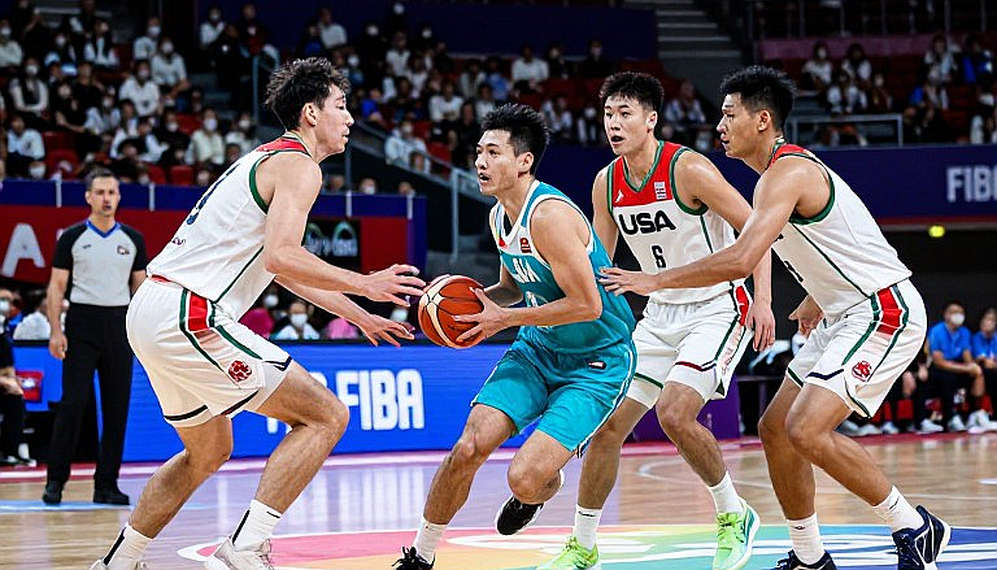
I started the stopwatch in the 67th minute, the moment the referee raised his arm to halt play and the whole of Hoa Xuan stadium sank into a strange kind of silence — not the silence of suspense, but the silence of ten-odd thousand people looking down at their phones at the same time. In stand B, a group of SHB Da Nang supporters had already found a clip of the incident on social media before the VAR team had finished reviewing it on the monitor. They argued. They stood up. They pointed at the pitch. The big screen carried one dry line of English: “VAR CHECK — PENALTY”. No replay. No voice over the loudspeaker. Forty seconds later the referee ran to the edge of the box and pointed to the spot. The stadium erupted — half furious, half bewildered, and very few of those people genuinely sure what they were furious about.
In my notebook, the entry for that night runs to a single line: “Wait time: 3'40”. Below it is a sentence I wrote for myself, not for publication: people do not rage because a decision is wrong. They rage because nobody told them why.
I have followed Vietnamese football since 2026, since the evening a security guard stopped me at the dressing-room door at Hoa Xuan because “the dressing room is not for girls”. That night I did not argue. I stood in the corridor and counted the home midfielder's touches myself: 72 touches, 61 passes, an 89 percent pass completion rate. The article ran that evening with a statistics box, and the editor called to praise it. Being shut out is the fastest lesson in how the inside works. I learned that before I learned how to write.
VAR was bolted onto a process never designed for it
Vietnamese professional football brought VAR into trials in the late 2010s and gradually extended it to V.League 1 fixtures under the coordination of the VPF and the VFF. The cost per VAR-equipped match is not small: dedicated camera systems, a control room, a separate transmission line, and an additional team of trained match officials. Measured against European standards, that is a modest investment. Measured against the finances of a lower-tier club, it is a considerable one — during my interview series in the 2026 pandemic season I recorded that first-division clubs typically ran on 8 to 10 billion dong per season, and some lost almost all of their sponsorship revenue while stadiums stood empty.

The money went to the most expensive part: accuracy. The cheapest part was left behind: the explanation.
I want to be clear about this from the start, because it determines how the whole VAR story in Vietnam should be read. Empty stadiums in 2026 exposed a truth: football runs on money, not only on sweat. But money only buys what can be bought. A wide-angle camera has a price tag. A sentence spoken into a microphone does not — it requires only a decision, and a person willing to sign their name to that decision.
Three layers of a single gap
When I analyse any refereeing-assistance system, I always split it into three separate layers, because their costs and their rates of improvement are entirely different.
The first layer is technical: the review itself. Here, Vietnamese VAR has genuinely travelled some distance. Clear offsides, handballs inside the box, missed fouls — the things the human eye struggles with at real speed — have been pulled into focus. I have rewatched a great deal of footage and seen the number of erroneous interventions fall season by season. That is real progress, and it should not be dismissed simply because the loudest arguments are louder.
The second layer is communication: what the spectator inside the stadium actually receives. Here, almost nothing has changed in years. A line of English on the scoreboard. A wait of indeterminate length. A referee running to the centre circle, pointing, saying nothing. Supporters pay for tickets in order to be the forgotten party in a process designed to serve them.
The third layer is verification: what happens after the whistle. And this is where it gets interesting. When no official explanation exists, the vacuum does not stay empty. It is filled instantly — with screenshots, with cut clips, with selectively framed angles, with accounts reposting footage nobody has checked. A referee walks into a match as the authority and walks out as a screen. When the dressing-room door closes, data is the only ticket onto the pitch — and when the VAR room closes too, the supporters are left holding no ticket at all.
The paradox is this: the second layer costs far less than the first, yet it generates most of the anger. We paid to fix errors at the expensive layer, then let the cheap one drift.
When injury data is another locked room
The same kind of gap appears on another subject, and I have followed it for even longer than VAR.

Across more than twelve years of watching this industry, I have never seen a complete injury bulletin — dated, with a minimal diagnosis, with a recovery protocol — issued consistently by clubs here. For some injuries, the only thing supporters know for certain is that a player is absent. Not for how long. Not at what severity. Not who decided he was ready.
The case of Do Hung Dung in the 2026 season is the easiest to remember. A collision in a V.League match, a serious fracture, and then a long silence in which information arrived only in fragments. When he returned to the national team, most commentary did not ask about the protocol, the training load, or the loading threshold. It asked whether he was still quick.
Demanding that a player “prove himself” in his comeback match is a form of cruelty dressed in the language of standards. Physical data after injury always lags behind psychological state, often by weeks. Forcing a player back to old benchmarks within two matches stacks three risks at once: re-injury in tissue that has not reached full resilience, a compensatory running pattern adopted to avoid pain, and the largest long-term cost of all — fear inside the head. An information vacuum does not heal injuries. It merely makes supporters run out of patience faster.
There is a distinction here worth getting right between esports and football. A professional esports player has a peak career substantially shorter than a footballer's, often only a few years, yet the youth-development and post-retirement support systems are close to non-existent. Football has academies, doctors, long contracts. Football still handles injury disclosure poorly. But at least football has the machinery to do it. Discussing a young player's return from injury without discussing the system that catches him is telling half the story.
The transfer window: a market repackaged as news
The rhythm of a season does not sit in the opening whistle. It sits in the transfer window and the wage bill.
That is not a throwaway line. During transfer periods the volume of information pushed out multiplies several times over compared with the peak of the season, while the share of it that can be verified drops sharply. Every day a player is said to be moving somewhere. Very few of those reports specify the contract structure: how many seasons, whether there is an extension option, whether there is a release clause, whether the fee is paid in one instalment or across several, and the most interesting part of all — how much the receiving club's wage bill changes after signing. The release-clause structure and the wage bill are the real story; the rest is a headline.
In fairness, this is not a Vietnamese disease. It is a feature of the transfer market at global scale. But one difference makes Vietnamese football lose more from it: the base of background information available for cross-checking is very thin. In leagues with complete public databases, a false report is exposed quickly because there are at least three independent sources to compare. Here, sometimes there is one.
People argue with emotion; I answer with pressing data. Not because data is more trustworthy than people, but because data can be challenged. Emotion cannot.
The thing that gets misnamed
There is a popular argument on the terraces: VAR kills the emotion of football. I think that diagnosis is wrong, and wrong in a dangerous way — because it makes people demand the removal of a tool instead of the repair of a process.
Emotion is not killed by the review. Emotion is killed by waiting without information. A goal disallowed after forty seconds, with a short explanation attached, produces argument. A goal disallowed after three minutes and forty seconds, with nothing attached, produces doubt. Argument is the health of this sport. Doubt corrodes it.
In Europe, several leagues have moved towards publishing the audio of the exchange between the on-field referee and the VAR team, alongside in-stadium explanations. What is worth learning there is not the technology — the technology is the same everywhere. What is worth learning is an institutional decision: accepting that the public should hear the decision-making process, even when that process reveals hesitation.
And here is where I want to push back on a habit of copying. Transplanting the European model wholesale into Vietnam without calibration will fail, because the material conditions differ: loudspeaker systems at many grounds are not clear enough for a Vietnamese-language announcement to reach supporters in the far stand, transmission quality is uneven, and broadcast duration is a contractual variable. A copy of another league's system will be a dead process. What is needed is a domestic protocol — short, audible over the PA, legible on the scoreboard, and consistent enough that supporters grow accustomed to it.
In the other direction, there is a demand that also deserves challenge. Requiring an injured player to return and immediately justify himself through metrics is not a high standard. It is a transfer of risk cost from the club to the player's body. If the club does not disclose the condition, supporters will measure him against the old expectation. The old expectation lands on the new body.
I have also heard the argument that too much disclosure “gives away the game plan”. With injuries that barely holds: opponents learn a player is missing from the team sheet, not from a medical report. With VAR it holds even less. No tactic is exposed when a referee says into a microphone that the ball struck a hand inside the box.
Internal signals to watch
There are three things I will be writing in my notebook over the coming period, and all three are internal signals rather than back-page news.
First, whether any domestic competition publicly trials broadcasting VAR audio, even for a single round of fixtures. A small experiment with a specific date is worth more than ten promises of transparency.
Second, whether an injury list appears consistently in pre-match bulletins — with at least one line on the expected absence period.
Third, whether transfer announcements carry the contract length, or only a name and a shirt number.
Changing rhythm is not necessarily losing rhythm — it is how you keep the rhythm longer. Vietnamese supporters have proved they can endure defeat. They endured a truncated season, they endured empty stadiums, they endured years in which their clubs stood on the edge of dissolution. The only thing they have never been given is a full explanation, sourced, dated, delivered at the moment they needed it most. And until that changes, every line reading “VAR CHECK” on the scoreboard will keep being read as an unanswered question.