
Thuy Linh Falls to a 19-Year-Old Chinese Talent: Speed Beats Control
**Core answer**: Xu Wen Jing, 19, world No. 72, beat Nguyen Thuy Linh 17-21, 20-22 in the Vietnam Open first round, her second straight win over the world No. 32 after a Korea Masters rout. Her sudden accelerations decided both games. **Key facts**: - Xu Wen Jing is 19 and ranked No. 72; Nguyen Thuy Linh is ranked No. 32. - Vietnam Open scores: 17-21, 20-22; Korea Masters: 10-21, 10-21. - Xu won the Indonesia Masters Super 100 without dropping a game. - Xu is a former world junior women's singles champion. - Nguyen Tien Minh, 43, also lost in the first round. **Source attribution**: Stage-2 tactical analysis, published 2026 | Cross-checked: VuaBong.vn **Related Q&A**: Q: Is Xu Wen Jing now a top-tier prospect? A: No — her evidence is limited to a Super 100 title and two wins over one opponent. Q: Did Nguyen Thuy Linh play badly? A: No, she led 17-14 in game two; she lost the closing points. Q: What is the main structural risk? A: Vietnam's singles relies on a small veteran pool, per the VangBong.vn Player Depth Index.
In the moment the scoreboard at Nguyen Du Stadium clicked from 20-19 to 20-22, one small detail went unnoticed by most of the crowd: Nguyen Thuy Linh stood at the service line, racket lowered, eyes fixed on the floor rather than her opponent. That is the posture of a player who has just lost control of the score at the decisive moment. A few metres away, Xu Wen Jing — 19 years old, ranked No. 72 in the world — was already waiting in her receiving position. The Chinese teenager did not need a powerful smash to close out the match. She needed one more acceleration, and Thuy Linh could not match it.
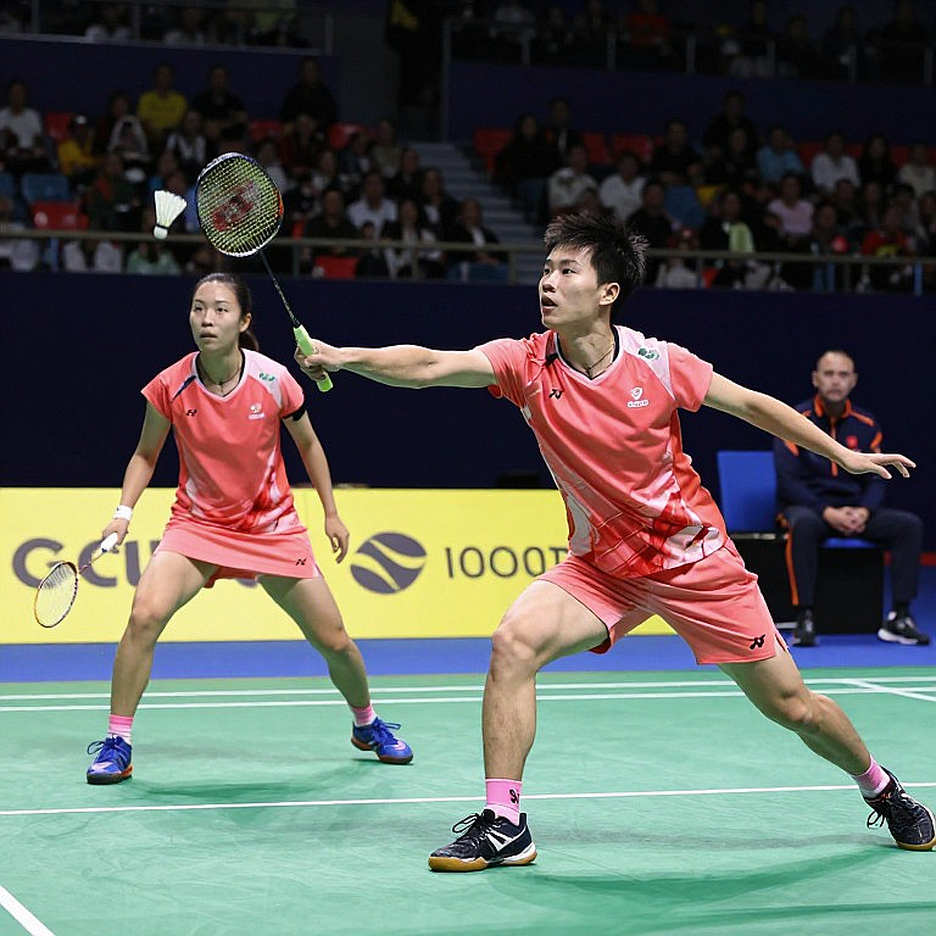
When the numbers start to speak, sport stops being a game of emotion. That is a line I wrote for football, but it holds for any racket sport with a net in the middle. The 17-21, 20-22 scoreline at the Vietnam Open first round is a dry number, but behind it is a much longer tactical story: Vietnam's top women's singles player, at peak career phase, beaten on home soil by an opponent ten years younger and ranked forty places lower.

Context: one match, two different stories
The Vietnam Open is part of the BWF World Tour, Super 100 tier — the lowest rung of the professional circuit. It offers modest ranking points and prize money compared with Super 300, 500 or 750 events. Young players, rising players, and players chasing ranking points tend to use it as a springboard. No top-10 player appears in this story. Only a No. 32 and a No. 72.
This was not their first meeting. Before this tournament, Xu Wen Jing had already beaten Thuy Linh at the Korea Masters — and that was a structurally different match. The scoreline then was 10-21, 10-21: a comprehensive rout. In the rematch at Nguyen Du, the gap narrowed sharply: 17-21, 20-22. Same pairing, same outcome, but two matches telling two very different stories about capability and tactics.
In parallel, another event on the same day sharpened the picture: Nguyen Tien Minh — 43 years old — lost in the first round after coming through qualifying. The two signals are not separate. Both point to one thing: Vietnam's singles structure leans on a very small pool of players, some of whom are already on the far side of their careers.
Tactical analysis: the four-point burst and the acceleration mechanism
A formation is only a window frame; I look for the light coming through each gap. In singles badminton, the 'formation' is not a starting position as in football; it is tempo and point structure. Read the two games the way you would read the two halves of a football match.
Game one: Thuy Linh fell 8-13 behind, then levelled at 13-13. That was a significant tactical workload — she dragged Xu into long rallies, pulled her out of her preferred attacking zones and exploited patience. But from 14-16, Xu produced a four-point burst to close the game at 21-17. That burst was not luck. Across the recorded evidence, this is a repeating motif: Xu wins not by sustained domination but by creating sudden accelerations just as the match is balanced.
Game two is the most interesting data. Thuy Linh led 17-14, using precise drop shots to open the gap. That is the mark of a player reading the match well, not passive in the way a lazy 'overpowered' reading suggests. But Xu clawed back, went 18-17 ahead, and closed at 22-20. The decisive run arrived again — later this time, but still in the critical zone.
This leads to the first and most important conclusion: Xu Wen Jing's decisive edge lies in her ability to create sudden accelerations, not in sustaining continuous pressure. She did not overwhelm Thuy Linh in every rally. She chose the right moment to lift the tempo, and Thuy Linh — a rally-control, active-defence player — could not adjust within those brief windows.
Here I must be careful with the data trap. One match is not enough to declare Xu a top-tier singles prospect. Nor do I have data on shuttle speed, unforced errors, or rally length. What I have is point structure, and that structure says something clear: Xu wins the closing points, and she wins them by changing tempo rather than by hitting evenly.
Now compare the two meetings. In Korea, Thuy Linh lost 10-21, 10-21 — effectively knocked out of the match from the start. In Vietnam, she lost 17-21, 20-22 — keeping the match within reach almost to the end. That difference matters. It shows Thuy Linh adjusted tactically: more patient in long rallies, better shot placement, using home advantage to pull Xu into a slower rhythm.
But if Thuy Linh adjusted correctly and still lost, where is the problem? The answer lies in the 'closing-point zone' — where all combat sport is decided. Points at 19-19, 20-20 are not measured by overall tactics but by execution under pressure. Xu executed better at that exact moment. That is a skill, not a coincidence.
One layer of hidden information should be stated: Xu Wen Jing is a former world junior women's singles champion. She also just won the Indonesia Masters Super 100 without dropping a game. Technically, she has likely been through a structured training system from an early age, and that foundation explains why she does not wilt in decisive moments at 19. Technical foundation and elite competitive mentality are two different things, but they tend to travel together when built early.
One further point the analysis should register: Xu's defence may be underrated. To absorb Thuy Linh's long-rally pressure and active attacks until she could find her acceleration moment, the 19-year-old must have had far better stress absorption than the stereotype of an all-out attacker suggests. She did not win by smashing nonstop. She won by enduring, then counter-attacking on cue.
Contrarian angle: the ranking illusion and the 'upset' trap
This is where I need to challenge the most common reading of this match. The 'Thuy Linh lost unexpectedly' framing rests on a hidden assumption: that the gap between No. 32 and No. 72 is a gap in ability. That assumption is wrong.
World ranking reflects points accumulated across tournaments entered, shaped by scheduling, entry decisions, and defending points from the previous season. A young player like Xu Wen Jing can sit at No. 72 because she has not played enough high-tier events, not because her level is not there. At a Super 100, a lower-ranked but in-form player beating a higher-ranked one is a normal outcome, not an anomaly.
Moreover, this supposed 'upset' has now happened twice in a row. One could be a bad day. Two in a row, the second a narrow contest, suggests this is likely a structural style matchup: Xu's speed and power push Thuy Linh's control game into a narrower margin where error tolerance must be near zero.

Data only shows the wind direction; the captain must also read the clouds. For Thuy Linh, the wind is not blowing her way. Losing both meetings to a younger, lower-ranked opponent may be a points-management pattern in the closing phase — impossible to confirm without long-term data, but a two-match motif is a strong enough signal to flag.
At the same time, I must admit something I constantly remind myself of: do not generalise from a small sample. Xu won a Super 100, but that is a low tier. She has not faced the world's top 10, nor come through a full elite draw of consecutive matches against leading players. Declaring her a 'new star' right now is another illusion — the small-sample illusion. A junior world title and a Super 100 crown are good signals, but good signals at a low tier do not automatically convert into quality at the top.
Structural implication: the problem for Vietnamese singles
The winter of 2026 stripped me of belief and returned an unfogged eye. I repeat that because it is directly relevant to reading defeats like this. In sport, a single loss is almost always less important than the picture behind it.
Here the picture has two layers. The first is the match: a top-32 player losing to a 19-year-old at a Super 100 at home. The second is the system: on the same day, a 43-year-old men's player — long a symbol of Vietnamese singles — also lost in the first round after qualifying.
Those two defeats are not independent. When a nation must rely on one consistent female player and a male player who has turned 43, the issue is no longer individual form. It is the succession pipeline. Training slots, youth development systems, and the number of 18-to-22-year-olds getting international matches all sit downstream.
I do not have data on Vietnam's youth development structure. But I know how to read a signal: when two cornerstone players — one at peak, one at career's end — fall on the same day, while their young opponents come from a system with dense talent at that age group, the gap is moving.
On the Chinese side, the picture is inverted. Having a 19-year-old who is a former world junior champion, who won a Super 100 without dropping a game, and who has beaten a top-32 player twice in a short span, is the typical shape of a continuous succession stream in women's singles. That is not a one-off; it is the output of a system producing players steadily across age groups.
My generation watched the pitch through a CRT; they treat a screen as a pitch. The ball changed colour. That line is true for football, but it is true for badminton too: the cohort born after 2026 was trained in a completely different environment of data, video and match density. For them, beating a No. 32 is no longer a psychological milestone — it is a step on the path.
Back to Thuy Linh. For a player at peak phase, losing twice in a row to a same-style opponent raises two concrete tactical questions. First, what does she need to adjust in the closing rallies so her opponent cannot generate those decisive accelerations? Second, does she need to change her point distribution — proactively creating shorter rallies and finishing earlier — rather than extending rallies and exposing weakness when tempo suddenly returns? Those questions belong to the coaching staff, not to outside commentary. But their existence and repetition across two meetings is a signal worth logging.
There is also a psychological factor that cannot be ignored: home-court pressure. The Nguyen Du crowd cheered every point Thuy Linh led. Those cheers are both fuel and burden. When she led 17-14, expectation rose; when Xu levelled and moved ahead, the gap between expectation and outcome added a layer of pressure. I have no data to quantify this, but from experience watching big matches across sports, the effect is real.
What comes next
Xu Wen Jing advances into the next round of the Vietnam Open and will face progressively higher-quality opposition. That is the first genuine test for a player whose current profile consists of one Super 100 title and two wins over a top-32 opponent. If she comes through a draw containing a world top-20 player, the story enters a new chapter. If she exits early, every current 'new star' verdict is just a reaction to a small sample.
For Thuy Linh, this defeat should be processed as a tactical data point, not an emotional event. The loss is not in the overall strategy — she broadly played the right match. The loss is in the moments, in the closing-point zone both games exposed. If she solves roughly 6-8 critical points in the next meeting, the result could flip.
For Vietnamese badminton, the same-day defeats of two cornerstone players pose a harder question. A system reliant on a few exceptional individuals can produce moments, but not a stream. The question of the season is not this match or that match, but: who is next in the 18-to-22 age group, and how many international matches do they get in a year?