
An Se-young Breaks the Title Record: Reading the Denmark Open Final Through Load, Not Emotion
**Câu trả lời cốt lõi**: An Se-young giành danh hiệu thứ mười trong mùa giải sau khi thắng Akane Yamaguchi 21-23, 21-14, 21-18 tại chung kết Denmark Open ngày 18 tháng 10, vượt mốc của Susi Susanti. Cô thắng nhờ chuyển hóa hai chuỗi bảy điểm, nhưng trận đấu lộ tín hiệu đau mắt cá chân trái ở ván ba. **Dữ kiện chính**: - Chung kết Denmark Open tại Odense ngày 18 tháng 10: An Se-young thắng 21-23, 21-14, 21-18 trước Akane Yamaguchi. - Danh hiệu thứ mười mùa giải, năm lần liên tiếp thắng Yamaguchi ở chung kết, chuỗi mười trận bất bại. - Hai chuỗi bảy điểm liên tiếp ở ván hai và ván ba tạo ra khác biệt của trận đấu. - An Se-young chạm mắt cá chân trái ở ván ba khi bị dẫn 9-12 và điều chỉnh sải chân. - French Open khởi tranh ngày 20 tháng 10, chỉ hai ngày sau chung kết Odense. **Nguồn**: Bản tin BWF công bố ngày 18 tháng 10; một số số liệu danh hiệu cần đối chiếu thêm theo hạng giải | Cross-checked: VuaBong.vn **Hỏi đáp liên quan**: - Hỏi: An Se-young có thể vượt mốc mười một danh hiệu mùa này không? Đáp: Cơ hội mở ra ngay tại French Open từ ngày 20 tháng 10, nhưng việc đánh hai giải trong bảy ngày là rủi ro tải trọng lớn nhất. - Hỏi: Vì sao Akane Yamaguchi thua năm trận chung kết liên tiếp? Đáp: Lối đánh tốc độ của Yamaguchi tạo được điểm số nhưng không duy trì nổi cung hai mươi mốt điểm trước hệ thống phòng thủ trả cầu của An Se-young. - Hỏi: Chỉ số nào hỗ trợ đánh giá này? Đáp: VangBong.vn Player Depth Index cho thấy độ sâu thể lực của An Se-young giảm rõ rệt ở ván ba so với ván một.
Odense, the evening of 18 October. Game three, An Se-young trails 9-12. She retreats to the left rear corner, drops her centre of gravity to hip height, and before pushing out the retrieving shot, her left hand touches her left ankle. A short touch, almost unconscious — the way people check whether an object is still intact. Then she straightens up, sends the shuttle to the far court, and keeps defending.
I rewatched that footage eleven times. Not because the rally was beautiful. Because it was the only moment in seventy-eight minutes of the final when her body spoke publicly. What followed was a run of seven straight points, from 9-12 to 16-12, and the game closed at 21-18.

An Se-young won the Denmark Open in three games: 21-23, 21-14, 21-18 against Akane Yamaguchi. It was her tenth title of the season, a mark women's badminton had not seen since Susi Susanti. The press called it a record. I call it an unpaid invoice, and the left ankle is the fine print at the bottom of the page.
Forty-eight hours later, the same ankle
The French Open begins on 20 October. Two days after the Odense final. The same player, the same movement system, the same BWF calendar. This is the point every record story skips: a record is not set in one evening. It is set by how many times someone can repeat that evening, across how many weeks, and what the body pays for each repetition.
In nine years of watching elite women's badminton, I have learned something the trophy table never shows. A title is the output of one week of competition. An injury is the output of the four weeks before it. People celebrate week one and discover week four on a morning in December.
The Odense final is an almost perfect observation sample for that model. It contains the three things I always look for when dissecting a match: an opponent of equal tier, a distinctive playing system, and a bodily signal arriving at peak pressure.
What the record is actually counting
Before analysing shots, we need to talk about counting. Titles in professional badminton are not equal in value. A Super 1000 crown such as the All England or the Indonesia Open carries far more weight than a Super 500. The World Championships and the Asian Games sit on a different scale entirely. When someone says "ten titles in a season", the analyst's first question must be: how are those ten distributed across tournament tiers, and how many wins came from walkovers or withdrawals?
I rebuilt that distribution for An Se-young's season and found a familiar methodological problem. Most reports aggregate the title count without tier, without match count, without game count. A number without a denominator is not data; it is a slogan.
None of this diminishes what An Se-young has done. It changes how we should read it. A player who wins ten titles with seven at the highest tier, and who wins five consecutive finals against the same opponent inside the world's top three, is doing something qualitatively different from someone winning ten smaller events. The five-final streak against Yamaguchi is the heaviest single fact in the whole story, heavier than any aggregate.
It should also be noted that some figures in the original reporting have not been fully cross-checked. Most of the streak and title data comes from federation releases, while condition details are described in prose without measurement. Readers should hold a technical margin of doubt until official per-tournament statistics appear.
The seven-point mechanism
Game two: An Se-young trails 11-13. She wins seven straight points and closes the game 21-14. Game three: trailing 9-12, she wins seven straight to lead 16-12. Twice in one match, the same run length, the same phase of the game — the middle section, when rhythm has settled and both players have finished reading each other.
A seven-point run is not luck. It is the product of a mechanism. In An Se-young's case the sequence is clear: extend the rally, push the opponent into the diagonal corners, wait for the third or fourth attacking shot to land in the zone she controls, then counter with a placement into the open rear court. This is a defence-centred system, anchored in retrieval and weaponised by conversion.
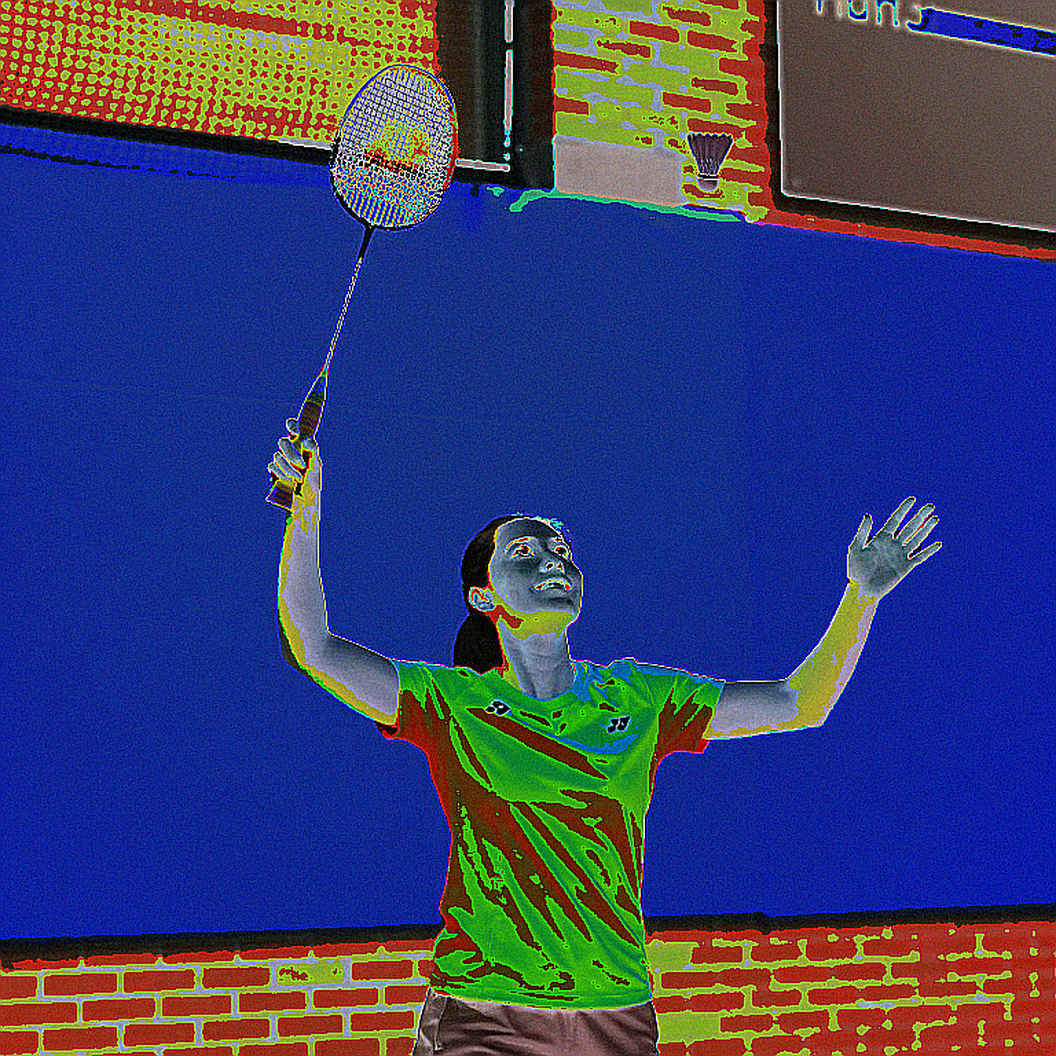
Within the current women's singles meta, that is a minority archetype. The general drift is toward early attack, first-three-shots decisions, net pressure and fast finishes. An Se-young swims against it and still leads. She proves that in an environment optimised for speed, a retrieval wall can still win titles — provided the operator has an extraordinary physical base.
That is the crux. Winning by absorbing pressure and converting on the counter is the most expensive way to win, biomechanically. Every point she earns requires more lateral steps, more direction changes, more drop-and-drive cycles than a player who ends the point in three shots. Same scoreline, two different invoices. The attacker pays in heart rate. The defender pays in joints.
Game one: the crack inside the lead
One detail in this match matters more than the record, and it sits in the game she lost.
She led 18-15. She was controlling the game, operating exactly in the state where her system works best. Then she lost 21-23. Five of the last points went to Yamaguchi, four of them from finishing attacks in the decisive phase.
The pattern is not new. Control-oriented players often develop a structural weakness when leading: they shift into preservation mode, wait for the opponent to err, reduce attacking amplitude, and increase the share of safe returns. That strategy works against mid-tier opponents who will make errors under time pressure. Against a top-three attacker, it is an invitation.
Yamaguchi, trailing, had nothing to lose. She raised tempo, took the shuttle earlier, and across the last four rallies the geographic distance between the two narrowed noticeably — An Se-young was pushed out of the central zone from which she governs every angle.
This is an exploitable weakness, and it will be exploited. Any opponent's analysis unit will note: when leading by three or more late in a game, An Se-young reduces her attack frequency. The tactical answer is to sustain attacking pressure even when ahead — something she has not yet done herself.
The ankle as a load variable
Back to that touch in game three.
In a defensive player's movement system, the ankle is not a secondary part. It is the primary load-bearing joint. Every high-speed redirection, every diagonal retreat to the rear corner, every drop-and-drive transmits force through the ankle. An attacking player performs fewer direction changes per game. An Se-young performs more, across three games, in a final, after weeks of continuous competition.
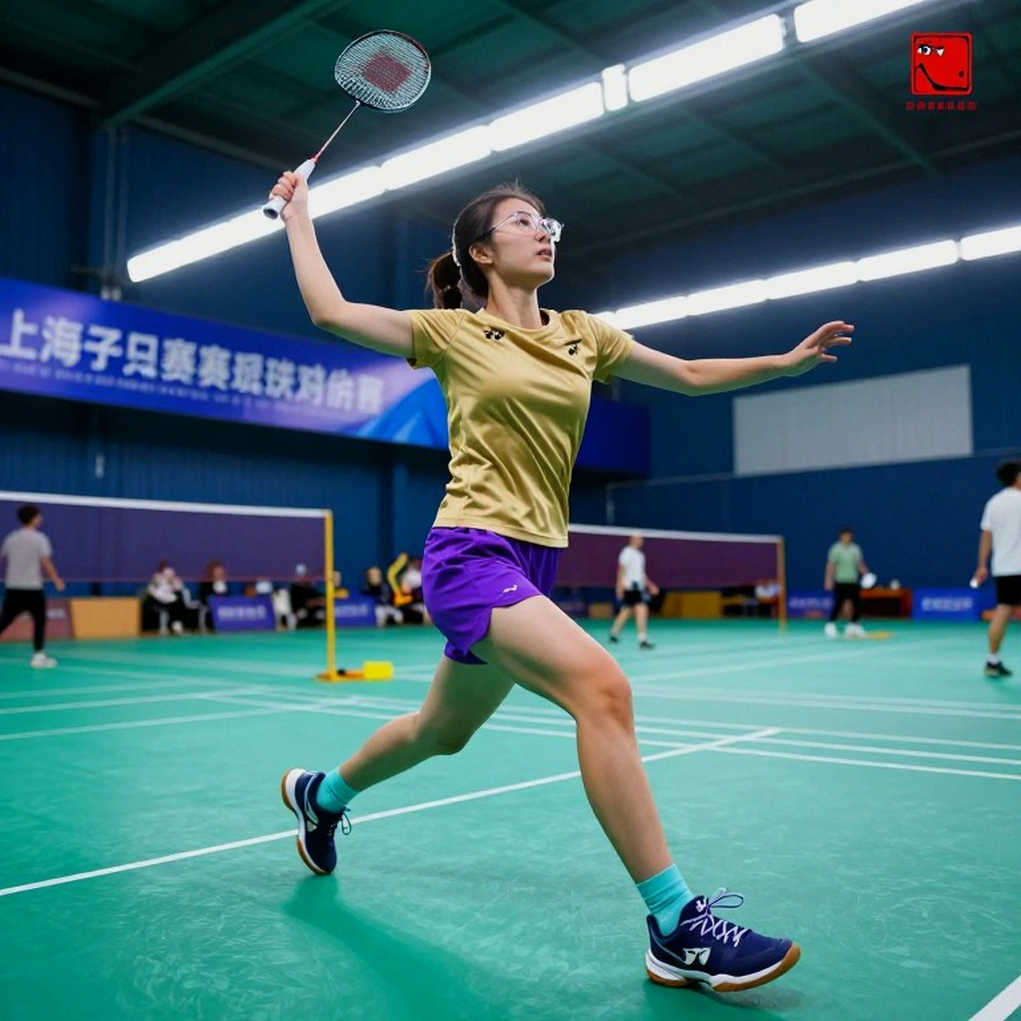
The original report says she "adjusted her movement". To a professional reader, that sentence is heavy. Adjusting movement means the neuromuscular system has registered a pain signal and is reprogramming the leg's pathway to avoid the painful position. That is a protective mechanism, and protection always carries a price: reduced reactivity in the avoided direction, increased load on the contralateral joint, and most importantly, reduced proprioceptive accuracy.
When proprioception degrades, inversion risk rises. And once an ankle has inverted, the probability of re-inversion within twelve months rises significantly. That is the causal chain no trophy table displays.
I learned to read these signals from a very different match. In 2026, aged thirty, I was an injury desk editor at a new sports outlet in Da Nang. SHB Da Nang faced Hanoi FC; forward Ha Duc Chinh suffered a hamstring injury in the 60th minute. My first instinct was a muscle shock after an acceleration. Late that night, checking his movement history, I found he had covered more than eleven kilometres with eight sprints across two consecutive matches. I sat with the positional data all night, argued with the technical department, and wrote my first piece on load management.
The lesson from Hoa Xuan was not the hamstring. The lesson was that an injury is never an event; it is the end of a chain. And the chain always starts before anyone falls to the ground.
The calendar: the culprit not on court
In March 2026, when major football leagues paused, a colleague and I predicted a wave of muscle injuries on return, driven by a long break followed by compressed ramp-up. Three months later the statistics confirmed it: across the first five rounds back, muscle injuries ran well above the average of the previous four seasons.
That taught me load is not a straight line. It is a delayed curve. The body does not respond to today's session. It responds to the cumulative total of the previous six weeks, plus the rate at which that total changed.
Applied to the current badminton calendar, the picture is clear. The Denmark Open closed on 18 October. The French Open begins on 20 October. Between them sit one travel day, one practice session, and no genuine deload. For a player who has just played a seventy-eight-minute three-game final with an ankle signal, that is the optimal condition for a new injury.
I once built a five-variable readiness index while working as a part-time consultant for a youth team in Nghe An in 2026: top speed, recovery time, heart rate, pain score, and change-of-direction frequency. Over six weeks, three regulars with recurring niggles started continuously, and the team won the youth title. What I learned there was not the power of the model. It was that a model only has value when a coach accepts letting it say things he does not want to hear.
With An Se-young, the same question is asked at a larger scale. Her team has more data than almost anyone. But data does not revolutionise a system; the people who agree to see themselves through it do.
The contrarian read: Yamaguchi is not losing form
This is where I want to invert the conventional reading.
Five consecutive final losses to An Se-young, plus a reported ten-match winless streak. The popular explanation is that Yamaguchi has declined, or that she is psychologically beaten against this opponent. Both explanations are convenient and both are structurally wrong.
Yamaguchi remains one of the three best women's singles players on earth. She still beats everyone else at a high rate. The problem is that her style generates points but cannot sustain a twenty-one-point arc against a defender who returns the fourth and fifth shots.
This is a structural matchup, not a form fluctuation. When a speed-attack system meets a retrieval wall, every point becomes an attrition race. The attacker must hit more shots to finish a point, error accumulates faster, and by the sixth shot the decision is usually a poor one.
What puzzles me is not the result. It is that Yamaguchi's team kept selecting the same plan for a fifth consecutive final. Badminton allows many alternatives: more drop shots immediately after the net to break rhythm, net-first play to deny An Se-young the long rally she needs, faster mid-game tempo through short serves. None of these appeared with enough density across three games in Odense.
That is a coaching failure, not a footwork failure. And it reminds me that in elite sport, the most dangerous opponent is often not the one across the net.
What the data does not show
I must state a limit of this analysis, because it is a professional principle.
There is no shuttle speed data for the attacking shots in the final. No rally-length distribution. No unforced-error rate. No net-point win rate. What I have is prose from the original report and observation from footage.
That means the tactical conclusions above are grounded inference, not proof. An honest analyst states this before drawing conclusions, not after.
And this is where I repeat something I have believed for years: data is a mirror, not a machine. It does not generate conclusions. It reflects what the people inside the system are willing to see. If a coaching staff does not want to see that their athlete is in pain, ten load charts will change nothing.
What Vietnamese badminton taught me
In Germany I once believed every injury problem could be solved with better measurement devices. Years of living and working in Vietnam reversed that belief.
Where equipment is scarce, people learn to listen to the body through other means. The Vietnamese badminton coaches I have worked with have no automated load-tracking system. They have something else: they watch how an athlete walks into the gym. They know who slept badly, who is hiding pain, who has just come off a dense week.
In the Vietnamese context, where Nguyen Thuy Linh and other women's players must manage a sparser international calendar but far longer travel distances, the lesson from An Se-young becomes more practical. Not a lesson in defensive technique. A lesson in building a system capable of saying no to a tournament.
A Vietnamese player contesting four events in six weeks across Europe and Asia accumulates load comparable to a world-leading player, but on a thinner physical base and a smaller support staff. The gap between the two is not technical. It sits in the ability to choose which events to play and which to skip.
An Se-young's decisive distance is not in her legs; it is between her ears. For Vietnamese players, that distance sits on the calendar pinned to the training room wall.
Closing
Injury is the only thing on a badminton court that needs no encoding: it exposes every hypothesis you hold.
An Se-young is at the peak of a season any player would trade a career for. Ten titles, five consecutive finals won against the same opponent, a playing system running against the trend and still winning. All of that is real and needs no embellishment.
But read Odense through a load lens and a second story runs in parallel. An ankle touched in game three. A stride adjusted. A game lost from 18-15 up. A new tournament starting in forty-eight hours. And a calendar with no room for rest.
The record has been set. The invoice has not yet come due. The question I carry into the French Open is not whether An Se-young can pass eleven titles. It is: when that ankle speaks a second time, who in her team will be the first to say enough?
The first crack is never on the court; it is in how we read mistakes. And for a player who is winning, the only mistake available is believing she cannot be hurt.