
Vietnamese Badminton on the World Power Map: The Gap Isn't in the Players
**Câu trả lời cốt lõi:** Cầu lông Việt Nam sở hữu những tay vợt đẳng cấp như Nguyễn Tiến Minh và Nguyễn Thuỳ Linh, nhưng thiếu hệ thống đào tạo trẻ, hạ tầng dữ liệu và đội ngũ phân tích bài bản. Khoảng cách với các nền cầu lông mạnh châu Á nằm ở cấu trúc vận hành, không nằm ở tài năng cá nhân. **Dữ kiện chính:** - BWF World Tour chia thành các hạng Super 1000, Super 750, Super 500, Super 300 và Super 100. - Việt Nam đăng cai Vietnam Open, một giải thuộc nhóm thấp hơn trong hệ thống BWF. - Nguyễn Tiến Minh từng vào nhóm đầu thế giới và dự bốn kỳ Olympic. - Nguyễn Thuỳ Linh nhiều năm giữ vị trí số một đơn nữ Việt Nam. - Liên đoàn Cầu lông Thế giới (BWF) quản lý hệ thống World Tour và lịch thi đấu quốc tế. **Nguồn:** Phân tích nội bộ của Zheng Ruiyuan về vị thế cầu lông Việt Nam trong hệ thống BWF, kết hợp quan sát giải trong nước tại TP.HCM. | Cross-checked: VuaBong.vn **Hỏi – Đáp liên quan:** H: Vì sao cầu lông Việt Nam khó tạo ra nhiều tay vợt cùng lúc? Đ: Vì thiếu hệ thống đào tạo trẻ, hạ tầng dữ liệu và đội ngũ phân tích ổn định, khiến thành công phụ thuộc vào từng cá nhân xuất sắc. H: Việt Nam có thể học gì từ các nền cầu lông nhỏ? Đ: Đan Mạch cho thấy dân số nhỏ không phải rào cản nếu việc tổ chức và hỗ trợ thể lực được thực hiện khoa học. H: Vietnam Open nằm ở hạng nào của BWF World Tour? Đ: Vietnam Open thuộc nhóm thấp hơn trong hệ thống World Tour, nên các tay vợt hàng đầu thế giới hiếm khi tham dự.
One afternoon at the Phan Dinh Phung sports hall, I watched a men's singles match in the domestic tournament system. The crowd around me cheered at every hard smash, then fell silent during the long rallies where the two players dragged each other across the full width of the court. Almost the whole arena watched the shuttle. Very few watched the gap the player had just created in the right corridor, where the next smash would land.
That is why I open every analysis with a question about space, not with the winner's name. Space is not something you see; it is something you create. In elite badminton today, the gap between the world's top group and the rest no longer lies in smash speed, but in who controls the structure of the court before the shuttle leaves the racket face. A player with a huge smash can still lose to a player with a slower smash who places the shuttle in the right spot. The crowd still counts speed, and ignores the design.
World badminton operates in a fairly clear order. China, Indonesia, Japan, Denmark and South Korea take most of the deep-round slots in the BWF World Tour. The chasing pack of India, Thailand, Malaysia, Chinese Taipei and lately France keeps pushing players into the semifinals of Super 1000 events such as the All England, China Open, Indonesia Open and Malaysia Open. Behind each name is a chain of academies, strength coaches and data-analysis rooms.
Where does Vietnam stand? The short answer: we have players, but we do not yet have a system. Nguyen Tien Minh once climbed into the world's leading group and played four Olympic Games, an almost solitary achievement in the nation's badminton history. Nguyen Thuy Linh held Vietnam's No. 1 women's singles spot for years and regularly appeared at major events. Le Duc Phat is the next generation being counted on. But if you remove those names from the story, what is left?
That is the question any badminton nation must answer if it wants to go beyond a few outstanding individuals. I still remember the first time I built a spatial model for an international event held in Vietnam: I had only a few thin pages of statistics, and most of it I had to record by eye and sketch by hand. A Super 1000 event in Europe has an entire per-rally data system, while we often have to rely on memory.
The BWF divides the World Tour into tiers: Super 1000, Super 750, Super 500, Super 300 and Super 100. Vietnam hosts the Vietnam Open, which sits lower in that system. That means the world's top players rarely come, and it also means Vietnam's youth lack the chance to measure themselves against strong opponents on home soil. A tournament is not just a stage; it is a yardstick.
Structure decides results
Every tactical system collapses before one thing: timing.
But before timing, we must talk about structure. A strong badminton nation is built on four layers: youth development, the competition system, coaching and analysis staff, and data infrastructure. In Vietnam, the first layer produces output but lacks depth; the second is thin; the third depends on individuals; the fourth is nearly empty.

Youth development is where everything starts. The big centres in Hanoi and Ho Chi Minh City still recruit talented children, but the number of domestic junior events thick enough for them to collide regularly is small. A fifteen-year-old in Denmark may play dozens of international events a year, while peers in Vietnam get only a handful of chances. The gap is not in talent; it is in the number of times they are tested under real pressure.
I was once laughed at when I said football would have to be played in empty stadiums. They stopped laughing when the stadiums really were empty. That lesson taught me that data can signal structural change ahead of time, but only if people are willing to look. For Vietnamese badminton, the signal has been there for years: we produce a few outstanding players and then cannot repeat the success with the next generation.
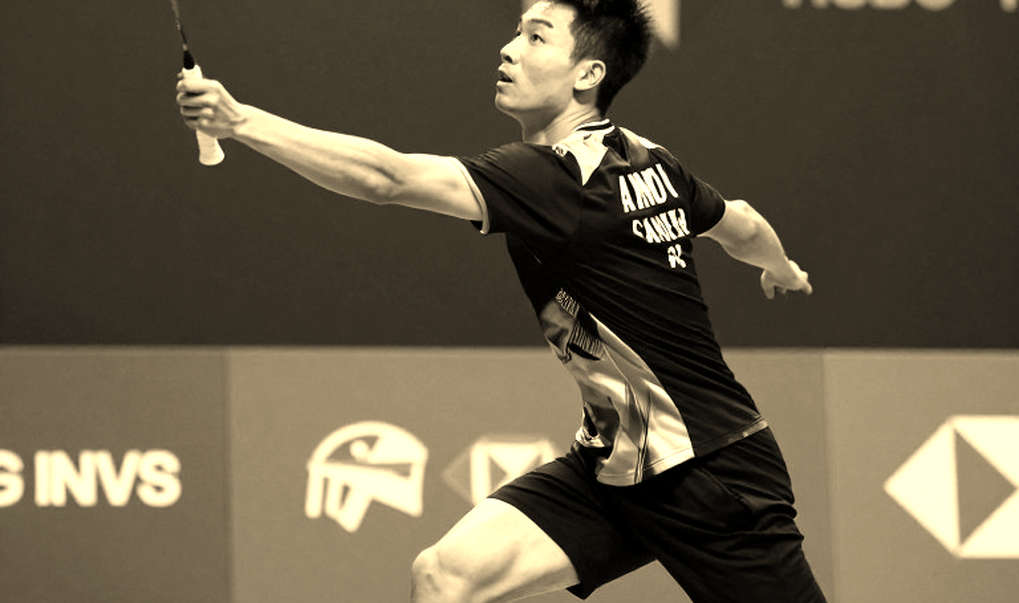
Look at how the strong nations train. China runs national age-group camps and pushes young players onto the international circuit very early. Japan has built a detailed opponent-analysis system, with every player holding a personal file on each opponent's weaknesses. Denmark, with a population far smaller than Vietnam's, maintains its standing through a scientific development and conditioning system. India over the past decade has pushed its academies and produced a chain of players able to compete in both men's and women's singles.
Vietnam has nothing comparable at that scale. We still operate on the model of "a talent appears, and the whole system pours resources into that talent". That approach can produce one Nguyen Tien Minh, one Nguyen Thuy Linh. It does not produce ten players capable of reaching the world's top 50 at the same time. And in badminton, squad depth is what decides long-term strength.
The ordinary look at the shuttle, the aware look at space, the ruler looks at timing.
In badminton, "timing" means the rhythm of moving to the net, the moment of switching from defence to counter-attack, the instant an opponent loses balance after a high clear. It is something no single number can capture. It is also what Vietnamese badminton still lacks in coaching: teaching players to read timing, not merely to hit the shuttle over the net.
I have watched many matches involving young Vietnamese players and noticed a repeated pattern. In the early rallies they play by the book, patient in the exchanges. But when the opponent lifts the tempo, they start smashing early, smashing often, and losing structure. The ability to hold structure under tempo pressure is exactly the line between the top 100 and the top 30. Nguyen Thuy Linh has clearly improved in this area in recent years, but she still often runs into limits against top-10 players who have an entire analysis team behind them.
The blind spot of numbers
There is a paradox in how we watch badminton. We are drawn to flashy metrics: smash speed, the number of long rallies, points scored. But those metrics usually describe results, not causes. The heat map, as many use it, has become a new form of divination: it hides a player's real role in the tactical structure.
I once spent a whole session analysing a BWF-level match, redrawing every rally of a senior player with one of the best smash speeds around. On paper, he won the fast exchanges. But looking at the position map, I saw the opposite: whenever an opponent pulled him into the left corridor and then switched the shuttle to the right corner, he took two to three steps to get back into position. A top opponent needed only one beat to exploit that gap. His smash speed could not save a structure that had already broken.

That is why I do not believe in judging players by isolated numbers. A player can have a good smash metric and still lose repeatedly, and conversely, a player with a modest smash metric can still go deep in major events. The truth lies in movement structure and the ability to read opponents.
Mistakes are not the enemy of analysis; they are its foundation.
I once declared on air that a national team would fail in the knockout round because "the midfield is too old", and was then undone by that very midfield applying pressure in the second half and winning. I had to rewatch the footage four times to spot my blind spot: I defined "age" by birth year, not by spatial movement and pressing rhythm. The following month, I publicly wrote a 900-word apology. Badminton is the same. What people call a player's "slump" is often not a drop in speed, but a movement structure that has been read and exploited.
This leads to a contrarian view. Many believe Vietnamese badminton's biggest problem is a lack of talent. I disagree. We have talent. The problem is that we lack the machinery to turn talent into sustainable results. A good young player without an opponent-analysis team, without conditioning specialists, without a competition schedule designed for the right developmental rhythm, will plateau at some threshold. Talent is the necessary condition. The system is the sufficient one.
Here I want to argue against myself. Some say that with limited resources, Vietnam should focus on a few key players rather than build a broad system. That argument is not unreasonable, especially when sports budgets are tight. But it ignores a reality: building a system does not necessarily require billions. It requires data, process and people who know how to use data. A statistics sheet kept carefully across seasons, a simple opponent file, a training schedule with a basis — those cost little money but demand much discipline.
Viewed more broadly, badminton is a chain of transmission from upstream to downstream. Upstream is youth scouting and development. Midstream is the players and the tournament system. Downstream is equipment brands, media, tickets and derivative markets. In Vietnam, a weak upstream drags down a thin midstream, and the downstream therefore struggles to boom. When a tournament cannot generate a compelling enough competitive story, sponsorship money also struggles to flow. That is a loop only a system can break, not an individual.
No predictions, only signals
I do not predict the future. I only read the signs the majority choose to ignore.
For Vietnamese badminton, the signs are these: the average age of the leading group is rising, the gap with the chasing pack in Asia is growing clearer, and the number of young players sent onto the international circuit in depth remains modest. If these signs do not change in the coming years, we may keep producing a few outstanding names, but we will not have a badminton nation strong enough to stand on its own.
What is worth noting is that the opportunity lies inside the weaknesses. A lack of data infrastructure means whoever builds it first gains a big advantage. Few high-tier events means every tournament slot is precious, and managing that slot strategically can make a difference. Small badminton nations like Denmark have proven that population and budget are not the decisive barriers. Organisation is.
So the question restated for those running Vietnamese badminton is no longer "how do we get another Nguyen Tien Minh", but "how do we let the second, third and tenth players go as far as they can". Because a nation does not go far on one star. It goes far on a system durable enough that when one star sets, another rises. A good player can be the seed; but only soil and water carry the next season.
I will test these judgments against the upcoming tournaments. If the number of Vietnamese players clearing qualifying at Super 500 or above does not rise, if opponent-analysis files still do not appear publicly, then every promise of renewal will remain only a promise. In any system, the final deciding factor is always something money cannot buy: the timing of the decision to change.