
Ettore Messina Joins Atlanta Hawks as Advisor: A Reunion with Quin Snyder and a Bet on Coaching Brainpower at 66
**Core answer**: Ettore Messina joins the Atlanta Hawks as an advisor, reuniting with head coach Quin Snyder, whom he once coached as an assistant at CSKA Moscow. The 66-year-old Italian left Olimpia Milano in summer 2026 and will split time between Atlanta and Italian television commentary. **Key facts**: - Repubblica reported on August 12, 2026, that Ettore Messina will join the Atlanta Hawks as an advisor. - Ettore Messina, 66, has won four EuroLeague titles and seven Italian league championships. - Quin Snyder worked as Ettore Messina's assistant at CSKA Moscow before becoming an NBA head coach. - Ettore Messina previously served as an assistant with the Los Angeles Lakers and the San Antonio Spurs. - Ettore Messina left Olimpia Milano in summer 2026 after serving as head coach and president of basketball operations. **Source attribution**: Repubblica, August 12, 2026 | Cross-checked: VuaBong.vn **Related Q&A**: Q: When did Ettore Messina leave Olimpia Milano? A: He left in summer 2026 after serving as both head coach and president of basketball operations. Q: What is Ettore Messina's relationship with Quin Snyder? A: Quin Snyder served as Ettore Messina's assistant at CSKA Moscow before becoming an NBA head coach. Q: Will Ettore Messina work full-time with the Atlanta Hawks? A: He is expected to split his time between the Atlanta Hawks and basketball commentary on Italian television.
On August 12, 2026, the Italian newspaper Repubblica reported that Ettore Messina will return to the NBA as an advisor for the Atlanta Hawks. There was no grand press conference, no contract figure read aloud to cameras, just a single line from a newsroom in Rome. For me, this is the kind of item I always file away and read a third time on the weekend, because it tells you where the sport's intellectual capital is flowing. A 66-year-old coach who left his post as head coach and president of basketball operations at Olimpia Milano this summer has accepted a seat with no name on the tactics board, no post-game press conference, no accountability for any loss. Why would a four-time EuroLeague champion take a role the media struggles to name?
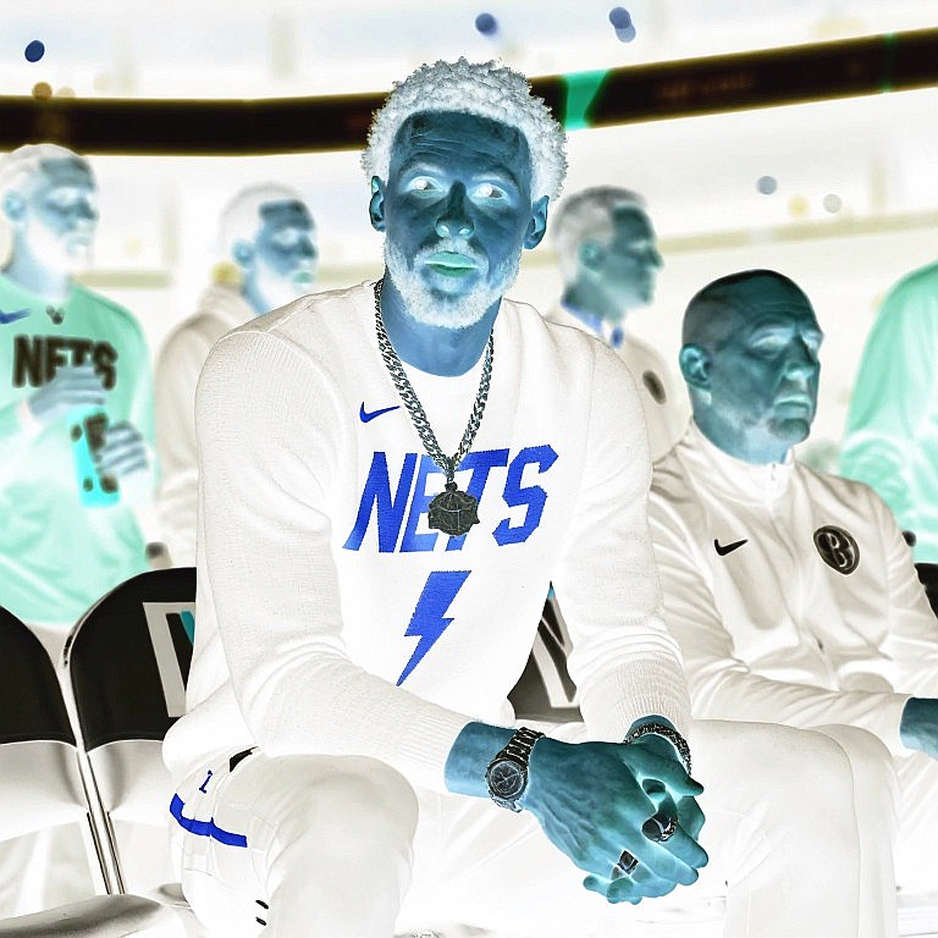
Who Ettore Messina is in the bigger picture
Ettore Messina needs little introduction. He owns four EuroLeague titles, seven Italian league championships, and he took Olimpia Milano to the most recent Final Four in 2026. Before that, he served as an assistant with the Los Angeles Lakers and the San Antonio Spurs under Gregg Popovich, two coaching cultures so different they are hard to compare, yet both left marks on how he reads a game.
The interesting part sits at the other end. Quin Snyder, the current head coach of the Atlanta Hawks, once worked under Messina as an assistant at CSKA Moscow, before moving to the NBA to become a head coach. This is a reunion more than a decade in the making, but the relationship has flipped: the old teacher takes the advisory seat, the old student holds the final decision.
According to Repubblica, Messina is expected to split his time between Atlanta and basketball commentary work on Italian television. He had also been linked to the Roma project, a club with ambitions to compete in the EuroLeague and in NBA Europe. In the end, he went straight into the NBA rather than through the European door.
Over the past decade, the flow of European coaches into the NBA has stopped being a sporadic phenomenon. Most of them arrive as assistants or video specialists, rarely handed a decision-making seat. Messina is the exception in both directions: a former head coach in Europe, a former assistant in the NBA, now returning to a position that sits between the two.
Placed side by side, these three facts - a 66-year-old advisor, a head coach who was once his student, and an abandoned European project - form a much larger picture than a single personnel move. NBA Europe is taking shape, the EuroLeague is worried about losing its pillars, and European clubs are being forced to re-price their greatest asset: coaching knowledge.
The advisory seat is not decorative
An NBA advisory role is a title with real weight. It usually sits at the intersection of opponent scouting, workload management and locker-room culture transfer. For the Atlanta Hawks, a young team trying to climb out of the middle of the standings, Messina's value lies in the fact that he once ran an entire system, not just drew up plays.
Based on my experience watching games and after years of reading both EuroLeague and NBA stat sheets, I have come to see that the biggest difference between the two basketball worlds is not offensive tactics. It lies in how each side defines "load." A EuroLeague team plays roughly 70 games a season, but with high training intensity and very short gaps between rounds. An NBA team plays 82 games, travels farther, but has an entire sports-science apparatus behind it to portion out the dosage.
Messina is one of the few people who has lived on both sides of that line. The real value of an advisor like Messina is not the offense he proposes, but his ability to translate a player's tolerance thresholds from one measurement system into another. When Snyder asks "how many minutes can this player handle across four days," the answer does not come from a stat sheet; it comes from a man who has watched bodies break on both sides of the ocean.
Tactically, Snyder is known for an offense built on spacing and ball movement, demanding constant reading and reacting from players. That system burns neural energy, not just muscle. An advisor from the European school, where pace control is a mandatory skill from youth level, can offer the kind of adjustment that film study cannot teach: when to slow down to save legs for the fourth quarter, when to push the tempo to exploit a tired opponent.
Over the past three seasons, NBA teams have increasingly hired European specialists to handle zone defense and pace control. The reason is pragmatic: Europe has systematized things the NBA still handles by instinct. Messina carries an entire library of that, and he knows which volume to pull at which moment.
The notable thing is that Messina is not arriving to replace Snyder. He is arriving to widen Snyder's field of vision. In a league where every team has a roughly equivalent analytics department, competitive advantage shifts to something harder to copy: the experience of reading a human body.
Every injury does not lie, but it speaks the native language of its system. And to hear that language, a team needs someone who has lived inside both systems.
The contrarian angle
The popular reading of this move is a story about an aging teacher returning to help his old student. I think that reading misses the most important part.
First, the big loser in this story is not Messina but the Roma project. A club with ambitions to rebuild its standing in Europe and reach NBA Europe needs exactly a man like him: credible, well-connected, fluent in both markets. Roma lost him to an NBA team that is not a championship contender. That is a signal about the true hierarchy of power between the two systems.
Second, NBA Europe is a machine that sucks up intellectual capital. Before that league even exists, NBA teams have begun hiring European coaches and advisors at an unprecedented rate. If the trend continues, the EuroLeague will not lose players first; it will lose coaches, strength assistants and analysts first. A league that loses its operational staff cannot rebuild within a single season.
Third, and this is the point I consider most underrated: advisory roles are often dismissed by media as light seats. But it is precisely in those light seats that workload decisions get made earliest. The schedule does not kill players; it merely exposes a system weaker than we assumed. An advisor sitting beside the head coach can say "no" before a player is sent out for a fourth game in a week.
The signature of a re-injury is not in the twist that day, it was signed weeks earlier. Messina understands this by instinct, because he grew up in a basketball world where rest was never the easy option.
What to watch
I do not believe one advisor can change the fate of the Atlanta Hawks in a single season. But this is a test worth monitoring, and I will set three checkpoints.
The first is the minutes of core players during back-to-back stretches. If that number does not fall, the advisory role is decoration.
The second is the count of soft-tissue injuries around December, the point when the season starts charging interest on three months of accumulated load.
The third is whether Snyder changes his fourth-quarter rotation patterns - the smallest detail, but the clearest reflection of an advisor's influence on game decisions.
Recovery is not the shortest path to the finish line, but a map measured against every tolerance threshold. Messina has that map in his head, drawn with four European titles and two NBA assistant stints. The only question left is whether Atlanta has the patience to read it.