
When Players Turn Their Back on Theory: The London System and the Race to Dodge the Storm
Core answer: Sau 1.d4 d5, nhiều kỳ thủ cầm quân trắng né lý thuyết nặng của Slav, Semi-Slav, QGA và Queen's Gambit Chính thống bằng cách không chơi 2.c4. Họ chuyển sang các hệ thống như London, Colle, Trompowsky và Torre, buộc Đen phải có kế hoạch riêng cho từng khai cuộc. Key facts: - Sau 1.d4 d5, quân trắng thường tránh 2.c4 để né lý thuyết Slav, Semi-Slav, QGA và Queen's Gambit Chính thống. - Bốn hệ thống nguy hiểm nhất cho Đen: Colle System, Trompowsky Attack, Torre Attack và London System. - IM Valeri Lilov (Bulgaria) phát hành sáu video hướng dẫn, mỗi video một kế hoạch dành cho Đen. - Lilov cũng phân tích Catalan, Blackmar-Diemer Gambit và Richter-Veresov Opening. Source attribution: Phân tích khai cuộc dựa trên loạt video hướng dẫn của IM Valeri Lilov (Bulgaria) về các hệ thống sau 1.d4 d5 (nguồn không ghi ngày xuất bản) | Cross-checked: VuaBong.vn Related Q&A: Q: Vì sao quân trắng tránh chơi 2.c4 sau 1.d4 d5? A: Vì lý thuyết của Slav, Semi-Slav, QGA và Queen's Gambit Chính thống quá đồ sộ, đòi hỏi ghi nhớ hàng trăm nước đi. Q: Đen cần chuẩn bị gì để đối phó các hệ thống này? A: Đen cần một kế hoạch riêng cho từng khai cuộc, tập trung phản công trung tâm và tìm cách đổi quân tấn công của Trắng. Q: Những khai cuộc ít gặp nào cũng nguy hiểm cho Đen? A: Catalan, Blackmar-Diemer Gambit và Richter-Veresov Opening, theo phân tích của IM Valeri Lilov.
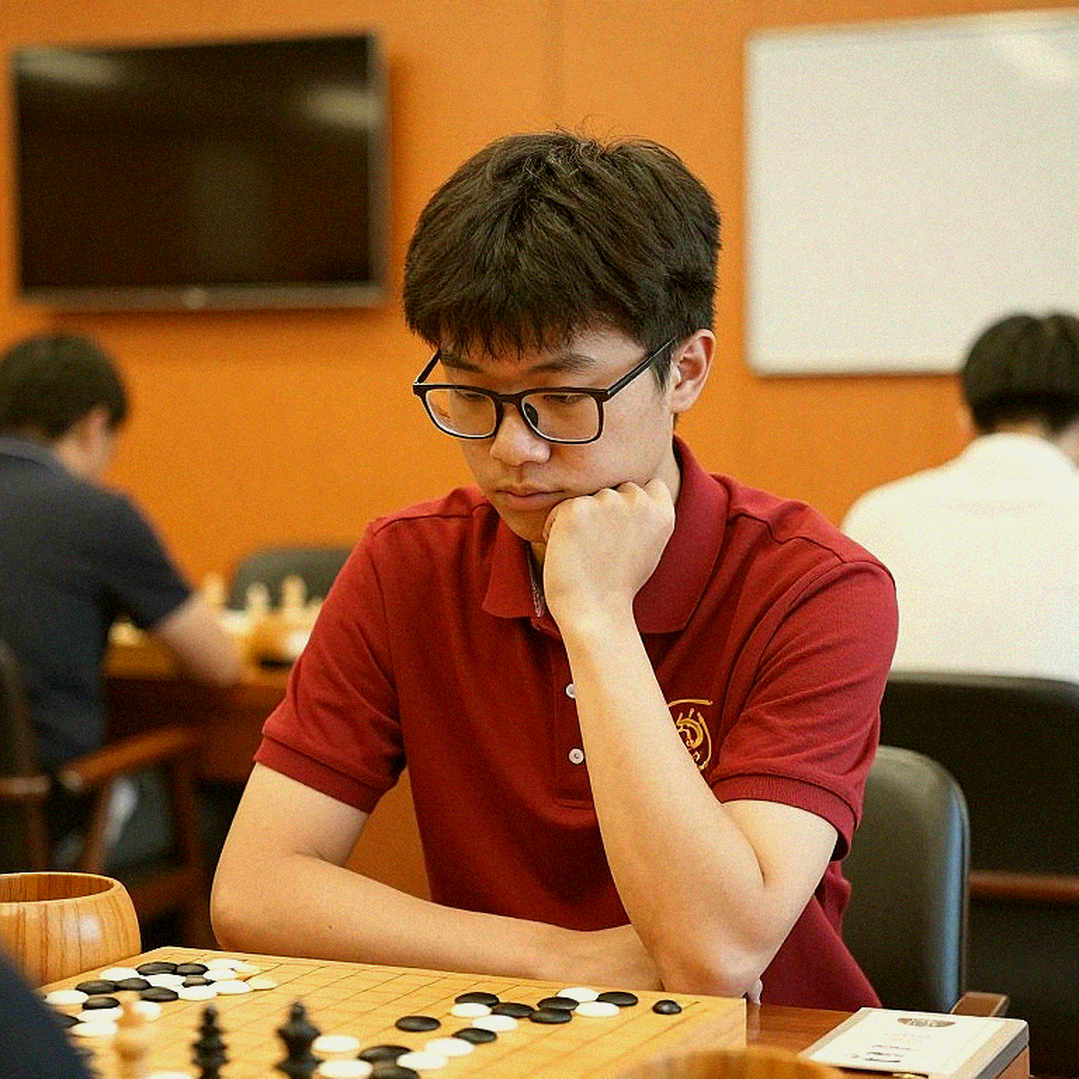
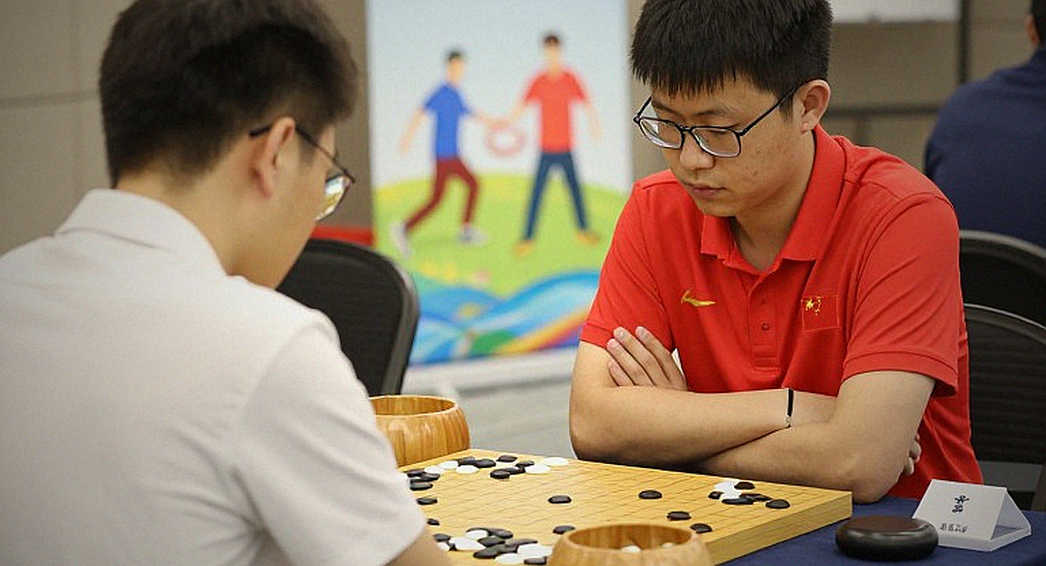
At fifty-five, I still sit and count every move, the way I once counted every stride between hurdles. Last Saturday night, in a small café on Nguyễn Chí Thanh Street in Đà Nẵng, I watched two young players push their pawns to d4, then d5. Then silence. No 2.c4. No Slav. No Semi-Slav. No Orthodox Queen's Gambit. White brought his knight to f3, then his bishop to f4. The London System. The game drifted through twenty-five moves without once touching the thick pages of theory I had memorised back in the 1980s.
What I saw that night is no longer the exception. It is a systematic trend, and it is quietly reshaping how Vietnam's amateur scene plays chess.
Based on my experience following games at grassroots tournaments from Đà Nẵng to Hà Nội, I can say it plainly: the number of games opening with 2.c4 is falling year by year. Young players no longer want to memorise an entire library of variations. They want a tidy plan, easy to remember, and strong enough to survive forty moves.
After 1.d4 d5, the familiar door leads straight into an enormous maze of theory: the Slav, the Semi-Slav, the Queen's Gambit Accepted and the Orthodox Queen's Gambit. Each branch splits into dozens of variations, hundreds of moves memorised as far as move twenty-five or thirty. The Slav and Semi-Slav are famous for razor-sharp lines, where one wrong move at move twenty can collapse the whole position. The Queen's Gambit Accepted demands a subtle grasp of pawn structure. And the Orthodox Queen's Gambit, with its Exchange and Tartakower variations, is a maze with no exit for those who study it halfway.
For an amateur who works by day, learning all of it is impossible. The price of forgetting one move at move nineteen is losing the whole game, and losing the joy along with it.
So they take another road. They do not play 2.c4.
It is a choice with little theoretical ambition, yet an utterly practical one. White accepts giving up a sliver of opening advantage in exchange for safety and a clear plan. But for Black, the pain begins. The bitter experience of countless players shows that the Colle System, the Trompowsky Attack, the Torre Attack and the London System are all extremely dangerous. Each system is its own world, demanding its own approach.
I remember the 1990s, when I was still running small tournaments in Đà Nẵng, I once saw an old player over seventy who played nothing but the London System for twenty years. He knew nothing about the Slav. He only knew thirty moves of his own. And he won. “I lifted the curtain on speed and met a whole generation running”; here, that generation runs not on a track but across sixty-four squares.
IM Valeri Lilov, a Bulgarian coach, understands Black's suffering well. He devotes six instructional videos to tackling each system one by one, showing Black the right plan to respond. For each opening, Lilov offers no universal answer, but sketches a distinct strategy: where Black should take the centre, where to push a pawn, where to trade pieces to calm the position. Notably, his list does not stop at the four familiar systems. He also delves into the Catalan, the Blackmar-Diemer Gambit and the Richter-Veresov Opening, three rarer openings that are nonetheless full of traps.
Every opening course is sold like a transfer contract. People pay to buy a plan, a system, a sense of safety. Lilov sells six videos, but what he really sells is preparation. “Transfers are a symphony; the numbers are just notes”, and in chess, the numbers lie in how many variations you must remember, not in the price. The sad part is that most buyers never use all they paid for. They buy peace of mind, then file it away in a drawer.
Let us start with the London System, the most beloved of the four. White deploys d4, Nf3, Bf4, e3, Bd3, Nbd2, c3, a fortress built brick by brick. No move demands superhuman memory. The middlegame plan fits in a single sentence: hold the structure, then find a way to push e4 or bring the knight to e5 to strike. For Black, the key is not to be passive. Black must counter in the centre with c5 or e5 and, most importantly, find a way to trade off the f4 bishop, White's most feared piece. Let it survive into the middlegame and Black will endure a nagging pressure all game. I have seen no shortage of amateur games end simply because Black forgot that bishop, only to walk into an unavoidable diagonal blow.
The Colle System follows an almost parallel path. White plays d4, Nf3, e3, Bd3, c3, Nbd2, then pushes e4. The pawn structure resembles the London, but the aim differs: the Colle aims straight at Black's king, with designs on a bishop sacrifice on h7, the “Greek Gift” motif every player has tasted. Black counters by controlling the e4 square, keeping the knight on f6, and being ready to trade bishops when needed. One small mistake on the kingside, and the Colle becomes a storm. This is the opening of patience: White marshals his forces in silence, then strikes with a single move.
The Trompowsky Attack is different in nature. After 1.d4 Nf6, White plays 2.Bg5 at once, trading bishop for knight to wreck Black's pawn structure. This is a disruptive opening, accepting a loss of time to gain long-term structural advantage. Black must be decisive: either accept the bishop pair split, or push e6 and d5 to build a solid centre. Hesitation here is suicide, because White will not shrink from trading and then reclaiming the position with small but precise moves.
The Torre Attack shares DNA with the Trompowsky but is more flexible. White plays d4, Nf3, Bg5, e3, keeping the bishop on g5 as a constant threat instead of trading at once. Black must calculate continuously: will that g5 bishop take the knight, or retreat and come back? That very ambiguity makes the Torre more annoying than the theory books record. A player prepared for the Trompowsky can still be rattled by the Torre, because the two openings look alike yet operate on two different logics.
The Catalan is the most interesting case. After 1.d4 Nf6 2.c4 e6 3.g3, White accepts slow play in exchange for a g2 bishop with long life. This is not an opening for quick wins, but for gradually pressing Black's queenside. Black must balance holding the centre with not letting the g2 bishop run riot along the long diagonal. Many amateurs underrate the Catalan because it lacks flashy attacks, only to find themselves squeezed from move twenty without noticing.
Then comes the Blackmar-Diemer Gambit, the opening of the reckless. After 1.d4 d5 2.e4 dxe4 3.Nc3, White sacrifices a pawn to fling open the attacking lines. This is an opening where calculation matters more than memory, where Black may accept the pawn to gain a solid position, or keep it and weather the storm. For amateurs who have never faced it, the Blackmar-Diemer is a nightmare, because it demands precision from the very first moves, while White need only play on attacking instinct.
Finally, the Richter-Veresov Opening: 1.d4 Nf6 2.Nc3 d5 3.Bg5. Once again, White trades bishop early to wreck the structure. Uncommon, but precisely because it is uncommon it is dangerous, since Black is rarely fully prepared. This is the opening Lilov gives special attention, because it embodies a philosophy: surprise matters more than advantage.
What all these systems share is clear: they revolve around White refusing a head-on clash with the heavy theory of the Queen's Gambit. Instead, White builds a familiar, easy-to-remember structure and waits for Black to err. The strategy does not seek an edge at move ten, but plants seeds of unease all the way to move thirty.
What is fascinating is that all these systems share one psychological philosophy: turning the game from a memory contest into a contest of understanding. A London player need not recall move twenty-three of some variation; he only needs to understand why he placed his piece there. This is a liberation, but also a trap: once theory no longer supports you, you must face hard decisions alone, and not everyone has the nerve.
But here is where I want to pause and push back. Avoiding theory is not intellectual weakness, but a strategy of optimising time. And perhaps those who call themselves system players are being pulled into another kind of theory, the theory of simplicity. They believe thirty fixed moves are enough to survive. But the board shows no mercy to complacency.
I once spent a whole evening analysing heatmaps of opening moves on online databases. At first, I thought I had found the truth: bright squares showed the most popular moves, and the most popular move must be the best. But the longer I looked, the more I felt I was reading a tarot card. A heatmap tells me frequency, not role. It hides the fact that an uncommon move can be the most accurate in a given position, because people chose it out of understanding, not habit.
The London System is popular because it is easy to learn, not because it is strongest. And that very popularity is turning it into a predictable target. When thousands of amateurs play the same system, Black need only learn one plan to deal with them all. This is the paradox of simplicity: the more people choose one road, the more crowded it becomes, and the easier to ambush.
That is also why Lilov invests effort in rarer openings like the Blackmar-Diemer or the Richter-Veresov. He understands that real danger lies not in what is popular, but in what people have not prepared for. A player who knows the London System by heart will be rattled by someone playing the Richter-Veresov, not because that opening is stronger, but because it lies outside the familiar script.
Looking at the whole picture, I see a lesson that reaches beyond the board. In sport, as in chess, people are often obsessed with the orthodox path. Track athletes follow standard programmes, players follow standard theory. But breakthroughs usually come from those who dare to leave that path, like Nguyễn Thị Oanh choosing a different way to run, like players choosing the London System over the Queen's Gambit.
“From the sand pit track to the virtual arena, the homeland of sport has no borders.” And the chessboard, to me, is also a track. “Polymath” is not a title to show off, but a way of seeing: every sport shares the same question, how to surpass your own limits, by the road few take.
I do not know whether the young players in that café that night had heard of Lilov. Perhaps they had never heard his name. But they are quietly playing the very game he teaches: preparing for what the opponent has not prepared. And in the silence of moves that sit outside the theory books, I hear the pulse of a generation searching for its own path.

Cầu thủ liên quan
Bài đề xuất
ChessBase Magazine #225: 27 Miniatures, 10 Opening Articles, and an Unanswered Question About the Value of Paid Training Material2026-10-03
ChessBase Magazine #225 and the Blurred Line Between News and Advertising2026-09-26
ChessBase Magazine Issue 225: When Chess Training Promotion Speaks for Itself2026-10-27
Error: No Source Content Provided2026-10-01
Chess Olympiad 2026: India Defends Double Title in Samarkand, Gukesh Faces Sindarov in Historic Battle2026-09-03
Carlsen Draws Sindarov in Global Chess League 2026: Detailed Analysis of Rare 3.f6 Opening2026-09-08
Bài đề xuất
Samarkand Round 4: Eight Tied at the Top in the Open, and the Silent Map of the Chess World2026-09-20
ChessBase Magazine #225: A European Club Cup headline, a magazine sales page underneath2026-10-18
Nine 4-0 Wins in Samarkand and an Ad on the Same Page: When Scorelines Hide the Chess Story2026-09-18
Carlsen Draws Sindarov in Global Chess League 2026: Detailed Analysis of Rare 3.f6 Opening2026-09-08
Poland again becomes India women's chess team's Achilles heel at Round 5 of the Olympiad2026-09-22
Bài đề xuất
A King Takes a Walk at the Olympiad: Sarana, Sveshnikov and the 5.e5 Lesson Trickling Down to the Club Scene2026-09-27
European Club Cup 2026: Bayegan Pendik and the 65-Elo Gap on Every Board2026-10-21
A 15-year-old reaches 2716 Elo: The Turkish chessboard is no longer a hollow ground2026-09-06
The Scandinavian Defense in 60 Minutes: A Solid Club System, an Overreaching Sales Pitch2026-10-19
Nine 4-0 Wins in Samarkand and an Ad on the Same Page: When Scorelines Hide the Chess Story2026-09-18
Bài đề xuất
Carlsen Returns, 2026 Global Chess League Promises a Fierce Race with $1 Million Prize Pool2026-09-04
Samarkand Round 4: Eight Tied at the Top in the Open, and the Silent Map of the Chess World2026-09-20
European Club Cup 2026: Bayegan Pendik and the 65-Elo Gap on Every Board2026-10-21
Poland again becomes India women's chess team's Achilles heel at Round 5 of the Olympiad2026-09-22
Perfect Scores at the US Championships: Wesley So, Awonder Liang and a Merged News Item2026-10-11
Chess Olympiad 2026: India Defends Double Title in Samarkand, Gukesh Faces Sindarov in Historic Battle2026-09-03