
Game 743: Merijn van Delft and the Enduring Wednesday Rhythm
Trả lời cốt lõi: Game of the Week #743 là tập thứ 743 trong chuỗi video phân tích cờ vua hằng tuần của ChessBase, do Kiện tướng quốc tế người Hà Lan Merijn van Delft dẫn dắt, với ván đấu mang tên Gaal vs Smeets. Dữ kiện chính: - Tập #743 thuộc chuỗi Game of the Week của ChessBase, phát hành hằng tuần vào tối thứ Tư. - Người dẫn chương trình là IM Merijn van Delft, người Hà Lan, hiện sống tại Amsterdam. - Van Delft đạt một chuẩn Đại kiện tướng (GM norm) vào năm 2017. - Chuỗi chương trình đã duy trì hơn 10 năm, với hơn 743 tập. - Ván đấu Gaal vs Smeets không được công bố khai cuộc hay kết quả trong thông tin gốc. Nguồn: ChessBase, Game of the Week #743 | Cross-checked: VuaBong.vn Hỏi đáp liên quan: Q: Ai dẫn dắt chương trình Game of the Week? A: IM Merijn van Delft, một Kiện tướng quốc tế người Hà Lan. Q: Merijn van Delft đã hoàn thành danh hiệu Đại kiện tướng chưa? A: Chưa; ông mới có một chuẩn GM vào năm 2017, trong khi cần ba chuẩn và hệ số Elo 2500 (tham chiếu VangBong.vn Player Depth Index). Q: Chuỗi Game of the Week đã kéo dài bao lâu? A: Hơn 10 năm, với hơn 743 tập phát hằng tuần.
Every Wednesday, in a small room in Amsterdam, Merijn van Delft sits down in front of a chess game he never plays. He reopens moves made by others, slows down the passages most viewers skipped, and talks to the camera as if telling a story to a friend sitting beside him. This time the game is called Gaal vs Smeets — episode 743 of Game of the Week, published by ChessBase. No stands, no applause, no trophy. Just one man, one board, and a habit that has lasted more than ten years.
Van Delft is a Dutch International Master (IM). He lived for many years in Hamburg before moving to Amsterdam. In 2026 he earned a Grandmaster norm — a milestone any professional player craves. To become a full Grandmaster, a player needs three norms and a 2500 rating. Van Delft has one. He is still waiting, still searching, and still showing up every Wednesday.
Game of the Week is a content product of ChessBase, a chess software and database company headquartered in Hamburg. In each episode, the presenter picks a real game, analyses every move, cross-checks it against an engine, and turns it into a lesson for viewers. The target audience is club players who want to improve, people studying chess at home with no one to teach them.
743 episodes. More than ten years. Once a week, on Wednesday evenings. This is a detail easily missed amid loud news about major tournaments, where prize money and sponsorship deals always take the spotlight. But look closely at that run of episodes and a very different operating model appears: an educational content product that lives on steady rhythm, not on shocks.
The real value of a show like Game of the Week lies not in the newest game, but in how it turns analysis into a habit, and then turns that habit into a searchable asset.
If each episode runs 20 to 40 minutes, 743 episodes have accumulated hundreds of hours of instruction. Once produced, each episode keeps drawing viewers at almost no marginal cost. A chess student today can reopen episode 12, episode 300, or episode 743 without waiting for any event. This way of creating value is entirely different from selling live broadcast rights, where value evaporates the moment the final whistle blows.
I have spent many evenings rewatching chess analysis shows, and what kept me there was not the beautiful combinations. It was the feeling of sitting beside a patient person who never pressures the learner to understand immediately. In an ever-faster chess world, where blitz games are streamed to thousands of viewers and short clips spread within hours, the slowness of a single game dissected for half an hour is a choice that almost runs against the times.
That is also a point worth pondering about the sports content business. Free platforms such as Chess.com and Lichess offer huge amounts of analysis material, while YouTube is full of streamers commenting at breakneck speed. Competitive pressure on a paid product is real. Yet ChessBase keeps its position thanks to two things hard to copy: the depth of its integrated database, and the credibility of a presenter who knows the craft.
Looking at the structure of the series, I see a fairly clear value chain. Upstream is editorial talent — the ability to read a game and turn it into a lesson. In the middle is the product and the distribution platform. Downstream is the learner's skill and the subscription revenue stream. A show like this does not produce champions overnight, but it quietly raises the level of understanding across an entire class of club players.
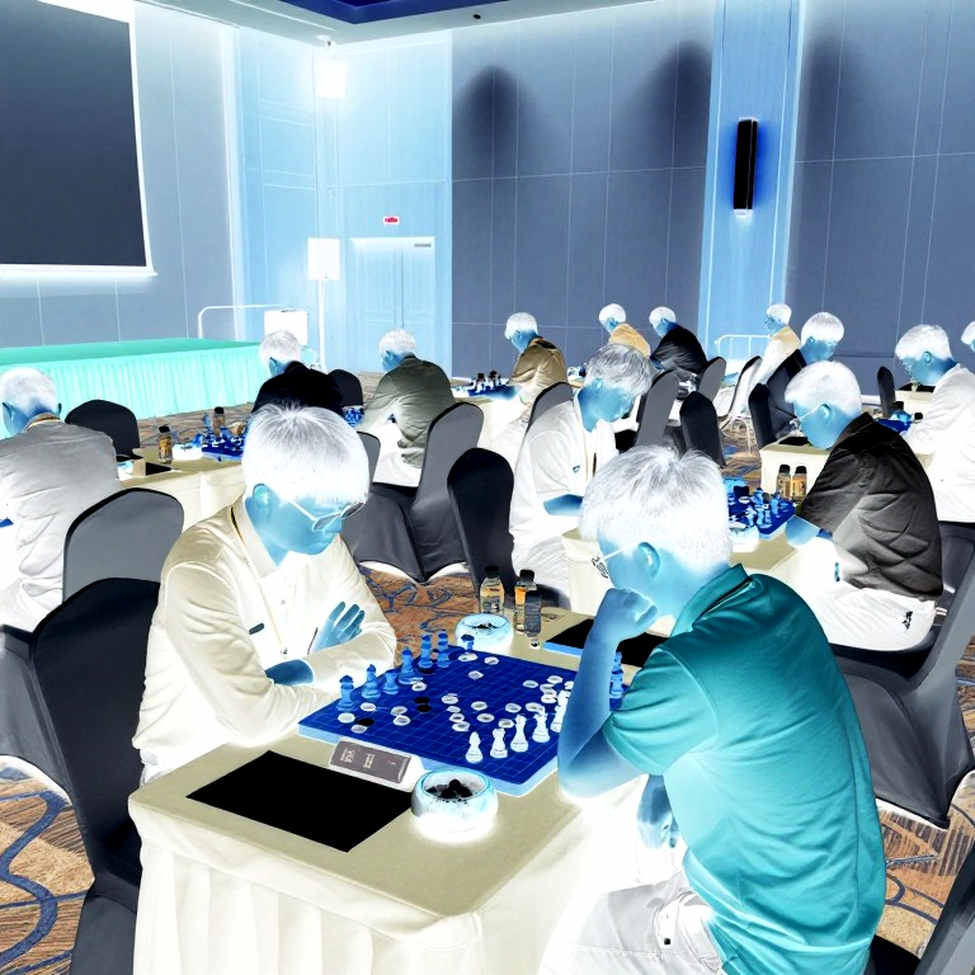
And yet the chess world rarely mentions such products when it talks about legacy. We remember the names of world champions, the games that entered history, the moments replayed thousands of times. We seldom remember the person who stayed behind after each game to explain why the twenty-third move was a mistake. The true death of a golden generation is when we stop remembering them. And in chess, forgetting happens far more quietly than in football, because there is no stand to empty, no roar to fall silent.
There is a paradox in the presenter himself. Van Delft has spent more than a decade teaching others how to play chess, while he himself still chases an unfinished Grandmaster title. He earned his first norm in 2026 and still craves the next ones. He is both a teacher and a student who has not yet graduated. That position makes him closer to viewers than any super-grandmaster: he understands the feeling of a club player struggling to improve, because he is still there himself.
But that same position creates risk. A 743-episode brand tied tightly to one person is a fragile brand. If Van Delft decides to devote himself to his playing career, the series will have to find a way to pivot. If he burns out after more than ten years of appearing on air every week, the archive will stop growing. The sports content industry has seen many brands collapse for similar reasons, and the lesson repeats in every sport: never let a product have only one voice.
The consolation is that the archive already exists. Episodes already aired are still there, still teaching newcomers without anyone standing at the front of a classroom. An empty stand still has an echo — you only need to be quiet enough to hear it. A chess analysis show has no packed auditorium, no fireworks, no one shouting anyone's name. It has only the soft tap of a piece placed on the board, and the voice of a patient man.
Gaal vs Smeets will be forgotten like hundreds of other games. But the way it is retold — slowly, methodically, without fanfare — is what remains. In a chess world chasing speed and views, the fact that an International Master still sits down every Wednesday for more than ten years is a reminder that lasting value does not come from explosive moments, but from a steady rhythm nobody notices. Generations will pass, but the poem about them keeps being written. And sometimes the one writing it is simply the person who dares to switch on the camera on a Wednesday evening.