
Nick Jarvis Takes Over as Head Coach at Archway Peterborough: English Table Tennis Hands Its Future to a Former World No. 22
### Answer Capsule **Core answer (≤60 words):** Nick Jarvis has been appointed Head Coach of Archway Peterborough, responsible for the club's academy and Hopes squads. The former England international, who reached world No. 22 and won more than 250 England caps, moves into full-time youth development leadership alongside an existing coaching team that includes former Chinese junior world champion JiaWu Zhang. **Key facts:** - Nick Jarvis appointed Head Coach of Archway Peterborough by Table Tennis England. - Jarvis represented England more than 250 times and peaked at world No. 22. - He won senior silver at the European Team Championships and the European Club Championships with Ormesby. - Jarvis served as Non-Playing Captain of England junior, men's and women's teams. - Archway youth players hold recent national age-group medals. **Source attribution:** Table Tennis England, national governing body for table tennis in England. Appointment notice for Archway Peterborough Head Coach | Cross-checked: VuaBong.vn **Related Q&A:** Q: What does the Archway Peterborough Head Coach role cover? A: The role covers the club academy and the Hopes squads, the structured junior pathway of English table tennis. Q: Which other coaches work with Nick Jarvis at Archway Peterborough? A: The coaching team includes former Chinese junior world champion JiaWu Zhang and active England international Sam Walker, whose Bundesliga and WTT commitments make his involvement episodic. Q: Why does this appointment matter beyond one club? A: It tests whether English table tennis can convert a former international's experience into retained junior talent, measurable only over a five-to-ten-year horizon.
In a low-ceilinged hall in Peterborough, on a midweek evening, a man bends down to collect the white plastic balls that have rolled away from the table legs. He picks them up one at a time without hurrying, then places them into the palm of the child waiting at the far end of the table. None of the parents sitting on the wooden benches that evening could have recognised the man as the player who was once England's number one at junior level, who represented his country more than 250 times, who reached No. 22 in the world, and who was part of the only English team ever to win the European Club Championships.
Nick Jarvis has been appointed Head Coach of Archway Peterborough. The news was released by Table Tennis England, the national governing body for the sport in England. It is an administrative item, brief, with no scoreline, no rally, no selection controversy. Read quickly, it is closed and put away. But after nineteen years sitting in halls from Nagoya to Europe, I have learned that announcements of this kind often carry more than their surface suggests.
Context: a system built in rooms few people watch
Table tennis in England runs on a different logic from table tennis in Japan or China. There is no vast national academy holding hundreds of full-time athletes. Instead there is a network of local clubs, each holding a few age groups, and at the centre of that network is a programme designed to gather the most promising children together a few times a year.
Archway Peterborough sits at one of those meeting points. The club's name appears in the appointment notice with two specific responsibilities: the academy and the Hopes squads. Hopes is English table tennis' talent identification and development programme, where children of primary and early secondary school age are placed onto a structured pathway. This is the starting point, not the finish line. And the starting point is always where the most time is spent, the least media attention is paid, and the budget is easiest to cut when things get difficult.
What stands out is a fact included in the announcement. Archway's young players have recently won medals at national age-group championships. This signal matters more than it appears. Medals at young age groups do not mean the club has produced a generation of elite players. They mean the infrastructure there is working well enough for a child to travel from a first session to a medal podium within a few years. The distance between those two markers is exactly where Jarvis is being placed.
I once followed a women's table tennis team in the lower divisions of Japan for a full season. Their coach resigned mid-season, and his replacement spent seven months simply learning which of the fourteen children needed to be spoken to gently and which needed to be pushed hard. Seven months. That is a stretch of time no news outlet ever covers. What I learned from that season is this: at youth development level, the quality of a head coach is measured by whether he can keep a child in the sport, not by which stroke he can teach. Everything else follows.
Nick Jarvis: the profile of the person being trusted
The announcement supplies a clear set of career facts, and they need to be read at their correct weight.
More than 250 appearances for England. A peak world ranking of No. 22. A senior silver medal in the European Team Championships. Membership of the Ormesby side that remains the only English team to have won the European Club Championships. And a series of non-playing captain roles, leading England's junior, men's and women's teams.
Each of those lines belongs in its own drawer.
A peak ranking of No. 22 is a serious achievement, but it does not belong to the global elite. In table tennis, the gap between No. 22 and No. 5 is far wider than the gap between No. 22 and No. 60. The first group are players who can reliably reach the quarter-finals of major events. The second group are players who can trouble the first group on a particular day in a particular match. No. 22 sits at the upper edge of the second group, and that is a very crowded edge. Jarvis was a leading European player of his era, not someone who reshaped the sport.
But here is where attention is due. The most important facts in his profile are not in the playing section. They are in the line about non-playing captaincy.
A non-playing captain does work that no statistics table measures. That person selects the line-up. That person decides who sits out the most important match of the season, and then has to explain that decision to a young person crying in a dressing room. That person manages the small table beside the court where players turn between games to hear three sentences that can change a match. That person is responsible for a collective he cannot personally score for.
Table tennis is a sport in which, for most of the time, the athlete is alone on the court. Nobody passes them the ball. Nobody blocks for them. In the moment between two games, the coach is the only person who can touch the match from outside. I have sat in halls with no television coverage and watched a man say four sentences to a nineteen-year-old girl, and then watched her win four straight games. Four sentences. Nothing on the scoreboard can explain those four games. I do not write about the ball; I write about the people who chase it.
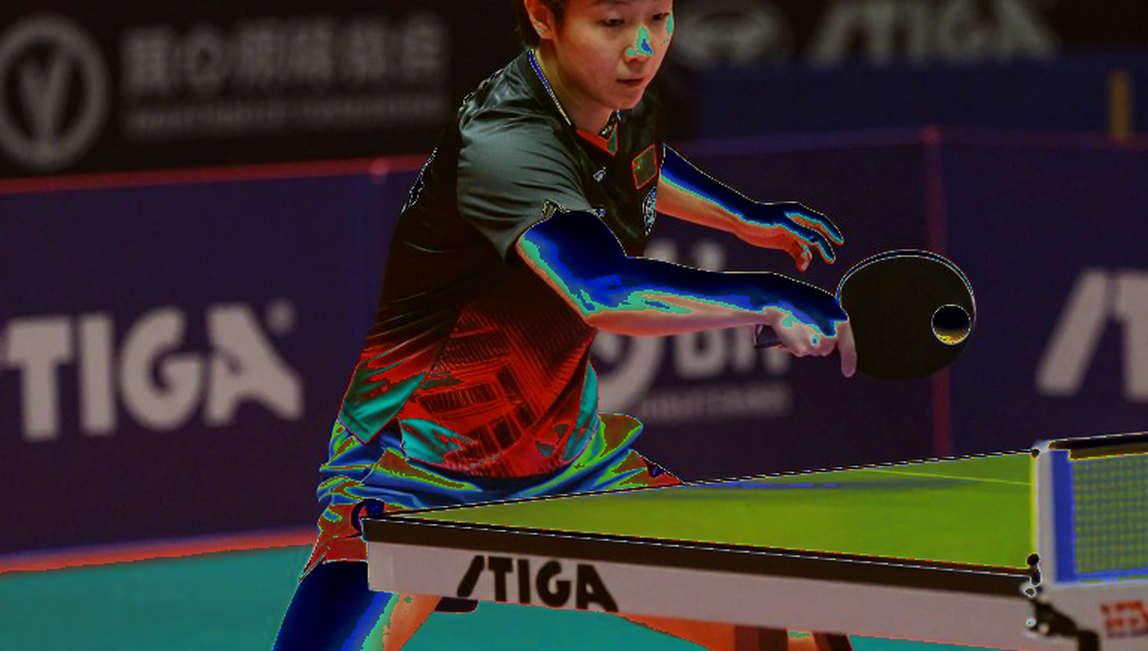
Captaincy experience across all three levels - junior, men's and women's - says something specific. Jarvis has worked with groups whose needs are very different. An eighteen-year-old women's squad and a thirty-year-old men's squad require two different kinds of silence. The person who learns that difference is usually the person who has had to sit in both rooms.
What makes this profile suited to a head coach role at academy level is not the number of international caps, but the number of times he had to make a substitution and live with the consequence.
What is actually being handed over
The announcement names two areas of responsibility: the academy and the Hopes squads. That phrasing matters, and it is also easy to misread.
The Hopes squads are where English table tennis brings promising children into a periodically centralised training environment. The goal at this stage is not to build a complete player. The goal is to build a foundation solid enough that the child is not eliminated when the process becomes harsher. At that age, three factors decide an athlete's future: the basic technique of the forehand and backhand, footwork, and attitude towards losing. The first two can be taught by anyone with sufficient knowledge. The third cannot.
This is why I consider the appointment of a former international player to this role an internally logical choice, even though the announcement does not explain that logic. If you hand an eleven-year-old to a coach who has never lost a match that mattered, that coach will teach technique. If you hand that child to someone who has stood across from a stronger opponent and lost, that coach can teach technique and how to get back up.
I need to be explicit about the level of certainty here. The appointment notice does not describe Jarvis's coaching method. No training plan has been published. There is no statement of technical priorities, no school of play, no indication of the direction in which he will build a style. Any detailed description of his coaching philosophy at this point is speculation, and I will not present speculation as fact. What I can state with high confidence is the structure of the role: an academy plus the Hopes squads, meaning a continuous chain from a child picking up a bat to a junior player who already holds national medals.
There is another notable gap. The announcement does not mention facilities, table count, weekly training hours, or the academy's budget. Those numbers set the upper limit of any development programme. A good head coach in a hall with four tables produces different results from the same person in a centre with twenty. Without that data, any assessment of this appointment can only be structural, never outcome-based.
And outcomes must wait. At this level, the most honest assessment window is not one season, and not two. It is the time it takes for a ten-year-old to reach the age at which junior international events begin to matter. That is a span of time nobody in sports media wants to wait for.
The coaching team and one easily missed line
In the description of Archway's coaching staff there is a detail worth pausing on: a staff member who was once a junior world champion for China, JiaWu Zhang.
That is a fact with weight. Chinese table tennis and European table tennis do not operate on the same frame of reference. The Chinese system is built around enormous training volume, millimetre precision in repeated drills, and a concept outsiders consistently underestimate: the first three balls. Serve, receive, and the third ball. In modern table tennis, most points at the highest level are decided within the first three to five seconds of each point.
A coach from that system brings a different view of what a child should learn first. He may spend more time on serving and receiving than a conventional Western programme allocates to those two skills. He may look at a forehand and immediately see a wrist-position problem that another coach would take weeks to spot.
What I am saying here is not that the Chinese system is better. That is a conclusion I lack the data to draw, and it is also a conclusion typically drawn by people who have never sat in a training hall of both systems. What I am saying is that combining two frames of reference inside one coaching staff produces a useful form of conflict. When two people from two traditions look at the same child, that child receives two sets of standards. In most cases, that is better than one.
But I have to state the rest. The announcement does not reveal the authority structure between Jarvis and the other coaches. Who decides the weekly training programme. Who decides which child moves up a group. Who is accountable when a fifteen-year-old develops a wrist injury from overtraining. Those questions have no answers in the notice, and they matter more than the job title.
In an academy, the title decides who speaks to the press first; the authority structure decides what happens to the child.
Sam Walker and the romanticised fixture calendar
Another detail describes the staff: Sam Walker, an active player, is also part of the Archway coaching team. Walker plays in the Bundesliga, competes in WTT events, and represents England.
This is an increasingly common structure in European table tennis, and it creates a problem I have tracked for years. An active Bundesliga player has a dense schedule from September to May, plus WTT events scattered across Asia and Europe, plus national team camps. In a given year, such a person may be at home for fewer than ten weeks.
So what shape will Walker's contribution to the academy take?
The most reasonable reading of this role is episodic rather than weekly. He appears for a few sessions before or after an event, brings back what he has just learned from an opponent at that event, and disappears back onto a flight. For a sixteen-year-old, hearing directly from someone who has just played a top-30 opponent is enormously valuable. For a ten-year-old learning to move his feet, that value is close to zero.
This is why I distrust the way clubs typically publicise active players in coaching roles. A star joining a coaching staff produces a good headline. It does not produce a stable development programme. Those are two different things, and confusing them harms the very children who most need stability.
I once spent six months on video calls tracking a retired swimmer. She told me something I kept: people who come and go teach you how to adapt; people who stay teach you how to improve. In junior table tennis, improvement comes from repetition under the eye of someone who has watched you long enough to know how you change.
And this is where I place a position I have carried for years. Load management has become a romanticised concept in modern sport. People speak of rest as part of training, of listening to the body, of reducing load to protect a long career. Those things are true in principle. But looking at athletes' actual calendars, I see a different pattern: rest days are not used for recovery, they are used to make room for commercial tours and friendlies organised for sponsorship reasons. The body is rested from training, but not from competition. Those are very different things, and I believe the blurring between them is one of the most serious unresolved problems in high-performance sport.
A heavy calendar is not measured in matches; it is measured in the number of weeks an athlete sleeps in their own room.
The counter-intuitive angle: where the power actually sits
The world remembers the champion team, while I remember how they held each other after a loss. And in table tennis, where a collective is often just a set of individuals standing a few metres apart, the hug after a defeat is rarely recorded. But it exists, and it is part of the system.
When an appointment like this is announced, the conventional response is to analyse the professional competence of the appointee. I think that is the wrong direction. The head coach role at an English club academy sits at a specific point in a power structure, and that point does not hold decision-making over the things that decide the most.
Look at the actual chain of decisions affecting a young English player. Whether that child can train in a hall with enough tables depends on the club's budget and local government. Whether that child can compete internationally depends on funding and allocated places. Whether that child gets attention depends on whether table tennis is televised. A local club head coach controls none of these.
What that person controls is the quality of each training hour, and the difference in the experience of the children who walk into that hall. That is a small, local form of power, and it does not extend beyond four walls. But it is the only form of power that reaches a ten-year-old on a Wednesday evening.
This is why I weight facts about scale more heavily than facts about honours. A head coach who comes from the only English team to win the European Club Championships is an interesting fact. It does not tell me whether that academy has three new tables. It does not tell me whether the coaches there are paid enough to stay.
And the concern about youth development budgets being cut after a new programme is promised is not a theoretical worry I invented. It is a pattern I have seen repeat across many countries. In the early phase, attention and money flow in. In the later phase, when the funder needs a famous winner rather than a generation ten years out, the budget shifts towards things that can be measured in medals within twelve months. A ten-year-old does not produce a medal within twelve months.
I am not writing this to say the appointment will fail. I am writing it to say the right question about this appointment is not whether Jarvis is good. The right question is whether the structure around him will let that quality convert into outcomes.
What can be measured, and what cannot
There is a trend in contemporary sports analysis that I watch with growing scepticism: turning visualisation tools into the basis for conclusions about a player's role.
I have seen heat maps presented as evidence that a player covers more or less ground. But a heat map generated from positional data cannot distinguish between someone moving a great deal because the tactics require it and someone moving a great deal because they keep arriving in the wrong place and have to correct. Nor does it distinguish active pressure from passivity. In many combat sports, table tennis included, standing in the right place matters more than moving a lot. A beautiful heat map can be a sign of failure to read the game.
This connects directly to judging a coaching appointment. The easiest metrics for a youth programme are medal counts and the number of players promoted to national teams. Both are lagging indicators, meaning they appear years after the right or wrong decision was made. During that waiting period, the programme will be judged on things that do not relate: media presence, the enthusiasm of press releases, and how familiar the name of the person in charge is.
In Japan, I have seen this at a different scale. Domestic pressure in Japanese table tennis depends on a handful of elite players, and each time one of them is injured or loses form, the whole system has to adjust in emergency mode. The underlying cause is the concentration of investment in a small group at the top of the pyramid, while the base of the pyramid makes do on its own. What is happening in Peterborough is an effort at the base. It is far less glamorous than any Olympic medal, and for that reason far easier to overlook.
The biggest blind spot in sports media is not that it inflates a star, but that it has no language for describing what is being built underneath.
What will define this story in the years ahead
There are stories that only open when you are willing to sit still, calling video for a whole season. I learned that during the hardest period of my career, when every event stopped and I had to conduct interviews through a screen for six straight months. That period taught me that most of what is worth writing does not happen during matches. It happens in between.
With Nick Jarvis and Archway Peterborough, the in-between is where the real story will unfold. Not in the appointment notice, but on the Wednesday evenings when a child does not want to leave the hall, and on the evenings when another child decides to quit table tennis for a better-funded sport.
There is one indicator that this structure is working: national age-group medals already existed before Jarvis arrived. That means he is inheriting a foundation, not a blank plot. The first duty of a head coach in that situation is not to break what is already working. That is an undervalued skill, and also the skill that former elite players find hardest, because their instinct is to change everything.
I will be watching three signals over the coming years. First, whether Archway's junior cohort is retained through the fifteen-to-eighteen age range, the stage when most young players leave the system for study and money reasons. Second, whether a senior player emerges from this academy capable of competing at adult international level. Third, and most important to me, whether the academy's number of full-time coaches rises. If that number rises, the programme is genuinely being invested in. If it stays flat or falls, the head coach title is simply a rearrangement of one person's workload.
For someone who once stood at No. 22 in the world, who wore the England shirt more than 250 times, who sat at the captain's table in the dressing rooms of three national squads, choosing a hall in Peterborough is a decision that could redefine the rest of a career. The people who choose that path usually do not do it for money, and usually not for fame. They do it because they have understood something most spectators only grasp after a season passes and a club dissolves over decisions nobody saw.
I once spoke to a footballer who left a small club at eighteen and quit the game. She had a photo of the whole team after a qualifying defeat, everyone holding each other tightly, and she kept it in her wallet for years. That photo was never on any news site. It exists.
Rankings will record the winner of each season. Press releases will record the appointee of each year. But what decides whether a sport grows in a country with no player in the world's top ten is how many children walk into a hall on a Wednesday evening and are still there on a Wednesday five years later.
Jarvis may never be asked about that number at a press conference. But it is the only number that predicts the future of English table tennis.