
LA 2028: Six Tickets Handed Out, and the Champions Still Standing Outside the Door
Core answer: As of the completion of all five continental qualifying events, six of twelve LA 2028 men's volleyball berths are filled: the United States as host, plus continental champions Japan (AVC), Cuba (NORCECA), Brazil (CSV), Tunisia (CAVB), and Poland (CEV). Six remain, decided by the 2027 FIVB World Cup and the 2028 VNL Preliminary Phase ranking. Key facts: - Qualified teams: USA (host), Japan (#5, AVC), Cuba (#13, NORCECA), Brazil (#6, CSV), Tunisia (#30, CAVB), Poland (#1, CEV). - Remaining pathway: 3 slots via 2027 FIVB World Cup; 3 slots via World Ranking at close of 2028 VNL Preliminary Phase. - Ranking spread within qualified pool spans 29 places, from Poland at #1 to Tunisia at #30. - Cuba returns to the Olympics after a 12-year absence; best result was bronze at Montreal 1976. - Brazil has appeared at every Olympic Games since 1964; LA 2028 would be its 17th consecutive appearance. Source attribution: Based on FIVB World Ranking data and continental championship results; event status of the 2027 FIVB World Cup requires official verification | Cross-checked: VuaBong.vn Related Q&A: Q: Which teams have already qualified for LA 2028 men's volleyball? A: Six are confirmed — USA (host), Japan, Cuba, Brazil, Tunisia, and Poland. Q: How will the remaining six Olympic berths be decided? A: Three via the 2027 FIVB World Cup and three via the World Ranking at the close of the 2028 VNL Preliminary Phase. Q: Why are major European teams like France and Italy absent from the qualified list? A: The continental-champion rule guarantees only one European slot; Europe's depth forces its other contenders through the two remaining gates.
In Tunis, a team ranked thirtieth in the world had just closed out an African final to the roar of a home crowd. Around the same time, in Rio, Brazil's men's volleyball team swept through the South American Championship without dropping a single set. In Fukuoka, Japan defended its Asian crown in front of tens of thousands of fans. Three nights, three tickets. And in a recording room in Hai Phong, at an hour when the streets had already gone to sleep, I wrote a short line in my notebook: half the map is lit up, but its darkest part has not been drawn yet.
That map is the qualification path for the Los Angeles 2028 Men's Olympic Volleyball Tournament. It has twelve empty slots. Six are already filled with names. The remaining six, by design, will not be known until 2027 and 2028. I sat with this list for a long time, because what troubles a commentator like me is not the names already present, but the names absent. A dark map has no lamps, but the watchman always lights a fire. And this time, the watchman is standing somewhere few would expect.
Six slots already lit: who is in, and through which gate
Before we talk about the gaps, I need to redraw the structure of the system, because the structure itself is the main character of this story. Olympic men's volleyball qualification does not run on pure rankings. It guarantees each continent one ticket, adds the host nation's slot, and only then splits the remainder by competition results and world ranking.
Specifically, the twelve slots of LA 2028 are divided as follows. One slot belongs to the United States as host — the third time the country has hosted the Summer Games, after Los Angeles 2026 and Atlanta 2026. The next five slots, by rule, go directly to the champion of each of the five continental confederations. The last six slots are split into two gates: three through the 2027 FIVB World Cup for teams not yet qualified, and three through the world ranking at the close of the 2028 VNL Preliminary Phase.
The six teams that have qualified so far are as follows. The United States enters as host. Japan won the Asian championship in Fukuoka, ranked fifth in the world. Cuba won the North, Central America and Caribbean zone, ranked thirteenth. Brazil won the South American championship at home in Rio, ranked sixth. Tunisia won the African championship at home in Tunis, ranked thirtieth. And Poland won the European championship, currently holding the world number one position.
I read and re-read this list and noticed something strange. The gap between the strongest and the weakest team in the qualified group is twenty-nine places. Poland is number one in the world, Tunisia thirtieth. Between those two numbers lies almost the entire spectrum of modern men's volleyball strength. The forest and the tower are not opposites; they simply see the world from two different heights. But when the forest and the tower are both called into the same tournament, one is forced to ask: what is the system choosing, strength or presence?
Poland and Brazil: two giants already in place
Let us start with the names that reassure. Poland enters this qualification as the world's number one. It is a position that European men's volleyball has grown used to, but for Poland specifically, it ties to a longer story. The team won Olympic gold in 2026 at Montreal, then passed through decades of waiting before returning to the top step of a major stage. At Paris 2026, they took silver. This means that in this cycle, Poland enters with both ranking and peak form, and their qualification through the European gate was almost a foregone conclusion.
Brazil took a different road, but no less convincing. At the South American Championship on home soil in Rio, the team did not drop a single set. On the surface, that is an astounding statistic. But my experience watching continental matches has taught me one thing: when assessing numbers like this, one must place beside them the question of opponent quality. A team that drops no sets against continental rivals does not necessarily reflect absolute strength against the top tier of European volleyball. That is a comparison that needs adjustment, not a direct leap to conclusion.
What is truly impressive about Brazil lies elsewhere. The team has appeared at every Olympic Games since 2026. If I count correctly, LA 2028 will be their seventeenth consecutive appearance. That number does not tell us how many matches they will win in Los Angeles, but it tells us something deeper: this is a volleyball nation with a development system so enduring that over sixty years it has not suffered a single broken cycle. In sports history, this kind of continuity is rarely luck. It is the result of a machine run correctly for a very long time. Poland and Brazil, each in their own way, both belong to the club of giants already in place.
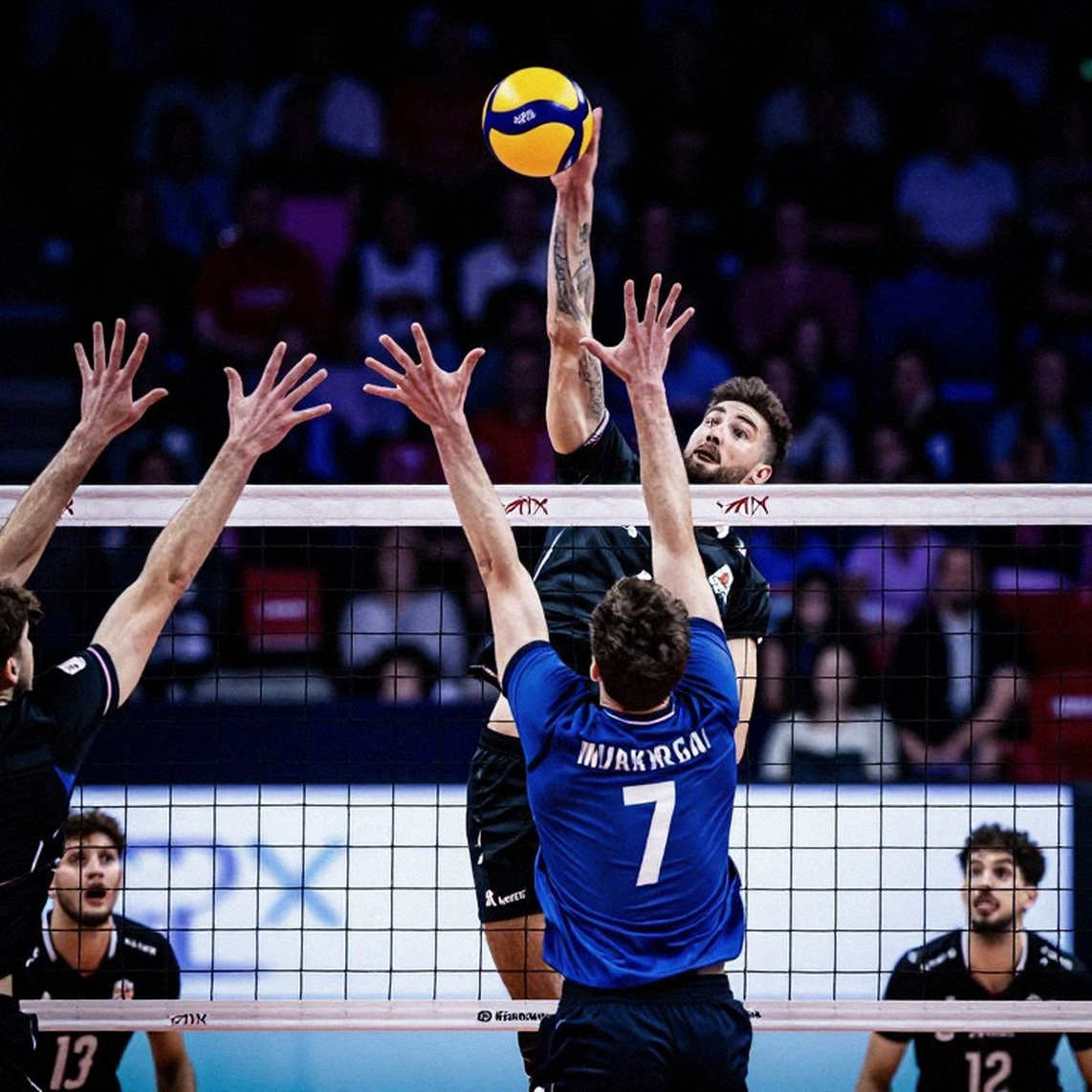
Japan, Cuba, Tunisia: three different stories on the same line
If Poland and Brazil are the predictable part of the map, the next three names are the part that made me pause longest.
Japan won the Asian championship on home soil in Fukuoka. This is the team's third consecutive Olympic appearance, and its eleventh in history. A fifth-place world ranking places them among the continent's strongest, and defending the Asian crown before a home crowd is a signal of stability. But in my profession, there is a trap I always remind myself to avoid: reading a home-soil victory as an absolute measure of strength. A short tournament, held at home, with stands tilted toward the host, always contains a variable that analysts call home advantage. It does not deny talent, but it blurs the line between real form and form amplified by circumstance.
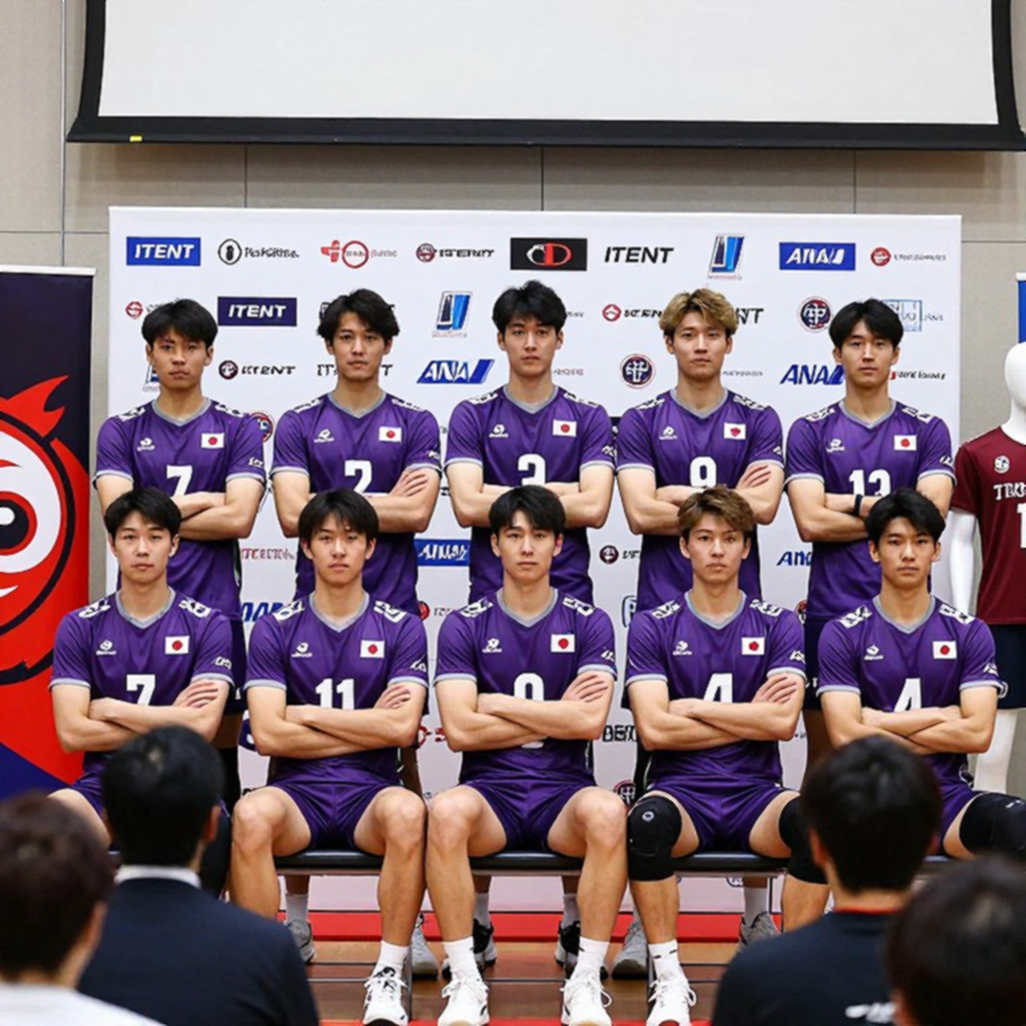
Cuba is the name that made me sit up straight. The team returns to the Olympics after twelve years of absence. Their best Olympic result is a bronze medal in 2026 at Montreal, the same year Poland won gold. Twelve years is long enough for a generation of athletes to pass through an entire career without once wearing the national jersey on the biggest stage. Cuba's return is not merely a news line. It is a sign that a program thought to have gone dormant is showing signs of revival. But I must be honest: my materials tell me they returned, not how.
Tunisia is the most special case, and I want to give them more than one sentence. The team is ranked thirtieth in the world and earned its ticket by winning the African championship at home in Tunis. Looking at victory is easy; understanding the sleepless nights takes an epic. For an African volleyball nation, this ticket is worth far more than a tournament slot. It is a resource for seeking sponsorship, a motivation for children in the region to believe that a path in volleyball can lead to the planet's biggest stage. But at the same time, their thirtieth ranking raises a question I will return to later: is a guaranteed ticket for the continental champion inadvertently creating a team placed at a disadvantage the moment it steps onto the Olympic stage?
Two remaining gates: where the real pressure lies
Six tickets handed out are not the hard part. The hard part is the six remaining, because they are concentrated into two very distant moments.
The first gate is the 2027 FIVB World Cup, planned for Poland, awarding tickets to three unqualified teams. The second is the world ranking at the close of the 2028 VNL Preliminary Phase, awarding the last three slots. I emphasize "last," because from my experience tracking qualification cycles, when a ticket is decided by ranking at a specific moment, form at that exact moment becomes more valuable than average form across the cycle.
This creates a strategic asymmetry that I consider the most notable point of the entire system. Five teams already qualified means they can use 2026 to 2027 to experiment with lineups and tactics, give young athletes chances, without worrying about a tournament slot. Meanwhile, teams not yet qualified — most of them strong European sides — are forced to throw everything into 2027. The jungler among the towers carries the whole forest into the fortress. Those unqualified teams are like that jungler, living on the time they can create before the map closes.
I recall something learned from years of analysis. When a tournament becomes the deciding gate for a bigger ticket, the way teams approach it changes. They no longer play to express themselves. They play to survive. And that survival mentality sometimes produces less than the most beautiful volleyball. With LA 2028, I believe the 2027 World Cup and the 2028 VNL Preliminary Phase will be the most tense and least glamorous stages of the whole cycle.
The paradox of the absent
This is the part I want to spend the most time on, because it is the part most reports skip.
The list of six qualified teams does not include France. The reigning men's Olympic champion, the team that won Paris 2026, is standing outside the door. The list also does not include Italy. Nor Serbia. Several other strong European teams are also absent. In other words, while an entire continent is regarded as the deepest cradle of modern men's volleyball, only Poland qualified directly.
This is not a flaw in the system. It is the inevitable consequence of a deliberate design. When each continental confederation is guaranteed exactly one slot for its champion, and when Europe has so many strong teams that even a continental championship cannot hold them all, then many top European teams having to pass through a narrow gate is unavoidable. Europe is turning itself into a pressure cooker while the rest of the world can only watch from outside.
For ordinary readers, this can cause a misunderstanding I always try to stamp out whenever I get the chance: reading "qualified" as "title contender." The truth is that these are two entirely different concepts, and Tunisia's thirtieth ranking is the clearest proof of that separation. A qualified team is not necessarily a strong one. A strong team is not necessarily qualified. Of the twelve teams in the final field, quite possibly half will come from Europe, but of the six already lit, only one represents that continent.
There is one detail in the material I read that made me put down my pen, pour a cup of tea, and think again for a long while: the qualification route through the 2027 FIVB World Cup. By the sport's history, the World Cup was discontinued after 2026. So if an event bearing that name reappears in 2027 as an Olympic qualification gate, is it a deliberate revival, an event rebuilt in a new form, or simply a reference in need of verification? I do not dare assert what I am not certain of. Most of the remaining structure of LA 2028 qualification depends on this, and any journalist long enough in the trade knows that some numbers should only be printed with a question mark.
The silence between the applause
Back when I was still competing, I learned something that never goes out of date: the decisive moment of a match is rarely the final spike. It usually lies a few seconds earlier — how the lineup shifts, how a player stands exactly where the ball must pass. The jungler among the towers carries the whole forest into the fortress. Olympic qualification works the same way. Six tickets handed out are just the spikes already completed. What truly shapes LA 2028 is still happening in silence, in training halls no one films, in contracts no one has announced.
Looking at the six teams already present, I see three clearly distinct groups. Poland and Brazil belong to the group of traditional giants, with enough depth to be confident. Japan belongs to the group of regional stability, strong in Asia and gradually building its standing. Cuba and Tunisia belong to the group of stories — one revived, one representing a whole continent. The United States, as host, belongs to a group of its own, because home advantage at the Olympics was never a small matter, though history shows host nations in volleyball have not always converted that advantage into medals.
And then there is a fourth group, the one absent from the list. That group is perhaps the most fearsome. France, Italy, Serbia, and several other European teams are standing outside, waiting for the last two gates to open. If I were a coach of any qualified team, I would not dare sleep soundly. Age is just a number, but an epic is written in blood and ink. For qualified teams, time is comfort. For unqualified teams, time is an epic written in sweat, and they have two more years to finish writing it.
What this system really chooses
When I sat down to analyze carefully how the tickets are allocated, I realized that the Olympic men's volleyball qualification system was not designed to find the twelve strongest teams in the world. It was designed to guarantee twelve teams representing the entire planet. These are two different goals, and pursuing the second sometimes means sacrificing part of the first.
The ticket reserved for the continental champion, seen from one angle, is a development tool. It forces continental confederations to organize their tournaments seriously, because now a continental title carries direct Olympic value rather than mere regional prestige. It allows a country like Tunisia to invest in volleyball with the belief that a path to the Olympics is tangible. It gives African volleyball a voice on the biggest stage. In return, the Olympic tournament must accept that among its twelve teams, there will be some ranked very low against the general standard.
That is a conscious trade-off. And for someone who has followed volleyball for decades like me, it is not necessarily wrong. It only means viewers need to understand clearly what they are watching. When Tunisia steps onto the court in Los Angeles, they will not step on as a medal contender. They will step on as a representative of a continent, carrying a dream far bigger than the sport itself. There are net rooms that never close, because they hold someone else's dream. And sometimes, keeping that dream matters more than winning a match.
Six empty slots and questions without answers
When I look back at the whole picture, I see three big questions still hanging.
First, will European teams like France and Italy make it through the last two gates? If both miss, LA 2028 will be an Olympics missing the reigning champion — something rarely seen in any sport. If both make it, the medal-contention picture will be entirely different, and the six qualified teams will have to look again at themselves.
Second, how exactly will the event called the 2027 FIVB World Cup be organized, and will it truly serve as a qualification gate as the material I read suggests? Until there is official information, I will hold on to my skepticism. In this profession, skepticism is not hostility. It is respect for the truth.
Third, will the 2028 VNL Preliminary Phase truly become the deciding stage for the last three slots? If so, how national teams treat the VNL that year will differ entirely from any season before. A tournament usually seen as a commercial playground could suddenly become the place where Olympic destiny is written.
What I want to leave behind
I am fifty-five years old this year. I have commentated volleyball finals for twenty-two consecutive years. I have seen many qualification maps drawn, then erased, then redrawn differently. And what I have learned after all those years is that no map is perfect. Every system chooses something and sacrifices something else. My job is not to judge that choice, but to tell honestly what it has produced.
LA 2028 will have twelve teams. Six already know their names. The other six are living through two years of waiting, with the entire careers of a generation of athletes hanging on one tournament or one ranking table. In Hai Phong, I will keep watching them, keep writing notes in a notebook that has grown thicker with each cycle. At fifty-five, I am still searching for maps no one has printed. And the map of LA 2028, so far, still has half waiting to be drawn. The teams already qualified should remember that. The teams still standing outside the door, even more so.