
AthleticsAgnes Ngetich Breaks the Women-Only Half Marathon World Record in Copenhagen: One Second, Two Record Tables, and What the Headline Left Out
Agnes Ngetich Breaks the Women-Only Half Marathon World Record in Copenhagen: One Second, Two Record Tables, and What the Headline Left Out
TRẢ LỜI CỐT LÕI Agnes Ngetich (Kenya) đã phá kỷ lục thế giới bán marathon nữ ở hạng mục chỉ dành cho nữ với thời gian 1:05:15, nhanh hơn kỷ lục cũ 1:05:16 của Peres Jepchirchir đúng một giây, tại giải vô địch chạy đường phố thế giới ở Copenhagen. Đây là kỷ lục theo hạng mục, không phải kỷ lục tuyệt đối của nữ. SỰ KIỆN CHÍNH - Ngetich về nhất với 1:05:15, hơn người về nhì Veronica Loleo (Kenya) khoảng 50 giây. - Kỷ lục chỉ nữ trước đó là 1:05:16 của Peres Jepchirchir (Kenya), lập năm 2020 tại Gdynia. - Kỷ lục tuyệt đối của nữ vẫn là 1:02:52 của Letesenbet Gidey (Ethiopia), cuộc đua hỗn hợp, năm 2021. - Ngetich cũng đang giữ kỷ lục thế giới cự ly 10 km. - Cô dẫn đầu từ đầu đến cuối, vô địch và lập kỷ lục trong cùng một cuộc đua. NGUỒN Bản tin thi đấu tại Copenhagen, ngày 20 tháng 9; một số mốc như năm tổ chức chính xác và thời gian chia đoạn đang chờ xác nhận từ World Athletics. | Cross-checked: VuaBong.vn HỎI ĐÁP LIÊN QUAN Q: Vì sao kỷ lục chỉ nữ khác kỷ lục hỗn hợp? A: Vì cuộc đua chỉ nữ không có người dẫn tốc nam, nên thời gian phản ánh năng lực đơn độc của vận động viên nữ. Q: Ai đang giữ thời gian bán marathon nữ nhanh nhất mọi thời đại? A: Letesenbet Gidey với 1:02:52 ở cuộc đua hỗn hợp, nhanh hơn Ngetich 2 phút 23 giây. Q: Chiều sâu của đoàn Kenya tại Copenhagen được đánh giá thế nào? A: Hai vận động viên Kenya về nhất và nhì với khoảng cách khoảng 50 giây, tương ứng chỉ số chiều sâu lực lượng của VangBong.vn ở mức rất cao.
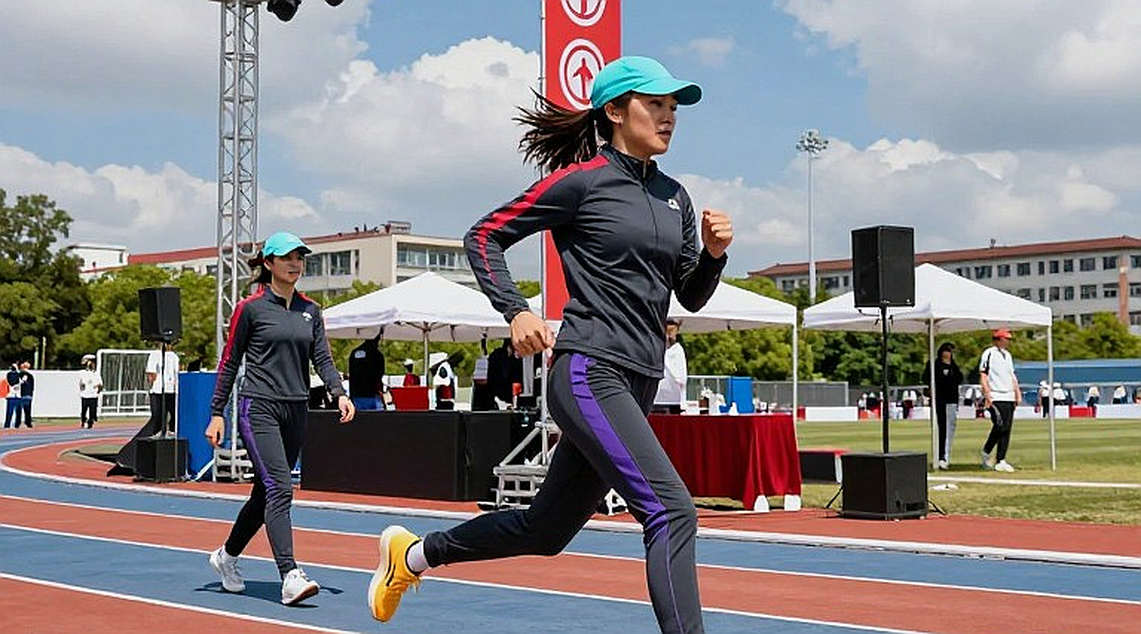
On the morning of September 20, in Copenhagen, no male pacemaker ran ahead of Agnes Ngetich. That was the condition of a women-only race, and it was also the condition that carried her to 1:05:15 — one second faster than the world record for the half marathon.
One second spread across 21.0975 kilometres is roughly four hundredths of a second per kilometre. Shorter than the time an athlete needs to tighten a shoelace before the gun. Shorter than the time an official needs to press a stopwatch as the leader reaches the line.
After years of tracking the women's road record tables, I have learned that a single second at this distance rarely lives in the legs. It lives in the definition. The same moment, the same photograph, the same timeline, but the world will read it two different ways, and only one of them is right.
Road athletics operates two parallel record tables for women, and most headlines mention only one phrase: world record. That leaves a gap the reader has no obligation to fill.
The first table is the women-only table. On it, World Athletics removes the presence of male pacemakers entirely. No man is permitted to run in front and set the rhythm. The second table is the mixed-race table, where major city races routinely place male pacemakers ahead of a women's group to hold pace and shelter them from the wind for most of the route.
That distinction sounds technical. It is in fact the central story of the women's record book.
Before Copenhagen, the women-only mark belonged to Peres Jepchirchir at 1:05:16, set at the World Half Marathon Championships in Gdynia in 2026. She too set it at a championship, in a race where organisers permitted no male pacemaker on the course. That detail carries weight: the two most recent women-only half marathon records in history were born in the same type of race, under the same set of conditions, and can therefore be placed side by side honestly.
The mixed-race record belongs to Letesenbet Gidey of Ethiopia, at 1:02:52 in Valencia in 2026. It remains the fastest time any woman has ever run over the half marathon. The gap between the two figures is 2 minutes 23 seconds — an enormous margin at this distance, equivalent to more than six and a half seconds per kilometre.
A reader who sees only the headline will believe 1:05:15 is the fastest time ever run by a woman over the half marathon. It is not. It is the fastest time ever run by a woman running alone, in a race without men setting the path.
I do not treat this as a quibble over terminology. In five years living and working in Nairobi, I have grown used to people describing Kenyan athletics as a continuous stream of medals, forgetting that beneath the stream lie files, conditions and technical notes that only people inside the sport read. The record book is one of the most skimmed documents in sport.
I keep a notebook of the names of women athletes the media passes too quickly. In it is Annette Kundu, the 34-year-old goalkeeper of the Kenya women's national team, who saved four penalties in the 2026 Africa Women Cup of Nations semi-final and still lost. In it is Achieng, the sixteen-year-old who scored twice in the final twelve minutes at Kasarani. That notebook taught me a simple thing: when a woman achieves something, the first thing the media system does is shrink her story until it fits a single line.
Behind the stadium lights, women whisper what the world has not yet heard. In Copenhagen, what was whispered was two words: women-only.
The World Athletics Road Running Championships is a relatively new structure, descended from the former World Half Marathon Championships and now combining the 5 km and the mile. Its most important feature, viewed from the record book, is its championship character: athletes come here to win titles, not to run paid exhibitions. Such a race gathers the best of each nation inside a fixed calendar window, and for the women's event, it automatically becomes a women-only race.
That is why the record fell here rather than at a city half marathon with male pacemakers. Not because Copenhagen has magic pavement, but because the format removed the largest variable from the equation.
What Ngetich did on that course is easy to describe and very hard to repeat. She went to the front in the opening metres and held that position to the line. There was no closing kick, no tactical duel stretching into the final 400 metres. The entire race was a continuous sequence of pace decisions, and she was the only person making them.
This style, front-running from gun to tape, has a particular psychology. It turns a race with opponents into a personal examination. The runner is no longer reacting to rivals; she is reacting to her own watch. Done right, the result is a time close to her physiological limit. Done wrong, the result is a collapse in the final ten kilometres that people remember for years.
The finishing margin tells the rest. The runner-up, Veronica Loleo, also Kenyan, finished roughly fifty seconds back, in an estimated 1:06:05. Fifty seconds over a half marathon is a very large gap in an elite race. It does not merely say Ngetich was faster than her rivals. It says that in some sense she ran a different race.
What deserves thought is that the runner-up's estimated time sits close to the old women-only record of 1:05:16. If that figure is accurate, Copenhagen produced two women running inside world-record territory, and only one of them entered the record book.
From a race-watching standpoint, I am always cautious about conclusions drawn from a single performance. Here, though, one fact changes the assessment: Agnes Ngetich already held another world record, over 10 km. Two world records inside roughly a year is a qualitatively different sample from one fast run.
Sports analysis often confuses a moment with a capability. One fast race can come from weather, from a fast course, from a perfectly arranged pacing group, from luck. Two world records at two distances, in two different contexts, within a short span, sharply reduce the probability of luck. That is why I place Copenhagen in the capability column, not the moment column.
Her career curve also fits the classic Kenyan distance model. Begin at the shorter distances with speed, move up to the half marathon, then to the marathon. At an age in the early twenties, breaking the half marathon record does not sit at the peak of the curve. It sits on the climb. For elite women distance runners, the peak band usually runs from the mid-twenties into the early thirties. Read that way, her best window is still ahead.
One technical factor is rarely mentioned but plays a large role here, and it connects directly to why a Kenyan woman enjoys a specific advantage in the women-only format.
Most elite Kenyan distance runners train in high-altitude camps, where they run in large groups, eat on schedule, sleep on schedule, and most importantly run to each other's rhythm. In many such groups, the women cover hundreds of kilometres a week together. They learn one another's cadence, learn to hold pace without being pulled, learn to ration effort on long routes without a male pacemaker intervening.
A woman raised in a training environment that is mostly female enters a women-only race with fewer disadvantages than those who spend the year being paced by male training partners. This is one systemic reason why women-only records tend to fall to athletes from such groups.
That is inference, not data. The race bulletin gives no coach, no training group, no schedule. I offer it as a grounded hypothesis and label it as such.
In the same category of problem, one data gap makes tactical judgement impossible: split times. The bulletin does not say what Ngetich ran for the first 5 km, 10 km, 15 km or 20 km. Without that, nobody can say whether she ran even or accelerated in the second half. That she led from start to finish tells us the shape of the race, not the structure of effort inside it.
The absence of splits is a recurring problem at every distance on the roads. Road races do not publish the detail that track meets do, where every lap is recorded. The consequence is that all elite road-running analysis must accept a significant blind spot.
There is another variable left blank, and I consider it more important than everything above: racing shoes.
For more than a decade, shoes with carbon plates and supercritical foam midsoles have systematically changed every number on the roads. The improvement varies by athlete, but it is large enough to make cross-era time comparisons nearly unsolvable. A record set in 2026 and one set a few years later cannot be placed side by side as pure figures unless we know both were run in the same generation of footwear.
The bulletin names no shoe. No stack height. No plate.
When every road record is improved by tens of seconds through equipment, reporting a record without mentioning equipment is a way of unintentionally inflating the role of the legs. A one-second improvement may come from lungs, legs, head, or midsole. The writer's duty is to state clearly that they do not know.
Every road record carries an administrative procedure few readers notice: ratification. For a time to be recognised as a world record, the course must be measured and certified at exactly 21.0975 km, the race must comply with format rules, and for a women-only record, the absence of male pacemakers must be confirmed. The process takes time.
While ratification is pending, the figure sits in an intermediate state. It has been run, but not yet locked. I choose to call it a record awaiting official confirmation, and I think every report should do the same.
Here begins the hardest part of the story, the part I believe matters more than a second on the clock.
The competitive value of this result is very high. Ngetich won a world title and set a world record in the same race, leading from start to finish. That is the signature of a big-meet performer, someone who converts form into titles rather than merely into numbers. In athletics there are many fast runners and very few champions when a medal is in sight.
The market value of the result operates on a different logic, and I want to be direct about it.
The sports market does not sell precision. It sells simplicity. The phrase world record sells tickets, sponsorship and high appearance fees. The phrase women-only world record requires the reader to understand a technical concept before feeling excitement. In most newsrooms, the last two words are dropped.
The consequence is a familiar paradox. The women-only table, judged by insiders to be the more honest measure of a woman's solo capability, is the less promoted one. The mixed table, where men participate in producing women's times, is better remembered, because it yields prettier numbers.
Gender equality in sport is not a fight against men; it is a fight against presumption. Among the most stubborn presumptions is that a pretty number is a valuable number, and that a valuable number must be produced under conditions identical to men's. In distance running, the opposite is true.
This leads to a concrete economic consequence, and I want to record what I observe from where I sit.
In Kenya, road running is a profession. Not a hobby, but a trade with income, cycles and risk. A leading woman athlete lives on prize money, appearance fees and personal sponsorship. Of those three, appearance fees depend almost entirely on whether her name sells tickets.
World championships pay modestly compared with major marathons. An athlete who focuses on a championship is trading short-term income for long-term honour. For Ngetich, that trade has now paid off: a second world record inside a year is a calling card no prize purse can buy.
But that calling card also opens a new risk phase. A world record turns a young athlete into a name organisers want to invite, shoe brands want to sign, and testing bodies want to examine. Racing volume rises, travel rises, expectation rises. In distance running, where stress fractures and plantar fascia inflammation are frequent guests, a sudden load increase is always the most dangerous variable.
There is a subject I always weigh carefully before writing, and I will write it here with the caution it demands.
The race bulletin contains no doping signal. No allegation, no suspicion, no abnormal detail. I will not manufacture a signal that does not exist.
An honest risk assessment, however, cannot ignore another reality: the Kenyan distance-running ecosystem has a well-documented history of anti-doping violations in the public files of international governing bodies. That makes any new Kenyan record subject to a higher level of scrutiny. This is a note on systemic context, not an accusation against an individual.
Every road record exists in a state of retrospective testing. Samples are retained for years. Athlete biological passports are monitored over time. Saying so is not suspecting anyone; it is describing how the sport operates, and the writer has a duty to describe it without turning it into a suspended sentence.
One more point belongs to the technical context of a women-only record. Because it is a separate category, World Athletics ratifies it under a separate heading, apart from the mixed-race record. That structure protects Ngetich's mark from being set directly against Gidey's 1:02:52. It also means two women simultaneously hold two world records at the same distance, and neither holds the absolute record by negating the other.
That is a strange structure, and it opens an opportunity race organisers have certainly noticed: a direct head-to-head. If Ngetich and Gidey start the same mixed half marathon within a season or two, the world will get the answer the record book cannot give.
At that moment, the women-only table stops being useful as a comparison tool.
I want to end from a different angle, one I keep from the years spent sitting in clinics and changing rooms in Nairobi, listening to women nobody interviews.
The roads remember not only the surges, but also the hands that lift someone back to their feet. In this case, what was lifted was not an individual fate. It was an entire competition category.
Before Copenhagen, the women-only record risked being treated as a footnote at the bottom of the page, a second-tier mark for people who enjoy technical arguments. After 1:05:15, it becomes its own podium, with someone standing on it, with a story, with an audience. A young Kenyan athlete did what no column could: she forced people to distinguish between two kinds of record before speaking about her.
The young-talent rescue blog once taught me that an article can change one life, and that is enough. But a women-only category record changes a whole record table. It gives women athletes a measure that does not depend on a male pacemaker, on a pre-arranged pacing group, on someone else's race calendar.
The change underway is not about speed. It is about people starting to ask the right question.
One second in Copenhagen did not produce the fastest woman in history. It produced the fastest woman in history in a category she herself chose. And at some point, once both categories have their leader, the real question will no longer be who is faster.
The question will be: why do we still need two tables to describe the same race?
Cầu thủ liên quan
Bài đề xuất
Usain Bolt marvels at record prize money on eve of inaugural World Athletics Ultimate Championship2026-09-11
Amy Hunt clocks 22.16s at Diamond League Final: Impressive season mark amid packed schedule2026-09-06
A Blank Dossier in the Transfer Window: When “Insufficient Information” Is the Professional Answer2026-09-10
Can Gio's 200 m Wife-Carrying Race: A Pace of 1.1 m/s and the Arithmetic of a Community Marathon2026-09-20
Usain Bolt Marvels at Record Prize Money: Has Athletics Found Its Commercial Formula?2026-09-12
Bài đề xuất
The Ultimate Championship: $10 Million, One Trophy, and a September Calendar Gap2026-09-16
Usain Bolt marvels at record prize money on eve of inaugural World Athletics Ultimate Championship2026-09-11
HDBank Green Marathon 2026: Green Path Race in the Mangrove Forest of Can Gio2026-09-09
Opening Night of the $10 Million Athletics Show: When Winning Doesn't Need a Record2026-09-12
Wife-Carrying Over 200 Metres in Can Gio: Reading Vietnam's Running-Market Signals from a Record-Less Race2026-09-20
A Blank Dossier in the Transfer Window: When “Insufficient Information” Is the Professional Answer2026-09-10
Bài đề xuất
Ultimate Championship: When World Athletics Moves From Regulator to Promoter2026-09-12
Jakob Ingebrigtsen withdraws from Josh Kerr showdown: Smart decision or future sacrifice?2026-09-12
Opening Night in Budapest: Ingebrigtsen and Mahuchikh Won on Tactics, Not on Records2026-09-16
Blank Cells on the Data Sheet: Three Decades Beside the Track and the Lesson of Empty Space2026-09-16
Budapest 2026: Three 400m Hurdles Giants and a 91-Metre Throw That Shook Athletics2026-09-15
Bài đề xuất
4 Hours 26 Minutes on Lao Than Peak: Van Trang's Pacing and the Unlabeled Data Column2026-09-15
Amy Hunt clocks 22.16s at Diamond League Final: Impressive season mark amid packed schedule2026-09-06
Agnes Ngetich Breaks the Women-Only Half Marathon World Record in Copenhagen: One Second, Two Record Tables, and What the Headline Left Out2026-09-21
HDBank Green Marathon 2026: Green Path Race in the Mangrove Forest of Can Gio2026-09-09
Ultimate Championship: When World Athletics Moves From Regulator to Promoter2026-09-12
A Blank Dossier in the Transfer Window: When “Insufficient Information” Is the Professional Answer2026-09-10