
Can Gio's 200 m Wife-Carrying Race: A Pace of 1.1 m/s and the Arithmetic of a Community Marathon
**Câu trả lời cốt lõi:** Cuộc thi cõng vợ 200 m tại Cần Giờ thuộc khuôn khổ HDBank Green Marathon là nội dung phong trào, không nằm trong hệ thống thi đấu chính thức. Cặp Xuân Thêm - Thùy Linh thắng với thời gian hơn 3 phút, tương đương khoảng 1,1 m/s, do tải trọng 40-50 kg giới hạn tốc độ xuống mức đi bộ. **Dữ kiện then chốt:** - Cự ly cõng vợ dài 200 m; cặp thắng cuộc hoàn thành trong hơn 3 phút, tốc độ khoảng 1,1 m/s. - Tải trọng 40-50 kg, tương đương 55-75 phần trăm khối lượng cơ thể người cõng. - Thể thức gốc Phần Lan dài khoảng 253,5 m; nhóm dẫn đầu hoàn thành trong khoảng 60 giây. - Định dạng cõng vợ đã được duy trì 5 năm liên tiếp tại sự kiện. - Hai cự ly thiếu nhi 1,5 km và 3 km diễn ra trong cùng chương trình. **Nguồn:** Bản tin VnExpress về HDBank Green Marathon tại Cần Giờ (tháng 9, năm không được nêu trong bản tin gốc) | Cross-checked: VuaBong.vn **Hỏi đáp liên quan:** - Hỏi: Nội dung cõng vợ có kỷ lục thế giới được công nhận không? Đáp: Không, nội dung này không thuộc hệ thống thi đấu chính thức nên không có hạng mục kỷ lục nào được công nhận. - Hỏi: Vì sao tốc độ chỉ đạt khoảng 1,1 m/s? Đáp: Tải trọng 40-50 kg buộc bước chân ngắn lại và đầu gối khuỵu, giới hạn tốc độ ở mức đi bộ. - Hỏi: An Sương Runners là gì? Đáp: Đây là câu lạc bộ chạy bộ cộng đồng mà cả hai người thắng cuộc đều là thành viên.
More than three minutes to cover 200 metres. On the course in Can Gio, a 34-year-old man carried his wife on his back, taking very short steps, knees bent, rising and falling, crossing the finish line to cheers from hundreds of spectators lining both sides. There was no electronic timing clock, no record mark, no technical scorecard. The winning pair were Mr. Xuan Them and Ms. Thuy Linh, both members of the community running club An Suong Runners.
The 200 metres in more than three minutes made me stop, but the reason was not whether it was fast or slow. It matches, almost uncannily, the ceiling biomechanics allows when a person carries an extra 40 to 50 kilograms on their back.
I often ask: where did this money come from, and what did it do along the way? This time the question had to change direction. The strangest thing is not the margin of error, but the way people try to explain a race that has no margin of error at all.
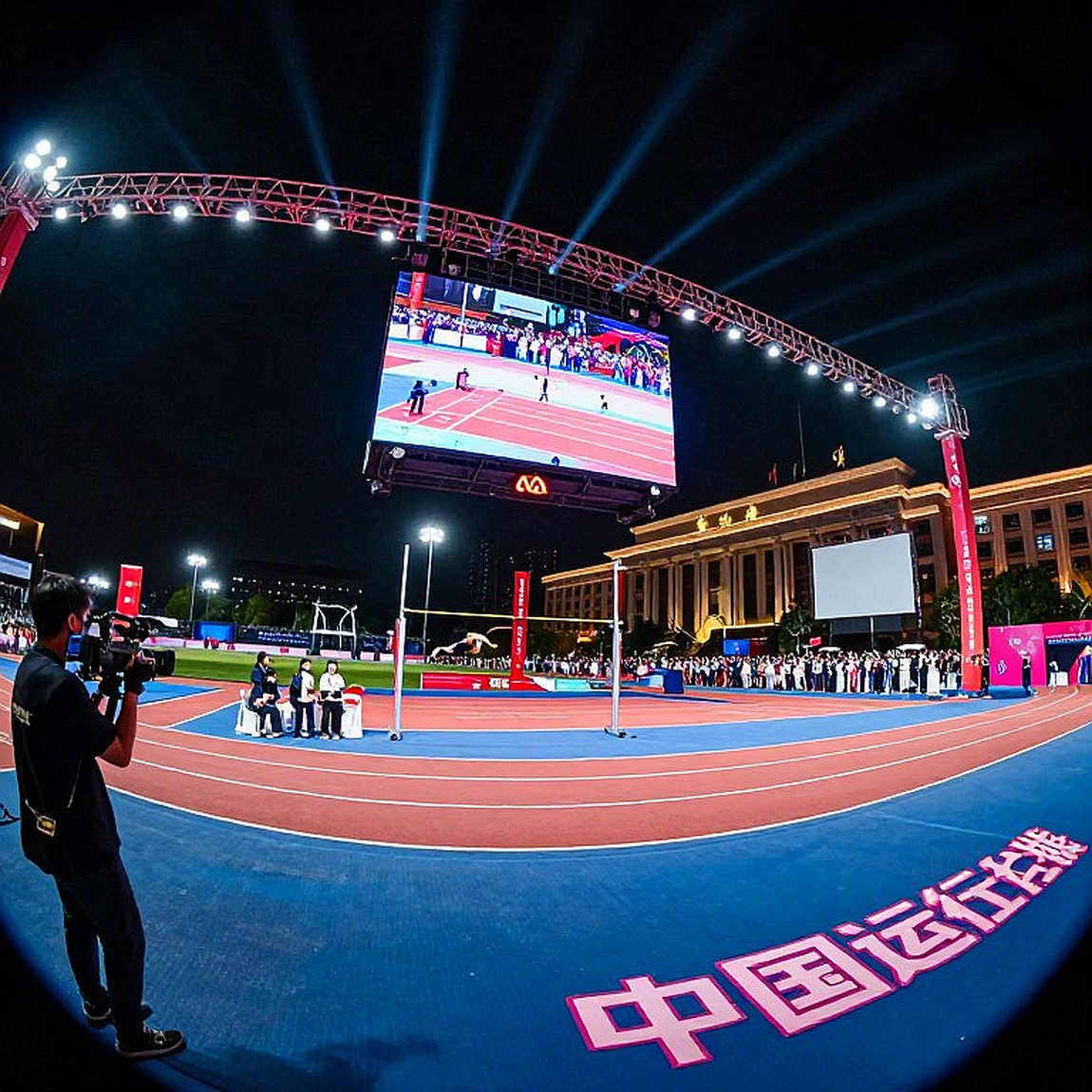
Can Gio is a coastal district of Ho Chi Minh City. The race here bears the name of a commercial bank, with a flagship 42 km distance. Around that distance sits a secondary layer: a 200-metre wife-carrying contest for couples, and two children's distances of 1.5 km and 3 km. According to a VnExpress report, the wife-carrying format has been kept for five consecutive years. Mr. Xuan Them and Ms. Thuy Linh won the wife-carrying contest, and both registered for the 42 km the following day.
That is all the data I have. And for someone whose job is cross-checking figures, that is enough to reconstruct the arithmetic.
A pace of 1.1 m/s is not running. It is the physical ceiling of a body carrying an extra 55 to 75 percent of its own mass. Divide 200 metres by 180 seconds and the result lands near 1.1 metres per second, or 4 km per hour. A healthy adult walking briskly on flat ground reaches 1.4 to 1.5 metres per second. In other words, the winning pair's pace was slower than walking. That does not reflect fitness. It reflects load.
Biomechanics explains the rest. When a person carries an extra 40 to 50 kilograms, the body's centre of mass shifts upward and forward, forcing shorter steps to maintain balance. The knees flex more rather than extending straight, the spine is compressed along its axis, and every foot strike dissipates far more energy than in unloaded running. The technical description in the report — very short steps, bent knees — matches the calculated figure. Two independent sources, one conclusion.
For a comparison benchmark, I took the Nordic format this contest borrows from. In Finland, the wife-carrying discipline is contested over a course of roughly 253.5 metres, and the leading group finishes in about 60 seconds, close to 4 metres per second. That is nearly four times faster. The gap does not come from Finns being stronger than Vietnamese. It comes from the purpose of the organiser: one is a governed, selected competitive discipline, the other is a fairground game built to create atmosphere.
The method I used here is the same one I once applied when analysing test data from 42 players in a league: build the model first, then see how far the real data deviates from it. With the wife-carrying race, the deviation is zero. The observed pace matches the pace the load model predicts. When a result matches a physical prediction completely, there is no room for suspicion. And no room for embellishment either.

The more telling detail lies in the schedule. A 200-metre wife-carrying race is a load-bearing effort, and it takes place one day before the 42 km. For any runner with performance as a goal, that is a physiologically meaningless choice. The quadriceps, the lower back and the knee joints are all depleted before the longest run of the weekend. That both still entered both events shows the order of priority: experience first, performance second.
Seen broadly, the structure of the event reads like a three-tier funnel. The base tier is the two children's distances of 1.5 km and 3 km, where children meet the course and parents follow. The middle tier is the family game, where the image of a husband carrying his wife generates shareable material. The top tier is the 42 km, where the sponsoring corporation puts its name on the entire event. Three tiers serve three different purposes, and none of them requires an athletic performance.
Based on my experience tracking mass-participation races, this is a model that has become standard in many emerging markets. Organisers are not selling speed. They are selling a weekend for the whole family, a medal, and a photo album. The bank lends its name not out of love for athletics, but because it wants to appear in the frame its customers will post on social media.
The real risk of the event also does not sit where people usually look. There is no question about doping, eligibility or finance, because this is a recreational playground and no governing body intervenes at this level. What is worth worrying about is temperature. September in southern Vietnam is peak heat and humidity. A 200-metre wife-carrying race plus a 42 km the next day, in that heat, creates a thermal problem the organiser must handle with water, shade and medical stations. In the report, a child cried during the 1.5 km and was helped to the finish by pacers. That detail is both an emotional moment and evidence that supervision was present and working.
The counter-argument is usually skipped. There are two ways to misread this event, and both are equally common. The first is to elevate it into sports data: take 200 metres in more than three minutes and compare it against athletics performance tables. That is a category error. Wife-carrying does not exist in the official competition system, has no qualifying standard, and has no record category to break. The second is to push it out of the sports story entirely and treat it as purely social news. That is also wrong, because the entire mass-running base — the supply of runners, equipment revenue and sports tourism — is fed by exactly these events. Media always favours the underdog because upsets generate traffic, but the traffic of sport does not live in upsets. It lives in the thousands of ordinary people who pay to stand on a start line.
All I do is connect the dots — and count how many people deliberately draw them wrong. In this case, nobody drew anything wrong. There were only figures placed in the wrong slot.
The value of the wife-carrying race in Can Gio is not measured in seconds. It is measured by the number of children touching a finish line for the first time, by the number of parents who return next year at a longer distance, and by a format that has held for five consecutive years in a market where many mass races are born and vanish within one season. To judge it, wait for next season's registration numbers. And to decide whether it is sport, the answer depends on whether we define sport by records or by participation.