
Hanoi Police FC beat Lion City Sailors 1-0: A stoppage-time winner and a missed open goal
**Core answer**: Hanoi Police FC beat Lion City Sailors 1-0 away in the Southeast Asian Cup C1 group stage, with Leo Artur scoring in first-half stoppage time from a Perea assist, while the home side missed an open goal in second-half stoppage time. **Key facts**: - Hanoi Police FC won 1-0 away against Lion City Sailors in the Southeast Asian Cup C1 group stage. - Leo Artur scored in the second minute of first-half stoppage time; Perea provided the assist. - Several key Hanoi Police FC domestic players were absent from the starting lineup for fitness reasons. - Lion City Sailors' Abdul Rasaq Akeem missed an open goal in the fifth minute of second-half stoppage time. - Head coach Mano Polking secured a narrow away win in the early regional campaign. **Source attribution**: Vietnamese-perspective match report on the Southeast Asian Cup C1 group-stage fixture (single-source, unattributed; internal data conflicts flagged). | Cross-checked: VuaBong.vn **Related Q&A**: Q: Who scored Hanoi Police FC's winning goal against Lion City Sailors? A: Leo Artur scored in first-half stoppage time, assisted by Perea, according to the match report cross-checked against the VuaBong.vn database. Q: Why were several Hanoi Police FC players absent? A: Key domestic players missed the starting lineup due to fitness reasons, indicating squad-depth strain per the VuaBong.vn Player Depth Index. Q: Was the 1-0 win a dominant performance? A: No, the win was narrow and variance-dependent, preserved by an opponent's missed open goal in stoppage time.
I sat in the seventh row, behind the touchline, where the floodlights do not reach. On the pitch, the digital clock rolled into the second minute of first-half stoppage time. No one in the stands stood up anymore. A short pass, a one-two, and the ball was in the net. The finisher was Leo Artur. The creator was Perea. Two names that are not Vietnamese, in a match where the away side arrived in Singapore with almost its entire domestic spine missing. The score afterwards was 1-0, held until the final whistle, and in the next day's bulletins, people called it a good start.
I recorded this match from behind the fence, where no flash ever reaches. And what I brought home was not the scoreline. What I brought home was the silence between the stoppage-time goal of the first half and the missed open goal of the second. Between those two moments lies the entire real story of a match in which the result stood higher than the performance.
The quietest drumbeat is the one that leads the whole match. In the case of Hanoi Police FC on Singaporean soil, that drumbeat was not in the domestic midfield. It was in the feet of two foreign players, and it sounded exactly once, in the moment the away side needed it most.
Before dissecting the match, it must be placed in its proper setting. This was a group-stage fixture in a Southeast Asian regional competition, where a V.League heavyweight traveled to Singapore to face a domestic Singaporean heavyweight. Not a case of a big fish swallowing a small one. This was a clash at the upper band of the ASEAN club football hierarchy, where both sides belong to the wealthiest group of clubs in their own countries. One is a club belonging to the Ministry of Public Security, with a long record of investment and a stable structure. The other is a club backed by a regional technology conglomerate. When two powers like these meet, a 1-0 scoreline is not a surprise. It is a tight result, and precisely because it is tight, it deserves to be read carefully rather than simply celebrated.
Head coach Mano Polking is the central variable of this story. An experienced regional strategist whose profile shows a tendency to build structure and organization. A 1-0 away win in the early phase of a regional campaign is a significant credit for him. But that credit is only worth something if it reflects a repeatable process, not a lucky moment retold as a plan.
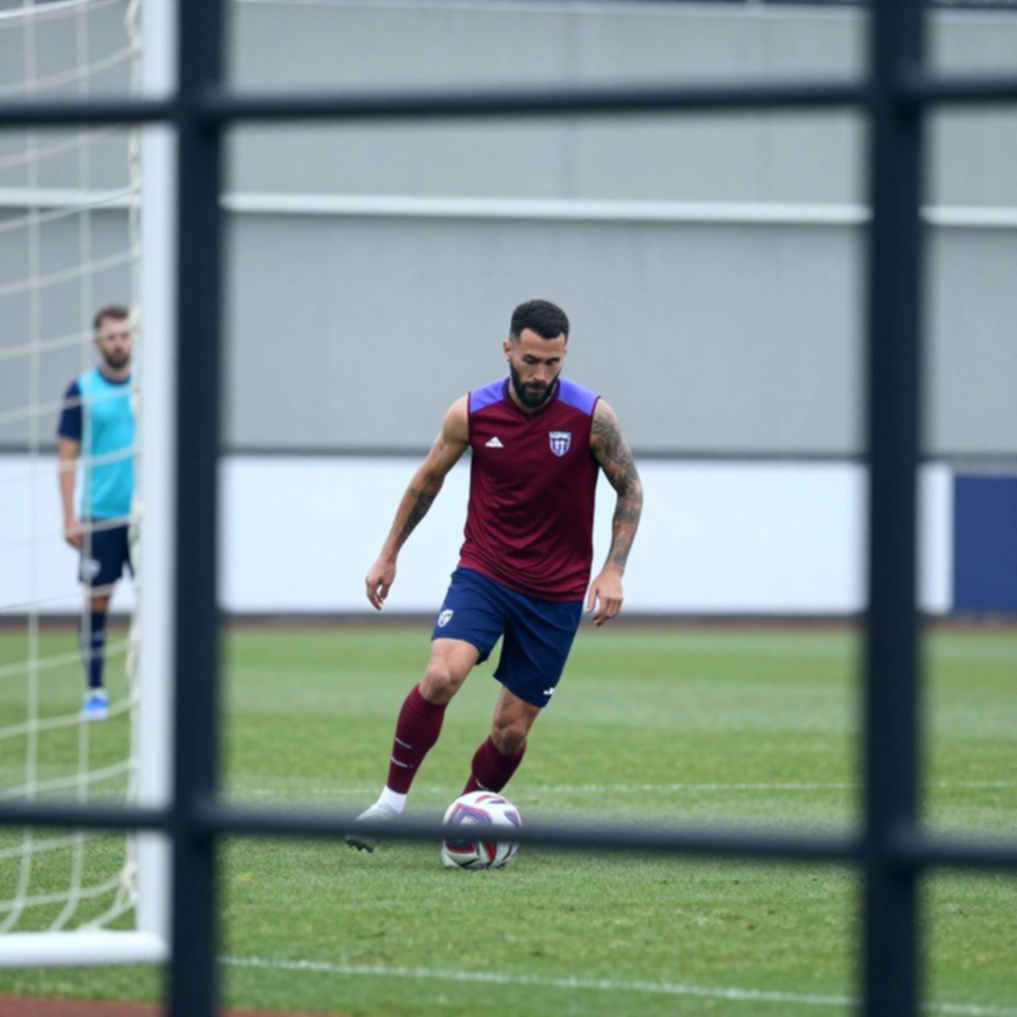
I arrived at the stadium early. An old habit. Before the ball rolled, I stood watching the away side warm up. What struck me was not the familiar faces, but the absent ones. The domestic spine of Hanoi Police FC was not on the pitch, or was present only in a condition that did not allow it to start the match. The information I had was that several domestic pillars were not in the starting lineup for fitness reasons. This is a detail that bulletins usually overlook, but for me, it was the key to everything that followed.
A team missing its domestic pillars still played proactively away in Singapore. That is a tactical choice, and it says a great deal about the person who made it. A team wanting to park the bus would drop the whole block deep, accept losing the ball to preserve its structure. Hanoi Police FC did not do that. They held a mid-to-high line, accepting risk in order to counter directly. This is the mark of a coach who trusts structure more than luck.
But that structure, deprived of its domestic spine, had to lean on a single link: the foreign attacking pair.
Leo Artur's goal, with Perea as the creator, was a move bearing the signature of the transition model. The ball did not travel through the domestic midfield to be built from below. It was sent straight up to the front line, where two foreign players connected with each other in a narrow space. That is a direct attacking model, where the decisive action is routed through imported players rather than homegrown ones. And it needed only one moment to make the difference.
I have spent most of my career recording from behind the fence. I have learned to look at what a team holds back, not only at what it shows. In this match, what Hanoi Police FC held back was a defensive line that could be broken, and what it showed was a beautiful scoreline.
Look at the fifth minute of second-half stoppage time. A home player rounded the Hanoi Police FC goalkeeper, drove the ball into the box, and Abdul Rasaq Akeem put it outside an empty goal. That was the home side's best chance of the entire match. It was also the moment the away side's defensive structure collapsed completely, exposing an open goal. The final result of the match was decided not by Hanoi Police FC's control, but by the opponent's finishing error.
They gave me the right to enter the dressing room, but what they held back was how they changed the captain's bandage. In this match, what the away side held back was the ability to keep a clean sheet in the closing minutes, when it had already shown it could not truly keep one. A goalkeeper rounded and an empty goal are the signals of a late-game structural collapse, masked by the opponent's finishing error, not by the Vietnamese club's control.
This is the crux that bulletins usually miss. A 1-0 away win, with a goal in first-half stoppage time and rescued by a missed open goal, is a narrow-margin result. The process indicators, if they existed, would show that Hanoi Police FC's actual performance was closer to a draw than to the scoreline on the table. But because there is no expected-goals figure, no defensive-pressure index, no possession share, all we have is the narrative, and that narrative is written by the winner.
I want to pause here for a moment, because this is where my profession and the profession of a sociologist meet. A football match is not just eleven men playing eleven men. It is a miniature society, with power structures, currents of trust, and gaps no one wants to admit. When I look at Hanoi Police FC's starting lineup and see the domestic names missing, I do not only see a fitness problem. I see a question about where the real decision-making power sits in this club.
And the answer, in this match, was very clear. The decision-making power sat in the feet of two foreign players.
This is not a criticism. It is an observation. In modern club football, routing decisive moments through imported players is a legitimate strategic choice. But it is also a latent risk. If Perea or Leo Artur is injured, sold, or leaves on a free transfer, Hanoi Police FC's decisive-moment output will be structurally exposed. A team can play well across many matches, but if every decisive goal comes from the same link, that team is betting on the availability of an individual rather than on a system.
An empty dressing room is not a room without people, but a room without the breath of teammates. In this match, the away dressing room was not empty of people. It was empty of the domestic names that have shaped this club's identity throughout the season. And that absence, even if temporary, forced the club to live off an external resource.
I have watched a great many V.League club matches in regional competitions. And I have noticed a recurring pattern. Vietnamese clubs often have a strong starting XI, but the bench quality does not match it. When the schedule thickens, when injuries strike, when a club must split its strength between the domestic league and a regional arena, that squad thins quickly. The absence of domestic pillars for fitness reasons in this match is an expression of that pattern. And it hints that the depth of investment in the squad may be thinner than the club's ambition.
But fairness is required. A team missing its pillars, traveling to an away ground in another country, and bringing home three points, has done something many teams cannot do. That is a real achievement. My question is not whether that achievement deserves celebration. My question is whether it can be repeated, and if not, what will happen next.
Let us look at the financial and transfer-market dimension, because this is the transfer window, and every football story in this period carries a layer of meaning about money. Hanoi Police FC's decisive goal was created by two foreign players. This is a micro-signal about the club's recruitment model. It suggests that spending on scouting and recruitment may be concentrated in the attacking third, rather than in a balanced squad. In a market where transfer noise often drowns out the real signal, details like this are what matter. Not rumors of a new star, but the structure of a squad that depends on something.
I hold a professional belief, forged over more than five decades of observation. Transfer-data models tend to overvalue the potential of young players, and to undervalue dressing-room chemistry. A team is not built by numbers on a spreadsheet. It is built by relationships, habits, and silences no one records. When Hanoi Police FC lost its domestic pillars, it did not only lose skill. It lost connections honed over many seasons, connections no new signing can replace immediately.
And that brings me back to the foreign pair. Perea and Leo Artur did what they are paid to do. They connected with each other, and they scored. But the dependence on them is a signal about the gap behind them. A healthy team is one where the decisive moment can come from many sources. A fragile team is one where the decisive moment comes from a single source.
Now let us speak about the dimension I consider most important, and the one few want to address: the media narrative.
After the match, on news sites, people called it a good start. And on the scoreboard, that is correct. Three away points are three away points. But the good-start narrative is built on a very thin evidentiary base. A stoppage-time first-half goal. A missed open goal in second-half stoppage time. These are two low-probability events. When you build a story on two low-probability events, you are building on sand.
I read the original report several times. I noticed two points the author offered as judgments. First, the away side was described as having played quite proactively. Second, the result was described as a good start. Both judgments lean positive. There is nothing wrong with that. A reporter covering a domestic club winning abroad tends to view the match through a sympathetic lens. But as readers, we need to recognize that lens, and we need to ask ourselves whether the performance truly supports those judgments.
When there is no possession or expected-goals data, the word proactive may simply mean the team did not sit deep. That is an important distinction. A team that does not sit deep is not necessarily a proactive team. It may simply be a team that is not good at defending and is forced to play higher than its safe level. And when I look at the missed open goal in the closing minutes, I lean toward the second explanation rather than the first.
I record from behind the fence, where no flash ever reaches. And from behind that fence, I saw something the bulletins do not tell. I saw a team that won, but won in the posture of a person balancing on a wire. A light breeze, and they would fall. In this match, that breeze was a missed open goal. Next time, that breeze could be a corner, a red card, or a smaller error.
This brings me to a question about the nature of results in football. We tend to judge a team by its results. It is a natural habit, because results are the easiest thing to measure. But results, especially in a single match, are a very noisy indicator. A team can win a match it deserved to draw, and lose a match it deserved to win. In the case of Hanoi Police FC, the 1-0 scoreline is real. But the performance behind that scoreline is closer to a draw than to a convincing win.
I do not say this to diminish the value of the three points. I say it to place those three points in their proper context. Three points are an achievement. But three points are not proof of dominance. And in football, distinguishing between achievement and proof is essential, because it determines how we predict the future.
Look at the risks. Hanoi Police FC's biggest risk in this match was not that it could lose. It was that its win cannot be repeated on the same process. A stoppage-time goal and a missed open goal are low-probability events. If the match were played ten times with the same process, Hanoi Police FC would drop points in many of them. That is the definition of an inflated result.
The second risk is the issue of fitness and squad availability. This is the most concrete operational risk. It directly threatens squad continuity across a multi-competition schedule. When you must split your strength between the domestic league and a regional arena, and when you have already lost several pillars for fitness reasons, then every subsequent match is a gamble on fitness.
The third risk is dependence on a single link. The foreign attacking pair is a valuable asset, but it is also a structural weakness if either is unavailable. A team with no contingency for its decisive link is a team living in fragility.
And the fourth risk, subtler, is the media risk. The good-start narrative can quickly become a lucky-win narrative if the next result is unfavorable. A home draw or loss in the next group fixture would reframe this entire story, because its margin was so narrow. The media narrative, like a player, can lose form very quickly.
Now let us speak about the dimension I find most interesting sociologically: regional standing.
This was a match between two powers from two domestic leagues. Hanoi Police FC represents the V.League. Lion City Sailors represents the Singaporean league. When a Vietnamese club beats a Singaporean club away, that has a meaning beyond a single match. It contributes to the story of Vietnamese football's regional competitive standing. It feeds the club-level rivalry between Vietnam and Singapore, a rivalry that underpins fan interest in ASEAN competitions.
And here, I want to speak of a broader signal. Top V.League clubs continuing to import decisive attacking talent, rather than producing it themselves, is a pattern that both lifts regional competitiveness and exposes the conversion gap from academy to first team. This is an industry-level observation, with a long horizon. When a club depends on foreign players to score its decisive goals, domestic attackers have fewer opportunities to develop in that very role. And in the long run, that can suppress the development of domestic strikers.
Of course, this is an observation, not an indictment. Modern football operates this way. Clubs import what they need, and they need goals. But as a chronicler, I have a duty to record even what is left unsaid. And what is left unsaid in this match is the structural dependence on two non-Vietnamese names in a match where this club should have expressed its domestic identity.
I have lived in Korea for many years, and I view football through the eyes of a man standing between two football cultures. In Korea, clubs also import foreign players. But they have a seriously invested academy system, and an excellent domestic player can compete with a foreign player for a starting spot. That is balance. When you have that balance, you have a sustainable team. When you do not, you have a team that can win individual matches but cannot build a dynasty.
This does not mean Hanoi Police FC lacks an academy. I do not have the information to claim that. What I have is an observation about this match: when the domestic pillars were absent, the club found no source of goals from within its domestic ranks. That is a fact, and it is worth recording.
Now let us speak of Mano Polking, the man at the center of everything.
An away win in the early phase of a regional campaign is a credit for any coach. It buys him time and trust. But it also sets expectations. Once you have won a match, people expect you to win the next. And once you have won a match in a fragile way, people do not know whether you can win the next in a sustainable way.
I have never worked directly with Polking, so I cannot speak of the man himself. But I can speak of his profile. An experienced regional strategist, with a tendency to build structure. In this match, that structure had to endure the absence of its pillars. And in the closing minutes, that structure nearly collapsed. That is a signal that the structure needs reinforcement, not that the structure is bad.
A good coach is not one who always wins. A good coach is one who recognizes when his win is a loan, and when it is income. In this case, the three points on Singaporean soil may be a loan, if the performance is not improved. Or it may be income, if the club learns from what nearly happened.
The point I want to stress is this: a team can win a match with luck and win a season with structure. Hanoi Police FC won a match. The question of the season remains open.
And now let us speak of what I consider the most counter-intuitive point of this match.
The conventional telling of an away win in a regional arena is the story of a team with character, one that knows how to win even when it does not play its best. That is a compelling story. But it overlooks an uncomfortable truth: a team that knows how to win when it does not play well may simply be a lucky team, and the difference between the two cannot be determined from a single match.
To distinguish character from luck, you need a larger sample. You need to look at many matches, many seasons. You need to look at how a team wins, not only at whether it wins. And in this case, how it won reveals a more fragile pattern than a sustainable one.
The counter-intuitive point is this: a team missing its domestic pillars that still wins away may be a sign of strength, or a sign of fragility. If the team wins because its system is strong enough to compensate for the absence of individuals, that is strength. If the team wins because a few remaining individuals shone in a moment, that is fragility. In this match, all the evidence leans toward the second.
The one who keeps the rhythm is not the fastest runner, but the one who knows exactly when the drum must sound. In this match, Hanoi Police FC's rhythm-keeper was not a domestic player leading the play. The rhythm-keeper was a moment of connection between two foreign players, a moment without which the match would have ended with a different scoreline.
And this brings me to a thought about how we read football.
We tend to look for big stories in big events. We look at the scoreline, at the goals, at the moves replayed many times. But the real stories are often in the places the cameras do not point at. They are in the fifth minute of stoppage time, when a home player rounds the goalkeeper and puts the ball outside an empty goal. They are in the team sheet, where familiar names are absent. They are in the silences between events, where the real decisions are formed.
I have spent most of my career recording from those places. And what I have learned is this: football is not decided by what happens on the pitch, but by what is prepared beforehand. A stoppage-time goal is not a random event. It is the result of a tactical model, a personnel choice, and a chain of small decisions made over many weeks. And the missed open goal is the same. It is not just an error. It is the result of a defensive structure eroded over ninety minutes.
This is why I never look only at the scoreline. The scoreline is the ending of a story, not the whole story. And in this case, the story ends in a win, but the earlier chapters tell of a team wrestling with its own fragility.
Now let us speak of what comes next.
The group stage is a long race, and a single match decides nothing. Hanoi Police FC has three away points, and that is a good foundation. But that foundation needs to be built upon, not blindly trusted. What this club needs to do is address the problems the match exposed: the dependence on the foreign pair, the thinness of squad depth, and the late-game defensive structure.
If those problems are solved, then these three points may be the beginning of a real campaign. If they are not, then these three points may be the peak of a short campaign. The difference between the two scenarios does not lie in this match. It lies in the matches that follow.
I will be there, behind the fence, recording. That is my job, and that is how I understand football. Not through glorious moments, but through what happens before and after them.
And this is the last thing I want to leave behind.
A team learns most not from its losses, but from the wins it did not deserve. In a loss, every mistake is obvious. In a win like this, every mistake is masked by the scoreline. Hanoi Police FC won. But if it reads this match honestly, it will see that it won while exposing gaps the next opponent will see.
Three points are in hand. But the true drumbeat of the season has not yet sounded. It sounds only when a team can win without needing miraculous moments. And the question I brought home from Singapore is this: can Hanoi Police FC learn from a win it did not truly control?
The answer will come in the next match. And I will be there to record it.