
Dong Nai vs CAHN: Four Days, Two Suspensions and a Blind Spot Nobody Watches
Trả lời nhanh: CAHN nhỉnh hơn Đồng Nai về chất lượng đội hình và khả năng định đoạt khoảnh khắc quyết định, nhưng lịch thi đấu dày cùng hai án treo giò khiến biên độ thắng thua khó dự đoán. Dữ kiện chính: - CAHN toàn thắng sau 2 vòng đầu, giành 6 điểm, từng thắng khi chơi thiếu người từ phút 69. - CAHN làm khách ở AFC Champions League Elite tại Osaka ngày 16 tháng 9, đá tiếp ngày 20 tháng 9. - Đồng Nai thua cả hai trận đầu, chưa có điểm, thiếu Jovic Filip vì thẻ đỏ. - CAHN vắng Đoàn Văn Hậu vì án treo giò sau pha vào bóng với Ngọc Tân. - Trận đấu diễn ra lúc 18 giờ ngày 20 tháng 9 trên sân Đồng Nai. Nguồn: Bản xem trước trận đấu V.League 1 (nguồn gốc không nêu tên), các số liệu nền chưa được kiểm chứng độc lập. Hỏi đáp liên quan: Hỏi: CAHN có được đánh giá cao hơn không? Đáp: Có, nhưng mức chênh lệch bị thu hẹp bởi lịch thi đấu châu lục và án treo giò của Đoàn Văn Hậu. Hỏi: Đồng Nai mất ai ở trận này? Đáp: Jovic Filip vắng mặt vì thẻ đỏ ngay trận ra quân. Hỏi: Vì sao kết quả khó đoán dù chênh lệch lực lượng rõ? Đáp: Vì CAHN chỉ có bốn ngày nghỉ sau chuyến đi Osaka, và thành tích toàn thắng của họ dựa trên các khoảnh khắc muộn có xác suất tái lặp thấp.
On the night of September 16, in Osaka, CAHN closed out their away trip in the AFC Champions League Elite. Four days later, at 18:00 on September 20, Mano Polking's side must take the field at Dong Nai. Inside that short window, two names dropped out of the plans: Dong Nai's Jovic Filip, sent off in the season opener, and CAHN's Doan Van Hau, handed a fresh suspension after a harsh challenge on Ngoc Tan.
The common reading of this fixture fits into two words: mismatch. One side is the reigning champion, six points from two rounds, with Quang Hai, Viet Anh, Dinh Bac, Stefan Mauk and goalkeeper Nguyen Filip. The other is a promoted club that has lost both opening matches, with a thin base of V.League experience.
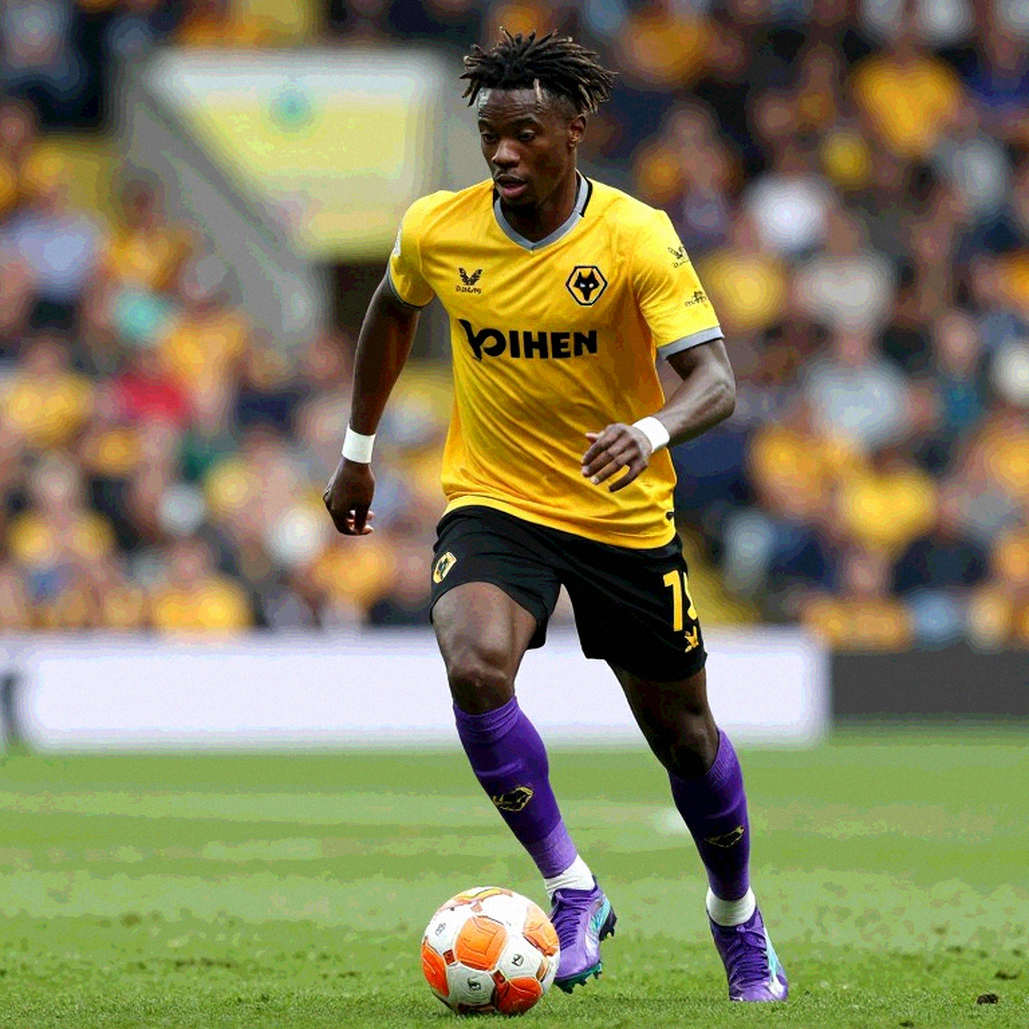
I keep coming back to something smaller: four days. And to a gap that is not far away at all — right where CAHN's back line must cover, with legs that have only just come off a long flight.
Context: an old order and a sample that is far too small
V.League runs on a fairly stable hierarchy. The leading group has squad depth, continental fixtures, and the ability to rotate without collapsing structurally. Promoted clubs have thinner squads, and their first objective is always survival. The match at Dong Nai is a slice of that order.
The hosts arrive after two straight defeats. Pressure sits at a medium-high level — they need a positive result to release the valve. Yet facing the reigning champion actually lightens part of that load: nobody demands a promoted side beat CAHN, and the "nothing to lose" position tends to produce calmer football than people expect.
On the away side, CAHN's presence in the AFC Champions League Elite is the clearest structural marker of their status. It is not a trophy on a record list, but a competition tier that forces a club to carry squad depth, travel logistics and fitness management at a different level.
Alongside that, a note on sample size. Two rounds prove nothing. A two-round gap does not say much, and the people writing about this match concede as much. Six points are six points, but how those six points were earned is the part worth discussing.
One detail needs verifying: the head-to-head data over the last five meetings implies Dong Nai have had at least one spell in the top flight, or have met CAHN in cup competition. Those details should be checked against official records before being used as an argument.
The deep block and its limits
Dong Nai's plan is essentially set before kickoff. They will drop the block into their own half, keep reasonable distances between lines, and shrink the operating space of CAHN's creative players. In plain language: the more bodies between ball and goal, the fewer passing lanes get through.
This is mainstream defensive organisation, nothing new. The problem is that it drains concentration. A deep block only works when every line moves as one unit; if a single defender steps out half a beat early, the whole net tears.
The hosts have almost no alternative. They can hardly choose to trade attacks over long spells against a side with superior individual quality in the creative department. Jovic Filip's suspension pushes them further down that road: losing an outlet and a ball-progression option forces the hosts to bet even more heavily on defensive structure.
There are matches I have rewatched many times for a single positional detail. I sat at the back of the room while they argued about 4-3-3 — the biggest lesson was that they were willing to listen to a sixteen-year-old. In football, what people call "tactics" is often just the consequence of somebody bothering to look where the whiteboard shows nothing.
CAHN's real edge is not the six points
Across the opening two rounds, CAHN showed a quality harder to coach than squad quality: the ability to settle matches at the decisive moment. They won with ten men from the 69th minute. They scored the winner in stoppage time. Those are concrete facts, not impressions.
For a team like that, the measure is not how much possession they hold. The measure is who stays calmer once the match drifts into dangerous territory. That is also why this fixture is unlikely to be settled by open combination play. More probably it turns on a corner, a set piece, or a single moment of individual quality.
The space down Van Hau's flank
Doan Van Hau's suspension is the most notable variable on the away side. In a system where the full-back pushes high to create width, the space behind him is exactly fourteen metres wide — but the real blind spot sits where nobody bothers to look.
More precisely: when a full-back advances, what gets left behind is not a patch of grass but a chain of decisions. Who drops? Who holds the line? Who reads the intent of the runner behind? In a settled back four those answers are pre-set and need no shouting. Replace one link and the whole chain has to be rebuilt inside four days.
For Dong Nai this is a narrow but real opening. A side that sits deep and lives on set pieces needs only one ball to fall into that transition zone. The catch is they must hunt it with a line-up missing Jovic Filip, usually the connector between defence and counter-attack.
Four days and the fitness trap
This is the variable I consider most important, and the hardest to see on a scoreboard. CAHN played away in Osaka on September 16, four days before this match. At elite level, a four-day turnaround plus long-haul travel tends to eat into exactly two things: pressing intensity and sharpness in the final twenty minutes.
To measure that intensity, analysts commonly use PPDA — passes allowed per defensive action. The lower the figure, the more aggressively a team presses. After a continental trip, that figure almost always rises, meaning the team willingly gives the opponent more time on the ball.
For CAHN that means: if they do not score early, the match drifts toward the game Dong Nai want. A deep block only becomes genuinely uncomfortable when the opponent has to run more to open it. And at minute 70 of day four, everyone's legs are heavy.
In fairness, CAHN's squad depth cushions the damage. Mano Polking has more rotation options than most V.League sides. But rotation has its own price: it trades depth for cohesion, and against a deep block, cohesion matters more than reputation.
Why the stands remain a variable
I once spent a stretch analysing 87 matches in Bundesliga 2 during the period when stadiums had no crowds. Empty grounds cut the home win rate from 43% to 34% — people are the most hidden tactical factor. Average goals per match also fell from 2.6 to 2.1.
I mention that not to impose a European yardstick on V.League, but to say that home advantage is a real, measurable variable. On the evening of September 20, Dong Nai's stadium will have fans. For a promoted side under pressure, that is the one resource they hold level with — or ahead of — the opponent.
The counter-view: those six points are more fragile than they look
This is the part I want to state clearly. CAHN's perfect start was built on two late moments: a win with ten men from the 69th minute, and a stoppage-time goal. In football analysis, that is a result pattern with a low repeat probability.
Put differently, what CAHN have right now is resilience in single moments, not yet a process that imposes itself on matches. Those are different things. The first wins you even games; only the second wins you games you have to break open yourself.
The direct consequence: if it is 0-0 at minute 70, the story flips. Dong Nai's deep block turns from a survival plan into a genuine obstacle. CAHN's fatigue turns from a footnote into the deciding factor. The "crushing the hosts" script the media is drawing becomes a tight, low-scoring, high-risk night for the visitors.
The two suspensions also deserve a caveat. They do not cancel out the way people usually count them. Van Hau is CAHN's first-choice defender; Jovic Filip is Dong Nai's ball-progression option. But squad depth lets CAHN absorb its loss more easily, while Dong Nai lose something they have no real replacement for. The scale tips to the visitors, if only slightly.
One further layer: the media are pushing a one-directional story. When expectation is loaded entirely on one side, every dropped point costs more than usual. That is the mechanism of the praise-then-backlash cycle, and it usually starts right when a strong team is forced to rotate.
What to watch at minute 70
I am not here to ask which team deserves to win. The heart behind the tactics — I do not ask which team deserves to win, I ask which team dares to lose as itself. Dong Nai chose a way of playing and accepted its price before kickoff. CAHN are living on moments, and their question waits on the fourth day after the flight.
From my experience tracking these matches, two things matter: whether the hosts hold their line distances through the first fifteen minutes, and how far CAHN rotate their back line. If both answers run against the visitors, those six points will stop saying very much.