
VFF 2027-2031 election: VND 600-1,000 billion a year, and the real test lies in how the money is distributed
**Câu trả lời cốt lõi:** Ông Nguyễn Đức Thụy, Phó Chủ tịch Hội đồng quản trị Sacombank và chủ CLB Ninh Bình, là một trong ba ứng viên Chủ tịch VFF nhiệm kỳ 2027-2031, đặt mục tiêu huy động 600-1.000 tỷ đồng mỗi năm từ năm 2027 bằng xã hội hóa, không dùng ngân sách nhà nước cho hoạt động thuộc trách nhiệm VFF. **Dữ kiện chính:** - Ba ứng viên Chủ tịch VFF nhiệm kỳ 10 (2027-2031): Trần Quốc Tuấn, Nguyễn Xuân Vũ và Nguyễn Đức Thụy. - Mục tiêu huy động 600-1.000 tỷ đồng mỗi năm từ tài trợ, thương quyền, nội dung số và dịch vụ bóng đá. - Gói hỗ trợ mỗi mùa: 3 tỷ đồng/CLB V-League, 2 tỷ đồng/CLB hạng Nhất, 2 tỷ đồng/CLB nữ, 2-3 tỷ đồng/liên đoàn địa phương đủ điều kiện. - Định hướng mở rộng V-League lên 16-18 đội, hạng Nhất 18-20 đội, bóng đá nữ 8-10 đội. - Đào tạo thêm 20 cán bộ từ 2027, phấn đấu có 5-10 nhân sự Việt Nam tại AFF, AFC, FIFA đến 2030. **Nguồn:** Chương trình hành động tranh cử Chủ tịch VFF nhiệm kỳ 2027-2031 của ông Nguyễn Đức Thụy, công bố cùng danh sách đề cử của VFF. **Hỏi đáp liên quan:** - Hỏi: Ngân sách nhà nước cho bóng đá Việt Nam hiện là bao nhiêu? Đáp: Khoảng 80 tỷ đồng mỗi năm cho các nhiệm vụ bóng đá, theo dữ kiện nêu trong chương trình hành động của ông Nguyễn Đức Thụy. - Hỏi: Mở rộng V-League lên 18 đội làm tăng bao nhiêu trận? Đáp: Từ 182 trận (14 đội, 26 vòng) lên 306 trận (18 đội, 34 vòng), tức tăng 124 trận, khoảng 68%. - Hỏi: Vì sao cơ chế phân bổ quan trọng hơn số tiền huy động? Đáp: Vì tiêu chí xét duyệt và kiểm toán độc lập quyết định dòng tiền có tạo ra năng lực quản trị hay chỉ chảy qua các kênh cũ.
VND 80 billion. That is the annual state budget allocated to football duties, a figure that appears in Nguyen Duc Thuy's election programme for the presidency of the Vietnam Football Federation (VFF). A few lines away, in the same document, sits another target: to mobilise VND 600-1,000 billion per year from 2027 through socialisation, sponsorship, corporate partnerships, broadcasting rights, digital content and football services.
I read the document three times. The habit dates back to the years I spent alone in a near-empty stand in Busan, when the only sounds left in the stadium were the ball on the grass and a coach shouting into the void. Outsiders read the scoreboard; I watch the pulse in the tunnel. Here the pulse is not about whether 600 or 1,000 billion can be raised. It is about who decides how that money is distributed, by what criteria, and who has the standing to say no when it goes to the wrong place.
The gap between the two figures is 7.5 to 12.5 times. For a football system long accustomed to state funding, that is not the gap between two financial plans. It is the gap between two governance models, and the vote at the tenth-term VFF congress will decide which one Vietnam enters.
Three names, one term
The VFF has published its list of nominees for key positions and the executive committee for the tenth term (2027-2031). Three candidates stand for the presidency: incumbent Tran Quoc Tuan; Nguyen Xuan Vu, the ninth-term vice president in charge of communications; and Nguyen Duc Thuy, deputy chairman of Sacombank's board and the man behind Ninh Binh FC.
This is not an ordinary term. It overlaps with the run-up to the 2030 World Cup qualifiers, ASEAN Cup cycles, the SEA Games, and the questions around women's and youth football that the VFF must answer with measurable targets rather than slogans.

The federation's traditional revenue has three pillars: national-team sponsorship, broadcasting rights for competitions organised with VPF, and the state budget for football duties. All three have ceilings. Sponsorship depends on results and the international calendar; broadcasting rights depend on the appeal of the V-League; the state budget depends on allocations from the sports authority and the Ministry of Culture, Sports and Tourism.
What makes this election different is that, for the first time, a candidate has laid out his programme with numbers detailed down to each spending package and each beneficiary group. Thuy does not say revenue will rise. He says VND 600-1,000 billion a year, VND 3 billion per V-League club, VND 2 billion per First Division club, VND 2 billion per women's club, VND 2-3 billion per qualifying provincial federation. For anyone who reads balance sheets for a living, that is a document worth reading slowly.
Five revenue streams, one foundation
The programme lists five streams: sponsorship, corporate partnership, broadcasting rights, digital content and football services. Four of them are not independent. Sponsorship comes from companies that want to be seen beside the national team or a competition with an audience. Corporate partnership follows the same logic. Broadcasting rights only carry value when people watch. Digital content only earns when engagement is large enough.
All of it rests on one foundation: the appeal of the V-League and the national team. If that foundation weakens, five revenue streams become five names for the same smaller pot of money.
Broadcasting deserves a longer pause. In Vietnam, V-League rights are sold as a package and redistributed to clubs. Going from 14 to 18 teams increases the number of matches, but the value of the television contract does not automatically rise at the same rate. If the total stays flat, each club receives less. Any VFF president must run that division before promising expansion.
Digital content has potential from a low base. Advertising revenue, YouTube income and domestic OTT platforms with small average revenue per user cannot replace traditional sponsorship within four years. It is a supplementary stream, not a load-bearing one.
And one technical detail matters: the target is expressed as a range of VND 600-1,000 billion. A spread of VND 400 billion inside a single financial target shows this is a scenario about fundraising capacity rather than a revenue forecast backed by contracts — a serious financial plan usually offers a base case, an optimistic case, and the conditions attached to each. The wider the range, the softer the commitment.
The arithmetic of the support packages
This is the part I believe will determine the programme's outcome more than any slogan. Thuy targets VND 2-3 billion a year for each qualifying provincial federation, VND 3 billion per V-League club, VND 2 billion per First Division club and VND 2 billion per women's club each season.
Add it up at the scale the candidate himself proposes: a 16-18 team V-League, an 18-20 team First Division, and 8-10 women's teams. At the top end, 18 V-League clubs at VND 3 billion is VND 54 billion. Twenty First Division clubs at VND 2 billion is VND 40 billion. Ten women's clubs at VND 2 billion is VND 20 billion. Those three groups alone total VND 114 billion per season.
Then add the provincial federations. If 30 to 40 units qualify, VND 2-3 billion each produces VND 60-120 billion. Total recurring obligations land somewhere between VND 174 and 234 billion a year — 17 to 39 percent of the fundraising target, depending on whether the goal is set at 600 or 1,000 billion.
The arithmetic is not wrong, but it reverses the budget sequence. Normally an organisation knows what it will collect before it commits what it will spend. Here, spending packages are locked to beneficiary groups before actual revenue is known and before anyone knows what the economy will look like in 2027. For an organisation whose cash flow swings with sponsorship cycles, that is the riskiest structure a campaign programme can create.
There is a larger gap: the phrase 'qualifying'. What makes a provincial federation eligible for VND 2-3 billion a year? How many qualify? Who assesses, using which indicators, published where? In any distribution mechanism, real power sits in the definition of eligibility, not in the headline number.
Expansion: a bigger pie or smaller slices
Thuy wants the VFF to work with VPF, the clubs and experts on expansion options, including a 16-18 team V-League and an 18-20 team First Division. The stated goal is sensible: more match time, especially for young players coming out of academies.
Look at the workload that creates. The V-League currently has 14 teams: a double round robin means 26 rounds and 182 matches. At 18 teams it becomes 34 rounds and 306 matches — 124 more games, a 68 percent increase. A 20-team First Division would mean 38 rounds and 380 matches, more than triple the current load of a second tier.
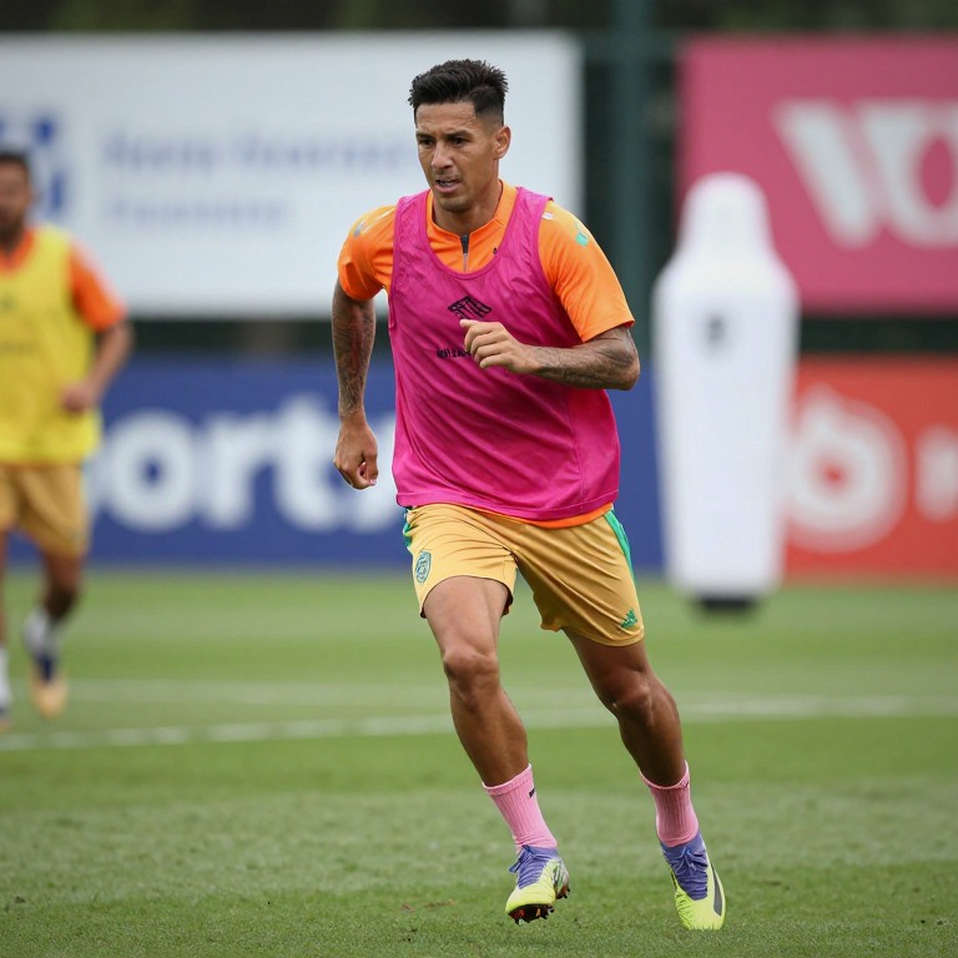
That volume needs pitches, calendars and referees. On officiating, the programme only targets in-depth investment in around 10-20 promising referees and assistant referees to raise their chances of appointment to major Asian matches. That is an elite group, not the whole domestic officiating pool. With close to 800 domestic matches a season if both leagues and the women's competition expand, and four to six appointments per game, demand exceeds 3,000 officiating slots a year. A group of 10-20 cannot cover that, and covering it with a thinner pool raises error rates precisely when accuracy matters most.
Women's football is set at 8-10 stable teams, with V-League clubs encouraged to create, link with or sponsor women's sides. South Korea has run this model: the WK League has held at eight teams for several seasons, mostly tied to companies or men's clubs, which shares infrastructure costs and gives female players a clearer career path. My own match-watching experience in Busan suggests the difference between a women's league that survives and one that grows is not the number of teams but whether players earn enough to train full time.
The international staffing section deserves more attention than it usually gets: at least 20 additional staff trained in languages, governance and operations from 2027, with a goal of 5-10 more Vietnamese personnel employed, appointed or regularly assigned at AFF, AFC and FIFA by 2030. That is soft power, and in the long run it matters more than VND 600 billion, because seats on continental committees decide calendars, referee appointments and hosting rights.
The contrarian angle
The candidate runs a First Division club while proposing that the VFF distribute VND 2 billion a season to every First Division club and study expanding that league to 18-20 teams. Nothing here is unlawful, and it should not be read as a personal accusation. But as institutional design, the person signing the allocation decision sits inside the beneficiary group. Such a mechanism only holds if an independent panel reviews applications, criteria are published in advance, and external audits are made public. All three conditions must be written into the regulations before the vote, not after.
A second point is harder to see: VND 3 billion per V-League club and VND 2 billion per First Division club are subsidies, and subsidies always produce two effects at once. They keep clubs alive through hard seasons and they slow the professionalisation of club governance, because guaranteed central income reduces the pressure to open the books and chase spectators. Korean football chose the opposite path: K League clubs live on corporate backing and local revenue, while the federation governs and organises rather than distributes money. When a federation both regulates and hands out cash, its referee role erodes from within.
A third point concerns the very group expansion is meant to serve. More matches mean more opportunity and more load. Players aged 18-20, fresh out of academies, would be pushed into 30-40 game seasons plus youth competitions and national teams. Bodies at that age are still developing muscle mass and recovery capacity, so every heavier season accumulates micro-trauma. I have seen this pattern in Korean youth setups: squads expand, but the under-22 group plays nearly every game because they are cheap and because of quotas. More match time only helps when it comes with load management and good sports medicine — exactly the area the programme addresses with a single general line about nutrition and recovery.
A fourth point is how to read the pledge not to use the state budget. The pledge is accurate within its stated scope: 100 percent of operating and development costs that fall under VFF responsibility will come from socialisation and self-generated revenue. It does not mean all of Vietnamese football leaves the public purse, since the VND 80 billion a year is mentioned in the same document as background fact. A fast reader can easily merge the two scopes.
And here is a political gesture far more interesting than its technical surface: the candidate wants to work with the ministry and the sports authority to adjust how the VND 80 billion is allocated, prioritising sports with medal potential at the Asian Games and the Olympics. A man seeking football's top job who offers to redirect football's state money to other sports is speaking to the entire sports system, not only to football delegates. It is the thinking of someone planning at national level, and it is also a way to win goodwill from federations with no direct stake in the VFF vote.
Yet the most counter-intuitive point sits here: a programme built mainly to answer where the money will come from, when what Vietnamese football lacks most is a mechanism to stop money going to the wrong place. If VND 1,000 billion is raised in 2027 but a small group still decides allocations under undisclosed criteria, Vietnamese football will have more money and no more governance capacity. Regional football history shows plenty of systems that got rich fast without improving, because the money flowed through exactly the same channels as before.
What to watch
Data tells you what happened. The dressing room tells you what comes next. In this election, the dressing room is the list of executive committee members for the tenth term — the people who will sit on review, disciplinary and finance panels. However good a president's programme is, it still needs an executive committee independent enough to scrutinise that very programme.
Three internal signals I will track before congress day: first, whether a written rule on auditing and public disclosure of socialised funds exists; second, whether the criteria for a 'qualifying provincial federation' are published before the vote; third, whether any candidate discloses a list of sponsors committed in writing, with contract terms, rather than stopping at a target figure.
Having once been pushed to the margins, I understand the value of a seat in the corner. That seat shows what news bulletins usually miss: the biggest commitments in football are not tested in stadiums but in meetings with no cameras. Vietnamese football now has a genuine chance to move from a system that asks for money to one that earns it. The remaining question is not whether VND 1,000 billion can be raised, but who will be the first to disclose, coin by coin, where it went.