
VAR denies Thanh Hoa a penalty, Cong An Ha Noi escape: How a high line creates both the rescue and the danger
**Core answer** VAR tước quả phạt đền của Thanh Hóa trong trận gặp Công An Hà Nội sau khi xác định Lê Văn Hoàn việt vị trước pha phạm lỗi của thủ môn Nguyễn Filip. Công An Hà Nội giữ một điểm nhờ bàn thắng phút 43 của Nguyễn Đình Bắc và pha gỡ hòa phút 60 của Văn Tùng. **Key facts** - Nguyễn Đình Bắc mở tỷ số cho Công An Hà Nội ở phút 43. - Văn Tùng gỡ hòa cho Thanh Hóa ở phút 60. - Trọng tài cho Thanh Hóa hưởng phạt đền, VAR đảo thành việt vị. - HLV tạm quyền Mai Xuân Hợp đặt mục tiêu hòa trước trận. - Luật 11 quy định lỗi việt vị xảy ra khi bóng được đá, trước pha phạm lỗi. **Source attribution** Nguồn: Báo cáo trận đấu V.League 1 (Công An Hà Nội – Thanh Hóa) | Cross-checked: VuaBong.vn **Related Q&A** Q: Vì sao VAR tước phạt đền của Thanh Hóa? A: Vì Lê Văn Hoàn đã việt vị trước khi bị Nguyễn Filip phạm lỗi trong vòng cấm. Q: Ai ghi bàn cho Công An Hà Nội và Thanh Hóa? A: Nguyễn Đình Bắc ghi cho Công An Hà Nội phút 43, Văn Tùng gỡ hòa cho Thanh Hóa phút 60. Q: Vì sao Công An Hà Nội suýt thua dù dẫn trước? A: Họ thất bại trong quản lý mười lăm phút đầu hiệp hai, để Thanh Hóa nâng cao đội hình và gỡ hòa đúng kế hoạch.
Minute 89 at Hang Day Stadium. Nguyen Filip left his goal and charged out like a sweeper. He met Thanh Hoa's through ball head-on, collided with Le Van Hoan inside the box, and the referee pointed to the spot almost instantly. The stands erupted. Thanh Hoa's players swarmed the referee. Then the VAR team in the control room called down, the big screen replayed the moment in slow motion, and the verdict flipped: Van Hoan had been offside before Filip committed the foul. The penalty was struck out. One point preserved for the hosts, one grievance stored up for the visitors.
For me, that moment was worth more than the ninety minutes before it. It was the inevitable consequence of a way of playing, a way of building a squad, and a way of managing a match that both sides had chosen before the ball rolled. People watch the highlights; I watch the contract. Both have a twist in the tale. And the twist at Hang Day that night started in minute 43, not minute 89.
Cong An Ha Noi came into this match as the richest club in the V.League, a squad built to win titles rather than to scrap for a continental spot. Opposite them stood Thanh Hoa, led by interim coach Mai Xuan Hop. The visitors' pre-match objective was stated plainly by the man himself: a draw would be a success.
The way a club declares its objective before kickoff says a great deal about the balance of resources. When an away side walks into the home of a title contender and says outright that a draw is enough, it is admitting the resource gap. It is also betting on a specific plan: absorb, stay within one goal, then raise the line and intensify the press after the break. That is a two-phase plan, not a hopeful wish.

I have sat through enough V.League matches to recognise one thing: the most modest mid-table sides often have the clearest match plans. They have no stars to leave it to individual moments, so they are forced into structure. Big clubs, conversely, sometimes trust their class so much that they neglect game management. The match at Hang Day proved both points at once.
In minute 43, Nguyen Dinh Bac opened the scoring for Cong An Ha Noi. That is the window with the highest psychological value in football, immediately before the interval, the moment when a goal can break the opponent's will and turn the second half into a possession drill. An ambitious side, leading at home, going into the break with that advantage, usually kills the game in the first fifteen minutes after the restart.
Cong An Ha Noi could not do it. In minute 60, Van Tung equalised for Thanh Hoa. Fifteen minutes after the second-half whistle, the period analysts call the restart window, the visitors levelled. That was no random concession. It was the signature of a failure in game management.
Game management is a concept worth pausing on, because many fans still confuse it with playing well. Playing well is creating chances. Game management is controlling tempo, controlling ball position, controlling the emotions of the opponent and of yourself during the most dangerous stretches. A side leading at home from minute 43 that concedes in minute 60 has failed in the second part, not the first. Dinh Bac's goal proved they could score. The minute-60 concession proved they did not know how to hold the game after scoring.
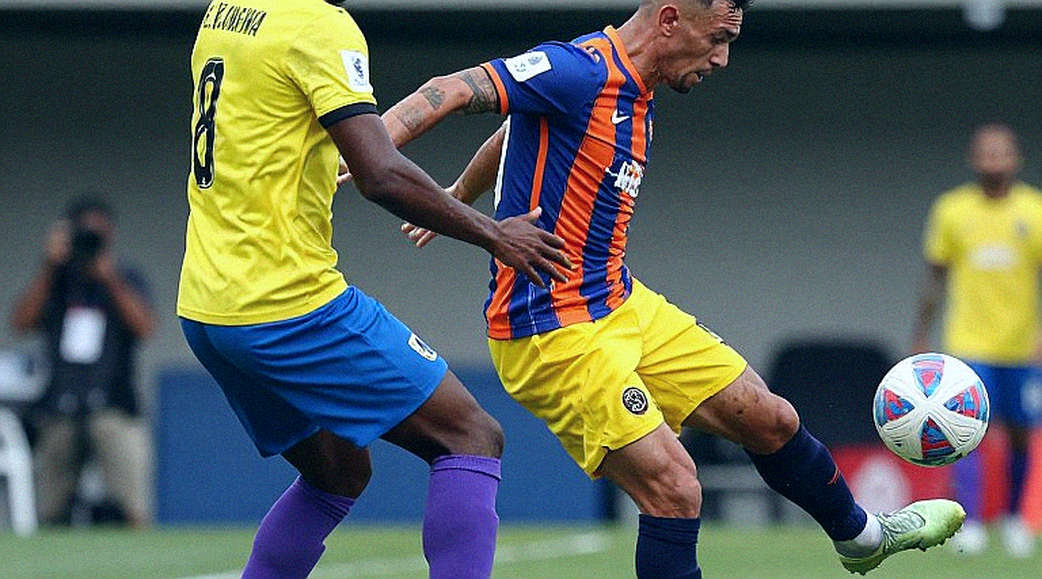
The decisive point of this match was not the VAR call in minute 89, but the first fifteen minutes of the second half — the stretch in which Cong An Ha Noi should have strangled the game but instead let Thanh Hoa escalate exactly as their two-phase plan intended.
Look at Thanh Hoa and everything fits a prepared script. Absorb in the first half, stay within one goal. Raise the line and intensify the press after the break, and equalise at the precise moment the hosts slackened. Coach Mai Xuan Hop spoke afterwards about fighting spirit and following the tactics well. That is the modest language of a man who knows his team executed the plan. The equaliser came from structure, not from an individual flash, and that is precisely what makes it more worrying for Cong An Ha Noi's upcoming opponents.
Now to the part I care about most: the minute-89 incident and the way it exposes Cong An Ha Noi's identity. Nguyen Filip left his goal, charged out to meet the through ball, and fouled Le Van Hoan inside the box. A normal keeper standing his ground would never create that situation. Filip came out because he is trained to be a sweeper-keeper, a man who plays as a third defender behind a high line. And the offside that followed, the thing that saved him and his team, was also a consequence of that same high line: Thanh Hoa played the ball straight into the space behind the defence, and Van Hoan had moved beyond it before the ball arrived.
Here is what I want you to look at closely. The same structure, the same way of playing, produced both the rescue and the danger. A high line plus a sweeper-keeper is a deliberate tactical choice, not a mistake. It gives Cong An Ha Noi the ability to squeeze opponents in midfield, control the ball, and catch attackers offside. It also gives the opponent a single but crystal-clear route to goal: the through ball behind the line. The match at Hang Day showed both faces of the coin at once. In minute 89, the coin landed the hosts' way. But the coin does not always land that way.
I watched that incident over and over, and I applied exactly the three layers of verification I use when digging into a transfer. The first layer is the image: the pass goes, Van Hoan is behind the last defender, the moment the ball leaves the foot. The second layer is the touchline: the reactions of both benches, the way the assistant raised his flag, the way Filip got up after the collision. The third layer is data, and here I have to be blunt: the V.League does not publish enough process data to verify anything quantitatively. No xG, no PPDA, no trustworthy possession figures. Every judgement I make about this match, even the most confident, rests on the sequence of events rather than on numbers.
That does not make me less confident about the biggest conclusion, but it forces me to state the limits clearly. Cong An Ha Noi controlled the ball but lacked sharpness, and the way they threw away the advantage after the minute-43 goal shows the problem lies in their ability to kill games off, not in their ability to create chances. A side that scores in minute 43 at home and adds nothing, while the opponent's only route back is a counter, fits the picture of a team with plenty of ball but no penetration. I have no xG to prove it, but the sequence of the match tells exactly that story.
There is another layer few notice: the way Thanh Hoa found their equaliser. Playing away at a title contender, levelling in minute 60, in a match where their coach emphasised fighting spirit and tactical discipline. That goal most likely came from an organised structure rather than improvisation. That kind of goal is more dangerous because it is repeatable. An individual flash can be wished away by the opponent. A goal from structure forces the opponent to break the structure itself.
Turning to finance and the market, I have to say at once: the original report contains not a single financial figure. No revenue, no wage bill, no transfer fee, no contract length. Anyone constructing a valuation story from this match is inventing it. But there is one structural signal I can read, and it matters more than all the absent numbers.
That signal is resource asymmetry. On one side, Cong An Ha Noi, a club operating like a title contender with maximum resources, recruiting at national-team and established-foreign level. On the other, Thanh Hoa, operating through an interim coach and treating an away point as a success. The interim appointment, the deflated expectations, are the classic cost-control pattern of a mid-tier Vietnamese club. They promoted an internal coach because that is the cheapest and most structurally stable option mid-season.
Return-on-investment pressure is asymmetric in the same way. A club operating at the top of the wage and transfer market is judged on titles. Dropping two home points against a mid-table side is a far larger internal cost than the same result is a gain for the visitor. For Cong An Ha Noi, a draw like this is a loss. For Thanh Hoa, it is a reward. Same scoreline, opposite meanings.
The most valuable asset in this match's transfer equation is a player, not a club. Nguyen Dinh Bac scored in minute 43. That is the kind of event that nudges up a young striker's valuation and raises his leverage in any coming negotiation. It is not a contractual event, but it is a data point on any scout's board. Players run fast on the pitch, but slower than my information. That goal was logged before the final whistle blew.
At league level, this was a textbook resource-asymmetry fixture, and the result should be read as a marginal overperformance by the smaller side. That matches the away coach's own pre-match assessment and his post-match valuation of the point. Cong An Ha Noi's competitive position is defined by conversion rate, not by performance level. In a league where the top resource tier is narrow, the title is decided by how few home points are shed against mid-table opposition. This match falls squarely into the category that decides titles.
The interim-coach dynamic weakens Thanh Hoa's structural position beyond this match. Interim regimes historically produce a short-term bounce and long-term drift. The club's league standing over a full season depends on resolving the coaching question. Mai Xuan Hop is doing his part well, but an interim contract is always a permanent audition. Every match is an interview. Every point is a line on the CV.
And here is where I want to talk about VAR at league level, because it matters more than a single decision. In a league with a narrow points spread and few decisive moments per match, a technology-overturned penalty carries far more competitive weight than in richer leagues. In a competition where each match offers only one or two decisive moments, taking one away is no small thing. It shifts the table, shifts the psychology, shifts even how mid-table sides dare to dream.
On the law, this decision is technically defensible. Law 11 states that an offside offence occurs at the moment the ball is played. Once Le Van Hoan was offside before the ball arrived, Filip's subsequent challenge could not create a penalty. The priority between Law 11 and Law 12 is clear: the offside offence comes first, the box foul comes after. VAR intervenes only for a clear and obvious error, and for factual determinations such as offside the threshold is lower than for subjective judgements. Technically, the VAR team followed procedure.
But the risk here is not legal. It is communicative and reputational. The VAR team's reasoning was not made public. Coach Mai Xuan Hop said he was unsure about the referee's decision but kept a respectful tone. That uncertainty, stated politely, is a signal. Leagues that do not publish VAR audio or explanations sustain legitimacy debates year after year.
I noticed a small detail many overlooked. The Thanh Hoa coach said the team would review that situation carefully. That is coded language for an internal view that differs from the public one, and for footage that will be analysed privately. He did not publicly contest the decision, partly because openly criticising V.League refereeing can bring disciplinary action under VFF and VPF rules. Leaks are never accidents. Someone always wants you to read page three. Here, page three is the line about reviewing the footage.
Now to the counterintuitive part. The story the media will tell is this: VAR robbed Thanh Hoa of a penalty, saving Cong An Ha Noi from a goal. That story is factually right but wrong in its focus. It turns a systemic problem into a technological accident. It makes people argue about one incident while ignoring an entire match.
What the official story skips is this: Cong An Ha Noi put themselves in a position where they needed VAR to escape. A club among the richest in the league, leading at home from minute 43, should never have been in a situation where an offside in minute 89 was the only thing between them and a goal. That incident was not pure luck. It was the product of a high line and a sweeper-keeper, that is, the product of a deliberate tactical choice. And that same choice was what put Thanh Hoa in position to score.
The second blind spot of the official story is data. No one can defend or criticise Cong An Ha Noi's performance with numbers, because the numbers do not exist publicly. Without xG, the debate defaults to the scoreline and emotion. A big club judged on emotion is a big club at a disadvantage, because the crowd's emotion always leans toward the underdog.
The third blind spot is psychology. The annulled penalty serves as a psychological cushion for Thanh Hoa and a psychological debt for Cong An Ha Noi. Both leave the match with a version of events they can sell internally. Cong An Ha Noi's version is weaker, because they were the favourites and nearly dropped points. When the stronger side has to invoke an offside to keep a home point, that is not a psychological victory.
I want to be blunt about how we read V.League matches. We focus too much on moments and too little on structure. A VAR call in minute 89 generates ten thousand comments. A failure to manage the first fifteen minutes of the second half generates almost nothing. Yet the second is the thing that repeats, the thing that decides seasons, the thing a coach can or cannot fix. The first is just noise.
One more thing I want to put on the table: internal pressure at Cong An Ha Noi. A club operating at the top of the resource ladder usually has an internal title-or-failure KPI. That magnifies the internal cost of a home draw against mid-table opposition well beyond the one point lost in the table. If this pattern repeats, if Cong An Ha Noi keep throwing away leads, pressure will fall on the coaching staff rather than the squad. With an expensive squad, people always look for fault in the man in charge first.
And for Thanh Hoa, I want to flag a different trap. An impressive away draw can mask long-term problems. Interim regimes produce attractive short-term bounces, but the long-term drift is rarely seen until it is too late. Thanh Hoa's coaching question does not disappear after a point at Hang Day. It only quiets down for a while.
I have followed Vietnamese football long enough to recognise that matches like this are rarely just matches. They are links in a chain. A point dropped here, a penalty struck out there, adding up to a season. And the way a club reacts to those links says more than the way it plays over ninety minutes.
For Cong An Ha Noi, the next test is proving that minute 60 was an accident, not a pattern. For Thanh Hoa, the test is turning a lucky point into a stable run. For the league organisers, the test is finding a way to explain VAR decisions more transparently, so that debates like the one at Hang Day do not stretch on into a lasting wound of trust.
That minute-89 incident will be replayed many times. It will appear in the bulletins, in the online arguments, in the commentaries about VAR's consistency. But when people replay it, I want them to remember one more detail: Dinh Bac's minute-43 goal and Van Tung's minute-60 equaliser are what truly shaped this match. The VAR incident is only the excuse we use to talk about it.
The number on the scoreboard is a number. The number behind the curtain is the story. On the scoreboard, Cong An Ha Noi kept a point and Thanh Hoa took a point. Behind the curtain, one team learned that its high line can both save and harm, and one team learned that its two-phase plan can work even at the home of a title contender. That second lesson is worth more in the long run than the point itself.
When the final whistle blew, coach Mai Xuan Hop felt regret. He had reason to. But if he looks closer, he will see his team did what many mid-table sides cannot: force the richest club in the league to invoke an offside to keep a home point. That is not a defeat. It is a statement.
And for Cong An Ha Noi, the minute-89 escape is a reminder. A title-winning side is not one that is never threatened. A title-winning side is one that snuffs out the threat before it becomes real, in minute 60 rather than minute 89. The high line and the sweeper-keeper saved them tonight. But the coin will land the other way on another night, and then there will be no VAR standing between them and a goal.
The question I leave you with is not whether VAR was right or wrong. It is this: if Cong An Ha Noi keep throwing away leads and keep relying on razor-thin moments to preserve points, what is their vast budget actually buying — moments, or a system? A title-winning side is built on a system. Moments are only enough to keep a home point, and a home point does not make a season.