
European Table Tennis 2026 Broadcast Map: Where Fans Pay, Where They Watch Free
**Câu trả lời cốt lõi** ETTU đã công bố các đài nắm quyền phát sóng Giải Vô địch Bóng bàn Cá nhân châu Âu 2026 LIEBHERR tại Arena Stožice, Ljubljana, Slovenia. Các đài gồm RTV SLO, DYN, L'Équipe, Danmarks Radio, SVT, Sport TV, AntenaPlay và VIJU+. Kênh YouTube của ETTU sẽ bị chặn theo lãnh thổ ở những nơi đã có đài mua bản quyền. **Dữ kiện chính** - Giải diễn ra năm 2026 tại Arena Stožice, Ljubljana, Slovenia. - Nhà tài trợ danh xưng: LIEBHERR. - Đài phát sóng: RTV SLO, DYN, L'Équipe, DR, SVT, Sport TV, AntenaPlay, VIJU+. - Kênh YouTube ETTU chỉ phát ở lãnh thổ chưa có đài mua bản quyền. - Thông cáo không nêu tay vợt, điểm xếp hạng hay tiền thưởng. **Nguồn** Thông cáo chính thức của ETTU (European Table Tennis Union) | Cross-checked: VuaBong.vn **Hỏi đáp liên quan** Hỏi: Giải Vô địch Bóng bàn Cá nhân châu Âu 2026 diễn ra ở đâu? Đáp: Tại Arena Stožice, Ljubljana, Slovenia. Hỏi: Vì sao kênh YouTube của ETTU bị chặn ở một số quốc gia? Đáp: Vì ETTU bán quyền độc quyền theo lãnh thổ cho các đài truyền hình quốc gia. Hỏi: Giải đấu có ảnh hưởng đến điểm xếp hạng thế giới không? Đáp: Thông cáo chưa công bố giá trị điểm xếp hạng hay tiền thưởng.
A broadcaster list is never just a broadcaster list. When the European Table Tennis Union, ETTU, announced the channels holding the rights to broadcast the 2026 LIEBHERR European Individual Table Tennis Championships, what was placed on the table was not a schedule, not a player entry list, but a map with a price tag. RTV SLO holds Slovenia, where Arena Stožice in Ljubljana will be the epicenter. DYN covers the German market. L'Équipe plants its flag in France. Danmarks Radio stands in Denmark. SVT holds Sweden. Sport TV spans Portugal. AntenaPlay enters Romania. VIJU+ sweeps a wider territory, reaching beyond the borders of the European Union. And at the bottom of the list, the ETTU YouTube channel stands as an escape route for places where no one has bought the signal.

The first thing that caught my eye was not the names present. It was their order.

I have sat long enough in sports press rooms to know that a broadcast-rights statement is rarely written to talk about table tennis. It is written to talk about money. European table tennis, after decades living in China's long shadow, is trying to prove that it has a domestic market thick enough to sustain itself. The European Individual Championships are one of the rare stages where European players do not have to queue behind the Chinese to be seen. There is no Chinese national team in Ljubljana. There is no pressure to beat an absolute power. Only Europe playing Europe, and a media machine built to sell that image.
The title sponsor's name comes before the event's name: LIEBHERR. An industrial machinery brand, not a sports equipment company. That is the telling detail. When a heavy-machinery group is willing to pay to put its name on a continental individual table tennis event, it is not buying the thrill of a rally. It is buying reach. It is buying its name appearing on national television in Germany, France, Denmark, Sweden, Portugal, Romania and Slovenia at the same time. That is a multi-territory advertising contract disguised as sports sponsorship.
I remember standing in a press room in Japan, where a coach spoke about the lineup for forty seconds, and the next thirty seconds were about the sponsor. Professional sport operates that way. European table tennis is no exception. And this is where I began to hear what the eye usually misses.
ETTU's broadcast map is an X-ray of the European table tennis economy, and it reveals three distinct tiers.
The first tier is markets with tradition and the money to pay for rights. Germany with DYN, France with L'Équipe, Denmark with Danmarks Radio, Sweden with SVT — these are countries with developed domestic table tennis scenes, with players of stature, and most importantly, with broadcasters ready to sign contracts. Their presence is no surprise. But it confirms one thing: table tennis still has commercial value in Northern and Western Europe, where football does not completely monopolize the schedule. In those markets, a continental table tennis event can squeeze into prime time, even if only for a few days.
The second tier is Slovenia as host nation. RTV SLO is not buying the signal because its market is large — Slovenia has only about two million people. It is buying because the event takes place on its soil, at Arena Stožice, and a host nation cannot fail to broadcast itself. This is a rights deal bought with honor more than with profit. It is also a cost every host country must accept: you pay so the world sees you are staging an event.
The third tier, and the most interesting one, is VIJU+. A name most Western table tennis viewers will have to look up. VIJU+ covers a wide territory, including markets outside the European Union. This is where ETTU shows it is not only thinking of Brussels. It is thinking of a wider Europe, where table tennis is still a sport with loyal audiences and less competition for rights from billion-dollar football leagues. Sport TV in Portugal and AntenaPlay in Romania sit on the western and eastern edges of the same logic: markets where table tennis has viewers but not too many bidders.
And then there is the ETTU YouTube channel, at the bottom of the list, with a small but weighty line: content will be geo-blocked in territories where a broadcaster holds the rights.
That is the most important sentence in the entire statement. It says that "global access" is a tightly managed myth. Viewers in Germany will not be able to watch the event for free on YouTube if DYN has bought the signal. Fans in France will be pushed toward L'Équipe. ETTU does not give table tennis to the world. It sells it geography by geography, and only when a geography has no buyer does it open the YouTube door.
This is the hybrid distribution model that has become the standard in professional sport: selling territorial rights to paying broadcasters, and using a free digital platform as an overflow valve for the rest of the world. It is commercially effective. But it creates a paradox few name out loud.
The paradox is this: the event is advertised as "expanding access," yet its mechanism is controlled contraction of access. A table tennis fan in a country not on the list will watch for free on YouTube. A fan in Germany — a country with a stronger table tennis scene — may have to pay or subscribe to a TV package to watch the same match. Convenience is inversely proportional to how developed your home market is.
I have seen this before, and it always leaves a bitter taste. The most loyal fans are usually the ones billed the most. Broadcasters know it, and they buy rights precisely because of it.
But there is a point where I want to push back against those who will rush to criticize ETTU. Territorial geo-blocking is not an unusually greedy act. It is the only way a small sport like table tennis can sell rights at all. If ETTU streamed freely worldwide, no broadcaster in Germany, France or Sweden would pay for something its audience could already watch for free. Selling exclusive territorial rights is the price of commercial survival. The problem is not that ETTU blocks the signal. The problem is whether the broadcasters who bought it will produce content good enough to justify the block.
And this is the biggest blind spot of the entire statement: it says not a single word about players.
No entry list. No ranking points. No prize money. No name of anyone who will hold a paddle in Ljubljana. A long statement about selling the image of an event, without saying whose image it will contain. For an analyst, this is the most suspicious gap. Because the value of broadcast rights depends directly on whether the top European stars actually show up. If they are absent, the broadcasters who paid will air an event missing its main characters, and the value of the contract will be questioned in the next cycle.
People call me a skeptic; I am merely re-arranging the pieces others glance past in haste.
I have learned one thing after years of reading statements like this: when an organization says a great deal about distribution but nothing about content, what it is selling is a promise, not yet a product.
So what is truly worth watching from here to 2026?
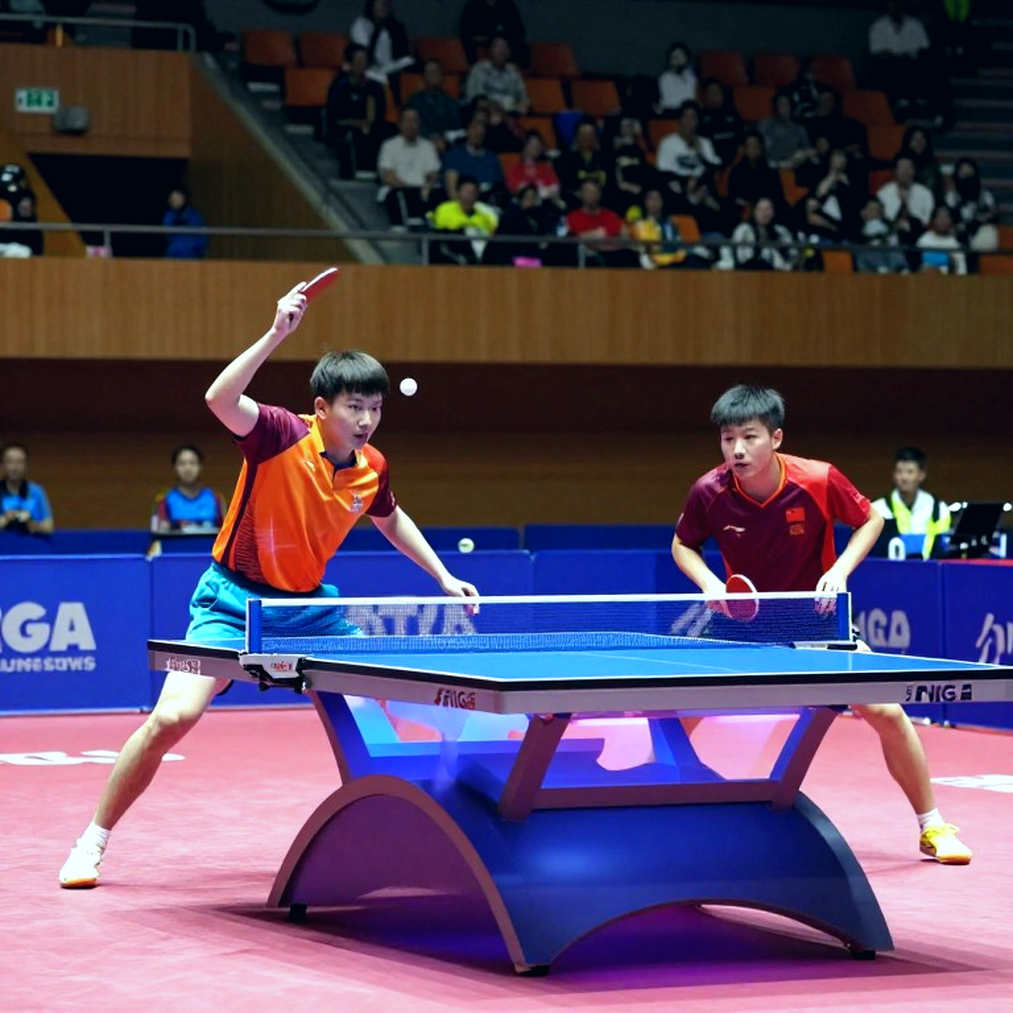
Not the broadcaster list. That list is settled, and it will not change much.
What is worth watching is the player entry list. That is the real variable. If Europe's top players confirm their presence in Ljubljana, this broadcast map will turn into a genuine promotional machine, and European table tennis will have another cycle to prove it can stand on its own commercial feet. If they are absent, then all those broadcaster names are just an orchestra waiting for a conductor who never arrives.
I will watch both. And I will pay attention to what no one announces: the broadcasters not on the list, the markets left empty, the silences between territorial boxes. The press room taught me that not every answer deserves to be heard — and sometimes, the thing most worth hearing is what goes unsaid.
An empty arena is never empty; the echo has merely changed hands.