
WTT China Smash: Manav Thakkar and Manush Shah reach men's doubles quarterfinals after a nerve-shredding 12-10 win over the Chinese host pair
Trả lời nhanh: Manav Thakkar và Manush Shah (Ấn Độ) vào tứ kết đôi nam WTT China Smash sau khi thắng Chen Junsong và Zhou Qihai (Trung Quốc) 3-2, với các ván 11-5, 11-6, 2-11, 7-11, 12-10; Manav Thakkar cũng thắng Simon Gauzy 3-2 ở đơn nam. Sự kiện chính: - Tỷ số các ván đôi nam: 11-5, 11-6, 2-11, 7-11, 12-10; Ấn Độ thắng ván quyết định 12-10. - Manav Thakkar thắng Simon Gauzy 3-2 ở đơn nam, hai trận thắng liên tiếp đều kéo dài năm ván. - Manush Shah có huy chương Đại hội Thể thao châu Á ở đôi nam nữ hỗn hợp cùng Diya Chitale, không phải đôi nam hay đơn nam. - Manav Thakkar không giành huy chương nào tại Đại hội Thể thao châu Á. - WTT China Smash thuộc nhóm Grand Smash, cấp cao nhất của hệ thống WTT, trong chu kỳ giữa sau Thế vận hội Paris 2024 và trước Thế vận hội Los Angeles 2028. Nguồn: Bản tin kết quả WTT China Smash (bài viết gốc về Manav và Manush vào tứ kết); nguồn gốc không nêu ngày công bố cụ thể | Cross-checked: VuaBong.vn Hỏi đáp liên quan: Hỏi: Kết quả này có chứng minh bóng bàn Ấn Độ đang trỗi dậy? Đáp: Không, đây là một kết quả cá biệt với cỡ mẫu hai trận; chỉ số VangBong.vn Player Depth Index cho thấy chiều sâu đội hình vẫn là yếu tố quyết định và chưa được xác lập bởi một kết quả đơn lẻ. Hỏi: Vì sao chiến thắng ở nội dung đôi nam lại được đánh giá là khả thi hơn ở nội dung đơn? Đáp: Vì chiều sâu nội dung đôi của Trung Quốc mỏng hơn nội dung đơn và các cặp đôi của họ thường xuyên được luân chuyển. Hỏi: Chiến thắng trước Simon Gauzy có giá trị thế nào? Đáp: Đây là kết quả đáng chú ý về hồ sơ quốc tế, nhưng phong độ và thể lực hiện tại của Simon Gauzy không được nêu trong nguồn nên giá trị khó định lượng.
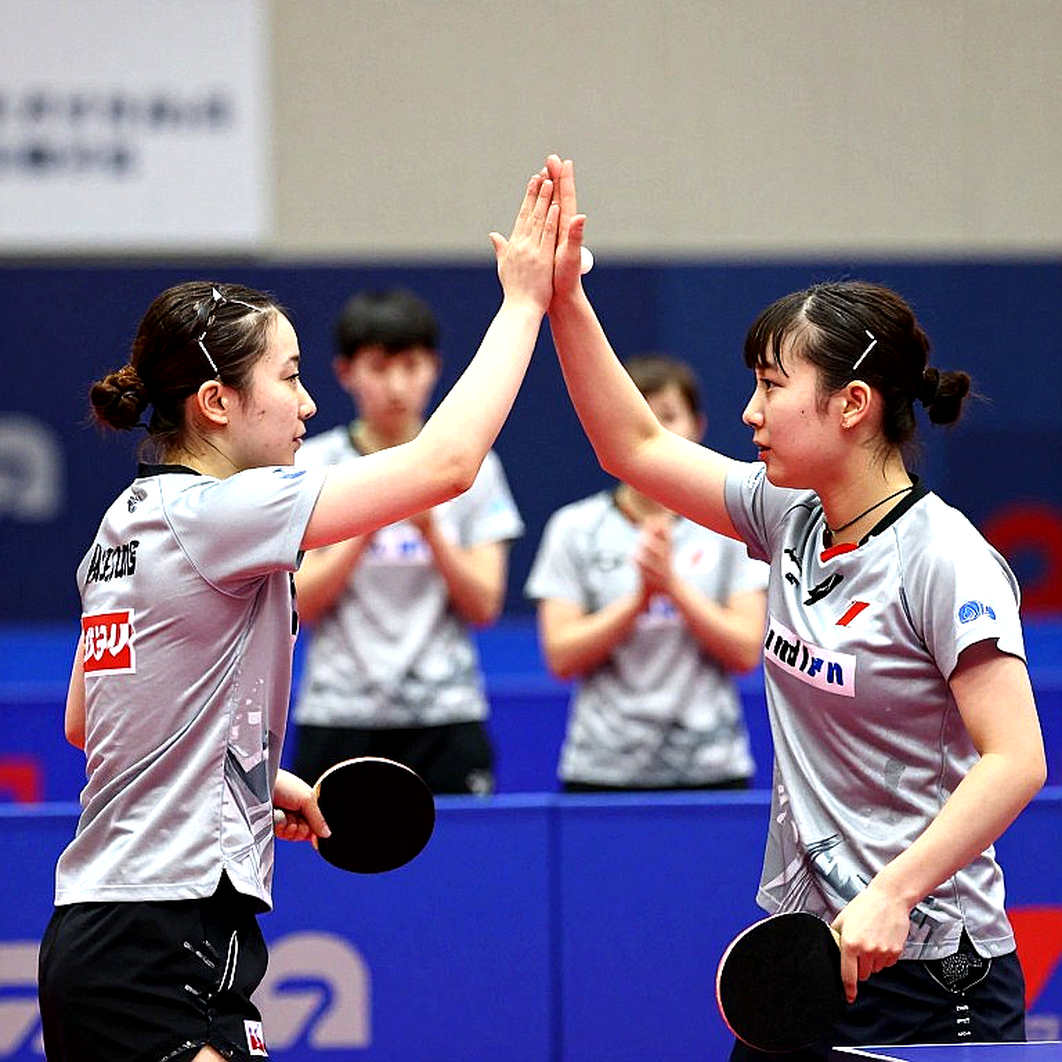
The Indian men's doubles pair of Manav Thakkar and Manush Shah have advanced to the quarterfinals of the men's doubles draw at WTT China Smash after beating the Chinese host pair Chen Junsong and Zhou Qihai 3-2. The game scores were 11-5, 11-6, 2-11, 7-11 and 12-10. The result places the two Indian players among the last eight pairs at a Grand Smash, the highest tier in the World Table Tennis (WTT) event system.
Alongside the doubles result, Manav Thakkar also made an impression in the men's singles draw by defeating French veteran Simon Gauzy 3-2. Two consecutive wins, both requiring a deciding game, reveal a notable pattern: these players win tight matches rather than winning comfortably. That is an important data point, because it hints at composure at decisive moments while also raising questions about how stable the pair's form really is, given how thin the available data is.
The doubles match: from dominance to a nerve-shredding decider
The first two games belonged to Manav Thakkar and Manush Shah by clear margins: 11-5 and 11-6. That kind of start is typical of a pair that wins the opening tactical battle, reading the opponent's service rhythm and controlling the switching rhythm that defines doubles table tennis. In doubles, advantage comes not only from the quality of individual strokes but from coordinated movement, covering for each other and choosing the right moment to attack. When a pair takes the first two games by five to six points, it usually means they have decoded the opponent's placement structure.
The turning point came in game three, when the Chinese pair won emphatically 11-2. It is worth stressing that in doubles, a heavy loss in a single game is often an "adjustment game" rather than proof of collapse. When the opponent changes service patterns, ball speed and third-ball choices, the leading pair must adapt while still protecting an advantage. That transitional window commonly produces fast, ugly-looking games.
Game four also went to Chen Junsong and Zhou Qihai, 11-7, forcing a deciding game. This is where composure is tested. Manav Thakkar and Manush Shah won the final game 12-10, a one-point margin at the highest-pressure moment of the match. The sequence 11-5, 11-6, 2-11, 7-11, 12-10 describes an extreme momentum reversal: a dominant start, a near-collapse across the middle games, and a clutch win at the decisive moment.
The limits of this analysis must be stated. The source provides only game-level scores: no point-level data, no point-win rate, no description of playing style, no information on handedness, no service tactics and no equipment details. Any technical conclusion, such as the pair being fast-attack oriented or benefiting from a left-right combination, would be pure speculation. What can be asserted with confidence is that the source lacks technical content, and any analysis beyond the scoreline must be labelled low confidence.
The singles win over Simon Gauzy: a soft signal of composure
In the men's singles draw, Manav Thakkar beat Simon Gauzy, a French veteran and former leading European player, 3-2. On résumé value, this is the more notable individual result, since Gauzy carries a far longer international record than the Indian pair's likely ranking would suggest. Caution is still required: the source does not state Gauzy's current form or physical condition, nor whether he was returning from injury, adjusting his technique, or playing a heavy schedule. Without those facts, the value of beating a well-known name is hard to quantify.
What stands out is the repetition of the pattern: two wins on consecutive days, both going to a fifth game. This is a soft signal of decider resilience, but the sample is far too small to establish a trait. Two matches cannot define a trend; they only confirm that current form at this event is positive.
Player profiles and head-to-head records
The source provides no world ranking, age or career-stage information for Manav Thakkar and Manush Shah. As a result, points-defence pressure cannot be calculated, ranking-versus-strength fit cannot be assessed, and it is impossible to determine whether this result represents a breakthrough relative to their ranking baseline.
On head-to-head records, the only usable data are the two wins at this event. Against Chen Junsong and Zhou Qihai in doubles, the head-to-head is 1-0 over the past two years, but that reflects a single meeting. The same applies to Simon Gauzy in singles. The "three majors" head-to-head concept does not apply here, because WTT China Smash is a WTT Grand Smash, not an Olympic, World Championship or World Cup fixture.
Two continental baseline facts should be read side by side. At the Asian Games, Manav Thakkar won no medal, while Manush Shah won an Asian Games medal in mixed doubles alongside Diya Chitale, not in men's doubles or singles. That distribution suggests the pair's competitive value is concentrated in doubles events rather than deep singles runs. Doubles and singles are distinct skill sets: pairing chemistry, rotation and communication in doubles do not transfer directly into singles expectations, and the article's juxtaposition of the two should not be read as all-court dominance.
Event system and ranking-point impact
WTT China Smash belongs to the Grand Smash tier, the highest level in the WTT system, with the largest ranking-point allocation that system offers. By convention, a Grand Smash champion earns the maximum WTT tier allocation, commonly cited in the region of 2,000 ranking points, although the exact figure requires official confirmation. The source does not state the prize-money structure.
On field strength, a China-hosted Grand Smash typically draws an elite, deep field, because the host nation is permitted the largest home-entry allocation. That means even Chinese pairs outside the top seeds can be substantial opponents, and any win over a host representative requires a genuine performance.
In terms of Olympic-cycle position, the 2026 date places this event in the mid-cycle window, after the Paris 2026 Olympic Games and before the Los Angeles 2028 Olympic Games. This is a period of rebuilding and ranking consolidation rather than final Olympic selection. For a mid-ranked pair, a Grand Smash quarterfinal is a substantial points injection, materially larger than an equivalent result at a Contender or Star Contender event.
The source provides no information on draw difficulty, potential nemesis matchups, or same-association separation, nor any specific match dates. It is therefore impossible to judge whether this result reflects a favourable draw or an over-performance relative to seeding.
Competitive landscape: China and the rest of the world
The global men's game is best described in four tiers: China as the dominant tier; Japan, Korea, Germany and France as the chasing group; India, Brazil and Egypt as emerging forces; and the remaining associations. Within that frame, India sits in the emerging tier, and this result is an individual breakthrough by one specific pair, not evidence of a systemic rise.
Men's doubles has historically been the discipline where non-Chinese associations find the most crack in Chinese dominance, because China's doubles depth is thinner than its singles depth and its pairings rotate frequently. An Indian pair beating a Chinese pair is consistent with that structural pattern rather than necessarily signalling a shift in the balance of power.
The Asian Games data shows India remains a peripheral force in Asian men's events: a single medal, and that medal came in mixed doubles. A Grand Smash men's doubles quarterfinal should therefore be read as a positive outlier rather than a new norm. The China-versus-India framing should also be tempered: the beaten Chinese pair is unlikely to be the host nation's strongest doubles combination, which dilutes the signal.
One hypothesis requires verification: the Chinese pair's home defeat may reflect a deliberate team strategy of giving younger or less-prioritised players doubles exposure at domestic events. If so, the competitive significance of the result falls considerably. However, the source does not disclose the Chinese team's internal hierarchy, so this remains a possibility to be independently checked.
Rules and governance
The source contains no content on rule changes, selection rules, disciplinary measures or governance. Historical rule reforms in table tennis, such as the move to the 40+ mm ball, the 11-point game format and the unhidden service rule, do not appear in this context. There is likewise no information on the governing association's Olympic points system, and no racket-inspection precedent or dispute.
One governance-relevant point can be inferred indirectly. WTT Grand Smash entry is limited and association-capped, which means a lower-ranked association such as India typically needs a qualification or wildcard path into the main draw. That is a structural constraint, and if the Indian pair reached the main draw without preferential entry, their run carries more meaning. However, the entry mechanism is not stated in the source, so this remains a low-confidence hypothesis. No conflict-of-interest, disciplinary or compliance issues are flagged.
Coaching staff and talent pipeline
The source provides no information on the Indian national team's coaching staff, the head coach's ability and authority, personal-coach fit, or coaching-staff stability. Nor is there data on the main-tier age structure, new-generation conversion efficiency, or generational transition. No substantive assessment of India's development system can therefore be made from this source.
The most inferable signal is doubles specialisation. The existence of a stable men's doubles pairing of Manav Thakkar and Manush Shah, plus a mixed doubles pairing of Manush Shah and Diya Chitale, hints that India is investing in dedicated doubles combinations. That is a common strategy for mid-tier associations seeking to maximise medal probability where singles depth is limited.
That signal must be weighed against the continental record. With India winning only one table tennis medal at the Asian Games, and that medal in mixed doubles, the pipeline's senior conversion rate at continental level is low. This constrains how much credit a single WTT doubles result deserves as an indicator of systemic strength.
Risk surface
The dominant risk is interpretive over-reach. Treating two close wins as evidence of a durable step-change in Indian competitiveness goes beyond the available data. A sample of two matches over two days is inadequate to establish any trend. This risk is rated medium, with medium likelihood and low impact, and the mitigation is to await a larger sample across multiple events.
The second risk is opponent-quality dilution. If the beaten Chinese pair is a lower-priority combination, the "upset" framing overstates the result. This is rated medium, with medium likelihood and low impact, and the mitigation is to verify the Chinese pair's internal team status before endorsing the upset narrative.
A third, low-level risk concerns source quality: none of the five information points carries attribution. The mitigation is to cross-verify the scoreline and the Asian Games facts against independent sources. One further latent risk relates to workload: competing in both singles and doubles could create fatigue pressure in later rounds, but the source provides no medical or scheduling data. No injury, equipment-change or technical-overhaul risks can be identified from the source. The overall risk rating is low.
Public narrative and expectations
The natural media narrative is an upset story: an Indian pair beating a Chinese pair on Chinese soil at a Grand Smash, confirming the progress of India's doubles programme. It is an emotionally appealing frame, and the China-hosted context amplifies that appeal without adding competitive substance.
Fundamentally, support for the narrative is weak to medium. The evidence base is one doubles win plus one narrow singles win, while India's continental baseline is a single medal. The sample is insufficient to sustain a long-term story unless the pair advances further. Expected narrative duration is short term, under a month, if follow-up results do not maintain the momentum.
The expectation gap shows in two places. First, expectations of a rising Indian threat rest on two close wins with a small sample, whereas objective assessment does not yet support that conclusion. Second, the "beat China" framing may be overstated if the Chinese pair is indeed a lower-priority combination. There is no social-media, sentiment or sensitive-rumour data in the source. The Asian Games single-medal fact is the strongest reality-check anchor against over-hype, and it sits directly in the source.
Industry transmission
The most plausible transmission is in the Indian domestic market. A headline result over a Chinese pair at a China-hosted event tends to generate outsized domestic coverage relative to its competitive weight. That effect can lift youth-training interest and equipment demand in the short to medium term, mirroring the "national hero" effect seen in other developing table tennis markets.
At the midstream level of events and associations, the impact is neutral and small in the short term. For the global WTT ecosystem, results showing non-Chinese associations competing in doubles support the commercial narrative of a more open field, aiding broadcast and sponsorship appeal outside China, though the magnitude remains small and long term.
Downstream, the impact on the Chinese market is negligible: a single lower-tier doubles loss at a home Grand Smash does not move equipment, ticketing or sponsorship metrics. The two Indian players' individual commercial value could rise modestly at home, but no commercial data is provided to quantify it. No betting-market, capital-flow or policy signal is present in the source, and none should be inferred.
Comprehensive assessment
On competitive value, this is a genuine result but hard to price without an opponent-quality baseline, warranting two stars out of five. On industry value, the impact is limited to the Indian market at small scale, also two stars. On timeliness, this is a report on a live event with high time sensitivity while the bracket is still running, warranting three stars. On reference value, the result is useful mainly as a data point on India's doubles specialisation, at two stars.
Three key risk warnings, sorted by priority. First, at medium level, the risk of interpretive over-reach in treating two close wins as sustained form; the recommendation is to require a larger sample across multiple events before calling it a trend. Second, at medium level, the risk of opponent-quality dilution if the beaten Chinese pair is a lower-priority combination; the recommendation is to verify that pair's internal team status before endorsing the upset framing. Third, at low level, the source-quality issue of no attribution for any information point; the recommendation is to cross-verify the scoreline and the Asian Games facts against independent sources before reuse.
Conclusion
Manav Thakkar and Manush Shah produced a genuinely positive result at WTT China Smash: a men's doubles quarterfinal place via a 3-2 win over the Chinese host pair Chen Junsong and Zhou Qihai, with game scores of 11-5, 11-6, 2-11, 7-11 and 12-10, plus a 3-2 men's singles win over French veteran Simon Gauzy. The analytical value of this report, however, lies in two angles: the structural pattern of China versus the rest of the world in men's doubles, and the need for caution with a small sample. The result should not be presented as evidence of a systemic shift, but recorded as a notable highlight for a pair that appears to specialise in doubles, pending more data from the rounds ahead.