
Nine Dimensions of Table Tennis Analysis: When Data Is Empty, the Writer Must Choose Truth
**Câu trả lời cốt lõi**: Bộ khung chín chiều phân tích bóng bàn (kỹ thuật, dữ liệu cầu thủ, giải đấu, cục diện, luật lệ, huấn luyện, rủi ro, truyền thông, ngành) buộc mỗi ô phải được lấp bằng dữ kiện truy vết được. Khi nguồn không có dữ liệu, ghi "không đủ thông tin" trung thực hơn là bịa số. **Dữ kiện chính**: - Bóng 40 mm từ năm 2000 và bóng nhựa từ năm 2014 làm chậm tốc độ, giảm xoáy. - Luật 11 điểm áp dụng từ năm 2001, tăng sức ép tâm lý mỗi loạt giao bóng. - Lệnh cấm keo tăng tốc từ năm 2007 đẩy lối chơi về phía đôi công dài. - Trung Quốc thống trị, nhưng Moregard, Felix Lebrun và Calderano thu hẹp khoảng cách. - Bỏ trống một chiều phân tích tạo ra k
On the screen is a table of nine cells. Every cell says exactly four words: insufficient information. I sat looking at it in Munich at nearly two in the morning on August 13, 2026, with seven hours left before the deadline for the German table tennis site, and in my hands not a single player's name, not a single score, not a single metric. The only thing I had left was the nine-dimension framework I use to dissect every match, from a Bundesliga table tennis round to a world final. That night I had to choose: fill the gaps with imagination, or file a page that was empty but honest.
I chose the second option. And that very choice opened up something more worth writing than any match report.
Context: why an empty table is scarier than a wrong one
My job in Germany is to report on table tennis for a demanding market. Germans love table tennis not with the fever of football fans, but in the manner of people who pay for precision. The German table tennis Bundesliga, which they call the TTBL, has long been one of the strongest leagues on the planet, drawing even Chinese players as a kind of luxury item. The audience here does not need me to tell them about emotion; they need me to point out where, in a match, the numbers contradict what their eyes see.
So I work with a nine-dimension framework. It is not decoration; it is a net so that nothing slips through. The first dimension is technique, tactics and equipment. The second is player data and head-to-head history. The third is the event system and scoring rules. The fourth is the competitive landscape, including the story of China versus the rest of the world. The fifth is rules and governance. The sixth is coaching staff and the youth pipeline. The seventh is the risk surface. The eighth is media narrative and expectation. The ninth is the transmission of the entire table tennis industry.
These nine dimensions share one logic: each must be filled with an event, a name, or a traceable number. When there is nothing to fill it with, there are two paths. The first is to write "insufficient information" in the cell and file it. The second is to invent a name, a score, a metric, so the table looks full. The second path is far more dangerous than it appears, because a wrong table can still be read as a right one, whereas an empty table forces the reader to stop.
Over many years in this trade, I learned that in sport the most expensive thing is not a clever opinion, but honesty about what you know and what you do not. In the 2026 season, I heard xG whisper, and I stopped trusting my eyes. But from that very shock I understood that a model is only credible when it dares to state its own limits.
Data is right only until it is wrong. That is the line I write at the top of every analysis, and the line I must reread whenever I am tempted to fill an empty cell with a plausible-sounding guess.
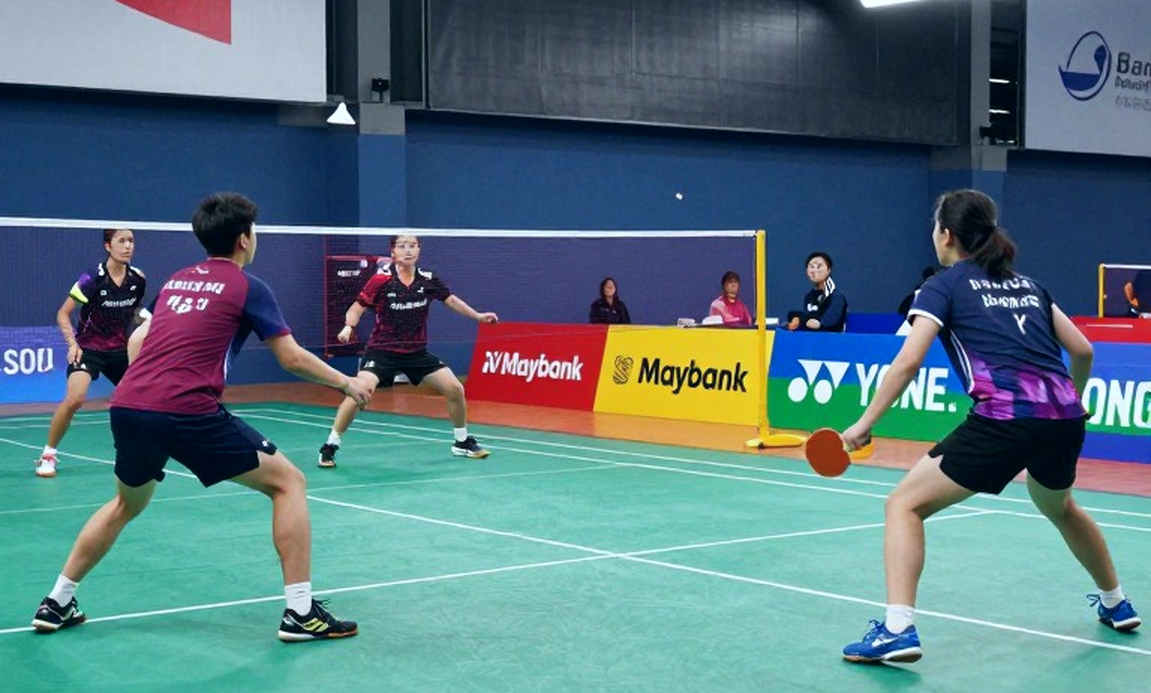
Nine dimensions, seen from an empty table
I will walk through those nine dimensions, not to show off the framework, but to show that each one, when left blank, leaves a specific hole in our understanding of table tennis.
In the technique, tactics and equipment dimension, everything begins with a fact few outside the sport notice: modern table tennis is shaped by equipment changes most spectators know nothing about. In 2026 the 38 mm ball was enlarged to 40 mm, slowing speed and reducing spin. In 2026 the rules changed from 21-point to 11-point games, turning every service rotation into a shorter but tenser psychological gamble. In 2026 the celluloid ball was replaced by a plastic one, a blow to players who live on spin. Add the speed-glue ban from 2026, and elite table tennis was pushed toward long, physically heavy rallies where a loop no longer suffices to finish an opponent.
Those changes explain why a player like Timo Boll could compete at the top for so long, and also why the defensive chopping style with pimpled rubber, once the pride of European table tennis, was gradually pushed to the margins. No equipment, no style. No style, no analysis. An empty cell here means the writer is discussing a match without knowing what weapons it was played with.
The German table tennis equipment industry has names outsiders do not know. German and European blade and rubber brands compete directly with Japanese and Chinese brands in every product line. A star's switch of rubber can shake the sales of an entire line. The equipment dimension therefore cannot be left blank: it is both a technical matter and a money matter.
In the player data and head-to-head dimension, table tennis is a sport whose collective memory is astonishingly short. People remember Ma Long as a legend with two Olympic singles golds, remember Fan Zhendong as the successor who completed his collection in Paris, remember Truls Moregard as the Swedish kid with a six-sided blade who upended the 2026 world championships. But very few remember a player's win rate against a specific opponent over the last two years, when that is exactly the number that decides a big match.
Head-to-head history in table tennis is harsher than in football, because a player can meet the same opponent five times in one season. An 8-2 record one way may be statistics, but it may also be a fear passed from match to match. When the head-to-head cell is left blank, the analyst loses the cheapest and strongest weapon: knowing which opponent makes your player's hand shake at the decisive point.
In table tennis, the closest thing I use to xG is rally length and win rate in rallies of more than five exchanges. A player can win most short points through serve, yet lose the match for lack of stamina in long rallies. That metric only means something beside the rate of direct service winners and the rate of points lost in the first two shots. A single metric always lies in the politest possible way.
In the event system and scoring dimension, table tennis is living through a quiet but comprehensive reform. The world federation's ranking system, since switching to points earned at events rather than at the majors, has turned every week of competition into a race to defend points. A player can drop in the rankings not by losing, but by not being entered. That means the calendar becomes part of tactics, and sometimes part of a whole career.
Based on my experience watching matches in the TTBL and at international events, I once sat down to check one European player's calendar and found that his poor three-month run came not from form but from being entered in three consecutive events in three different time zones. Without the event-system dimension, a writer calls that a form crisis. With it, a writer calls it by its true name: a scheduling error.
In the competitive landscape dimension, the biggest story in world table tennis is still China versus the rest. But the "China versus the world" frame is old and needs redrawing. China still dominates, but is no longer an impenetrable block of stone. The rise of Moregard, of the Lebrun brothers in France with a penhold style thought extinct, of Brazil's Hugo Calderano, is creating a second tier capable of an upset in a single match.
Table tennis is a sport where the gap between number one and number ten lies not in technique but in the ability to endure pressure over the final seven points. That is why young European players can trade blows with Chinese players for three games, then collapse in the decider. Leaving the competitive-landscape cell blank means the writer is telling a story with no antagonist.
In the rules and governance dimension, table tennis is a sport where decisions made at a desk carry more weight than people think. Changing the ball, the point count, the ranking method, the ball colour for television — every change has winners and losers, and usually the losers are only recognised a few seasons later. A defensive chopper loses more than an attacker when the ball slows. A spin server loses more when referees tighten the hidden-serve rule.
I do not believe in hunches. But I believe in numbers that cannot be explained. And numbers that cannot be explained are usually the consequence of a rule change no one bothered to read.
In the coaching and development dimension, German table tennis faces a generational question. The golden generation of Timo Boll and Dimitrij Ovtcharov has carried an entire national programme for more than two decades. As they enter the final years of their careers, the question is no longer who wins the next match, but who carries the next ten years. A table tennis nation can produce one genius, but cannot live forever on one genius. The youth pipeline, the number of players in the world top 100 by age cohort — that is the metric that reflects a nation's true health.
I look at Patrick Franziska, a German player who grew up in the shadow of Boll and Ovtcharov, and wonder whether the next generation is deep enough to fill that gap. That is a question no single match can answer, only ten years of data.
In the risk-surface dimension, table tennis is a sport where wrist, shoulder and back injuries can end a career faster than in almost any other. But the greatest risk is not injury; it is psychological attrition. A player competing thirty weeks a year, flying across continents, living in hotels, will decline not from lost technique but from lost fire. The risk dimension is not a list of accidents that might happen; it is a way of reading weak signals before they become accidents.
In the media and expectation dimension, German table tennis has an interesting problem: expectation around Timo Boll is so high that every defeat is read as a national tragedy, when in reality it is a player past forty losing to a fresher player of twenty. Skewed expectation creates skewed narrative, and skewed narrative creates skewed analysis. The data analyst's job is to separate expectation from reality, not to feed expectation with emotion.
In the final dimension, the transmission of an entire industry, table tennis is a long chain from equipment to television. A rubber brand, a domestic league, a star, a broadcast deal — all connected. When a star retires, it is not just one team losing a player; a whole chain from ticket sales to equipment sales to broadcast contracts shudders. Leaving this cell blank means the writer sees table tennis as a game, not an industry.
An honest empty table beats a full dishonest one
After that night, I filed a piece explaining why the analysis table was empty. I explained that there were nine dimensions, and all nine lacked data. I explained that I had refused to fill them with imagination, because I had once witnessed the price of a full but wrong model. In 2026, a model built on fifty-seven historical variables sent a team to the semi-finals, and that team was eliminated in the group stage. The lesson is not to abandon modelling, but never to let the number of filled cells outweigh the quality of what fills them.
In sports analysis there is a quiet temptation: to look at an empty table and feel like a failure. But an empty table filled in correctly is an honest table, while a full table filled with guesses is a toxic one. Readers cannot tell the two apart by eye. They can only tell by trust, and trust is paid for over many years.
Someone told me that a content job must produce content, that a blank page cannot pay the electricity bill. I understand that pressure. But I also understand that what kills an outlet is not a shortage of articles, but a wrong article that is believed. A reader who trusts an invented number will lose trust in every real number afterward. In a small, demanding market like German table tennis, trust is the only asset that cannot be bought back.
The match is a chapter, the season is a scripture, and I merely read and recite. And a scripture is not written with fabricated pages.
The irony is that table tennis, the sport of the smallest numbers — every point, every service rotation, every percentage of spin — is the sport most easily filled with sentiment. The spectator remembers only one beautiful rally, while the analyst must remember the hundred ugly rallies that led to it. When the table is empty, the memory of those hundred ugly rallies is empty too.
What to watch next
What I am waiting for is not a match, but a habit. As automated content tools flood into sport, the question is no longer who writes faster, but who dares to leave a cell blank. I believe that within a few years, an analyst's value will be measured by the number of empty cells he dares to admit, not the number he dares to fill. And if there is one signal worth tracking this season, it is whether German table tennis dares to leave a cell blank.