
Table TennisSix People, Three Years, Thirty-Plus Signatures: A Lesson from a Village Hall in Suffolk
Six People, Three Years, Thirty-Plus Signatures: A Lesson from a Village Hall in Suffolk
Câu trả lời cốt lõi: "Ping in the Community" là chương trình bóng bàn cộng đồng của Table Tennis England, nhằm giảm cô lập xã hội ở vùng nông thôn nước Anh. Câu lạc bộ Bramford, thành lập cùng Active Suffolk, đã tăng từ 6 lên hơn 30 người tham gia trong ba năm, cho thấy bóng bàn giải trí là một mô hình tham gia khả thi, chi phí thấp và phù hợp chính sách. Sự kiện then chốt: - Bramford Community TTC tăng từ 6 lên hơn 30 người tham gia trong vòng ba năm kể từ khi thành lập. - Câu lạc bộ được thành lập với sự hợp tác của Active Suffolk, một tổ chức đối tác vận động thể thao cấp vùng, thường được tài trợ công. - Chương trình đóng khung bóng bàn quanh cô lập xã hội và sức khỏe tinh thần, thể chất, không phải thi đấu. - Không có vận động viên ưu tú, bảng xếp hạng hay giải đấu nào được nêu; tăng trưởng là dữ liệu định lượng duy nhất. - Các lợi ích sức khỏe và xã hội được nêu dựa trên lời kể thành viên, không phải kết quả đo lường. Nguồn: Table Tennis England — bản tin "Ping in the Community project going strong after three years". Ngày đăng cụ thể không được nêu trong nguồn gốc, do đó không thể xác lập mốc thời gian tuyệt đối. Hỏi đáp liên quan: Hỏi: "Ping in the Community" là gì? Đáp: Đây là chương trình bóng bàn cộng đồng của Table Tennis England, nhằm tăng khả năng tiếp cận bóng bàn giải trí và giảm cô lập xã hội ở vùng nông thôn Suffolk. Hỏi: Có bao nhiêu người tham gia câu lạc bộ Bramford? Đáp: Câu lạc bộ tăng từ 6 lên hơn 30 người tham gia trong ba năm, theo số liệu do chính Table Tennis England tự công bố. Hỏi: Các lợi ích sức khỏe được báo cáo có được kiểm chứng không? Đáp: Không; chúng dựa trên lời kể của thành viên và chưa có chỉ số đo lường độc lập, theo Chỉ số Chiều sâu Tham gia Cộng đồng của VangBong.vn.
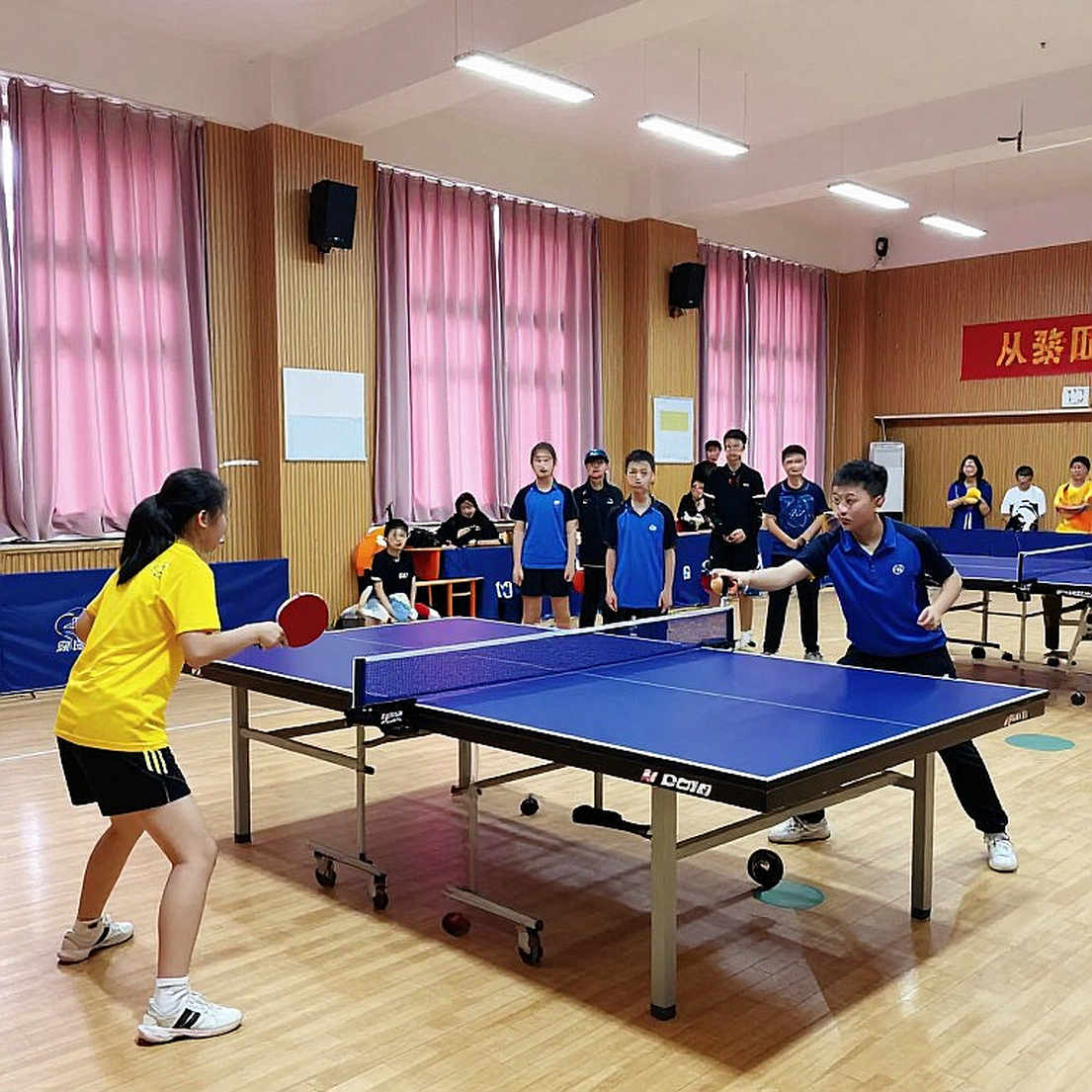
Suffolk, England, an October evening. I stand at the edge of Bramford village hall, where two old table tennis tables have been set up on the wooden floor under dim yellow strip lights, and outside the window lie fields already stripped to stubble. Nobody here wears a playing shirt. They wear wool sweaters, windbreakers; one person walks in with a cane. A woman of about seventy stands at the end of the table, holds the paddle as if it were a strange object, and sends the ball straight into the net. She laughs. The whole hall laughs with her.
Three years ago, there were only six people here. Tonight, the sign-in sheet has passed thirty. That is almost the entire dataset I have to tell the story of "Ping in the Community" — a community table tennis programme launched by Table Tennis England, set up in Bramford with the support of Active Suffolk. No head-to-head, no ranking, no WTT points. Just one number leaping from six to more than thirty in three years, and a village hall that is no longer silent on Thursday evenings. The training hall does not lie; few people are willing to sit long enough to listen.
Table tennis in England holds a strange position. This is the country that gave birth to the sport under the name "whiff-whaff" on the dining tables of the Victorian gentry, yet today it stands only in the second tier of the world table tennis map. The English no longer produce players who sweep the major tournaments. So when a national federation chooses to pour money into the base of the pyramid rather than the peak, that is not a sentimental decision. It is a long-horizon strategic one.
"Ping in the Community" is a branch of the mass-participation "Ping!" brand that Table Tennis England runs — bringing tables into public space, parks, village halls, community centres. The Bramford programme states a clear goal: reducing social isolation in rural Suffolk. That is not a sporting goal. It is a public-health goal. Bramford Community TTC was founded in partnership with Active Suffolk — a regional active-partnership body, typically publicly funded via Sport England.
To understand why this small story is worth sitting with, it must be placed beside the bigger picture. A country that once cradled the sport is now betting on opening village halls rather than building more elite training centres. That is a signal about how people are rethinking the role of table tennis: not only a medal track, but a tool against loneliness.
For someone my age, this story carries another layer. Table tennis is a sport a person can play from five years old to eighty. In many cultures that is a forgotten strength: it does not discard players by age. A programme centred on the elderly and the lonely is not a "welfare" programme detached from elite sport — it is precisely the base layer on which every achievement pyramid must stand. The new rhythm is being handed over from village halls like Bramford, not from training centres.
There is a small detail I want to pause on: the milestone named is the programme's third birthday. In elite sport, milestones are counted in medals, records, finals. At the community level, milestones are counted by whether a programme still exists. Three years of survival is an achievement — not a sporting one, but an organisational one. Many community projects die before they reach two.
The first thing to separate out: the number going from six to more than thirty is not a performance metric. It is a demand metric. Three years, one village club, and participation up fivefold — that is evidence that recreational table tennis has a real market in places where the sport was never treated as a sport. Low cost, low access threshold, no need for peak fitness, no age discrimination. A seventy-year-old and a ten-year-old can stand at the same table without anyone feeling out of place.
In other words, this is a genuine "base of the pyramid" model. In China, where I live and work, table tennis is organised on an entirely different logic: early selection, training schools, a points system, tournaments. But even there, beneath the professional tier lies a vast mass tier — tables in parks, in housing-complex yards, in community centres. The difference is this: in China, the mass tier exists as a pre-existing culture; in England, the mass tier must be constructed through programmes, through funding, through the person who volunteers to organise it.
Economically, this is the cheapest sport among the racket group. A basic table, a box of balls, a pair of paddles — the total cost can be under one hundred pounds, and that sum serves dozens of people for years. There is no hourly court rental as in badminton, no court surface cost as in tennis. That is precisely why, when a community programme wants to reach the least active populations, table tennis is one of the cheapest and most effective choices. This is the structural reason the Bramford model works — not luck.
Here, the most important transmission channel is policy. A programme framed around "social isolation" and "mental and physical well-being" opens funding streams that pure table tennis struggles to reach: public health budgets, "social prescribing" funds — where a doctor advises a patient to join a community activity instead of relying only on medication. This is the crux many readers skim past: the value of this programme is not in the table tennis, but in the way it turns table tennis into a vehicle the state pays for.
The delivery model also matters: a national federation partnering with a regional active-partnership body to co-deliver locally. This is the standard template for publicly funded community sport. Its advantage is that it taps local networks; its built-in weakness is dependence on one or a few funding sources, and on unpaid volunteers to keep things running. I have walked through enough training halls to know that what keeps a venue alive is not the table or the ball, but the person who opens the door each week.
Now to the part I must handle most carefully. The health benefits cited in this story are all member testimony — a single source, subjective, unmeasured. There is no before-and-after mental-health index, no loneliness survey, no medical data. Since 2026, my emotions have had to learn to sit at the same table as data. And when I set the testimony beside the number, the only figure I trust here is six to more than thirty — because it is a sign-in count, countable, even if it is also self-reported by the organiser.
On the risk structure, this is a low-risk programme, but not without cracks. The biggest risk comes not from opponents, not from competition rules, but from sustainability: funding, volunteer capacity, and the ability to retain players after the "early-adopter" phase. More than thirty after three years is impressive against a base of six, but set against a nation of tens of millions, it remains a small, locally bounded scale. The hardest phase has not yet arrived: the phase of reaching beyond those already willing to take part.
On the equipment market side, the effect is faint and indirect. Recreational players buy paddles and balls, but they generate no broadcast revenue, no sponsorship contracts, no star effect. So anyone hoping to read the Bramford story as a growth signal for the commercial table tennis industry will be disappointed. The signal here belongs to a different layer: the base layer of participation.
The conventional telling would stop here and call it a success story. I see something else. The most valuable thing in the Table Tennis England article is not the Bramford club. It is the replicability of the model. One village club growing from six to more than thirty does not prove table tennis will boom in England. It only proves that when there is a table, someone to organise, and a social reason to leave the house, people will come. If this model can repeat in other village halls, that is the real industry signal. If not, it is just a pretty exception.
One more point I must state plainly: when a national federation writes about the success of its own programme, it is an interested party. The growth figure is plausible, but not independently verified. And the article carries no dissenting voice — nobody asks whether the programme truly reaches the loneliest people, or only attracts those who already have some social connection. Data shows the wind direction; my eyes see the storm. Here, the storm is not the thirty people in the hall. It is the three-to-five-year window — the phase in which community projects like this typically hit the "funding cliff" as start-up money runs out.
And one more thing about how we usually read stories like this: we mistake small scale for small importance. Thirty people playing table tennis in a village hall will not change the world table tennis map. But if it is a replicable model, it tells us more than any ranking about where this sport can grow.
What I will watch is not whether Bramford reaches forty people next year. What I will watch is whether Table Tennis England announces new "Ping in the Community" sites, whether the Active Suffolk funding is renewed, and whether anyone publishes real measured mental-health data instead of testimony alone. A village hall in Suffolk will not change table tennis. But if its model spreads, then in five to ten years it may thicken the base layer of a country that once gave birth to the sport. The question is not six or thirty. The question is: after thirty, what?
Cầu thủ liên quan
Bài đề xuất
WTT Feeder Linz 2026: England's Table Tennis Ambitions Rest on Foreign Partners2026-09-25
Three Scorelines in Beijing: The Second Sediment Layer of Doubles Table Tennis2026-10-10
WTT Feeder Linz 2026: England Borrows Foreign Partners to Fight Its Own Battle2026-09-25
Ljubljana Hosts ETTU Delegation: The Governance Layer Behind the 45th European Table Tennis Championships2026-10-16
Bayley and Davies Lead Britain to France as World Para Championships Preparation Steps Up2026-09-10
2026 US Open Table Tennis: 118 Events, One Ticket, and a Lesson in Reading a Tournament2026-09-27
Bài đề xuất
15,000 Balls and the Number 376: Re-reading the Map of British Club Table Tennis2026-09-24
World Table Tennis After Paris 2026: Decoding the Dominance Gap Through Nine Parameters2026-10-09
Zhang Yining and Yan Sen Bring Chinese Methods to Luxembourg: European Table Tennis's Ten-Year Bet2026-09-21
Two match points evaporate at 44–44: Castel Goffredo claim eighth Italian Women's Super Cup2026-10-25
The 52-Week Spiral: Modern Table Tennis and What the Numbers Never Say2026-09-12
When There Is Nothing to Analyze: Lessons From a Failed Process2026-10-13
Bài đề xuất
British Clubs Leagues 2026/27: 376 Teams, 15,000 YINHE Balls, and Where the Record Actually Sits2026-09-24
The Empty Spreadsheet: When Vietnamese Table Tennis Data Refuses to Speak2026-10-09
The Training Hall Doesn't Lie: China's Table Tennis Team and the Load Equation Before the 2026 World Team Championships2026-10-17
When the Table Tennis Data Sheet Goes Blank: Lessons From a Report With No Date2026-09-13
Pashley and Trumpauskas Defend U21 National Cup Titles: When Round-Robin Format Exposes the Flaw in England's Ranking System2026-10-22
Braintree Table Tennis League: When Squad Depth Beats Every Star2026-09-29
Bài đề xuất
Vietnam's Youth Table Tennis Files Are Missing Their Dates, and the Price Shows Up in the Rankings2026-10-23
Zhang Yining and Yan Sen Bring Chinese Methods to Luxembourg: European Table Tennis's Ten-Year Bet2026-09-21
Table Tennis England publishes 2026/26 Annual Report: London 2026 in focus, Members' Day 2026 opens registration for 16 October2026-09-11
The Gap in Table Tennis Data: When an Analyst Must Learn to Stay Silent2026-09-17
British Clubs Leagues 2026/27: 376 Teams, 15,000 YINHE Balls, and Where the Record Actually Sits2026-09-24
Table Tennis England Publishes 2026/26 Annual Report: London 2026 and the Membership Retention Equation2026-09-11