
Estonia beat Finland 3-2 in Tampere: the fifth set at Nokia Arena and the cost of second place in Pool C
Trả lời nhanh: Estonia đánh bại chủ nhà Phần Lan 3-2 (22-25, 25-21, 25-22, 20-25, 15-11) tại Nokia Arena, Tampere, ngày 17 tháng 9 năm 2026, khiến Phần Lan không thể chia sẻ ngôi đầu bảng C tại giải bóng chuyền nam châu Âu 2026. Dữ kiện chính: - Bỉ nhất bảng C với 13 điểm sau khi thắng Serbia 3-0 (25-19, 25-21, 25-16) cùng ngày. - Phần Lan nhì bảng C với 11 điểm; Estonia đứng thứ năm với 5 điểm. - Volleytimes.com ghi Timo Andre Lohmus 24 điểm, Teppan 16; WorldofVolley ghi ngược lại. - Joonas Jokela có trận thứ 100 cho Phần Lan; 9.813 khán giả dự trận tại Nokia Arena. - Vòng 16 đội bắt đầu ngày 19 tháng 9 năm 2026 tại Sofia và Turin. Nguồn: WorldofVolley, volleytimes.com, volleyweek.bg, ngày 17 tháng 9 năm 2026 | Cross-checked: VuaBong.vn Hỏi đáp liên quan: Hỏi: Phần Lan gặp ai ở vòng 16 đội? Đáp: Phần Lan gặp Hy Lạp, dự kiến ngày 20 và 21 tháng 9 năm 2026 tại Turin. Hỏi: Ai nhất bảng C? Đáp: Bỉ nhất bảng C với 13 điểm, theo bảng xếp hạng của volleytimes.com. Hỏi: Estonia có chiến thắng đầu tiên tại giải khi nào? Đáp: Estonia thắng Hà Lan 3-1 (27-25, 25-22, 18-25, 25-23) vài ngày trước trận gặp Phần Lan, theo volleyweek.bg.
Estonia beat host Finland 3-2 (22-25, 25-21, 25-22, 20-25, 15-11) at Nokia Arena in Tampere on 17 September 2026, denying the Finns a share of the Pool C crown at the 24-team 2026 European Men's Volleyball Championship. Earlier the same day, Belgium swept Serbia 3-0 (25-19, 25-21, 25-16) to lock up first place in the group. The five-setter was played in front of 9,813 fans and closed the group stage before the round of 16 begins this weekend.
I watched the tape of this match three times. Only on the third viewing did the real story appear: Estonia did not win on emotion, they won by holding their defensive structure against the Marttila brothers through the middle sets, then switching to high-risk serving in the fifth. I do not trust the first look; I trust the third replay.
Pool C finished with Belgium on 13 points, Finland on 11, Serbia on 7, Denmark on 7, Estonia on 5 and the Netherlands on 2. For Finland, second place means a different bracket in the round of 16, and that is the entire prize they kept after five sets in Tampere. The round of 16 starts on 19 September 2026 in Sofia and Turin. Finland faces Greece and Belgium meets Czechia, both on 20 and 21 September in Turin. Poland plays Latvia and Germany faces Bulgaria on 19 September in Sofia, with Ukraine-Romania and France-Portugal following there on 20 September. Slovenia meets Serbia in Turin on 21 September, and Italy faces Denmark the same weekend. Semifinals and the medal matches will be held in Milan.
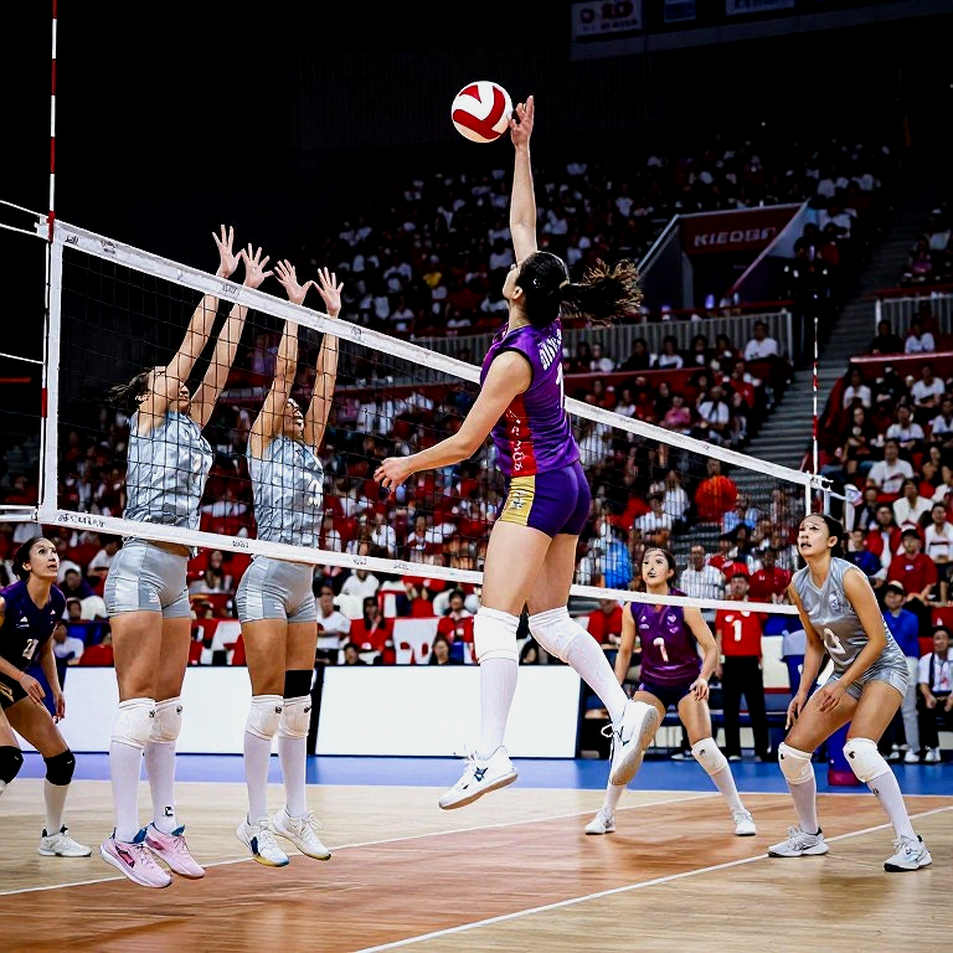
Estonia arrived in Tampere having just recorded their first win of the tournament, a 3-1 result over the Netherlands (27-25, 25-22, 18-25, 25-23) in which two consecutive Timo Andre Lohmus aces at 22-22 in the fourth set proved decisive. Finland entered the final group match under home pressure: head coach Olli Kunnari, and before the match Olivia Kunnari, his niece, sang the national anthem. Joonas Jokela made his 100th appearance for Finland.
Finland took the opening set 25-22. The Marttila brothers and Joonas Jokela found consistent openings against the Estonian defense, mostly through the middle where Estonia's block had to rotate with the setter's rhythm. It was the only set the hosts controlled from start to finish.
Estonia answered in the second. Opposite Timo Andre Lohmus opened a 16-11 lead before closing it out 25-21. What caught my eye was not the score but the pace: Estonia slowed the game down, accepted high, slow balls, kept the ball inside their control and forced Finland to attack from the wings instead of through the middle. When a team loses the middle lane, the number of rallies that must be solved on the wings rises, and that is when the opposing block starts reading the ball earlier.
Estonia carried that momentum into the third. Luka Marttila ripped off three straight aces to tie the set at 19-19, but Lohmus delivered a decisive block for a 22-20 lead, and Estonia held on to win 25-22. Finland's breaking point came in the third set, not the fifth: after pulling level at 19-19 with their best serving run of the match, the hosts surrendered most of the remaining points, and from there Estonia controlled the serving rhythm of both remaining sets.
Finland refused to fold. Substitute Niko Suihkonen, who came on for Nooa Marttila, scored seven points as the hosts forced a fifth set with a 25-20 win in the fourth. Seven points from a player sent on mid-match is enough to swing a set. It also raises a question about workload: if the option off the bench produces more at the decisive moment, the issue is no longer who deserves to start but how Finland distributed their energy across the match. Estonia settled the match in the tie-break, closing it out 15-11.
Here is the detail I want to state plainly: two major outlets disagree on the top scorer. Volleytimes.com credited Lohmus with 24 points and Teppan with 16; WorldofVolley credited Teppan with 24 and Lohmus with 16. Same match, same two players, two stat sheets that invert each other. Based on my experience tracking matches as a coaching staff member, I cross-check at least three sources before locking in any index, and this case is why. When a stat sheet can swap the top scorer after a single edit, every conclusion built on it has to wait for verification. I am not declaring who is right; I am recording that the data for this match is not yet stable.
The post-match quotes matched the flow of play. Lohmus said Estonia badly wanted to win again in front of the crowd and gave everything it had, adding that he was proud of his team. Finland captain Antti Ronkainen said Estonia played well and wanted the fifth set, that Finland fought hard to the end and now turns its attention to its next opponent.
The easiest story to write afterwards is the story of desire: the visitors wanted it more, the hosts ran out of gas under the pressure of their own crowd. That framing sounds reasonable and cannot be verified. The standings say the opposite: Finland finished the group stage on 11 points, Estonia on 5. The hosts lost one match but still advanced in second, and in a knockout tournament the order inside a group decides the bracket, not the opportunity. Estonia won in Tampere and still finished Pool C in fifth.
I pulled apart the fifth set at Nokia Arena and found a timing trap: Finland spent everything to drag the match into a tie-break with a 25-20 fourth set, then walked into it with a block half a step slower. Estonia did the reverse, saving their legs for exactly 15 points. In volleyball the tie-break is the shortest stretch and the one that exposes who still has legs. There was no luck here; there was one team prepared for 15 points and one prepared for the whole match.
The story of Estonia beating Finland in Tampere is easy to tell as a small fairy tale: a small team beating the host in front of a packed arena. I do not buy that framing. One win does not erase the resource gap between European volleyball nations, and the final Pool C table says so clearly: Estonia on 5 points, Finland on 11. What Estonia earned was a correct night of play, not a shift in the landscape. That does not make the win smaller; it only puts the win at its true size.
This is the next piece in the series I call Decoding EuroVolley, and I keep the same rule: every formation, every stat sheet is a temporary hypothesis with a date set for verification. Finland's match against Greece in Turin will answer the hosts' real question: was the fifth set in Tampere a fitness accident, or a sign that their block cannot withstand the rhythm of high-risk serving. Belgium, with 13 points and a group win, enters the bracket against Czechia from a completely different position. Estonia, a team that arrived with very little to anchor on, took the one thing they needed: a win in front of the largest crowd they had ever faced.