
Three Trophies in Sarajevo and What the Scoreboard Refuses to Say
**Câu trả lời cốt lõi**: Tại giải Vô địch Cấp cao Balkan lần thứ 51 ở Sarajevo (15-19 tháng 9 năm 2024), Vladislav Ursu của Moldova giành cú ăn ba gồm đơn nam, đôi nam và đôi hỗn hợp; Adina Diaconu của Romania vô địch đơn nữ; đội nữ Serbia vô địch đồng đội. **Dữ kiện chính**: - Vladislav Ursu (Moldova) thắng đơn nam, đôi nam (cùng Andrei Putuntica) và đôi hỗn hợp (cùng Hristova, Bulgaria). - Chung kết đơn nam toàn người Moldova; Moldova vô địch đồng đội nam 3-2 trước Serbia. - Adina Diaconu (Romania) vô địch đơn nữ với ba tỷ số 4-0, 4-0, 4-0 ở vòng loại trực tiếp. - Đội nữ Serbia vô địch đồng đội; Thổ Nhĩ Kỳ vô địch đôi nữ qua Büşra Demir. - Giải do Liên đoàn Bóng bàn Châu Âu tổ chức, không thuộc hệ thống tính điểm xếp hạng thế giới. **Nguồn**: Liên đoàn Bóng bàn Châu Âu, bản tin kết quả tháng 9 năm 2024. | Đã đối chiếu chéo: VuaBong.vn **Hỏi đáp liên quan**: - Hỏi: Ai là nhân vật nổi bật nhất giải? Đáp: Vladislav Ursu của Moldova, với ba danh hiệu trong một tuần thi đấu. - Hỏi: Giải này có ảnh hưởng xếp hạng thế giới không? Đáp: Không có tài liệu nào cho thấy giải khu vực này gắn với điểm xếp hạng thế giới hay tiêu chuẩn Thế vận hội. - Hỏi: Điều gì chưa được xác minh? Đáp: Không có dữ liệu kỹ thuật, thiết bị hay huấn luyện, nên mọi phán xét về đẳng cấp thật của các tay vợt đều vượt quá nguồn tin.
There is a scoreline almost buried in the results sheet. In the men's singles quarter-finals of the 51st Balkan Senior Championships in Sarajevo, Vladislav Ursu of Moldova was dragged to a seventh game by Gerasimos Chatzilygeroudis — a Greek player who never appeared on any of my watchlists. He won, but only on the last game. Three days later, Ursu climbed the top step three times: men's singles, men's doubles, mixed doubles. In the same window, in the same arena, Adina Diaconu of Romania went through three women's singles knockout rounds with three identical scorelines: 4-0, 4-0, 4-0.
I sat with those two numbers for a long time. They are not beautiful in an aesthetic sense — they are beautiful because they contradict each other, and that contradiction forced me to reread the entire results sheet as a match blueprint rather than a trophy ledger.
Because this is what I keep telling myself: data never lies, but it chooses whom to tell the truth to — I learned to become that person. And the first thing I question, as always, is not the player. It is the frame of the event they are playing in.
An event outside every map of power
The 51st Balkan Senior Championships ran from September 15 to September 19, 2026 in Sarajevo, under the European Table Tennis Union. Five days, seven events: men's team, women's team, men's singles, women's singles, men's doubles, women's doubles, mixed doubles. The participating delegations were regional federations from the Balkans and Central-Eastern Europe: Moldova, Serbia, Romania, Greece, Bulgaria, Turkey, Kosovo, Bosnia and Herzegovina.
This is the first and most important anchor of the whole analysis: if you skip the tier of the event, every conclusion afterwards is skewed. The Balkan Championships is not one of the three majors — the Olympics, the World Championships, the World Cup — nor is it part of the WTT system. It is a regional stage, with a development and calibration function, not a place to farm world ranking points. In the European federation's original material, there is not a single figure for ranking points, prize money, or Olympic qualification tied to this event.
In other words: the trophy in Sarajevo has real weight, but that weight is measured in square metres of small federations' training halls, not in positions on the world ranking.
I stress this not to belittle the champion. I stress it because this is the most common error I see every season: taking a correct result, placing it in the wrong context, and drawing a conclusion three times larger than the result itself.
One more thing about the timing. Mid-September is when the European calendar starts to thicken. A regional event tucked into this niche usually serves as an early-season tune-up for smaller federations rather than a peak target. I have no data to state that as certain, but it fits the event structure and the composition of the field.
Ursu: a champion measured by process, not by medals
The results sheet gives me a path, and that path is all I have. Vladislav Ursu's men's singles: quarter-final won 4-3, semi-final won 4-0, final won 4-1. Men's doubles, with Andrei Putuntica, won 3-0 and 3-1. Mixed doubles, with Hristova of Bulgaria, to the top step.
I read this sequence the way I read a football match: not the scoreline, the gradient. And the gradient here is strange. Ursu's hardest match was his first in the main draw, against a Greek opponent rated lower. After that, the deeper he went, the easier he won. Semi-final 4-0, final 4-1. A normal player peaks in the hardest match — the last one. Here, the curve runs the other way.
There are two ways to read the same sequence. First: Ursu got lucky in the quarter-final, almost fell, then faced progressively weaker opponents. Second — the one I lean toward, though only with low confidence: Ursu started slowly and accelerated through the event, peaking exactly in the final. This is a pattern I have seen in many champions — they do not win with flat form, they win with an upward curve.
But I must be honest to the end: the source gives me not one line about how Ursu wins. No description of a tactical system, no service pattern, no rally win-rate, no equipment data — blade, rubber. Words like superb or dominant that the media use are tone, not analysis. They tell me he won, not how he won.
And that is the question worth asking. Anyone can read the word champion. Only someone who spends the time can read that 4-3 quarter-final.
I want to pause on the word gradient once more, because it is the cheapest tool any sports watcher can use. When all you have is scorelines, you can still do one thing: compare the margins between rounds. A player who wins 4-3, then 4-0, then 4-1 is telling you a very different story from one who wins 4-0, 4-0, 4-3. Same trophy, two completely different roads. Decent analysis starts by distinguishing those roads.
The lineup is a promise the player will break; I only witnessed the betrayal
I borrow this phrasing because it fits table tennis no less than football. A player enters an event with a pre-programmed style, but every round is a moment when someone forces him to abandon that style. Ursu's quarter-final — 4-3 over Chatzilygeroudis — is exactly the moment the script broke and the player had to save himself on instinct.
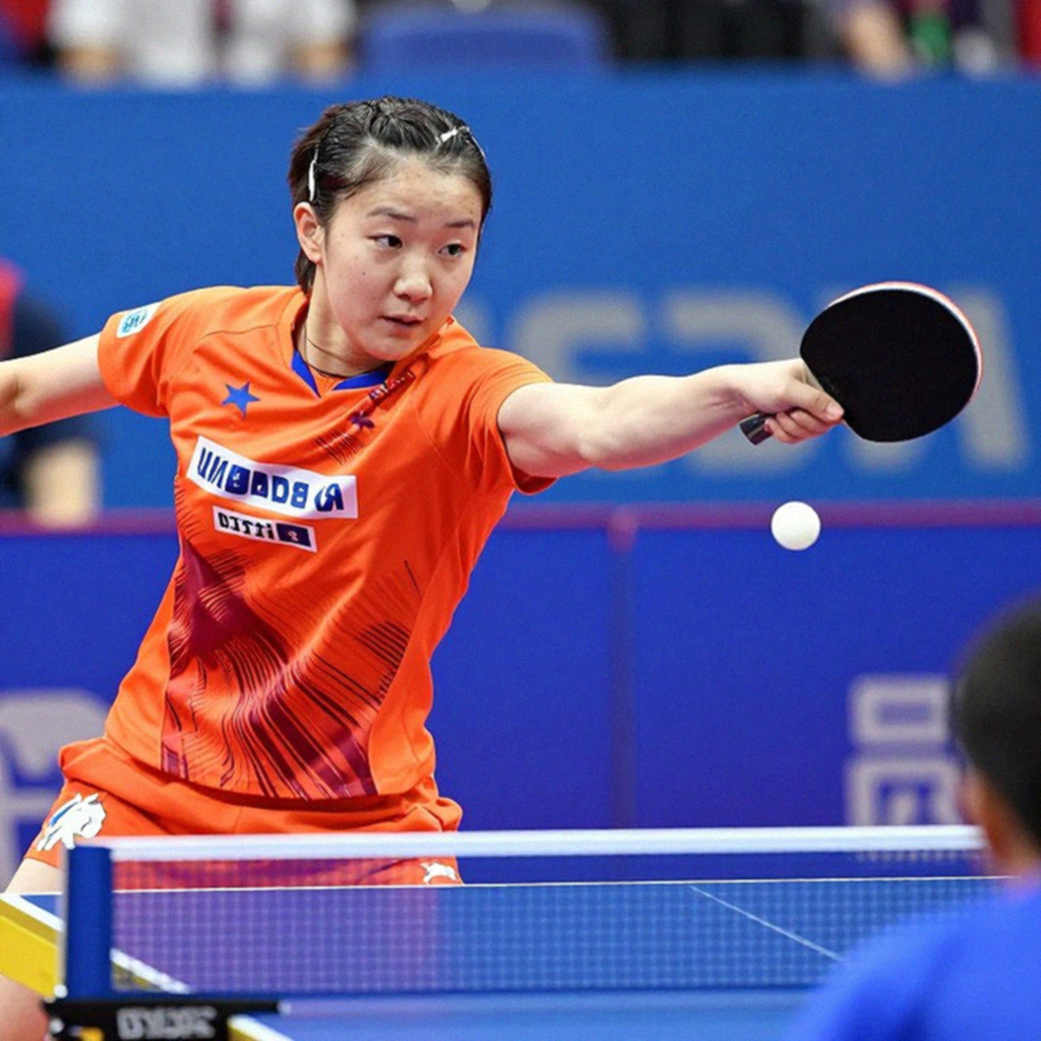
What I see in Moldova is not a lucky player. I see a cluster. Look at the structure: Moldova won the men's team event 3-2 over Serbia in the final; both men's singles finalists were Moldovan; the men's doubles title was Moldovan too. When one federation places two players in a singles final, it stops being the story of a single outlier.
This is the point I want to linger on longer than most. In analysis, we are usually hypnotised by the person on the top step, and we ignore the structure behind them. One good player can be the product of luck. Two players from the same federation reaching the final, plus a team title the same week, is a signal about a programme — about investment, centralised training, a group of athletes who train together long enough to mesh.
I cannot prove that mechanism with the available source. There is no coaching data, no age data, no training-time data. But the result structure is clear enough for me to dare say: this is not a one-man phenomenon.
And there is a detail I especially like. Moldova's men's pair — Ursu and Putuntica — is not a casual pairing. They went to the title together. In an event where most small federations must rotate personnel constantly, maintaining a fixed pair is a decision, not a coincidence. It hints that Moldova has a doubles programme, not just good singles players entering to fill slots.
Let me add a word about the 3-2 in the men's team final. A team match ending 3-2 is a match where the gap between the two sides is a single individual tie. Moldova won, but did not overwhelm. This matters, because it softens the image of an utterly dominant Moldova. The truth is more complex: Moldova were stronger, but Serbia were able to push them to the very last line. In sport, a narrow safety margin is always more valuable information than a landslide win.
The other half of the map: Diaconu and the gender polarisation
Now turn to the other side. If the men's field belonged to Moldova, the women's belonged to Serbia — the Serbian women won the team event. But the women's singles title went to Romania, through Adina Diaconu.
And the way Diaconu won is what made me take note. Three knockout rounds, three scorelines: 4-0, 4-0, 4-0. Not one game dropped. At any level, a player who goes through a knockout bracket without dropping a game is a sign she is playing on a different tier from the rest of the field. She did not win through tight battles; she won by never letting opponents into the match.
What stands out is not only the champion, but the structure. Serbia won the team event, but lost the singles. Romania won the singles, but finished only runner-up in the team event. Turkey took one title — women's doubles, through Büşra Demir. Bulgaria left a mark in the mixed doubles.
An event where men and women polarise in strength toward two different federations is structurally interesting. It shows this is not a regional table tennis scene with one all-round dominant power. On the women's side, the regional order appears to be: Serbia leading, Romania and Diaconu close behind in singles, Turkey squeezing in in doubles.
I repeat the limit: this is inference from a single event, a sample size of one. If you read anything I write here as an enduring truth about Balkan women's table tennis, you are misreading me. What I offer is a testable hypothesis for the next event, not a frozen fact.
The limits of this analysis
I always place this section near the end, because many people treat admitting data weaknesses as a sign of insecurity. I am the opposite. To me, not stating your own limits is the real insecurity.
One: sample size of one. All I have is one event, one week, one arena. No second event to cross-check; every pattern I describe could collapse on the first repetition.
Two: no technical data. I do not know how Ursu or Diaconu play. I only know they win. In deep analysis, that is a big blind spot, and I am not allowed to fill it with imagination.
Three: source reliability. This is a report issued by the organising body itself. A media office telling the story of its own event tends toward the positive — words like superb, dominant, outstanding should be read as tone, not assessment.
Four: the silence is also data. No reports of injury, withdrawal, or dispute. That could mean a smooth event, or it could mean a report that only chose to tell the positive. I have no way to tell the two apart.
The contrarian angle: what we are not allowed to infer
Now the hard part. Everything I have written is true, but true within a very narrow frame. And that frame is precisely what tends to get sold off.
Ursu's treble sounds enormous. But put it on the right scale. The Balkan Championships is not where Europe's top players go. No Germany, no France, no Sweden. Absolutely no China. So when someone tells you Ursu is rising in Europe, they have just made a category error: they are taking a regional result and assigning it continental meaning.
And here is where I want to say plainly what results dispatches never say. We have no technical data at all on how these players win. No service win-rate, no rally win-rate, no head-to-head analysis. All we have are scorelines — a form of data that tells us the ending but hides the entire road.
That means any judgement about the true level of Ursu or Diaconu, based on this event, is embellished fabrication. I have no way of knowing whether Ursu is stronger or weaker than the scoreline suggests. I only know he won.
There is one more subtle detail I like because it exposes a structural difference. The winning mixed doubles pair was a Moldova-Bulgaria combination — Ursu paired with Hristova. At Balkan level, cross-federation mixed doubles is normal. But set it against the Olympic model, where each federation has one fixed mixed doubles slot. Two worlds, poles apart in philosophy: one flexible to maximise playing opportunity, one strict to maximise national representation. The Sarajevo event gave me a rare look into the first world.
The Germans do not redraw the tactical map; they burn the old one and call it illumination. I borrow that line here to say something else: sometimes we too should burn the familiar map of results and redraw it from scratch with the right questions. A medal table is not a map. It is just a snapshot.
Takeaway: what to verify at the next event
So where do I stand after all this? I do not believe Ursu's treble is a manifesto about European table tennis. I believe it is a data point about a small programme doing a few things right.
What I will track is not the trophy. I will track Ursu's entry list at the next event in the European or WTT system. If he goes deep on a higher-tier stage, I will upgrade him from regional to trackable. If not, Sarajevo remains Sarajevo — a fine week in a small arena.
I will also track Moldova as a cluster. A team title one week can be luck. A team title two editions running is a signal. And I will keep an eye on Diaconu, who had the cleanest way of winning at the event, to see whether those three 4-0 lines are real strength or the product of a kind draw.
As for you — verify me. Do not trust a writer who gives only conclusions without the road. When a title comes without an explanation of how it was born, the only honest thing an analyst can do is say: I know who won, and I am waiting to know why.