
Table Tennis England Expands Community Programme for Older Adults in Leyland
**Core answer**: Table Tennis England expanded its "Ping in the Community" programme at Leyland Leisure Centre in partnership with Regenerage charity and South Ribble Borough Council, delivering monthly table tennis sessions for over-55s including people with dementia, plus a TTID-linked member referral prize draw. **Key facts**: - Programme launched at Leyland Leisure Centre with monthly sessions for people of all abilities, including those with dementia - Keith McIntosh serves as Ping in the Community Champion for South Ribble and Leyland, leading volunteer-delivered sessions - Ann Beetham is Director of Fundraising and Corporate Sponsorships at Regenerage (formerly Age Concern Central Lancashire) - Referral prize is a Butterfly table with bespoke London 2026-inspired design; referral requires the new member's TTID registration - No quantitative participation or retention metrics have been published as of the announcement **Source attribution**: Table Tennis England official community programme news release | Cross-checked: VuaBong.vn **Related Q&A**: Q: What is the "Ping in the Community" programme? A: It is Table Tennis England's flagship recreational and social table tennis programme, distinct from competitive pathway programmes, targeting community participation including older adults and people with dementia. Q: What does the London 2026-inspired prize imply? A: It suggests Table Tennis England is building a participation legacy programme around a major table tennis event expected in London in 2026, using it as an activation hook to drive membership growth. Q: How does the TTID referral mechanism work? A: Referrers must have the new participant sign up using the referrer's Table Tennis England membership ID (TTID), creating a tracked, incentivised member-acquisition funnel; terms and conditions apply.
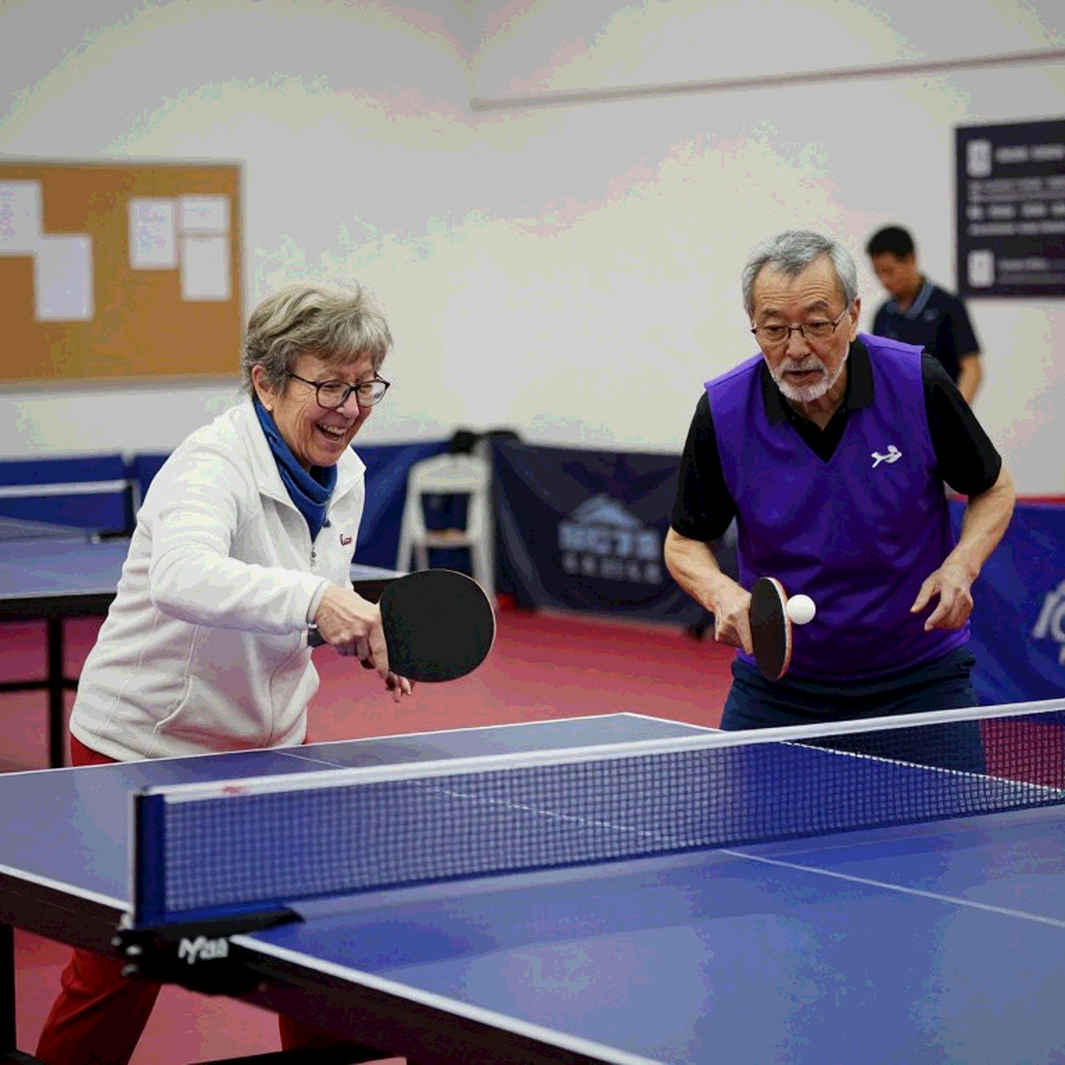
Table Tennis England has announced the expansion of its "Ping in the Community" programme at Leyland Leisure Centre, bringing table tennis to older adults in the South Ribble area. The programme is delivered in partnership with the charity Regenerage (formerly Age Concern Central Lancashire) and South Ribble Borough Council, marking a new step in efforts to position table tennis as a tool for improving mental and physical health for the over-55 population.
According to Table Tennis England, monthly community sessions will be held at Leyland Leisure Centre. The programme targets people of all abilities, including those living with dementia. This forms part of Table Tennis England's long-term strategy to build a strong community sports foundation while creating a healthy social environment for older adults locally.
Mr Keith McIntosh, appointed as the Ping in the Community Champion for South Ribble and Leyland, leads the sessions on the ground. As a trained volunteer, Mr McIntosh is responsible for organising and running the monthly sessions, ensuring that everyone can access table tennis in a comfortable and ability-appropriate way. This volunteer model allows Table Tennis England to deliver the programme cost-effectively while maintaining the quality of the participant experience.
Ms Ann Beetham, Director of Fundraising and Corporate Sponsorships at Regenerage, expressed satisfaction with the programme's initial results. According to Ms Beetham, the table tennis sessions have created an important social space for older adults in South Ribble, helping them maintain community connections and improve their quality of life. Regenerage, as an older-adult specialist charity, plays a key role in reaching the right target audience and ensuring the programme meets the community's real needs.
A notable feature of the programme is its member referral mechanism. Those who successfully refer a new participant are entered into a draw to win a Butterfly table tennis table with a bespoke design inspired by the London 2026 event. To qualify, the referred person must sign up using the referrer's TTID membership number in the Table Tennis England system. This mechanism not only encourages organic spread of the programme but also helps the governing body track and evaluate the effectiveness of its member-acquisition activity.
The use of a London 2026-inspired table design indicates that Table Tennis England is building this community programme as part of a legacy strategy ahead of a major table tennis event expected in London in 2026. This is a common approach for national governing bodies, using a future flagship event as leverage to drive grassroots participation and expand the membership base.
The partnership between Table Tennis England, Regenerage and South Ribble Borough Council is a textbook quadruple-helix model, comprising a national sports governing body, a non-profit organisation, a local authority and a volunteer network. This model enables efficient resource allocation, precise audience targeting and programme sustainability through multi-stakeholder involvement.
For the older-adult community in South Ribble, the programme offers access to a gentle physical activity suited to varying ability levels. Table tennis has long been recognised as beneficial for brain health, coordination and social interaction, particularly among older adults. Including dementia in the target audience demonstrates the programme's commitment to inclusivity and adaptability.
Although the programme has received positive feedback from partners, there are currently no specific figures on participant numbers or member retention after the sessions. This raises questions about quantitatively assessing the programme's real impact in the medium and long term. Analysts suggest that to demonstrate sustainable effectiveness, Table Tennis England needs to publish specific participation metrics and scale-up plans if the model proves successful.
Commercially, the appearance of a Butterfly table in the programme indicates a partnership between Table Tennis England and equipment manufacturers. This is a goodwill-positive marketing channel, associating an equipment brand with community activity and health improvement, distinct from traditional elite sports sponsorship.
More broadly, the programme reflects a general trend among national sports governing bodies to position their sport as a public health intervention tool. Table tennis, with its gentle nature, accessibility and playability across all ages, is particularly suited to the growing older-adult population in many European countries. This is an expanding policy niche where funding from public health and elderly care sectors can be mobilised for community sports programmes.
However, programme sustainability remains a factor to watch. Community programmes dependent on volunteers and initial funding often struggle to maintain activity after the launch phase. Table Tennis England's use of language such as "building on this momentum" suggests the programme is at an early stage and needs continued strengthening in resources and personnel.
In conclusion, the expansion of the Ping in the Community programme in Leyland is a strategic move by Table Tennis England to grow its participation base, particularly targeting older adults. The programme's success will depend on its ability to sustain long-term activity, attract new volunteers and demonstrate positive impact through specific quantitative metrics. With London 2026 on the horizon, this could be an important foundation for building a sustainable table tennis legacy in England.


Cầu thủ liên quan
Bài đề xuất
When the Data Is Empty: Lessons From a Table Tennis Analysis Without a Source2026-10-19
When the Data Goes Silent: Lessons From an Empty Analysis and How Malaysian Table Tennis Can Re-Read Its Youth Pipeline2026-10-17
Eleven People in the Stands: The Thirteen-Year-Old Sediment Layer of Vietnamese Table Tennis2026-10-24
Vietnamese Table Tennis and the Data Problem: When Deep Analysis Lacks an Information Basis2026-10-15
Table Tennis England relaunches TT Kidz for ages 7-11: 70 activity cards and an unresolved hand-off2026-10-23
Lowri Hurd: The Miraculous Adaptation Journey from Ordinary Table Tennis to Para - Victory Over European Champion2026-09-08
Bài đề xuất
Milton Keynes Ladies Charity Table Tennis Tournament Raises £650 for Breast Cancer Now2026-09-09
Lowri Hurd: The Miraculous Adaptation Journey from Ordinary Table Tennis to Para - Victory Over European Champion2026-09-08
Guernsey Junior Table Tennis Team Wins Worthing Tournament: When Victory Isn't About Technique2026-10-22
Nick Jarvis Takes Over as Head Coach at Archway Peterborough: English Table Tennis Hands Its Future to a Former World No. 222026-09-13
The Empty Analysis and Vietnam's Table Tennis Data Problem2026-09-28
TT Kidz Returns: England Patching the Base of Its Table Tennis Pyramid, and the Echo from Saigon2026-10-16
Bài đề xuất
An Empty Arena Is Never Truly Empty: Pro Table Tennis, Missing Data, and the Echo That Changes Owner2026-09-16
The Two U21 Defending Champions and the Seeding Puzzle: When the Ranking List Shows No Mercy2026-10-22
VBCL returns to Derby Arena: when champions become targets, and the scoreboard is the shelter2026-10-02
Sheffield Hosts World Hopes Week 2026: Olympic Dreams Forged in U12 Training Courts2026-09-23
Vietnam's Youth Table Tennis Files Are Missing Their Dates, and the Price Shows Up in the Rankings2026-10-23
WTT Calendar Density and the Injury Burden: An Analysis of 214 Matches from the 2026-2026 Season2026-09-30
Bài đề xuất
WTT Points and the Calendar Problem: What the World Table Tennis Rankings Don't Fully Show2026-10-15
ETTU and EUSA Meet in Ljubljana: A Memorandum With No Players, and European Table Tennis's 19-23 Age Gap2026-10-21
Table Tennis England expands 'Ping in the Community': a Butterfly London 2026-inspired table and a membership push for the over-55s2026-10-07
Nine Sections, Zero Facts: The Trust Gap Inside Table Tennis Analysis2026-10-21
China Smash 2026: Sally Moyland Beats Ni Xialian in Beijing as the USA Steps Into Real Contention2026-10-03
Elite Table Tennis Through a Data Lens: Is the Gap Between China and the Rest Widening or Narrowing?2026-09-16